- Company Articles
- Products and Technology
- Product knowledge
- Duplex Aluminum Pipe Joint: Key Component for Flexible Production Equipment

Duplex Aluminum Pipe Joint: Key Component for Flexible Production Equipment
Related Product
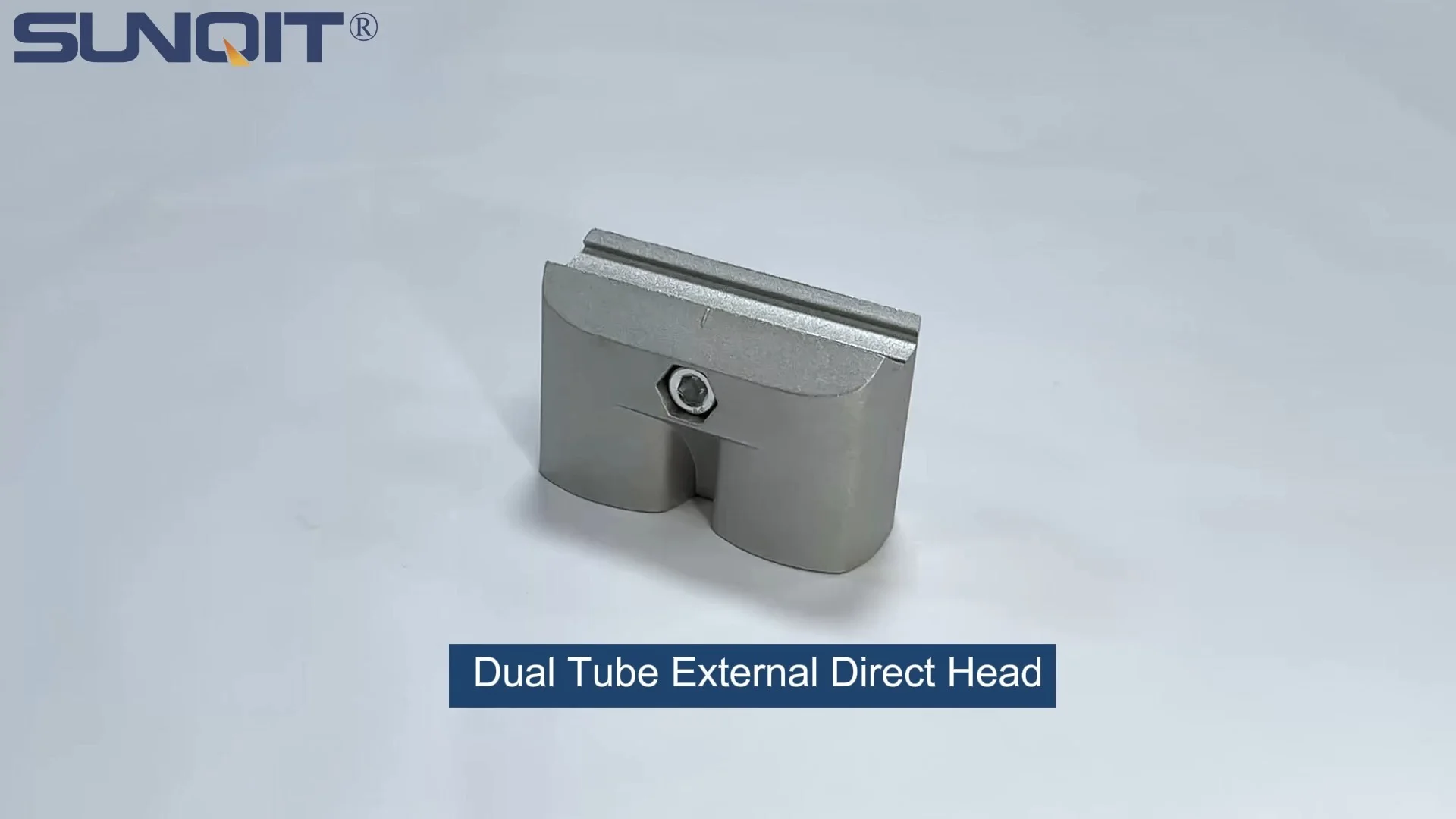
Duplex Aluminum Pipe Joint
Duplex Aluminum pipe joint used for one pcs 28pcs aluminum pipe and one pcs of 28mm duplex pipe connection in straight angle.
The Changing Face of Modern Manufacturing: Why Flexibility Matters More Than Ever
Walk into any manufacturing facility today, and you'll likely notice a shift. Gone are the days of massive, immovable production lines churning out identical products for years on end. Instead, you'll find teams adapting to shorter product lifecycles, smaller batch sizes, and customer demands for customization—all while racing to keep up with global competition and supply chain fluctuations. In this fast-paced environment, rigidity is the enemy. A production line that can't pivot quickly when a new design launches or a material shortage hits isn't just inefficient; it's a liability.
This is where flexible production equipment comes into play. At its core, flexible manufacturing is about building systems that can evolve. It's about creating workspaces, material flows, and assembly lines that don't require a complete overhaul every time a process changes. And while there are many players in this ecosystem—from smart sensors to automated guided vehicles—one unsung hero often makes the difference between a system that works and one that adapts : the modular component. Specifically, components like the duplex aluminum pipe joint, which quietly hold everything together while enabling endless reconfiguration.
Think of it this way: If flexible production is a language, modular components are its grammar. They set the rules for how parts connect, interact, and evolve. And among these components, the duplex aluminum pipe joint stands out as a critical "conjunction"—a versatile connector that turns individual pieces (like aluminum profiles, pipes, and accessories) into a cohesive, yet adaptable, whole. In this article, we'll explore why this unassuming component has become indispensable for manufacturers aiming to stay agile, reduce waste, and future-proof their operations.
What Is a Duplex Aluminum Pipe Joint, Anyway? Breaking Down the Basics
Let's start with the fundamentals. A duplex aluminum pipe joint is a specialized connector designed to link aluminum pipes, profiles, or tubes in modular production systems. Unlike traditional rigid joints—think welded steel brackets or fixed plastic connectors—duplex joints are engineered for flexibility, strength, and ease of use. The term "duplex" here refers to their ability to connect two or more components at once, often with multi-directional adjustability, making them ideal for building structures that need to bend, extend, or reorient without losing stability.
At first glance, you might mistake a duplex aluminum pipe joint for a simple piece of hardware, but its design is surprisingly clever. Most models feature a cylindrical or angular body made from high-grade aluminum alloy—chosen for its lightweight properties and resistance to corrosion. The joint typically has two or more ports (openings) where aluminum pipes or profiles insert, secured by set screws, bolts, or quick-release levers. Some advanced versions even include internal rotary mechanisms, allowing connected pipes to swivel or pivot slightly, adding another layer of adaptability.
But what really sets duplex joints apart is their "no-weld, no-drill" philosophy. Traditional manufacturing setups often require welding steel pipes or drilling holes to attach brackets—processes that are time-consuming, permanent, and messy. Duplex aluminum joints, by contrast, let operators assemble, disassemble, and reassemble structures by hand, using basic tools like hex keys or wrenches. This not only speeds up setup but also means that if a workbench needs to be taller, a material rack needs an extra shelf, or a conveyor needs to reroute, the system can be reconfigured in hours (or even minutes) instead of days.
The Anatomy of a Duplex Aluminum Pipe Joint: Key Features That Matter
To understand why these joints are so effective, let's break down their key features:
- Material Science: Aluminum isn't just lightweight—it's strong. Modern aluminum alloys (like 6061 or 6063) used in duplex joints offer a high strength-to-weight ratio, meaning they can support heavy loads (think toolboxes, raw materials, or even small machinery) without adding unnecessary bulk. This is a game-changer for mobile equipment like turnover trolleys, where reducing weight improves maneuverability.
- Corrosion Resistance: Unlike steel, aluminum forms a natural oxide layer that protects it from rust and degradation—critical in environments where moisture, chemicals, or dust are present (e.g., food processing, electronics manufacturing, or automotive plants). This longevity reduces replacement costs and keeps systems looking (and functioning) like new for years.
- Modular Compatibility: Duplex joints are designed to work with standard aluminum pipes and profiles, which are widely available and come in consistent sizes (like 20mm, 30mm, or 40mm diameters). This standardization means you can mix and match components from different suppliers without worrying about compatibility issues—a huge plus for manufacturers that need to source parts globally.
- Tool-Free (or Low-Tool) Assembly: Most duplex joints use set screws or cam levers that can be tightened by hand or with a basic hex wrench. No welding torches, no power drills, no specialized training required. This empowers frontline workers to make adjustments on the fly, rather than waiting for maintenance teams to schedule a "modification day."
- Reusability: Unlike glued or welded joints, which are destroyed when disassembled, duplex aluminum joints can be reused indefinitely. A joint removed from an old workbench can be repurposed to build a new material rack, reducing waste and cutting down on material costs over time.

From Parts to Productivity: How Duplex Joints Work with Aluminum Profiles and Accessories
A duplex aluminum pipe joint rarely works alone. Its true power shines when paired with other modular components, creating systems that solve specific manufacturing challenges. Let's take a closer look at how these joints collaborate with two key partners: aluminum profiles and aluminum pipe accessories.
Aluminum Profiles: The Backbone of Modular Systems
Aluminum profiles are the "bones" of modular production equipment. These are extruded aluminum bars with T-slots (longitudinal grooves) along their length, which allow accessories (like brackets, shelves, or panels) to be attached anywhere along the profile without drilling. Common profiles include 2020, 3030, or 4040 series (named for their cross-sectional dimensions in millimeters), and they come in various shapes—square, rectangular, or even round—to suit different load requirements.
Here's where the duplex joint steps in: To build a structure like a workbench or a material rack, you need to connect these profiles at corners, intersections, or T-junctions. A duplex aluminum pipe joint acts as the "knee" or "elbow" in this skeleton, joining profiles at angles (90°, 45°, or even custom angles) while maintaining the structural integrity of the whole. For example, to build a simple workbench, you might use 4040 aluminum profiles for the legs and frame, connected by duplex joints at the corners. The T-slots in the profiles then let you add a tabletop, tool hooks, or storage bins—all without modifying the frame itself.
Aluminum Pipe Accessories: Adding Functionality to the Framework
If aluminum profiles are the bones, aluminum pipe accessories are the "muscles and organs"—the parts that add specific functionality. These include everything from caster wheels for mobility to roller tracks for material flow, from clamps that hold tools in place to panels that create dividers. And again, the duplex joint plays a key role in integrating these accessories into the system.
Take roller tracks, for instance. In a lean manufacturing setup, roller tracks (or "flow racks") are used to move materials from one workstation to the next, following the principle of "first in, first out" (FIFO) to reduce waste. To build a flow rack, you'd mount roller tracks onto aluminum profiles, using duplex joints to angle the tracks downward for gravity-fed movement. If you later need to adjust the track's slope or add a new lane, you can loosen the duplex joints, reposition the profiles, and tighten them back up—no cutting or welding required.
Another example: casters. Adding casters to a workbench or trolley turns a stationary structure into a mobile one, which is essential for facilities that need to rearrange workstations or transport materials between zones. Duplex joints can secure caster mounts to the base of aluminum profiles, ensuring the casters stay stable even when the trolley is fully loaded. And if a caster wears out? Swap it out in minutes by detaching the joint—no need to replace the entire frame.

Why Duplex Aluminum Pipe Joints Outperform Traditional Connectors: A Side-by-Side Comparison
You might be wondering: Why not just use traditional steel joints or plastic connectors? After all, they're cheaper upfront, right? While it's true that some legacy systems still rely on these older options, the long-term costs of rigidity, maintenance, and waste often make them a false economy. Let's put this to the test with a comparison between duplex aluminum pipe joints and two common alternatives: welded steel joints and basic plastic connectors.
| Feature | Duplex Aluminum Pipe Joint | Welded Steel Joint | Basic Plastic Connector |
|---|---|---|---|
| Weight | Lightweight (aluminum alloy); ideal for mobile equipment | Heavy (steel); increases energy use for transport/movement | Lightweight, but prone to bending under heavy loads |
| Assembly Time | 5–10 minutes per joint (hand tools only) | 30–60 minutes per joint (requires welding equipment/skill) | 5–10 minutes, but may loosen over time |
| Reusability | Unlimited; can be disassembled and reused indefinitely | Non-reusable; welding destroys the joint if disassembled | Limited; plastic weakens with repeated tightening/loosening |
| Corrosion Resistance | Excellent (natural oxide layer); suitable for damp/dusty environments | Poor (prone to rust); requires painting/coating | Good, but UV/chemical exposure can cause brittleness |
| Cost (Long-Term) | Higher upfront, but lower total cost (no replacement/waste) | Low upfront, but high long-term (replacement, downtime, labor) | Low upfront, but high replacement cost (frequent breakage) |
| Flexibility | Multi-directional adjustability; angles can be modified easily | Fixed; requires cutting/welding to reconfigure | Limited adjustability; fixed angles only |
The takeaway? While welded steel might seem sturdy, its permanence is a drawback in dynamic environments. Plastic connectors are cheap but lack durability. Duplex aluminum pipe joints strike a balance: they're strong enough for industrial use, flexible enough to reconfigure, and durable enough to last for years—all while keeping assembly and maintenance simple. For manufacturers focused on lean principles (like reducing waste and optimizing flow), this balance is invaluable.

Real-World Impact: How Duplex Joints Transform Workflows (Case Study)
To see the duplex aluminum pipe joint in action, let's look at a real example: a mid-sized electronics manufacturer we'll call "TechFlow." TechFlow produces printed circuit boards (PCBs) for consumer electronics, and like many in their industry, they were struggling with two challenges: frequent product design changes and rising labor costs.
Before adopting modular systems, TechFlow's assembly lines were built with welded steel workbenches and fixed conveyor belts. When a new PCB design required a different layout (e.g., adding a soldering station or repositioning a testing area), the team had to:
- Halt production for 2–3 days while maintenance crews cut and rewelded the steel frames.
- Dispose of the old steel components (creating waste).
- Hire external contractors for specialized welding work, adding costs.
The result? Downtime, lost revenue, and a workforce frustrated by the constant disruptions. In 2023, TechFlow decided to overhaul their assembly area using modular components, centered around aluminum profiles, duplex aluminum pipe joints, and aluminum pipe accessories.
The Transformation: From Rigid to Responsive
TechFlow replaced their steel workbenches with modular workstations built using 4040 aluminum profiles and duplex joints. Here's what changed:
- Faster Changeovers: When a new PCB design launched, the team reconfigured the workbench layout in 2 hours (not 3 days) by loosening the duplex joints, adjusting the profile positions, and retightening. No welding, no contractors, no downtime.
- Reduced Waste: Old workbench components were repurposed into material racks and turnover trolleys, cutting waste by 60% in the first year.
- Improved Ergonomics: Duplex joints allowed workers to adjust the height and angle of work surfaces, reducing strain and lowering injury rates by 25%.
- Scalability: When demand spiked, TechFlow added new workstations by purchasing additional profiles and joints—no need to redesign the entire line.
Today, TechFlow estimates that their modular setup has saved them over $120,000 annually in downtime and waste alone. And perhaps more importantly, their team now feels empowered to suggest workflow improvements—knowing that the tools they use can evolve with their ideas.
TechFlow's story isn't unique. From automotive parts suppliers to medical device manufacturers, companies of all sizes are discovering that modular systems built with components like duplex aluminum pipe joints aren't just "nice to have"—they're essential for staying competitive in a world that won't stop changing.
Beyond the Joint: How Duplex Connectors Fit into Lean Systems
We've talked a lot about flexibility, but it's worth tying this back to a broader manufacturing philosophy: lean production. Lean is all about maximizing value while minimizing waste—whether that waste is time, materials, or effort. And modular systems, with duplex aluminum pipe joints at their core, align perfectly with lean principles in several ways:
1. Eliminating "Overproduction" of Fixed Infrastructure
Traditional fixed systems often require overbuilding—adding extra capacity or features "just in case" a process changes. With modular systems, you build only what you need today, then add or reconfigure components tomorrow. This avoids the waste of overproducing infrastructure that may never be used.
2. Reducing "Waiting" Waste
As TechFlow discovered, waiting for production lines to be rebuilt is a major waste of time. Duplex joints cut that waiting time to near-zero, letting teams adapt on the fly and keep production moving.
3. Minimizing "Transport" Waste
Lightweight aluminum systems (connected by duplex joints) are easier to move than steel, reducing the effort (and energy) needed to transport materials or reposition workstations. Add casters (secured by—you guessed it—duplex joints), and suddenly even heavy workbenches become mobile, eliminating the need to carry materials long distances.
4. Empowering "Continuous Improvement"
Lean isn't a one-time project; it's a culture of continuous improvement. Modular systems give frontline workers the tools to experiment with better layouts, since they can test changes without permanent consequences. A worker who notices a bottleneck can rearrange a flow rack using duplex joints, test the new setup, and revert if it doesn't work—all in a shift.
In short, duplex aluminum pipe joints don't just enable flexibility—they enable lean flexibility . They turn abstract lean principles into tangible, daily actions that drive efficiency and innovation.
Looking Ahead: The Future of Modular Manufacturing
As manufacturing continues to evolve—with trends like Industry 4.0, automation, and circular economy principles gaining steam—modular components like duplex aluminum pipe joints will only grow in importance. Here's why:
- Circular Economy Alignment: Duplex joints support the "reuse" and "recycle" pillars of the circular economy. Aluminum is 100% recyclable, and modular systems reduce the need for virgin materials by extending the lifespan of existing components.
- Integration with Smart Technology: Future modular systems may include duplex joints with built-in sensors to monitor load, temperature, or vibration—providing real-time data to optimize workflows. Imagine a workbench that alerts you if a joint is loosening, preventing accidents before they happen.
- Customization at Scale: As customers demand more personalized products, manufacturers will need systems that can switch between configurations quickly. Duplex joints make this feasible, even for small-batch production.
Of course, none of this means the duplex aluminum pipe joint will replace all other connectors overnight. There will always be niche applications where steel or specialized materials are necessary. But for the vast majority of manufacturers aiming to balance cost, speed, and flexibility, this humble component has proven itself to be more than a tool—it's a strategic asset.
Final Thoughts: Why the "Little Things" Like Duplex Joints Matter Most
In the grand scheme of manufacturing, it's easy to focus on the flashy technologies—the robots, the AI-powered analytics, the 3D printers. But as we've explored, the true enablers of flexibility often lie in the details: the connectors, the brackets, the unassuming components that hold the system together. The duplex aluminum pipe joint is a perfect example of this. It doesn't grab headlines, but it quietly empowers manufacturers to adapt, innovate, and thrive in a world that won't stand still.
So, the next time you walk through a manufacturing facility, take a closer look at the workbenches, the flow racks, and the material trolleys. Chances are, you'll spot duplex aluminum pipe joints holding them together—silent, strong, and ready for whatever comes next. And if you're a manufacturer still relying on rigid systems? Maybe it's time to ask: What could your team accomplish if they spent less time rebuilding and more time creating?
The answer, as TechFlow and countless others have discovered, is simple: more. More innovation, more efficiency, more resilience. And it all starts with a joint that knows when to hold on—and when to let go.