- Company Articles
- Products and Technology
- Product knowledge
- Duplex Aluminum Pipe Joint: Key to Building Reconfigurable Production Lines

Duplex Aluminum Pipe Joint: Key to Building Reconfigurable Production Lines
Related Product
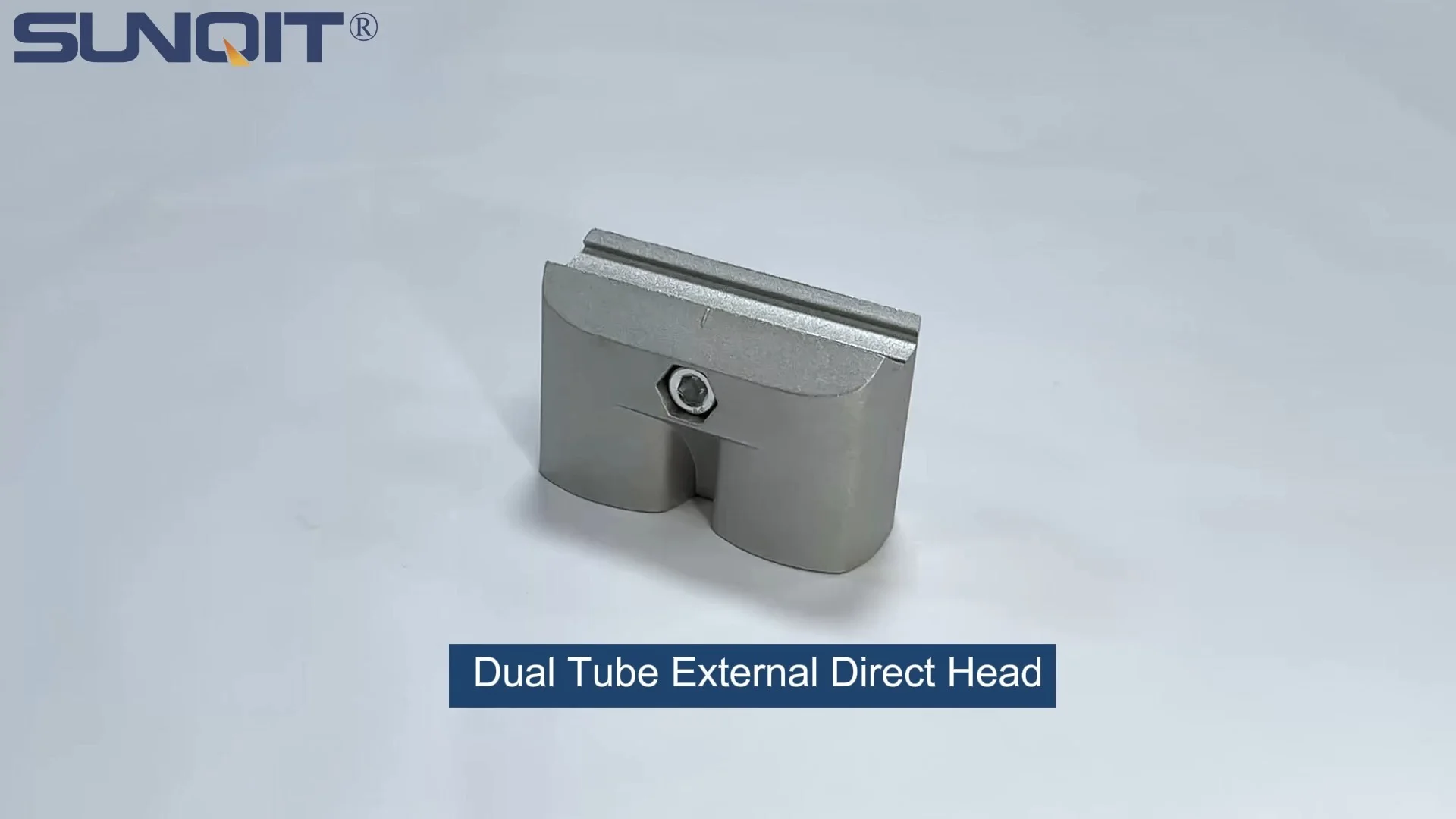
Duplex Aluminum Pipe Joint
Duplex Aluminum pipe joint used for one pcs 28pcs aluminum pipe and one pcs of 28mm duplex pipe connection in straight angle.
How a Simple Component is Transforming Flexibility in Modern Manufacturing
The Changing Face of Manufacturing: Why Flexibility Isn't Just a Buzzword Anymore
Walk into any manufacturing facility today, and you'll notice a quiet revolution unfolding. The days of static, one-size-fits-all production lines are fading fast, replaced by setups that can pivot, adapt, and reconfigure at a moment's notice. This shift isn't just about keeping up with trends—it's about survival. In an era where customer demands change overnight, product lifecycles shrink by the quarter, and global supply chains feel like a rollercoaster, rigidity is the enemy. Production managers, plant supervisors, and floor workers alike are asking the same question: How do we build lines that can keep up without breaking the bank?
The answer, it turns out, often lies in the smallest components. While flashy robotics and AI-driven systems grab headlines, the unsung heroes of flexible manufacturing are the humble connectors, joints, and pipes that hold everything together. Among these, one component has emerged as a linchpin for reconfigurable production: the duplex aluminum pipe joint. It's not glamorous, but for anyone who's ever stared at a bolted-down assembly line and wished it could "just move," this unassuming piece of hardware is a game-changer.
In this article, we'll dive into why the duplex aluminum pipe joint matters, how it works with other components like aluminum lean pipe and aluminum profile accessories, and why it's become a must-have for factories aiming to stay agile. We'll hear from production teams who've swapped rigid systems for flexible ones, and explore how choosing the right lean system supplier can make all the difference in turning a vision of adaptability into reality.
The Problem with Rigid Production Lines: Costs, Downtime, and Lost Opportunities
To understand the value of the duplex aluminum pipe joint, let's first talk about the problem it solves: rigid production lines. For decades, manufacturing facilities relied on fixed setups—steel pipes welded together, workbenches bolted to the floor, roller tracks cemented in place. These systems were built to last, and they did. But "last" isn't the same as "adapt."
Consider a scenario many production managers know too well: A customer orders a new product variant, slightly larger than the current model. Your assembly line, however, is built for the old size. The roller tracks are too narrow, the workbench height is off, and the material racks don't fit the new packaging. To adjust, you need to cut steel pipes, re-weld joints, drill new holes in concrete, and bring in contractors. The process takes days—if not weeks—and costs thousands in labor and downtime. By the time you're ready, the customer's window of opportunity has shrunk, and your team is burnt out from the rush.
Or take seasonal demand. A toy manufacturer might need to ramp up production for the holidays, requiring more workstations and wider material flow paths. With a rigid line, that means investing in entirely new equipment—only to tear it down in January when demand drops. The waste of resources is staggering. And let's not forget the human cost: Workers stuck in inefficient setups, struggling with cramped spaces or awkward workflows, leading to slower output and higher error rates.
These aren't just hypothetical problems. A 2023 survey by the Manufacturing Flexibility Institute found that 68% of plant managers cite "inability to reconfigure lines quickly" as a top barrier to meeting production goals. The average factory loses 12% of its annual capacity to downtime caused by line reconfigurations. For small and medium-sized enterprises (SMEs), this can be fatal. They don't have the budget for multiple fixed lines, so they're forced to choose between turning down orders or sinking profits into costly overhauls.

Meet the Duplex Aluminum Pipe Joint: A Solution Built for Adaptability
What Exactly Is a Duplex Aluminum Pipe Joint?
At its core, the duplex aluminum pipe joint is a connector designed to link aluminum lean pipes (hollow, lightweight aluminum tubes) into stable, yet easily reconfigurable structures. Unlike traditional welded steel joints or even basic plastic connectors, duplex joints are engineered for two key traits: strength and speed. They're called "duplex" because they often feature dual locking mechanisms—think of a combination of a friction fit and a quick-release lever or set screw—that let you assemble, disassemble, and reconfigure without tools (or with just a simple hex key).
Picture this: You need to adjust the height of a workbench. With a traditional steel joint, you'd need a wrench to loosen bolts, realign the pipes, and retighten—assuming the threads aren't stripped from previous adjustments. With a duplex aluminum joint? Flip the lever, slide the pipe to the new height, lock it back in, and you're done. Total time: 30 seconds. No sparks, no heavy tools, no frustration.
Materials Matter: Why Aluminum Lean Pipe and Duplex Joints Work Hand-in-Hand
The magic of the duplex joint isn't just in its design—it's in the material. Aluminum lean pipe, the partner in this system, is lightweight (about 1/3 the weight of steel), corrosion-resistant, and infinitely recyclable. When paired with a duplex joint made from high-grade aluminum alloy, the result is a system that's strong enough to support heavy loads (we're talking hundreds of pounds per linear foot) but light enough for a single worker to reposition.
Compare that to steel: A 10-foot steel pipe might weigh 40 pounds, making it impossible for one person to maneuver. Aluminum lean pipe of the same length? Just 13 pounds. That means your team can reconfigure a workstation or material rack without calling in a forklift or extra hands. It also reduces the risk of injury—no more strained backs from lifting heavy steel components.
Durability is another win. Aluminum naturally forms a protective oxide layer, so it won't rust, even in humid factory environments or areas with exposure to oils and coolants. Steel, by contrast, needs regular painting or coating to prevent corrosion, adding maintenance costs over time. For food, pharmaceutical, or electronics manufacturers—where cleanliness is critical—aluminum's resistance to rust and easy-to-clean surface is a game-changer. No more hiding rust spots or worrying about flaking paint contaminating products.
Design Features That Make a Difference
Duplex joints aren't one-size-fits-all, and that's intentional. A good lean system supplier will offer a range of duplex joint designs to fit different needs:
- Multi-angle rotation: Some duplex joints swivel 360 degrees, letting you create angled structures (like sloped roller tracks for gravity-fed material flow) without cutting pipes at odd angles.
- Load-bearing capacity: Heavy-duty duplex joints, reinforced with internal ribs, can support workbenches with power tools or material racks stacked with heavy components. Lighter versions are perfect for lightweight shelving or mobile trolleys.
- Compatibility with aluminum profile accessories: The best duplex joints play well with others. They can connect to aluminum profile accessories like brackets, clamps, and end caps, letting you add shelves, tool holders, or LED light strips to your structure without extra adapters.
- ESD-safe options: For electronics manufacturing, where static electricity can damage sensitive components, some duplex joints come with conductive coatings, ensuring the entire structure is grounded.

How It All Comes Together: Building Reconfigurable Systems with Duplex Joints
The true power of the duplex aluminum pipe joint shines when it's part of a larger ecosystem. Let's break down how it integrates with common factory components to create flexible production lines.
Workbenches: From Static to "Set It and Forget It—Until You Need to Change It"
Workbenches are the heart of any assembly line, and they're also one of the biggest pain points when reconfiguring. Traditional workbenches are heavy, fixed, and often custom-built for a single task. With duplex joints and aluminum lean pipe, workbenches become modular. Need a wider surface for a new product? Add an extension by sliding aluminum lean pipes into duplex joints and clamping on a new tabletop. Want to lower the height for seated work? Adjust the legs in minutes. Even accessories like tool hangers, monitor mounts, or ESD mats can be attached via compatible aluminum profile accessories—no drilling required.
Take the "Workbench E (single deck-without caster)" from many lean system suppliers' catalogs. It's a basic frame made with aluminum lean pipes and duplex joints. Out of the box, it's a standard workbench. But with a few tweaks—adding casters for mobility, extra shelves for storage, or a pegboard for tools—it transforms into exactly what your team needs that day. And when the next project comes along? Strip it down and rebuild it. No waste, no new purchases.
Roller Tracks: Keeping Materials Flowing, Even When Products Change
Material flow is the lifeblood of production, and roller tracks are the veins. Whether you're moving circuit boards through a PCB assembly line or boxes through a packaging station, roller tracks need to adapt to different product sizes, weights, and speeds. Here, duplex joints shine.
Imagine a roller track system for shipping boxes. One week, you're handling small, lightweight packages—you need narrow tracks with closely spaced rollers. The next week, a bulk order comes in for larger boxes—you need wider tracks and sturdier rollers. With traditional steel roller tracks, this would mean swapping out the entire system. With aluminum lean pipe and duplex joints? Loosen the joints holding the track supports, slide them apart to widen the track, swap in heavier-duty rollers (attached via roller track connectors), and lock everything down. Done in under an hour.
Even better, duplex joints work seamlessly with specialized components like plastic roller track guide rails (yellow or grey, depending on your color-coding system) or aluminum guide rails. These rails keep products centered on the track, preventing jams. And if you need to create a curved track? Flexible duplex joints can bend slightly, or you can use angled joints to create smooth arcs—no custom bending required.
Material Racks and Trolleys: Storage That Grows with Your Needs
Material storage is another area where rigidity hurts. A "Material Rack B (3 row and 3 floor)" might work for your current inventory, but what if you start stocking taller components? With duplex joints, you can adjust shelf heights in seconds. Need to add a fourth row? Just slot in another aluminum lean pipe and secure it with a duplex joint. Trolleys, too, become more versatile. Add casters (using caster accessories like castor installation bases) for mobile storage, or remove them to turn the trolley into a stationary rack. It's like having a storage system that can read your mind—and your inventory reports.

Real-World Impact: Stories from the Factory Floor
Numbers and specs tell part of the story, but nothing beats hearing from teams who've actually used duplex aluminum pipe joints to transform their operations. Let's look at two examples—one from a small electronics manufacturer and another from a medium-sized automotive parts supplier—to see the difference these joints can make.
Case Study 1: A 50-Person Electronics Plant Cuts Reconfiguration Time by 90%
PrecisionTech, a contract manufacturer of circuit boards in Ohio, was struggling with frequent product changes. Their clients ranged from medical device companies to consumer electronics brands, each with unique assembly requirements. Before switching to aluminum lean pipe and duplex joints, their production line reconfigurations took 2–3 days, involving welding, drilling, and multiple contractors. "We were turning down orders because we couldn't adjust fast enough," says Maria Gonzalez, Production Manager. "Or we'd take the order and lose money on overtime to meet deadlines."
In 2022, they partnered with a lean system supplier to rebuild their main assembly line using aluminum lean pipe, duplex joints, and aluminum profile accessories. The results were immediate. For their first big reconfiguration—a switch from a 6-inch to an 8-inch circuit board—Gonzalez's team expected it to take a full day. Instead, they finished in 2 hours. "The duplex joints were the star," she says. "Our lead technician, who's been with us 15 years, kept saying, 'This can't be right—it's too easy.' But it was right. We adjusted the workbench heights, widened the roller tracks, and repositioned the material racks—all with hand tools. No contractors, no downtime beyond a lunch break."
Since then, PrecisionTech has increased its order acceptance rate by 40% and reduced reconfiguration-related downtime by 90%. "We even use the system for prototyping," Gonzalez adds. "We'll build a small test line in a day, run a batch, tweak the setup, and run again. It's like having a mini factory within our factory."
Case Study 2: Automotive Supplier Eliminates 30% of Storage Waste with Modular Racks
AutoParts Inc., a supplier of brake components in Michigan, faced a different challenge: seasonal storage needs. In the summer, when car production peaks, they stockpiled raw materials (steel coils, plastic resins) in every available space. In the winter, those materials sat idle, and the racks took up valuable floor space needed for maintenance. "We had racks everywhere—permanent ones bolted to the floor, temporary ones that wobbled, and piles of pallets in the corner," recalls Tom Wilson, Warehouse Manager. "It was chaotic."
Their solution? Modular material racks built with aluminum lean pipe, duplex joints, and heavy-duty split foot seats (to anchor racks to the floor when needed). Today, in peak season, they assemble tall, multi-tiered racks (using "Material Rack B (3 row and 3 floor)" designs) to maximize vertical space. In slow season, they disassemble the extra racks, stack the aluminum lean pipes in a corner, and free up floor space for equipment repairs. "The duplex joints make disassembly as easy as assembly," Wilson says. "Two people can take apart a 10-foot rack in 20 minutes. And since the pipes are aluminum, they don't rust, so we don't have to worry about storing them in a dry area. We just lean them against the wall and they're ready for next summer."
The result? A 30% reduction in wasted storage space and a 50% drop in workplace accidents related to unstable temporary racks. "Our team used to hate peak season because of the clutter," Wilson adds. "Now, they actually look forward to it—they know the racks are safe, and they can adjust them to fit whatever materials come in that day."
Choosing the Right Lean System Supplier: It's About More Than Parts
You've decided to invest in a duplex aluminum pipe joint system—great! But where do you start? The market is flooded with suppliers, each claiming to offer "the best" components. The truth is, the right lean system supplier isn't just a parts vendor—they're a partner who understands your unique needs and can guide you to the right solution.
Here's what to look for:
- Product breadth: A good supplier should offer not just duplex joints and aluminum lean pipe, but the full ecosystem—aluminum profile accessories, roller tracks, casters, workbench components, and more. This ensures compatibility; you won't end up with a joint that doesn't fit a roller track connector from another brand.
- Customization support: While standard components work for most cases, every factory has quirks. A supplier with in-house engineering can help design custom solutions—like a specialized duplex joint for a unique workbench angle or a modified roller track for oversized products.
- Quality testing: Ask about material testing. The aluminum should be T6-grade (heat-treated for strength), and duplex joints should undergo fatigue testing (how many times they can be adjusted before wearing out). A reputable supplier will share test results openly.
- On-time delivery: There's nothing worse than halting a reconfiguration because a critical joint is on backorder. Look for suppliers with local warehouses or short lead times—ideally, 2–3 days for standard parts.
- Training and support: Even the easiest duplex joint takes some getting used to. A good supplier will offer training sessions (in-person or virtual) for your team, plus clear documentation and responsive customer service when questions arise.
Don't be afraid to ask for references. Talk to other factories in your industry who've worked with the supplier. Did the components hold up? Was the support team helpful? These insights are worth more than any sales pitch.
The Future of Manufacturing: Why Duplex Joints Are Just the Beginning
The duplex aluminum pipe joint is more than a tool for today's flexibility—it's a foundation for tomorrow's manufacturing. As factories move toward "lights-out" production (fully automated lines) and mass customization (producing small batches of unique products), the need for adaptable infrastructure will only grow.
Imagine a factory where production lines reconfigure themselves overnight, guided by AI that predicts demand. It sounds futuristic, but the building blocks are here: lightweight aluminum structures, smart sensors (attached via aluminum profile accessories), and—yes—duplex joints that can be adjusted remotely (someday soon, we might see motorized duplex joints controlled by a tablet). Even today, some suppliers are experimenting with "digital twin" software, where you can design your line in 3D, test configurations virtually, and then order the exact duplex joints and aluminum lean pipes needed to build it.
Sustainability is another driver. Aluminum is 100% recyclable, and duplex joints mean less waste—no more cutting steel pipes that end up in landfills when lines change. Factories using modular aluminum systems report a 25% reduction in material waste, aligning with global goals to reduce carbon footprints.
For workers, the future looks brighter, too. No more struggling with heavy steel components or toxic welding fumes. Duplex joints and aluminum lean pipe make lines safer, more ergonomic, and more empowering. When workers can adjust their own workstations to fit their bodies or their tasks, morale and productivity soar.
Conclusion: Flexibility Starts with the Right Connection
In the end, manufacturing is about connections—between machines, between workers, and between supply and demand. The duplex aluminum pipe joint is a physical manifestation of that idea: a connection that's strong enough to build on, yet flexible enough to change when needed. It's not just a part; it's a mindset shift—one that says, "We don't have to accept 'good enough' when 'adaptable' is possible."
Whether you're a small electronics plant fighting for market share or a large automotive supplier looking to cut waste, the message is clear: rigidity costs money, time, and opportunities. Flexibility, enabled by tools like the duplex aluminum pipe joint, aluminum lean pipe, and aluminum profile accessories, is the key to thriving in today's fast-paced manufacturing world.
So, the next time you walk through your factory, look at the joints holding your lines together. Are they keeping you stuck in the past, or propelling you toward the future? The answer might just be the difference between surviving and thriving.
| Feature | Traditional Steel Joints | Duplex Aluminum Pipe Joints |
|---|---|---|
| Installation Time | Hours (requires welding/drilling) | Minutes (tool-free or simple tools) |
| Reconfiguration Ease | Difficult (requires cutting/welding) | Easy (loosen, adjust, lock) |
| Weight | Heavy (hard to maneuver) | Lightweight (1/3 the weight of steel) |
| Durability | Prone to rust; threads strip easily | Corrosion-resistant; long-lasting |
| Cost Over Time | High (labor, downtime, replacement) | Low (reusable, minimal labor) |