- Company Articles
- Products and Technology
- Product knowledge
- Duplex Aluminum Pipe Joint: Supporting Agile Manufacturing Processes

Duplex Aluminum Pipe Joint: Supporting Agile Manufacturing Processes
Related Product
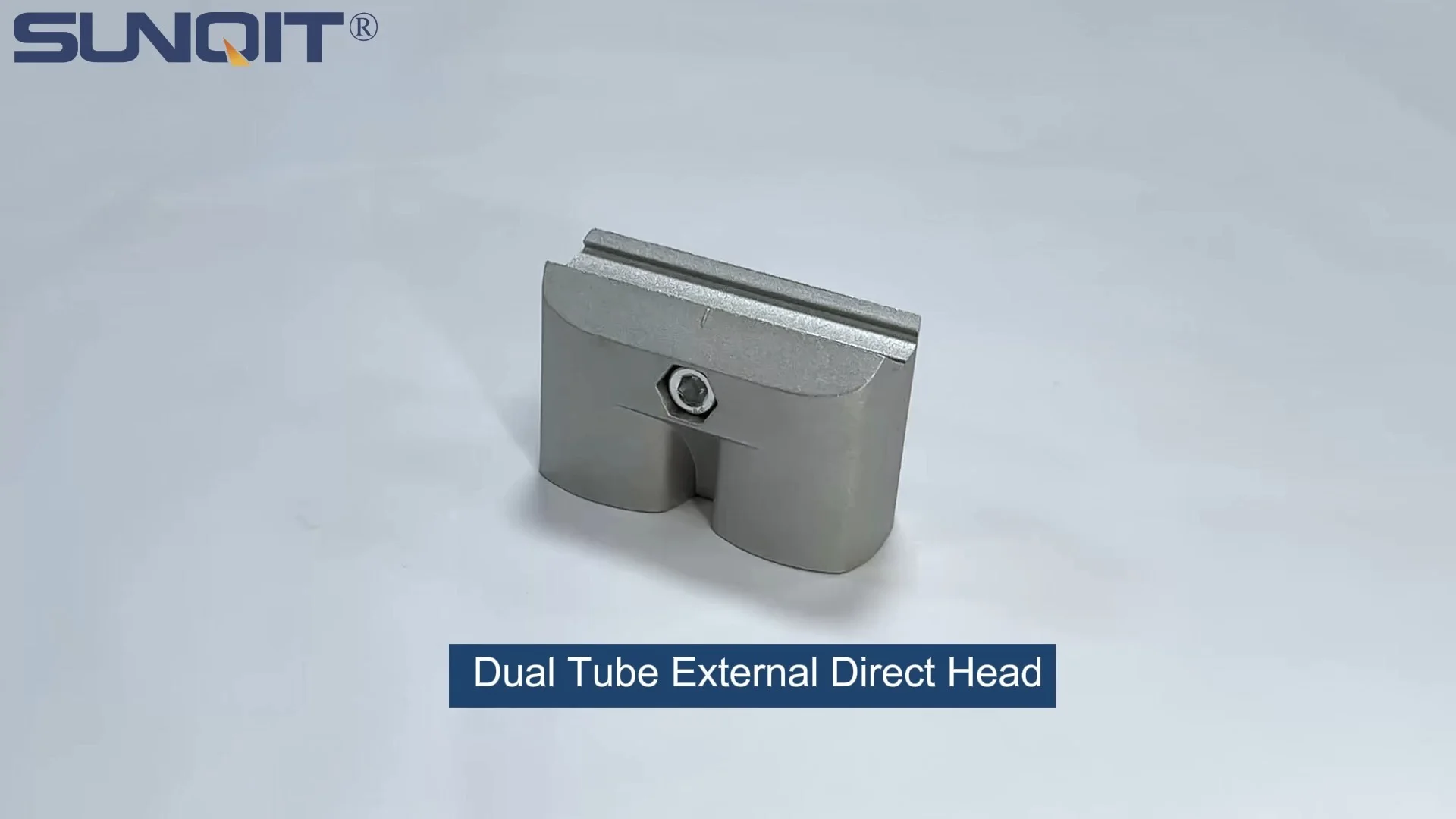
Duplex Aluminum Pipe Joint
Duplex Aluminum pipe joint used for one pcs 28pcs aluminum pipe and one pcs of 28mm duplex pipe connection in straight angle.
In the bustling heart of a modern manufacturing facility, Maria, a production supervisor, stares at the schedule with a mix of determination and frustration. Her team has just received a rush order for a new product line—one that requires a completely different assembly setup than the current smartphone components they're building. The problem? Their workbenches are welded steel, their material racks are bolted to the floor, and reconfiguring them would take weeks. "If we can't adapt faster," she mutters, "we'll lose this client."
Maria's dilemma isn't unique. Across industries, manufacturers are grappling with a new reality: customer demands for customization, shorter lead times, and rapid product (iteration) have made rigid, one-size-fits-all production setups obsolete. Enter agile manufacturing—a philosophy built on flexibility, adaptability, and speed. But agile manufacturing doesn't just happen; it requires infrastructure that can keep up. At the center of this shift lies a quiet hero: the duplex aluminum pipe joint . This unassuming component, paired with aluminum profiles and accessories, is revolutionizing how factories design, build, and reconfigure their workspaces. Let's explore how.
What is Agile Manufacturing, and Why Does Infrastructure Matter?
Agile manufacturing isn't just a buzzword—it's a survival strategy. In a market where 73% of consumers now expect personalized products (McKinsey, 2024), manufacturers can no longer rely on mass production lines that take months to retool. Agile manufacturing prioritizes four core principles: flexibility (adapting to changing demands), speed (reducing time-to-market), collaboration (breaking down silos between teams), and resilience (minimizing downtime from disruptions).
But here's the catch: Agile principles can't thrive in a rigid environment. Traditional manufacturing setups—think fixed steel workbenches, welded conveyor systems, and immovable material racks—are the antithesis of agility. They're built for stability, not change. To truly embrace agility, manufacturers need infrastructure that's as adaptable as their teams. This is where modular components like the duplex aluminum pipe joint come into play. By enabling quick, tool-free reconfiguration of workspaces, these joints turn static factories into dynamic ecosystems that can pivot at a moment's notice.
The Need for Flexible Infrastructure: Beyond "One and Done" Setups
Imagine a factory floor where every workbench, rack, and conveyor is a puzzle piece—one that can be rearranged, added to, or repurposed in hours, not weeks. That's the promise of flexible infrastructure. Unlike traditional systems, which are designed for a single product lifecycle, modular setups use interchangeable components to grow, shrink, or transform as needs evolve. Why does this matter?
- Reduced Downtime: When a new order arrives, reconfiguring a modular workspace takes hours (not weeks), slashing idle time between production runs.
- Cost Efficiency: Instead of buying new equipment for each product line, teams repurpose existing components, cutting capital expenses by up to 30% (Lean Manufacturing Institute, 2023).
- Employee Empowerment: Frontline workers—who know their workflows best—can tweak setups without waiting for engineering teams, boosting morale and productivity.
At the heart of this flexibility is the duplex aluminum pipe joint . More than just a connector, it's the linchpin that turns aluminum profiles, pipes, and accessories into a versatile toolkit for building agile workspaces. Let's take a closer look at what makes this joint so critical.

What is a Duplex Aluminum Pipe Joint?
Picture this: a small, lightweight connector made from high-grade aluminum alloy, designed to join two aluminum pipes or profiles with precision. That's the duplex aluminum pipe joint. But its simplicity belies its power. Unlike traditional steel joints (which require welding) or plastic connectors (which lack durability), duplex joints are engineered for modularity and versatility . The "duplex" in its name refers to its dual functionality: it can both rigidly fix components in place and allow for rotational or adjustable movement, depending on the application.
Let's break down its key attributes:
Material: Aluminum's Winning Traits
Aluminum isn't chosen by accident. It's lightweight (30% the weight of steel), making it easy for teams to handle and reposition without heavy machinery. It's also naturally corrosion-resistant, thanks to a protective oxide layer, which means it holds up in dusty, humid, or even slightly chemical-exposed factory environments. And despite its lightness, aluminum alloys (like the 6063 grade used in most industrial joints) offer impressive tensile strength—enough to support heavy loads on workbenches or material racks.
Design: Built for Quick Assembly
Duplex joints are designed for "tool-free" or "minimal-tool" assembly. Most feature a simple (twist) or clamp mechanism: align the pipes, insert the joint, tighten a lever or bolt with a hex key, and you're done. No welding torches, no drilling, no waiting for adhesives to dry. A single worker can assemble a basic workbench frame in under 15 minutes—compared to hours for a welded steel equivalent.
Reusability: The "Zero Waste" Advantage
Unlike welded joints, which are permanent, duplex aluminum pipe joints are fully (detachable). When a workspace needs to be reconfigured, the joint is loosened, the pipes are disassembled, and both components are reused elsewhere. This not only reduces waste but also extends the lifecycle of factory equipment—critical for sustainability goals.

Key Features of Duplex Aluminum Pipe Joints
To understand why duplex joints are indispensable for agile manufacturing, let's dive into their standout features:
1. Compatibility with Standard Aluminum Profiles
Duplex joints are designed to work seamlessly with standard aluminum profiles—think T-slot aluminum extrusion profiles, basic aluminum tubes, and aluminum pipe accessories. This standardization means manufacturers don't need custom parts; they can mix and match components from different suppliers, ensuring flexibility in sourcing.
2. Load-Bearing Capacity
Don't let their size fool you: duplex joints can handle serious weight. A single joint, paired with 20mm diameter aluminum pipe, can support up to 150kg of static load (e.g., a fully loaded workbench top). For heavier applications (like material racks), multiple joints distribute weight evenly, making them suitable for everything from small tool holders to large-scale assembly lines.
3. Precision Adjustability
Many duplex joints feature incremental adjustment settings. For example, a joint used in a workbench leg might allow height tweaks in 5mm increments, ensuring the surface is perfectly level—even on uneven factory floors. This precision is critical for tasks like electronics assembly, where misaligned workbenches can lead to errors.
4. Low Maintenance
Aluminum's corrosion resistance means duplex joints rarely rust or degrade. A quick wipe with a damp cloth removes dust and debris, and if a joint loosens over time, a simple tighten with a hex key is all it takes to restore its grip. No lubrication, no painting, no replacement parts—just reliable performance, day in and day out.

Integration with Aluminum Profiles and Accessories
A duplex aluminum pipe joint is only as useful as the ecosystem it connects. Fortunately, it plays well with a range of aluminum profile accessories, turning basic pipes into fully functional workspaces. Let's walk through a real-world example: building an agile workbench.
Step 1: The Frame – Aluminum Profiles + Duplex Joints
Start with four aluminum profiles (e.g., 40x40mm T-slot aluminum extrusion profiles) as legs. Use duplex joints to connect horizontal crossbars at the top and bottom, forming a sturdy rectangular frame. Want adjustable height? Swap fixed duplex joints for rotating ones, allowing legs to extend or retract as needed.
Step 2: The Worktop – Adding Stability
Secure a plywood or aluminum honeycomb panel to the top crossbars using aluminum profile fixings (another key accessory). The T-slot design of the profiles lets you slide bolts into place, no drilling required. Need to add a shelf halfway up? Attach two more crossbars with duplex joints—done in 10 minutes.
Step 3: Mobility – Casters for Flexibility
To make the workbench mobile, add caster wheels (from the caster and accessories lineup) to the bottom legs. Duplex joints easily accommodate caster mounts, turning a stationary bench into a trolley that can be rolled to different assembly stations. Lock the casters when stability is needed, unlock them to reposition—simple.
Step 4: Tool Integration – Accessories for Productivity
Hang tool holders, LED lights, or small bins from the T-slot profiles using aluminum profile accessories like brackets or hooks. Since the duplex joints allow for easy repositioning, workers can arrange tools exactly where they need them—reducing reach time and errors.
The result? A workbench that's customizable (height, shelves, mobility), reusable (reconfigure for new tasks), and employee-designed (teams tweak setups to fit their workflows). This isn't just a workbench—it's an agile workspace.
Applications: Where Duplex Joints Shine in Manufacturing
Duplex aluminum pipe joints aren't limited to workbenches. Their versatility makes them ideal for a range of manufacturing setups. Let's explore three key applications:
1. Flow Racks: Streamlining Material Handling
Flow racks—used to move materials from storage to assembly lines—rely on smooth, gravity-fed movement. By combining duplex joints with aluminum guide rails and roller tracks (e.g., plastic roller track guide rail yellow or aluminum guide rail A), teams can build custom flow racks in hours. For example, a 3-row, 3-floor material rack (like "Material Rack B" from supplier catalogs) can be assembled by connecting aluminum profiles with duplex joints, then adding roller tracks to each shelf. When product sizes change, adjust the shelf height by repositioning the joints—no need for new racks.
2. Turnover Trolleys: Moving Materials with Ease
Turnover trolleys (used to transport parts between stations) need to be lightweight yet sturdy. Duplex joints excel here: connect aluminum pipes into a frame, add a mesh or panel base, and attach caster wheels. The result is a trolley that's easy to push (thanks to aluminum's light weight) and durable enough to carry heavy components. When not in use, disassemble it to save space—duplex joints make breakdown quick and tool-free.
3. Assembly Lines: Modular Conveyor Systems
Even conveyor systems can benefit from duplex joints. By linking aluminum profiles with roller tracks (e.g., 40 steel roller track with yellow wheels) and duplex connectors, teams can build modular conveyor sections. Need to extend the line? Add another section with a few joints. Need to change the angle? Use 45° or 135° aluminum pipe joints to create curves. This modularity is a game-changer for factories with frequent product changes.
Benefits of Duplex Aluminum Pipe Joints for Agile Manufacturing
It's one thing to describe how duplex joints work; it's another to quantify their impact. Let's look at the tangible benefits they bring to agile manufacturing:
1. Faster Time-to-Market
When a new product line requires a workspace overhaul, traditional setups take 2–4 weeks. With duplex joints and aluminum profiles, that timeline drops to 1–2 days. For example, a medical device manufacturer in Ohio reported cutting setup time for a new catheter assembly line from 3 weeks to 1 day using modular infrastructure (Case Study: Agile Manufacturing Review, 2024).
2. Cost Savings
By reusing components, manufacturers reduce spending on new equipment. A mid-sized electronics factory in China saved $120,000 in one year by repurposing workbenches and racks via duplex joints instead of buying new ones (Lean Enterprise Institute, 2023). Additionally, aluminum's light weight lowers shipping and handling costs for accessories and pre-assembled components.
3. Sustainability
Aluminum is 100% recyclable, and duplex joints' reusability cuts down on waste. A study by the Aluminum Association found that modular aluminum systems reduce manufacturing waste by up to 40% compared to disposable plastic or welded steel setups. For companies aiming for net-zero goals, this is a significant win.
4. Scalability
As production volumes grow, duplex joints make scaling easy. Need to add 5 more workbenches? Order extra aluminum profiles and joints, and assemble them in a day. No need to redesign layouts or wait for custom fabrication—simply expand the existing modular system.
How Duplex Joints Compare to Other Connector Systems
To truly appreciate duplex aluminum pipe joints, it helps to see how they stack up against traditional connectors. Below is a comparison table of three common options:
| Feature | Duplex Aluminum Pipe Joint | Traditional Steel Welded Joint | Plastic Connector |
|---|---|---|---|
| Assembly Time | 5–10 minutes (hand tools only) | 1–2 hours (requires welding equipment) | 10–15 minutes (hand tools) |
| Reconfigurability | High (easily disassembled/reused) | None (permanent welds) | Medium (can crack with repeated use) |
| Weight | Light (30% of steel) | Heavy (requires machinery for movement) | Light (but less durable) |
| Durability | High (corrosion-resistant, 10+ year lifespan) | High (but prone to rust without coating) | Low (degrades in UV light/heavy loads) |
| Cost (Lifetime) | Medium (higher upfront, lower long-term via reuse) | High (expensive to fabricate; no reuse) | Low (cheap upfront, but frequent replacement) |
Clearly, duplex aluminum pipe joints strike a balance between speed, durability, and cost—making them the top choice for agile manufacturing.
Case Study: How a Furniture Manufacturer Embraced Duplex Joints
Let's step into the shoes of GreenWood Furniture, a mid-sized manufacturer of custom office chairs. In 2022, their production line was struggling: each chair model required a unique assembly setup, and reconfiguring their fixed steel workbenches took 2 weeks per model change. Lead times ballooned to 6 weeks, and customer complaints piled up.
GreenWood's solution? They switched to a modular system built around duplex aluminum pipe joints, aluminum profiles, and accessories. Here's what happened:
- Setup Time Plummeted: Reconfiguring a workbench for a new chair model now takes 2 hours (not 2 weeks). "We used to lose a full week of production between model changes," says operations manager Raj. "Now, we switch setups over a lunch break."
- Employee Engagement Soared: Assembly line workers, who knew the workflows best, began suggesting tweaks to workbench layouts. "One team added adjustable shelves to hold smaller parts at eye level—errors dropped by 15%," Raj notes.
- Costs Fell: By reusing components, GreenWood cut new equipment spending by $80,000 in the first year. They also reduced waste, aligning with their sustainability goals.
Today, GreenWood's lead times are down to 2 weeks, and they've expanded their product line by 40%—all because they built an agile infrastructure around duplex aluminum pipe joints.
Choosing the Right Duplex Aluminum Pipe Joint: Key Considerations
Not all duplex aluminum pipe joints are created equal. To maximize agility, manufacturers should keep these factors in mind when selecting joints and accessories:
1. Material Quality
Opt for joints made from high-grade aluminum alloy (e.g., 6061 or 6063), which offers the best balance of strength and corrosion resistance. Avoid low-quality aluminum, which may bend or crack under load.
2. Compatibility
Ensure the joint fits standard aluminum profile sizes (e.g., 20x20mm, 40x40mm) and accessories (casters, roller tracks, etc.). A good supplier will provide compatibility charts to avoid mismatched parts.
3. Load Rating
Check the joint's load capacity (usually listed in kg). For workbenches or material racks, choose joints rated for 150kg+ to ensure safety and durability.
4. Supplier Support
Partner with a supplier that offers technical support, assembly guides, and replacement parts. A responsive supplier can help troubleshoot setup issues and suggest optimizations.
The Future of Agile Manufacturing: Duplex Joints and Beyond
As manufacturing evolves, so too will the tools that support it. Duplex aluminum pipe joints are already evolving—new designs integrate IoT sensors (to track usage or detect wear) and quick-release mechanisms (for even faster reconfiguration). Meanwhile, aluminum profile accessories are becoming smarter: think roller tracks with built-in sensors to monitor material flow, or casters with brakes that lock automatically when a workbench is in use.
But perhaps the biggest trend is the rise of "agile ecosystems"—factories where every component, from workbenches to conveyor systems, is modular and interconnected. In this vision, a single duplex joint isn't just a connector; it's part of a network that adapts to real-time demand, employee feedback, and market shifts.
Conclusion: Building the Factories of Tomorrow, Today
Agile manufacturing isn't a distant goal—it's here, and it's reshaping how products are made. At its core is infrastructure that can keep up with change, and the duplex aluminum pipe joint is leading the charge. By combining lightweight aluminum, modular design, and compatibility with aluminum profiles and accessories, this unassuming connector empowers manufacturers to build workspaces that are fast, flexible, and future-ready.
For Maria (the production supervisor we met earlier), the solution is clear. After installing duplex joint-based workbenches, her team reconfigured their assembly line in 4 hours, shipped the rush order on time, and retained the client. "We're not just building products anymore," she says. "We're building a factory that can grow with us."
The message is simple: In a world that demands agility, the right tools matter. And when it comes to flexible infrastructure, the duplex aluminum pipe joint isn't just a tool—it's a game-changer.