- Company Articles
- Products and Technology
- Product knowledge
- Duplex Aluminum Pipe Joint: Supporting Sustainable Manufacturing Goals

Duplex Aluminum Pipe Joint: Supporting Sustainable Manufacturing Goals
Related Product
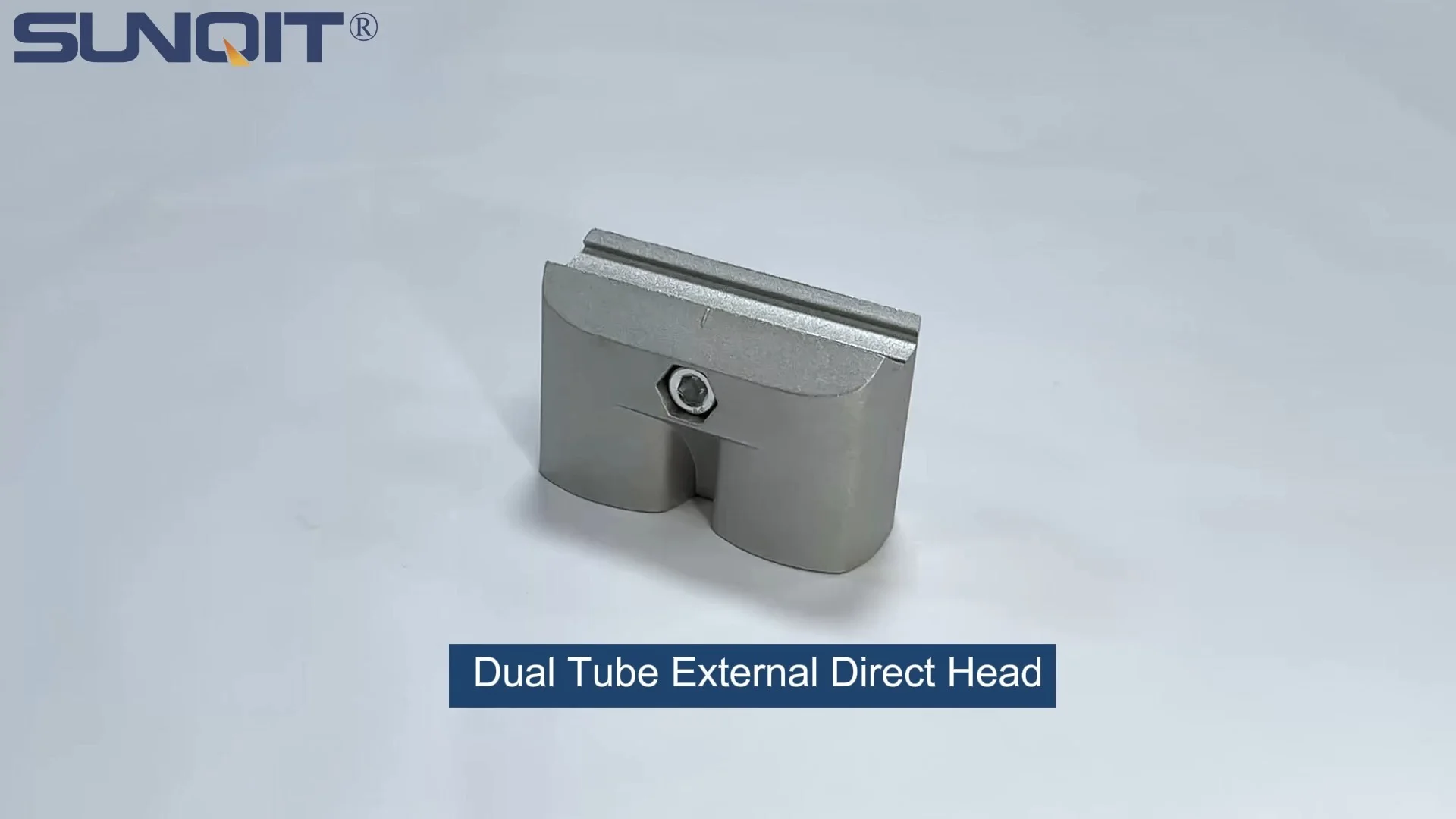
Duplex Aluminum Pipe Joint
Duplex Aluminum pipe joint used for one pcs 28pcs aluminum pipe and one pcs of 28mm duplex pipe connection in straight angle.
The Manufacturing Crossroads: Sustainability Meets Efficiency
Walk into any modern factory, and you'll sense the quiet hum of a sector at a crossroads. On one hand, there's the pressure to produce more, faster, and at lower costs—a demand that's only intensified in a global market where competition never sleeps. On the other hand, there's a growing urgency to do better: to reduce waste, cut carbon footprints, and build systems that don't just serve today's bottom line but protect tomorrow's planet. For manufacturers, this isn't just a choice between profit and purpose; it's a balancing act that requires tools and solutions designed to excel on both fronts.
Enter the duplex aluminum pipe joint—a small but mighty component that's quietly revolutionizing how factories operate. At first glance, it might seem like just another piece of hardware, but dig deeper, and you'll find a product engineered to address two of manufacturing's biggest challenges: flexibility and sustainability. In a world where lean principles and green goals are no longer optional, the duplex aluminum pipe joint isn't just an accessory; it's a cornerstone of a smarter, more responsible way to build and operate production lines.
This article isn't about selling you a part. It's about exploring how the right tools can transform your workspace from a static, resource-heavy operation into a dynamic, eco-friendly hub that adapts to change, reduces waste, and supports your team's best work. We'll dive into what makes duplex aluminum pipe joints unique, how they integrate with lean systems, and why they're becoming a go-to choice for manufacturers committed to sustainability. Whether you're running a small workshop or a large-scale production facility, the lessons here apply—because sustainability, after all, is a journey every manufacturer is on, regardless of size.
What Is a Duplex Aluminum Pipe Joint? Breaking Down the Basics
Let's start with the basics: What exactly is a duplex aluminum pipe joint, and how does it differ from the joints you might already be using? To put it simply, it's a connector designed to link aluminum lean pipes—those lightweight, durable tubes that form the backbone of everything from workbenches to material racks—in a way that's both strong and supremely flexible. But the "duplex" in its name hints at a dual nature: it's built to handle two critical demands simultaneously: structural integrity and adaptability.
Traditional pipe joints, whether made of plastic or stainless steel, often force a trade-off. Plastic joints are cheap and easy to adjust but lack the strength to support heavy loads over time, leading to frequent replacements and waste. Stainless steel joints are tough but heavy, expensive, and rigid—once you build a structure with them, reconfiguring it means starting from scratch. Duplex aluminum pipe joints, by contrast, are engineered to avoid this compromise. They're crafted from high-grade aluminum alloy, which brings together the best of both worlds: the lightness of plastic, the durability of steel, and the added bonus of being 100% recyclable.
But what really sets them apart is their design. Many duplex joints feature internal rotatory mechanisms (think "internal rotatary aluminum joint" from the keyword list), which allow pipes to pivot and lock into place at multiple angles without losing stability. This isn't just about convenience—it's about reducing waste. In a factory where production lines change with new product launches or shifting demand, being able to disassemble a workbench and reassemble it as a material rack in an hour, rather than buying a new one, cuts down on both cost and clutter. And because aluminum is naturally resistant to corrosion and wear, these joints don't degrade quickly, meaning fewer replacements and less material ending up in landfills.
Let's get a bit technical, but in a way that matters for your day-to-day. The aluminum used in these joints is often an extrusion profile (another keyword: "aluminum extrusion profile"), which is formed by pushing molten metal through a die to create consistent, precision-engineered shapes. This process minimizes material waste compared to casting or machining, as it uses only the exact amount of aluminum needed for the joint's structure. Add to that the fact that aluminum can be recycled repeatedly without losing quality—unlike plastic, which degrades with each reuse—and you've got a component that's sustainable from production to disposal.

Sustainability by Design: How Duplex Joints Reduce Environmental Impact
Sustainability in manufacturing isn't just about using "green" materials—it's about rethinking every step of the process to minimize waste, energy use, and carbon emissions. Duplex aluminum pipe joints excel here because sustainability is baked into their DNA, not tacked on as an afterthought. Let's break down how they contribute to a greener operation, one joint at a time.
1. Material Efficiency: Less Waste, More Value
Aluminum, as a raw material, is a sustainability standout. It's the most abundant metal in the Earth's crust, but more importantly, recycling it requires just 5% of the energy needed to produce new aluminum from ore. That's a staggering 95% energy savings—and when you multiply that by the thousands of joints in a typical factory, the impact adds up fast. Compare that to plastic lean pipe joints, which are often made from non-recyclable or hard-to-recycle plastics (like PVC) that end up in landfills after a short lifespan. Stainless steel, while recyclable, requires far more energy to melt down and reuse than aluminum, making it a less eco-friendly choice overall.
But the efficiency doesn't stop at the material itself. The extrusion process used to make aluminum profile accessories (including duplex joints) is inherently low-waste. Unlike machining, which cuts away excess material to shape a part, extrusion shapes metal by forcing it through a die, so there's almost no scrap. Any leftover aluminum from production can be melted down and reused immediately, creating a closed-loop system that minimizes waste from the start.
2. Longevity: Reducing the "replace and Discard" Cycle
One of the biggest hidden costs of manufacturing—both financial and environmental—is the "replace and discard" cycle. A plastic workbench joint might last a year before cracking under heavy tools; a stainless steel joint might rust in a humid factory environment after a few years. Each replacement means buying new parts, disposing of old ones, and using energy to transport and install them. Duplex aluminum pipe joints, thanks to their corrosion-resistant aluminum alloy and robust design, can last a decade or more with minimal maintenance. That's a 10x reduction in the number of joints you'll need to replace over time, which translates to less waste, lower shipping emissions, and fewer resources consumed in production.
Consider a scenario: A electronics manufacturer uses plastic joints for their assembly line workbenches. Every 18 months, 20% of the joints crack, requiring replacement. Over 10 years, that's roughly 111 joints replaced (assuming 100 initial joints). With duplex aluminum joints, they might replace 5 joints in the same period due to accidental damage—not wear. The difference? 106 fewer joints in landfills, and hundreds of kilograms of plastic (or steel) not produced, shipped, or disposed of.
3. Energy Savings in Daily Operations
Aluminum's light weight isn't just a convenience for assembly teams—it also saves energy in day-to-day operations. A workbench built with aluminum lean pipes and duplex joints weighs up to 40% less than the same structure made with stainless steel. That means less effort for workers to move or reconfigure (reducing fatigue and injury risk), but also lower energy use when the structure is moved with machinery like forklifts. Even something as simple as a turnover trolley with aluminum frames requires less fuel to transport materials across the factory floor, adding up to significant energy savings over time.
And because duplex joints make reconfiguration so easy, factories can adapt to changing needs without shutting down production for days. For example, if a new product requires a wider workbench, instead of building a new one from scratch (which uses new materials and energy), the team can disassemble the existing bench, adjust the joints, and rebuild it in an hour. Less downtime means more productivity, but also less energy wasted on idle machinery and redundant production of new equipment.

Duplex Joints and Lean Systems: A Match Made for Efficiency
Sustainability and lean manufacturing go hand in hand. Lean principles—like reducing waste, optimizing workflows, and continuous improvement—are all about doing more with less, which aligns perfectly with the goal of minimizing environmental impact. Duplex aluminum pipe joints aren't just sustainable; they're lean by design. They integrate seamlessly with lean systems to create workspaces that adapt to your team's needs, eliminate bottlenecks, and cut down on the "seven wastes" that plague traditional manufacturing (overproduction, waiting, transportation, overprocessing, inventory, motion, and defects).
Flexibility: The Cornerstone of Lean Adaptability
Lean manufacturing thrives on flexibility. A production line that can pivot quickly to meet changing demand, reduce batch sizes, or accommodate new product designs is a line that wastes less time and materials. Duplex aluminum pipe joints enable this flexibility in ways few other components can. Let's take a common example: a workbench. A standard workbench built with fixed wooden or steel frames is static—if your team needs more space for a new tool, or wants to rearrange the layout to reduce motion waste (workers walking back and forth), you're out of luck. You either live with inefficiency or build a new bench.
With duplex joints, though, a workbench (like "workbench e (single deck-without caster)" from the keyword list) becomes a modular system. Need to add a shelf? Slide a new aluminum pipe into the joint, lock it, and you're done. Want to shorten the bench to fit a new machine? Unlock the joints, remove a section, and reattach—no saws, no screws, no mess. This isn't just about saving time; it's about eliminating the waste of overproduction (building a new bench when the old one can be adapted) and inventory (storing extra benches "just in case").
Flow Racks and Conveyors: Smoothing Material Movement
Material flow is another area where lean and sustainability intersect. A disorganized material rack or a janky conveyor system leads to waiting (workers standing idle for parts), transportation waste (carrying materials long distances), and defects (parts damaged in transit). Duplex aluminum pipe joints, paired with roller tracks and accessories (like "roller track placon mount for aluminum profile flat" or "swivel roller balls 1 inch"), make it easy to build custom flow racks and conveyors that keep materials moving smoothly to where they're needed.
Imagine a automotive parts factory where components used to sit in static bins, requiring workers to walk 50 feet to retrieve them. By using duplex joints to build a flow rack (e.g., "material rack b (3 row and 3 floor)"), they can gravity-feed parts directly to the assembly line. The rack is angled slightly, with roller tracks (keyword: "roller track") that let bins glide forward as the front one is emptied. No more walking, no more waiting, and fewer dropped parts. And if the assembly line moves or the parts change size? The rack can be reconfigured with new angles and roller tracks in an afternoon, using the same duplex joints and aluminum pipes.
Reducing Motion Waste: Ergonomics and Efficiency
Motion waste—workers bending, reaching, or twisting unnecessarily—is a silent productivity killer and a common source of workplace injuries. Duplex joints help solve this by making it easy to adjust workspaces to fit human ergonomics, not the other way around. For example, a workbench height that's too low forces workers to hunch; too high, and they strain their shoulders. With duplex joints, you can raise or lower the bench legs in minutes by adjusting the pipe lengths and relocking the joints. Add casters ("flat adjustable swivel castor wheel") to make the bench mobile, and workers can position it exactly where they need it, reducing the steps they take each day.
This isn't just about comfort—it's about efficiency. A study by the Occupational Safety and Health Administration (OSHA) found that ergonomic workspaces reduce fatigue by up to 30%, which translates to faster, more accurate work and fewer defects. Fewer defects mean less scrap, less rework, and fewer resources wasted on fixing mistakes. And when workers are comfortable, they're more engaged—leading to continuous improvement suggestions that further reduce waste. It's a cycle where sustainability and productivity feed each other, all enabled by the flexibility of duplex aluminum pipe joints.

A Closer Look: Duplex Joints vs. Traditional Joints (The Numbers Speak)
To really understand the impact of duplex aluminum pipe joints, it helps to see them side by side with the alternatives. Below is a comparison table breaking down key factors like sustainability, durability, flexibility, and cost—both upfront and long-term. This isn't just about specs; it's about showing how each choice affects your factory's efficiency, your team's workflow, and your environmental footprint.
| Feature | Duplex Aluminum Pipe Joint | Plastic Lean Pipe Joint | Stainless Steel Joint |
|---|---|---|---|
| Material | Recyclable aluminum alloy | Non-recyclable/limited-recycle plastic (PVC/PP) | Recyclable stainless steel |
| Energy to Produce (per kg) | ~5 kWh (recycled aluminum) | ~3 kWh (but requires frequent replacement) | ~7 kWh (recycled stainless steel) |
| Expected Lifespan | 10–15 years | 1–2 years | 7–10 years (if corrosion-free) |
| Weight (per joint) | ~150g | ~80g | ~300g |
| Flexibility (Reconfigurations) | Unlimited (adjustable angles, reusable) | Limited (plastic fatigues after 2–3 reconfigurations) | None (welded or fixed; requires cutting to reconfigure) |
| Corrosion Resistance | High (aluminum oxide layer prevents rust) | High (but degrades in sunlight/chemicals) | High (but heavier and costlier) |
| Upfront Cost (per joint) | $8–$12 | $2–$4 | $15–$20 |
| 10-Year Total Cost (100 joints) | ~$1,000 (initial) + $50 (replacements) = $1,050 | ~$400 (initial) + $2,200 (5 replacements) = $2,600 | ~$2,000 (initial) + $600 (1.5 replacements) = $2,600 |
| Waste Generated (10 years) | 5 joints (recyclable aluminum) | 500 joints (non-recyclable plastic) | 15 joints (recyclable steel, high energy to process) |
The table tells a clear story: while plastic joints have the lowest upfront cost, their short lifespan and high replacement rate make them the most expensive and wasteful choice over time. Stainless steel joints are durable but rigid and heavy, with a total cost on par with plastic when you factor in replacements and energy use. Duplex aluminum joints, meanwhile, offer the best balance of sustainability, durability, and cost-effectiveness—saving you money and reducing waste while keeping your workspace flexible.
Real-World Applications: How Factories Are Using Duplex Joints Today
Theory is one thing, but seeing how duplex aluminum pipe joints work in real factories brings their impact to life. Let's explore three scenarios—from a small electronics workshop to a large automotive plant—to see how these joints are solving everyday problems and driving sustainability goals.
Case Study 1: A Small Electronics Assembly Workshop
A family-owned electronics workshop in California specializes in repairing and custom-building circuit boards. Their biggest challenge? Limited space and frequent changes in the types of boards they handle—from small smartphone components to larger industrial panels. For years, they used wooden workbenches and plastic storage bins, which cluttered the shop and made it hard to adapt to new projects. When a new client required a dedicated assembly line for medical device boards, they knew they needed a better system.
They turned to aluminum lean pipes and duplex joints. In a weekend, they built two modular workbenches ("workbench e (single deck-without caster)") with adjustable shelves and integrated roller tracks ("plastic roller track guide rail yellow") for moving circuit boards between stations. The duplex joints let them adjust the height of the benches to match each technician's ergonomic needs, reducing strain and errors. When the medical device project ended three months later, they disassembled one workbench and rebuilt it as a material rack ("material rack b (3 row and 3 floor)") for storing spare parts—no new materials needed, just reconfigured pipes and joints.
The result? A 40% reduction in workspace clutter, a 25% decrease in assembly time (thanks to better flow), and zero waste from discarded furniture. The owner estimates they saved $2,000 in new workbench costs alone, not to mention the time saved on setup and reconfiguration.
Case Study 2: A Mid-Size Food Packaging Plant
A food packaging plant in Texas was struggling with two issues: high employee turnover due to repetitive strain injuries (from lifting heavy boxes) and a growing pressure from clients to reduce their carbon footprint. Their existing stainless steel conveyor system was fixed in place, so workers had to carry boxes to and from the line, leading to fatigue and injuries. Additionally, the steel system was rusting in the humid environment, requiring costly replacements every few years.
They replaced the steel conveyors with aluminum roller tracks ("38 aluminum roller track yellow with side guide") and duplex joints. The new system was lighter, so it could be extended or shortened as production needs changed, and the aluminum's corrosion resistance meant it wouldn't rust. They added casters ("360° swivel expanding stem casters wheel with brake") to the conveyor frames, making them mobile—now, instead of workers carrying boxes, the conveyor could be wheeled directly to the packing stations.
The impact was immediate: Workers reported 50% less fatigue, and injury claims dropped by 70%. The plant also reduced its carbon footprint by 15% in the first year, thanks to fewer steel replacements and lower energy use from lighter, mobile conveyors. Clients noticed too—several larger retailers now prioritize the plant for orders due to its sustainability efforts.
Case Study 3: A Large Automotive Parts Manufacturer
A major automotive parts manufacturer with a 500,000-square-foot facility was facing a classic lean challenge: their production lines were built for mass production, but market demand was shifting to smaller batches and custom parts. Their fixed steel workstations and material racks couldn't keep up, leading to overproduction (making extra parts to justify setup time) and inventory waste (storing unused parts).
They embarked on a, replacing steel structures with aluminum lean pipe systems using duplex joints. Over six months, they converted 80% of their workbenches, flow racks, and turnover trolleys to modular aluminum setups. One key change was switching to "workbench e" models with adjustable heights and roller tracks, paired with "turnover trolley and rack" units that could be reconfigured in minutes for different part sizes. The duplex joints' internal rotatory mechanisms allowed workers to adjust angles on the fly—for example, tilting a workbench surface to reduce glare on precision parts, or angling a flow rack to speed up material delivery.
The results were staggering: Overproduction dropped by 35%, inventory holding costs fell by 20%, and changeover time between product runs decreased from 4 hours to 45 minutes. The plant also reduced waste by recycling all their old steel structures (which offset the cost of the new aluminum system) and cut energy use by 12% due to lighter equipment and more efficient workflows. Perhaps most importantly, employee engagement scores rose—workers felt empowered to adjust their workspaces to be more efficient, leading to a 15% increase in productivity.
Addressing Common Concerns: Why Duplex Joints Are Worth the Investment
If duplex aluminum pipe joints are so great, why isn't every factory using them? We've talked to manufacturers who hesitate to make the switch, often due to common misconceptions. Let's address these concerns head-on, so you can make an informed decision for your facility.
"Aluminum isn't strong enough for heavy loads."
This is a holdover from the days of flimsy aluminum cans. Modern aluminum alloys, especially those used in extrusion profiles for industrial applications, are surprisingly strong. A duplex aluminum joint paired with a 2.0mm thick aluminum lean pipe can support up to 200kg per linear meter—more than enough for most factory workbenches, material racks, or conveyors. For extreme loads, you can use thicker pipes or add support brackets (like "roller track placon mount center support bracket")—the modular design makes it easy to reinforce where needed. In fact, many automotive plants now use aluminum structures for heavy parts like engine blocks, trusting aluminum's strength to keep workers safe.
"The upfront cost is too high compared to plastic."
It's true: a duplex aluminum joint costs 2–3x more upfront than a plastic one. But as the earlier comparison table showed, plastic joints end up costing more over time due to replacements. Let's do the math for a small factory with 10 workbenches, each using 20 joints. Plastic joints cost $4 each, so $800 upfront. Over 10 years, you'll replace them 5 times (every 2 years), totaling $4,000. Duplex joints cost $10 each, so $2,000 upfront, and you'll replace maybe 5 joints total, totaling $2,050. That's a $1,950 savings over 10 years—and that doesn't include the cost of labor to replace joints, or the downtime during replacements. For larger facilities, the savings are even bigger.
"We already have steel systems—will aluminum be compatible?"
Compatibility is rarely an issue. Most aluminum lean pipe suppliers (keyword: "lean pipe supplier") design their products to work with standard accessories, including casters, roller tracks, and clamps, many of which are also made for steel pipes. If you have existing steel pipes, you can even use hybrid systems: keep the steel for heavy, fixed structures and use aluminum and duplex joints for areas that need flexibility. Over time, you can phase out steel as it wears out, without disrupting operations.
"Is it hard to train workers to use duplex joints?"
Not at all. Unlike welding or bolting steel joints, duplex aluminum joints require no special tools—just a hex key or a simple locking mechanism. Most workers can learn to assemble, disassemble, and reconfigure a basic structure in 15–30 minutes. Many suppliers offer free training videos or on-site workshops, and because the joints are intuitive (twist to adjust, lock to secure), workers often figure out new configurations on their own, leading to continuous improvement suggestions.
The Future of Manufacturing: Why Duplex Joints Are Here to Stay
As manufacturing evolves, two trends are becoming increasingly clear: sustainability is no longer a "nice-to-have" but a business imperative, and flexibility is essential for surviving in a fast-changing market. Duplex aluminum pipe joints aren't just a solution for today—they're a foundation for the factories of tomorrow. Here's why they'll play a key role in the future of manufacturing:
First, regulatory pressure is mounting. Governments worldwide are tightening environmental laws, from carbon taxes to waste reduction mandates. Factories that can't demonstrate sustainable practices will face fines, lost contracts, and reputational damage. Duplex joints, with their recyclable materials, low waste, and energy efficiency, provide a tangible way to meet these regulations while improving operations.
Second, the rise of "reshoring" and local manufacturing means smaller, more agile facilities that need to adapt quickly to local demand. A factory in Ohio making parts for electric vehicles can't afford to build new steel lines every time a new model launches. Duplex joints' modularity lets them scale up or down, reconfigure lines, and test new processes without the cost of traditional construction.
Finally, the workforce is changing. Younger workers entering manufacturing expect modern, efficient tools and a workplace that values sustainability. A factory with cluttered, outdated workspaces and wasteful practices will struggle to attract and retain talent. Duplex joints help create a workplace that's not just productive but also appealing—one where workers feel empowered to improve their environment and contribute to a greener future.
Conclusion: Small Joints, Big Impact
In the grand scheme of manufacturing, a pipe joint might seem like a small thing. But as we've explored, it's the small things that often have the biggest impact. Duplex aluminum pipe joints are more than just connectors—they're a statement about how you run your business. They say that you value efficiency without sacrificing sustainability, that you trust your team with the tools to adapt and improve, and that you're building for the long term, not just the next quarter.
Whether you're a small workshop looking to reduce clutter and waste, or a large manufacturer aiming to meet aggressive sustainability goals, duplex aluminum pipe joints offer a path forward. They're affordable in the long run, easy to implement, and proven to work in real-world settings. And when paired with aluminum lean pipes, roller tracks, and other accessories, they create a system that grows with you—reducing waste, saving energy, and making your factory a place where both people and the planet thrive.
So the next time you walk through your factory, take a look at the joints holding your workbenches and racks together. Are they holding you back, or propelling you forward? With duplex aluminum pipe joints, the answer can be the latter—one joint at a time.