- Company Articles
- Products and Technology
- Product knowledge
- Duplex Aluminum Pipe Joint: The Backbone of Modern Lean Production Systems

Duplex Aluminum Pipe Joint: The Backbone of Modern Lean Production Systems
Related Product
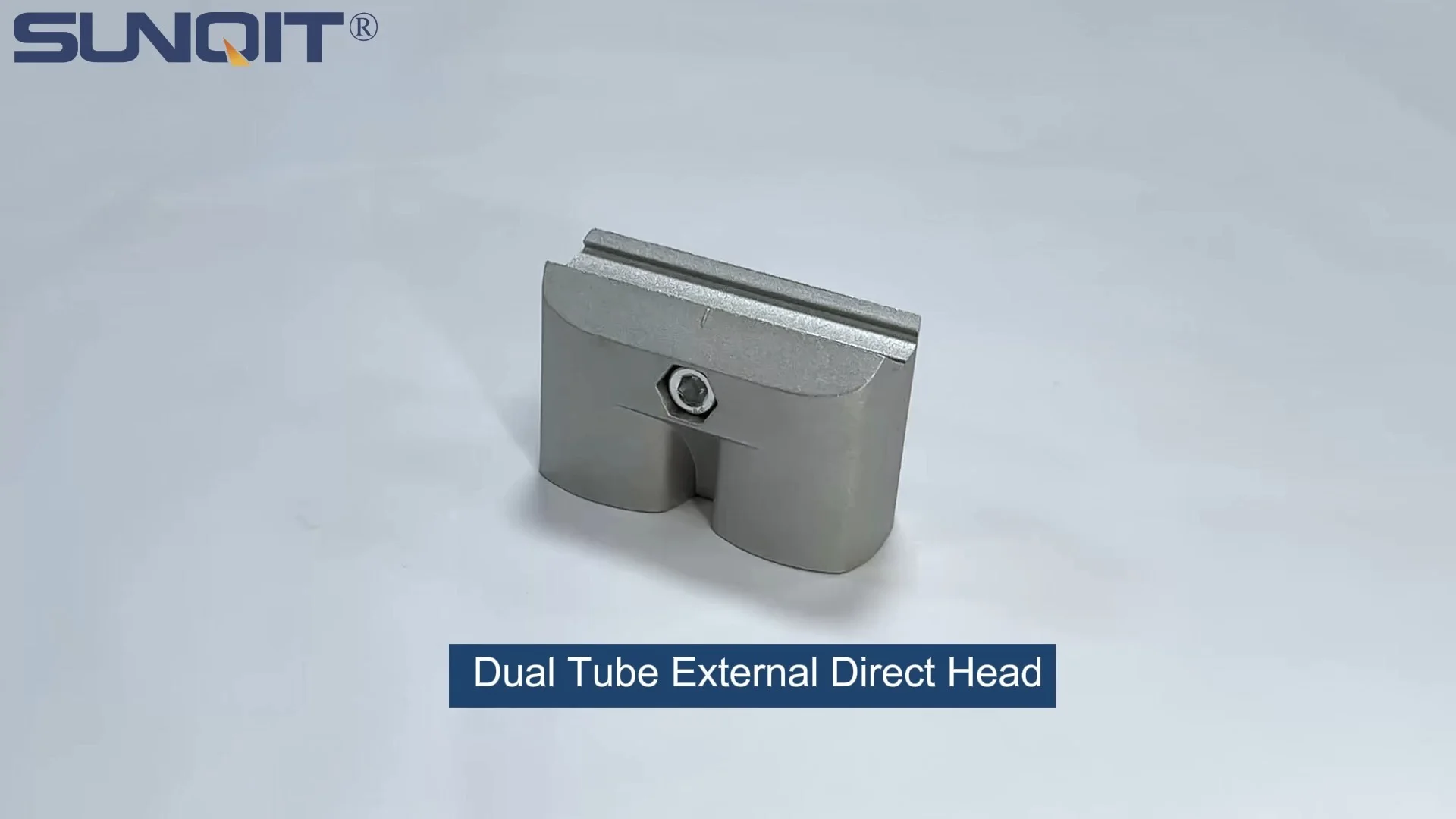
Duplex Aluminum Pipe Joint
Duplex Aluminum pipe joint used for one pcs 28pcs aluminum pipe and one pcs of 28mm duplex pipe connection in straight angle.
How a Simple Connector is Transforming Factories, One Workbench at a Time
1. The Evolution of Lean Production: From Waste Reduction to Adaptive Excellence
Walk into any successful manufacturing facility today, and you'll notice something different from the factories of 50 years ago. The clunky, one-size-fits-all assembly lines are gone, replaced by open, flowing workspaces where stations seem to shift and reshape like living organisms. This isn't just aesthetics—it's the result of decades of refining lean production, a philosophy born in the Toyota factories of post-WWII Japan that prioritized eliminating waste (or "muda," as they called it). But here's the thing: modern manufacturing demands more than just cutting waste. In a world where consumer tastes change overnight and product lifecycles shrink from years to months, lean systems need to do more than eliminate —they need to adapt .
I remember visiting a mid-sized electronics plant a few years back that perfectly captured this challenge. Their production line was a marvel of efficiency in 2015, with welded steel workbenches and fixed roller tracks that churned out smartphone components like clockwork. But by 2020, when demand shifted to larger tablets and foldable devices, their "efficient" setup became a liability. The fixed-height workbenches didn't fit the new assembly processes; the rigid roller tracks couldn't handle bulkier components. Retooling took weeks, and by the time they were ready, competitors had already cornered the market. Their mistake? Building their lean system on a backbone that couldn't bend.
That's the crux of the issue: lean production today isn't just about doing more with less. It's about doing different with the same. And the backbone of that adaptability? It starts with the humble connectors and structures that hold everything together. Enter the duplex aluminum pipe joint—a small, unassuming piece of engineering that's quietly become the unsung hero of the modern lean system.
2. What is a Duplex Aluminum Pipe Joint, Anyway?
Let's start with the basics. A duplex aluminum pipe joint is exactly what it sounds like: a connector designed to join aluminum pipes or profiles, but with a "duplex" twist—think of it as a Swiss Army knife for factory infrastructure. Unlike traditional steel welds (which are permanent) or plastic lean pipe joints (which often crack under heavy use), these aluminum joints are built to balance three critical needs: strength, speed, and flexibility.
Picture this: a cylindrical aluminum body with two interlocking sleeves, a spring-loaded locking mechanism, and a simple lever or hex-key slot. Slide two aluminum pipes into either end, adjust the angle (any angle—90 degrees, 45 degrees, even a gentle slope), flip the lever, and it locks into place. No welding, no drilling, no waiting for adhesives to dry. I've watched a team of two workers disassemble a full-size material rack and rebuild it as a mobile workbench in under an hour using these joints—something that would have taken a day with traditional steel structures.
But what really sets duplex aluminum pipe joints apart is their material. Aluminum isn't just lightweight (about a third the weight of steel); it's naturally corrosion-resistant, which matters in factories where spills, humidity, or chemicals are part of the daily grind. Many suppliers anodize the aluminum, adding a thin, hard layer that resists scratches and wear—meaning these joints can handle the bumps and scrapes of a busy production floor for years. And unlike plastic, aluminum doesn't degrade under UV light or extreme temperatures, so they work just as well in hot foundries as they do in climate-controlled electronics plants.

3. Why Duplex Aluminum Pipe Joints Are Non-Negotiable for Modern Lean Systems
At first glance, a pipe joint might seem like a trivial part of a lean system. After all, isn't lean about big-picture stuff—value streams, kanban boards, continuous improvement? Sure, but those big-picture goals fall apart if your physical workspace can't keep up. Let's break down why duplex aluminum pipe joints have become the backbone of today's most agile lean systems.
Flexibility: The Ability to "Pivot Without Panic"
Last year, I worked with a furniture manufacturer that specializes in custom office chairs. Their problem? Every client wanted something slightly different—extra lumbar support here, a wider seat there. Their old setup used fixed steel workbenches with welded tool holders; reconfiguring for a new chair model meant calling in a welder and shutting down the line for half a day. Then they switched to aluminum profiles connected with duplex joints. Now, when a custom order comes in, a supervisor grabs a hex key, loosens a few joints, and adjusts the workbench height or swaps out a tool rack in 15 minutes. "It's like having a production line that can read minds," their plant manager told me. "We pivot without panic now."
Durability That Doesn't Weigh You Down
Steel is strong, but it's heavy. Try moving a steel workbench across the floor, and you'll need a forklift. Aluminum profiles with duplex joints? A single worker can tilt a fully loaded mobile workbench (fitted with casters, of course) and wheel it to a new location. This matters because lean systems thrive on flow—materials should move to workers, not the other way around. A bakery I visited in Chicago uses roller tracks built with duplex joints to route dough trays from the mixer to the oven. The tracks are light enough that workers can adjust their slope by a few degrees to speed up or slow down the flow based on how busy the oven is that day. And because the aluminum joints don't rust, they're safe to use even in the humid environment near the dough mixers—something steel joints couldn't handle without constant maintenance.
Cost-Efficiency: Saving Money by Spending Smarter
Let's talk numbers. A typical welded steel workbench costs about $300 to build, but if you need to reconfigure it, you might as well throw it away—it's cheaper to buy a new one than to cut and reweld. A duplex aluminum pipe joint setup? The initial cost is slightly higher ($400–$500 for a basic workbench), but here's the kicker: those aluminum profiles and joints can be reused indefinitely . When the furniture manufacturer I mentioned earlier phased out a chair model, they didn't scrap the workbenches—they took them apart and rebuilt them as packing stations. Over three years, they estimate they've saved $75,000 by reusing components instead of buying new ones.
Compatibility: Building a "Modular Ecosystem"
Duplex aluminum pipe joints aren't one-trick ponies. They play well with other lean tools, creating a modular ecosystem that grows with your needs. Need to add a shelf to a material rack? Slide an aluminum profile into a duplex joint and lock it. Want to attach a roller track to a workbench for parts delivery? The joint's universal design fits most standard aluminum profile sizes. A medical device plant I toured uses this to great effect: their assembly line uses the same duplex joints to build everything from small parts bins to full-size testing stations. "We standardized on these joints five years ago," their operations director said. "Now, when we need a new tool, we don't design from scratch—we just mix and match the same profiles and joints we already have."

4. Beyond the Joint: How Duplex Connectors Bring Lean Components to Life
A duplex aluminum pipe joint is powerful on its own, but its true magic lies in how it connects with other lean staples: aluminum profiles, workbenches, roller tracks, and more. Let's take a closer look at these partnerships.
Aluminum Profiles: The "Building Blocks" of Lean Workspaces
Aluminum profiles are the "bones" of the system, and duplex joints are the "joints" that let those bones move. Profiles come in standard sizes—20x20mm, 30x30mm, 40x40mm—and their T-slot design lets you attach accessories (tool hooks, shelves, lights) anywhere along the length. But without a good joint, they're just static pieces of metal. Duplex joints turn them into something dynamic. For example, a 40x40mm aluminum profile might start as part of a workbench one month, then get repurposed as a side rail for a roller track the next—all thanks to the joint's ability to lock securely in any configuration.
Workbenches: From Fixed Desks to Adaptive Command Centers
The humble workbench is where the rubber meets the road in lean production. A poorly designed workbench creates waste—workers reaching too far, tools out of place, parts piling up. Duplex aluminum pipe joints solve this by letting workbenches evolve with the task. Take the "workbench E" (single deck, without casters) from many suppliers: with duplex joints, you can add casters in 10 minutes if you need mobility, or stack another deck on top if you need more surface area. A automotive parts plant I visited even uses duplex joints to mount monitors and barcode scanners to their workbenches—adjusting the height so taller and shorter workers can both work comfortably, reducing fatigue and errors.
Roller Tracks: Keeping Materials Flowing, Without the Friction
Roller tracks are the circulatory system of a lean factory, moving parts from station to station with minimal effort. But traditional roller tracks are rigid—welded to frames, set at a fixed angle. Duplex joints change that. Imagine a 38mm aluminum roller track used to feed circuit boards to an assembly line. In the morning, when demand is high, workers can angle the track steeper (using duplex joints) to speed up delivery. In the afternoon, when they need to inspect parts more carefully, they flatten the angle—slowing the flow without stopping production. And because the joints are adjustable, you can easily add curves or branches to the track if you need to route parts to a new station. It's like having a traffic system that can reroute itself based on real-time needs.

4. The Proof in the Production: Real-World Case Studies
Numbers and features tell part of the story, but nothing beats hearing from factories that have lived through the transformation. Here are two case studies that show duplex aluminum pipe joints in action.
Case Study 1: A Medical Device Manufacturer Cuts Downtime by 90%
Before: A manufacturer of surgical tools relied on welded steel workbenches and fixed material racks. When they introduced a new line of minimally invasive tools (smaller, more delicate parts), they needed to reconfigure 12 workstations. The process took 3 days: welding new brackets, repainting, and testing stability. During that time, production of their existing tools dropped by 40%.
After: They switched to aluminum profiles and duplex joints. For the new tool line, workers disassembled the old workstations, cut the aluminum profiles to new lengths (using a simple miter saw), and rebuilt the workstations with duplex joints. Total downtime: 4 hours. "We didn't just save time—we saved morale," their production lead said. "Workers hated the old setup because it felt like we were stuck in the past. Now, they take pride in tweaking their stations to work better."
Results: 90% reduction in reconfiguration downtime, 25% increase in on-time deliveries, and a 15% drop in worker fatigue (measured via ergonomic assessments).
Case Study 2: A Food Packaging Plant Adapts to Seasonal Spikes
Before: A snack food company faced extreme seasonal demand—double the production in Q4 for holiday sales. Their fixed roller tracks and workbenches couldn't handle the extra volume; they had to rent temporary steel structures, which were heavy, hard to clean, and took up valuable floor space.
After: They invested in aluminum profiles, duplex joints, and modular roller tracks. In Q4, they expand their production line by adding 8 mobile workstations (built with duplex joints) and extending roller tracks to feed parts to the new stations. When the season ends, they disassemble the extra stations and store the profiles (which take up 1/3 the space of steel structures). The aluminum is easy to sanitize, meeting food safety standards, and the lightweight design means no forklifts are needed for setup.
Results: Eliminated $50,000 in annual rental costs, reduced Q4 labor overtime by 30%, and improved food safety scores (no more hard-to-clean steel crevices).
5. Traditional vs. Duplex: A Comparison Table
| Feature | Traditional Steel Welded Joints | Plastic Lean Pipe Joints | Duplex Aluminum Pipe Joints |
|---|---|---|---|
| Assembly/Reconfiguration Time | 8–12 hours (requires welding) | 1–2 hours (hand-tightened, but prone to slipping) | 15–30 minutes (tool-free or hex-key adjustment) |
| Weight | Heavy (requires machinery to move) | Light, but low load capacity | Lightweight (single-person movable) with high load capacity |
| Durability | High, but prone to rust; welding weakens over time | Low (cracks under heavy use or temperature changes) | High (anodized aluminum resists rust, wear, and corrosion) |
| Cost Over 5 Years | High (need to replace/rebuild 2–3x) | Medium (replace joints every 1–2 years) | Low (reusable; only replace if lost/damaged) |
| Compatibility | Limited (welded to specific pipe sizes) | Moderate (fits plastic pipes, but not aluminum profiles) | High (works with aluminum profiles, steel pipes, roller tracks, and accessories) |
6. The Future of Lean: Why Duplex Aluminum Pipe Joints Will Lead the Way
As manufacturing continues to evolve—toward smaller batches, faster customization, and smarter factories—one thing is clear: rigid systems will be left behind. Here's why duplex aluminum pipe joints will remain the backbone of lean production for years to come.
Industry 4.0 and the "Smart Workbench"
Industry 4.0 is all about connecting physical systems with data—sensors, IoT devices, and real-time analytics. Duplex aluminum pipe joints make it easy to integrate this tech. Want to mount a camera above a workbench to monitor assembly quality? Use a duplex joint to attach a sensor arm, and reposition it later if needed. Need to add a weight sensor to a roller track to track material flow? The joint's T-slot compatibility lets you mount the sensor anywhere along the profile. I recently saw a prototype "smart workbench" that uses duplex joints to attach a touchscreen monitor, barcode scanner, and even a small robotic arm—all repositionable based on the task. As factories get smarter, their physical infrastructure needs to be just as adaptable as their software.
Sustainability: Lean Production Meets Green Manufacturing
Modern manufacturers aren't just focused on efficiency—they're focused on sustainability. Aluminum is 100% recyclable, and duplex joints mean less waste from scrapped structures. A study by the Aluminum Association found that using aluminum in manufacturing infrastructure reduces a factory's carbon footprint by 20–30% compared to steel, thanks to lower transportation costs (lighter weight) and longer lifespan. And because duplex joints let you reuse components, you're not constantly buying new materials. It's lean production with a green twist.
The Rise of "Micro-Factories" and On-Demand Production
More and more businesses are moving to micro-factories—small, localized production facilities that make goods on-demand, reducing shipping and inventory costs. These micro-factories can't afford large, fixed setups; they need to do more with less space. Duplex aluminum pipe joints are perfect for this: a 500 sq. ft. micro-factory can use modular workbenches and roller tracks that fold up or reconfigure to make different products. I visited a micro-factory in Brooklyn that makes custom bike parts—they use duplex joints to switch between making handlebars in the morning and seat posts in the afternoon, all in the same small space. "We couldn't scale without these joints," the owner told me. "They let us be a factory that fits in a garage."
7. Conclusion: Building the Lean Factories of Tomorrow, Today
Lean production has never been just about tools or processes—it's about mindset: the willingness to question, adapt, and grow. For decades, manufacturers focused on eliminating waste in workflows, but they overlooked a critical source of waste: rigid, unchanging infrastructure. Duplex aluminum pipe joints solve that problem by turning static workspaces into dynamic, adaptable ecosystems.
Whether you're running a massive automotive plant or a small custom workshop, the message is clear: your lean system is only as strong as its backbone. Welded steel and plastic joints might get the job done today, but tomorrow's market demands more—speed, flexibility, and sustainability. Duplex aluminum pipe joints deliver all three, turning your factory into a space that can keep up with your ideas.
So the next time you walk through a factory, take a closer look at the workbenches, the roller tracks, the material racks. Chances are, the ones that look like they're built to last—and adapt—are held together by duplex aluminum pipe joints. They're not just connectors; they're the quiet revolution that's making lean production smarter, faster, and more human-centered than ever before.