- Company Articles
- Products and Technology
- Product knowledge
- Duplex Aluminum Pipe Joint vs. Traditional Joints: Key Differences

Duplex Aluminum Pipe Joint vs. Traditional Joints: Key Differences
Related Product
Duplex Aluminum Pipe Joint
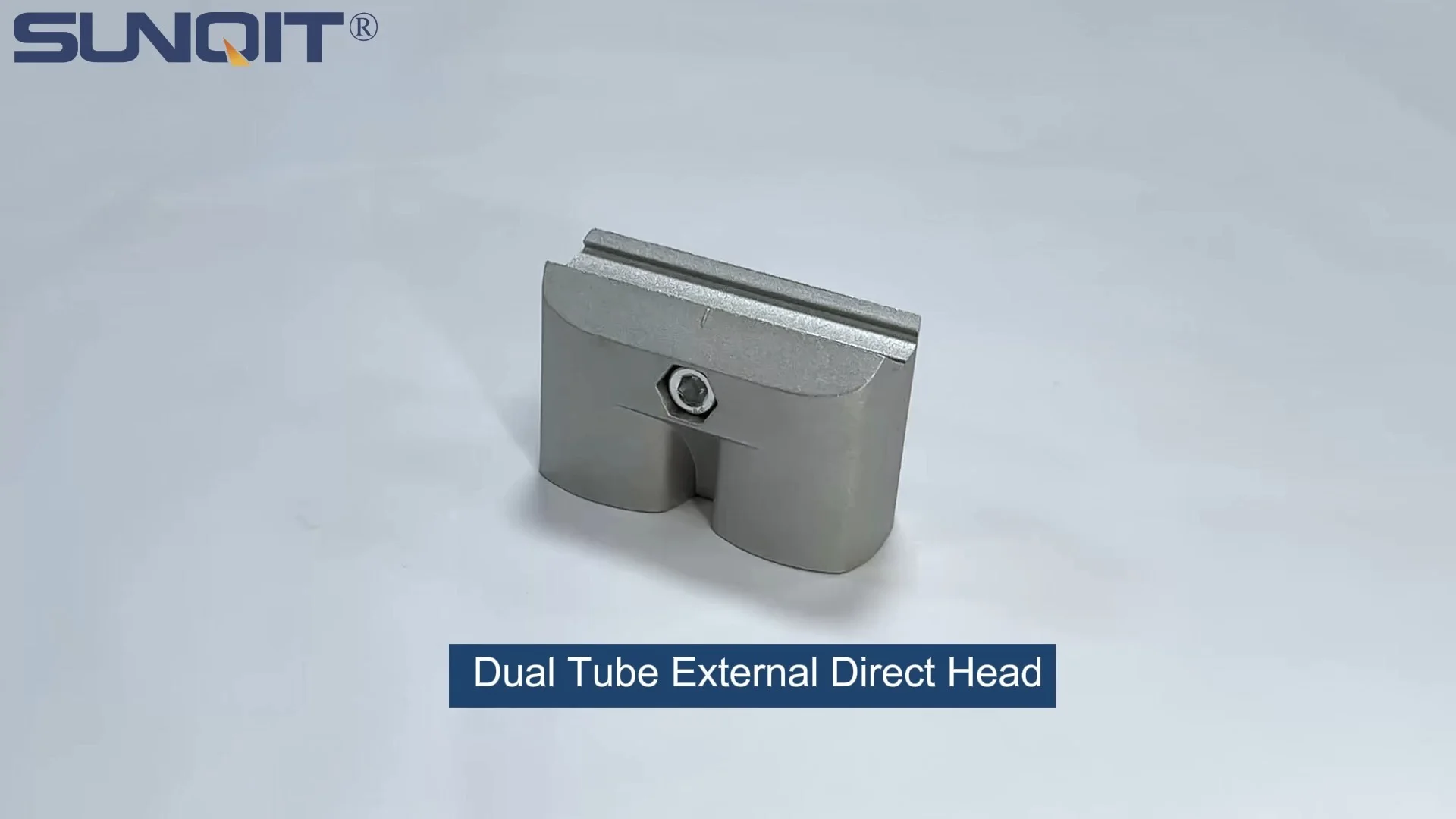
Duplex Aluminum pipe joint used for one pcs 28pcs aluminum pipe and one pcs of 28mm duplex pipe connection in straight angle.
Introduction: The Unsung Heroes of Workplace Efficiency
In the bustling world of manufacturing, warehousing, and workshop management, the structures we rely on—from assembly line workbenches to material flow racks—are only as strong as the connections holding them together. While the pipes, profiles, and panels often get the spotlight, it's the joints that quietly bear the weight of daily operations. They determine how easily a workspace can adapt to new needs, how long equipment lasts in harsh environments, and even how much time and money businesses spend on maintenance and reconfiguration. Today, we're diving into a critical comparison that's reshaping modern workspaces: duplex aluminum pipe joints versus traditional joints. Whether you're a facility manager looking to upgrade your production line or a small business owner setting up a new workshop, understanding these differences could save you from costly mistakes and unlock new levels of efficiency. Let's start by getting to know each contender.
What Are Duplex Aluminum Pipe Joints?
Duplex aluminum pipe joints are a modern solution designed for modular, lightweight, and durable structural systems. As the name suggests, they're crafted from aluminum—a material prized for its strength-to-weight ratio and resistance to corrosion—and often feature a "duplex" design that enhances versatility. Unlike one-size-fits-all connectors, these joints are engineered to work seamlessly with aluminum lean pipe and aluminum profile accessories, creating systems that can be easily customized, disassembled, and reconfigured.
At their core, duplex aluminum pipe joints prioritize flexibility. They typically use a combination of internal and external locking mechanisms, allowing them to connect aluminum pipes at various angles (90°, 45°, 135°, etc.) without the need for welding or heavy tools. This modularity makes them a cornerstone of lean manufacturing principles, where adaptability and waste reduction are key. Imagine a joint that lets you adjust a workbench height in minutes or reconfigure a flow rack to accommodate new product sizes—no cutting, welding, or specialized labor required. That's the promise of duplex aluminum pipe joints.
Another standout feature is their durability. Aluminum naturally resists rust and corrosion, making these joints ideal for environments where moisture, chemicals, or frequent cleaning are part of the routine—think food processing plants, laboratories, or electronics assembly lines. When paired with aluminum profile accessories like end caps, guide rails, or caster wheels, they form systems that are not only strong but also built to last, even under daily wear and tear.
At their core, duplex aluminum pipe joints prioritize flexibility. They typically use a combination of internal and external locking mechanisms, allowing them to connect aluminum pipes at various angles (90°, 45°, 135°, etc.) without the need for welding or heavy tools. This modularity makes them a cornerstone of lean manufacturing principles, where adaptability and waste reduction are key. Imagine a joint that lets you adjust a workbench height in minutes or reconfigure a flow rack to accommodate new product sizes—no cutting, welding, or specialized labor required. That's the promise of duplex aluminum pipe joints.
Another standout feature is their durability. Aluminum naturally resists rust and corrosion, making these joints ideal for environments where moisture, chemicals, or frequent cleaning are part of the routine—think food processing plants, laboratories, or electronics assembly lines. When paired with aluminum profile accessories like end caps, guide rails, or caster wheels, they form systems that are not only strong but also built to last, even under daily wear and tear.

What Are Traditional Joints?
Traditional joints, by contrast, are the tried-and-true (but often rigid) connectors that have been used for decades. They come in various forms, but the most common include welded steel joints, plastic snap-fit connectors, and bolted steel brackets. Each has its own set of trade-offs, but they all share one defining trait: they're designed for permanence rather than adaptability.
Welded steel joints, for example, involve melting metal to fuse pipes together, creating a bond that's incredibly strong but fixed in place. They're commonly used in heavy-duty applications like warehouse shelving or industrial machinery, where the structure rarely needs to change. However, this strength comes with downsides: steel is heavy, prone to rust if not regularly painted or coated, and once welded, modifying the structure means cutting it apart and rewelding—time-consuming and costly work.
Plastic snap-fit joints are lighter and cheaper upfront, often used in DIY or low-weight applications. But they lack the durability of metal; exposure to sunlight, heat, or heavy loads can cause them to crack or warp over time. Bolted steel brackets, while slightly more flexible than welded joints, still require tools to assemble and disassemble, and the steel components are susceptible to corrosion without proper maintenance. In short, traditional joints excel in static, low-change environments but struggle to keep up with the fast-paced, ever-evolving needs of modern workplaces.
Welded steel joints, for example, involve melting metal to fuse pipes together, creating a bond that's incredibly strong but fixed in place. They're commonly used in heavy-duty applications like warehouse shelving or industrial machinery, where the structure rarely needs to change. However, this strength comes with downsides: steel is heavy, prone to rust if not regularly painted or coated, and once welded, modifying the structure means cutting it apart and rewelding—time-consuming and costly work.
Plastic snap-fit joints are lighter and cheaper upfront, often used in DIY or low-weight applications. But they lack the durability of metal; exposure to sunlight, heat, or heavy loads can cause them to crack or warp over time. Bolted steel brackets, while slightly more flexible than welded joints, still require tools to assemble and disassemble, and the steel components are susceptible to corrosion without proper maintenance. In short, traditional joints excel in static, low-change environments but struggle to keep up with the fast-paced, ever-evolving needs of modern workplaces.

Key Differences: Breaking Down the Battle
Now that we understand the basics, let's dive into the critical differences between duplex aluminum pipe joints and traditional joints. From durability to cost, these factors will help you decide which is right for your workspace.
1. Durability: Corrosion Resistance and Longevity
When it comes to long-term performance, the material matters—and aluminum has a clear edge here. Duplex aluminum pipe joints are naturally resistant to corrosion, meaning they won't rust when exposed to moisture, humidity, or chemicals. This is a game-changer for industries like food processing, pharmaceuticals, or marine manufacturing, where daily washdowns or humid conditions are the norm. A facility using aluminum lean pipe systems with duplex joints can expect their structures to look and function like new for 5–10 years, even with minimal maintenance.
Traditional steel joints, on the other hand, are a magnet for rust. Without regular coats of paint or expensive galvanization, they'll start to corrode within months in damp environments. This isn't just a cosmetic issue: rust weakens the metal, increasing the risk of structural failure over time. Plastic traditional joints fare even worse—UV rays from sunlight can make them brittle, and heavy loads can cause them to snap. In one case study, a warehouse using plastic snap-fit joints for a light-duty flow rack had to replace 30% of the joints after just two years due to cracking, while a neighboring facility with aluminum joints reported zero replacements in the same period.
Traditional steel joints, on the other hand, are a magnet for rust. Without regular coats of paint or expensive galvanization, they'll start to corrode within months in damp environments. This isn't just a cosmetic issue: rust weakens the metal, increasing the risk of structural failure over time. Plastic traditional joints fare even worse—UV rays from sunlight can make them brittle, and heavy loads can cause them to snap. In one case study, a warehouse using plastic snap-fit joints for a light-duty flow rack had to replace 30% of the joints after just two years due to cracking, while a neighboring facility with aluminum joints reported zero replacements in the same period.
2. Flexibility: Adapt or Stay Stuck?
In today's business world, adaptability isn't a luxury—it's a necessity. Product lines change, production volumes fluctuate, and new regulations demand workspace adjustments. Here, duplex aluminum pipe joints shine. Their modular design allows for quick disassembly and reconfiguration. Need to shorten a workbench? Simply loosen a few bolts, remove a section of aluminum pipe, and reattach the joints. Want to add a new shelf to a material rack? Slide in a new crossbar and lock it into place with a duplex joint. No cutting, no welding, no waiting for a contractor.
Traditional joints, by contrast, are built for permanence. Welded steel joints are fixed in place—modify the structure, and you'll need to cut the welds, which weakens the metal and requires re-welding. Bolted steel brackets are slightly better, but they still require tools and time to adjust, and frequent disassembly can strip the threads or warp the brackets. Plastic joints are often one-time-use; once snapped into place, they can crack if you try to remove them. For businesses that need to pivot quickly—like a small manufacturer taking on a new client with different product specs—this rigidity can mean lost time and missed opportunities.
Traditional joints, by contrast, are built for permanence. Welded steel joints are fixed in place—modify the structure, and you'll need to cut the welds, which weakens the metal and requires re-welding. Bolted steel brackets are slightly better, but they still require tools and time to adjust, and frequent disassembly can strip the threads or warp the brackets. Plastic joints are often one-time-use; once snapped into place, they can crack if you try to remove them. For businesses that need to pivot quickly—like a small manufacturer taking on a new client with different product specs—this rigidity can mean lost time and missed opportunities.
3. Installation: Time, Tools, and Expertise
Installing a structural system shouldn't require a team of experts or a truckload of specialized tools. Duplex aluminum pipe joints make this a reality. Most systems are designed for "tool-less" or "minimal-tool" assembly—often just a hex key or a wrench is enough. The joints are precision-engineered to fit snugly with aluminum lean pipe, so even someone with basic DIY skills can assemble a workbench or flow rack in an afternoon. This reduces labor costs and speeds up project timelines. For example, a team of three workers can set up a 20-foot assembly line frame using duplex joints in under 4 hours, compared to a full day with welded steel joints (which also requires a certified welder).
Traditional joints, especially welded ones, are far more labor-intensive. Welding requires trained professionals, protective gear, and a clean, well-ventilated workspace—all of which add to the cost. Bolted steel brackets need precise alignment to avoid weak spots, and plastic snap-fit joints often require brute force to lock into place, increasing the risk of damage during installation. In short, traditional joints turn a simple setup into a complex, time-consuming project.
Traditional joints, especially welded ones, are far more labor-intensive. Welding requires trained professionals, protective gear, and a clean, well-ventilated workspace—all of which add to the cost. Bolted steel brackets need precise alignment to avoid weak spots, and plastic snap-fit joints often require brute force to lock into place, increasing the risk of damage during installation. In short, traditional joints turn a simple setup into a complex, time-consuming project.
4. Cost: Upfront vs. Long-Term Value
It's true: duplex aluminum pipe joints often have a higher upfront cost than traditional plastic or basic steel joints. Aluminum is a premium material, and the precision engineering of duplex designs adds to the price tag. But when you factor in long-term costs, the tables turn. Let's break it down:
Traditional Joints: Low upfront cost, but high maintenance and replacement costs. Steel joints need regular painting or coating to prevent rust (adds $100–$300/year for a small facility). Welded structures require occasional repairs or modifications (costing $500+ per change). Plastic joints may need full replacement every 2–3 years ($200–$500 for parts and labor). Over 5 years, these costs add up.
Duplex Aluminum Joints: Higher upfront cost, but minimal maintenance. Aluminum doesn't rust, so no painting or coating needed. The modular design means reconfigurations cost nothing but time—no need to buy new parts or hire welders. A study by a manufacturing association found that facilities using aluminum lean pipe systems with duplex joints saved 30% on maintenance costs over 5 years compared to those using traditional steel joints. For businesses planning to stay in the same space long-term, the initial investment pays off handsomely.
Traditional Joints: Low upfront cost, but high maintenance and replacement costs. Steel joints need regular painting or coating to prevent rust (adds $100–$300/year for a small facility). Welded structures require occasional repairs or modifications (costing $500+ per change). Plastic joints may need full replacement every 2–3 years ($200–$500 for parts and labor). Over 5 years, these costs add up.
Duplex Aluminum Joints: Higher upfront cost, but minimal maintenance. Aluminum doesn't rust, so no painting or coating needed. The modular design means reconfigurations cost nothing but time—no need to buy new parts or hire welders. A study by a manufacturing association found that facilities using aluminum lean pipe systems with duplex joints saved 30% on maintenance costs over 5 years compared to those using traditional steel joints. For businesses planning to stay in the same space long-term, the initial investment pays off handsomely.
5. Application Scenarios: Where Each Shines
No single joint is perfect for every situation, but understanding which works best where will help you make the right choice.
Duplex Aluminum Pipe Joints: Ideal for dynamic, high-change environments. Think assembly lines that need to retool for new products, laboratories with shifting equipment needs, or workshops that handle multiple projects. They're also great for clean environments (food, electronics) thanks to their corrosion resistance, and lightweight for mobile systems like turnover trolleys. For example, a medical device manufacturer uses duplex joints to build workbenches that can be sanitized daily and reconfigured weekly as new prototypes are developed—something traditional welded steel would make nearly impossible.
Traditional Joints: Better suited for static, heavy-load applications where change is rare. Welded steel joints work well for permanent warehouse shelving that holds palletized goods, or industrial machinery bases that never move. Plastic joints can be useful for temporary, low-weight setups (like event displays or short-term storage racks). But for most modern workplaces, where agility is key, traditional joints are increasingly becoming a liability.
Duplex Aluminum Pipe Joints: Ideal for dynamic, high-change environments. Think assembly lines that need to retool for new products, laboratories with shifting equipment needs, or workshops that handle multiple projects. They're also great for clean environments (food, electronics) thanks to their corrosion resistance, and lightweight for mobile systems like turnover trolleys. For example, a medical device manufacturer uses duplex joints to build workbenches that can be sanitized daily and reconfigured weekly as new prototypes are developed—something traditional welded steel would make nearly impossible.
Traditional Joints: Better suited for static, heavy-load applications where change is rare. Welded steel joints work well for permanent warehouse shelving that holds palletized goods, or industrial machinery bases that never move. Plastic joints can be useful for temporary, low-weight setups (like event displays or short-term storage racks). But for most modern workplaces, where agility is key, traditional joints are increasingly becoming a liability.

The Comparison Table: At a Glance
| Feature | Duplex Aluminum Pipe Joints | Traditional Joints (Steel/Plastic) |
|---|---|---|
| Material | Aluminum (corrosion-resistant, lightweight) | Steel (heavy, rust-prone) or Plastic (brittle, low durability) |
| Installation | Tool-less/minimal tools; 1–2 hours for basic setup | Welding/bolting required; 4–8 hours for basic setup |
| Reconfigurability | Easy to disassemble and reconfigure; no damage to components | Fixed (welded) or difficult to adjust (bolted/plastic); risk of damage during changes |
| Maintenance | Minimal; no rust prevention needed | High; steel needs painting/coating; plastic may need replacement |
| Cost (5-Year Lifespan) | Higher upfront, lower long-term (30% savings on maintenance/modifications) | Lower upfront, higher long-term (high replacement/maintenance costs) |
| Best For | Dynamic environments, clean rooms, mobile systems, frequent reconfigurations | Static, heavy-load setups, temporary low-weight applications |
Real-World Example: A Manufacturer's Journey to Adaptability
The Challenge: A mid-sized electronics manufacturer in Michigan was struggling with its assembly line. The line used welded steel workbenches and flow racks with traditional steel joints, which had served them well for years. But as they expanded into new product lines (smaller, more complex devices), they needed to shrink workbench sizes, add adjustable shelving, and reposition flow racks to reduce bottlenecks. Every change meant hiring a welder to cut and rework the steel structures—costing $800–$1,200 per modification and taking 1–2 days of downtime. In a competitive industry where speed to market matters, this was a problem.
The Solution: After researching options, they switched to an aluminum lean pipe system with duplex aluminum pipe joints and aluminum profile accessories. The initial investment was higher—about $5,000 for materials to replace 10 workbenches and 5 flow racks—but the results were immediate.
The Outcome:
•
Faster Changes:
The team now reconfigures workbenches in-house using just hex keys. A recent shift to a new product line took 3 hours instead of 2 days.
•
Lower Costs:
No more welder fees—saving $6,000+ in the first year alone.
•
Durability:
After 2 years, the aluminum structures show no signs of corrosion, even in the humid production area (the old steel ones needed repainting yearly).
•
Employee Satisfaction:
Workers appreciate the adjustable height workbenches, reducing ergonomic strain and boosting productivity.
As the plant manager put it: "We used to dread product changes. Now, we look forward to them—because our workspace can keep up."
Conclusion: Investing in the Future of Your Workspace
Duplex aluminum pipe joints and traditional joints represent two eras of workplace design: one built for permanence, the other for progress. While traditional joints have their place in static, low-change environments, the modern workplace demands more—adaptability, durability, and efficiency. Duplex aluminum pipe joints deliver on all three, offering a solution that grows with your business, reduces long-term costs, and makes even the most complex reconfigurations feel like a breeze.
If you're tired of paying for expensive modifications, waiting for welders, or watching your once-strong structures rust away, it might be time to make the switch. Aluminum lean pipe systems with duplex joints aren't just a purchase—they're an investment in a workspace that can keep up with whatever the future throws at it. After all, in business, the ability to adapt isn't just a advantage—it's survival. And when it comes to adaptability, duplex aluminum pipe joints are leading the way.
If you're tired of paying for expensive modifications, waiting for welders, or watching your once-strong structures rust away, it might be time to make the switch. Aluminum lean pipe systems with duplex joints aren't just a purchase—they're an investment in a workspace that can keep up with whatever the future throws at it. After all, in business, the ability to adapt isn't just a advantage—it's survival. And when it comes to adaptability, duplex aluminum pipe joints are leading the way.