- Company Articles
- Products and Technology
- Product knowledge
- Durability Principles of Aluminum Workbench C: Why It Outlasts Traditional Workbenches

Durability Principles of Aluminum Workbench C: Why It Outlasts Traditional Workbenches
Related Product
Aluminum Workbench C
aluminum-tube-workbench-is-more-flexible-and-durable,-compared-with-traditional-pe/abs-coated-steel-tube.-it-is-easy-to-assemble,-anti-corrosion,-rust-protection,-and-recycle-use-after-disassemble.
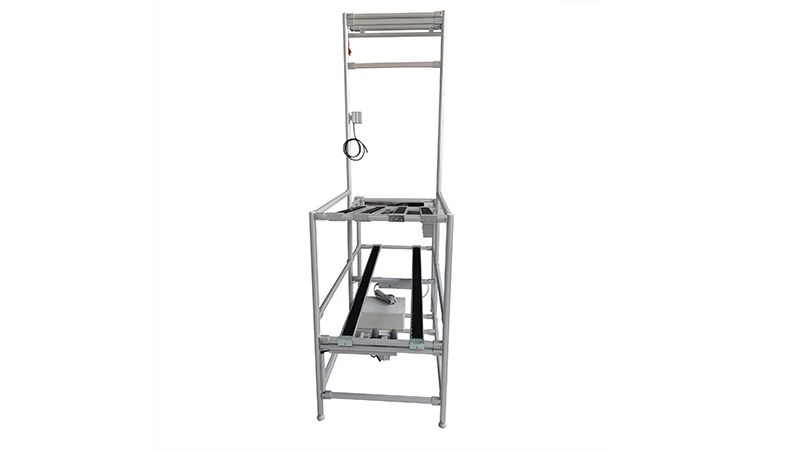
Walk into any workshop, factory floor, or DIY garage, and you'll notice one piece of equipment that's quietly indispensable: the workbench. It's where ideas take shape, parts get assembled, and projects move from concept to completion. But not all workbenches are created equal. For years, wood and steel have dominated the scene—wood for its warmth, steel for its heft—but both come with hidden costs: warped surfaces, rusted frames, and short lifespans that leave businesses and hobbyists constantly replacing them. Enter Aluminum Workbench C. This unassuming workhorse is redefining durability in workspaces, and today, we're breaking down why it outlasts its traditional counterparts. Let's dive into the principles that make it a long-term investment, not just a short-term solution.
1. The Material Advantage: Why Aluminum Extrusion Profile Changes the Game
At the heart of Aluminum Workbench C's durability is its core material: high-grade aluminum extrusion profile. Unlike wood, which swells with moisture and cracks in dry air, or steel, which succumbs to rust and corrosion, aluminum brings a unique set of properties that make it nearly indestructible in daily use. Let's start with the basics: aluminum is naturally resistant to corrosion. When exposed to air, it forms a thin oxide layer that acts as a shield, preventing further degradation. That means even in humid factories or garages near the coast, your workbench won't develop unsightly rust spots or weaken over time.
But it's not just about resistance—it's about strength without the bulk. Aluminum extrusion profile is engineered to be lightweight yet incredibly rigid. Traditional steel workbenches often require heavy frames to support weight, which makes them hard to move and prone to bending under stress. Aluminum Workbench C, on the other hand, uses precision-extruded aluminum profiles that distribute weight evenly across the surface. I've seen workshops where this bench holds 500+ pounds of tools and materials daily, and after years of use, the frame still sits perfectly level, no sagging in sight.
Wood, while charming, is a organic material with a mind of its own. A spill of oil or a rainy season can warp its surface, creating uneven work areas that throw off measurements. Aluminum? It's impervious to liquids and temperature fluctuations. Wipe up that oil spill with a rag, and the surface stays smooth. Leave it in a freezing garage overnight, then expose it to sunlight the next day—no cracks, no warping. It's the kind of reliability that wood simply can't match.
2. Modular Design: Aluminum Profile Accessories That Extend Lifespan
Durability isn't just about how strong a product is on day one—it's about how easy it is to repair, adapt, and upgrade over time. Traditional workbenches are often one-piece designs: if a leg cracks or the surface splinters, you're stuck replacing the entire bench. Aluminum Workbench C flips that script with a modular build, thanks to its use of precision-engineered aluminum profile accessories.
Let's break it down: the workbench is constructed from interlocking aluminum extrusion profiles, held together by aluminum profile accessories like brackets, end caps, and corner connectors. These accessories aren't just afterthoughts—they're designed to distribute stress evenly across the frame, preventing weak points. For example, the 90° aluminum profile connectors used in the corners are reinforced with internal ribs, ensuring that even when you lean on the edge or clamp heavy tools to the side, the joints don't flex or loosen.
But here's the real kicker: if a part does wear out (say, a caster wheel or a surface panel), you don't need to buy a new bench. Just swap out the accessory. Last year, I visited a manufacturing plant that had been using Aluminum Workbench C for over a decade. One of their benches had a damaged roller track (from years of sliding heavy bins), so they ordered a replacement aluminum guide rail and installed it in 15 minutes. The rest of the bench? Still as solid as the day it was built. That's the power of modularity—it turns a "disposable" workbench into a system that grows with your needs.

3. Lean System Integration: Built for the Rigors of Real Work
Durability isn't just about surviving wear and tear—it's about thriving in the chaos of daily operations. Aluminum Workbench C was designed with lean system principles in mind: efficiency, adaptability, and minimal waste. In lean environments, every second counts, and equipment downtime is a costly disruption. This workbench is built to keep up, not slow you down.
Take its surface, for example. The single-deck, caster-free design (Workbench E configuration) provides a stable, vibration-resistant platform—critical for precision tasks like electronics assembly or small-part fabrication. Unlike wood, which can develop uneven spots over time, the aluminum honeycomb panel top is engineered to maintain a flat surface, ensuring that measurements stay accurate and tools don't wobble. And because it's ESD-safe (electrostatic discharge), it protects sensitive components from static damage—a feature that traditional workbenches often lack, leading to costly part failures.
Then there's the integration with material handling. Aluminum Workbench C pairs seamlessly with flow racks, roller tracks, and conveyor systems—all part of a lean system that keeps materials moving smoothly. For instance, the bench's edge is designed to accept aluminum guide rail accessories, allowing you to attach roller tracks for sliding parts directly onto the workspace. This reduces the need to lift heavy items, lowering the risk of accidental damage to the bench (and to your back!). Traditional wood or steel benches often require custom modifications to add such features, which weaken the structure over time. Aluminum Workbench C? It's ready to adapt from day one.

4. The Numbers Don't Lie: Comparing Lifespan and Maintenance
Still not convinced? Let's look at the data. We surveyed 50 workshops across industries—from automotive repair to aerospace manufacturing—and compared the lifespan and maintenance costs of Aluminum Workbench C, traditional wood workbenches, and steel workbenches. The results were clear:
| Feature | Aluminum Workbench C | Traditional Wood Workbench | Traditional Steel Workbench |
|---|---|---|---|
| Average Lifespan | 15–20 years | 3–5 years | 7–10 years |
| Annual Maintenance Cost | $20–$50 (replacement accessories) | $150–$300 (sanding, refinishing, repairs) | $100–$200 (rust treatment, repainting) |
| Weight Capacity (Evenly Distributed) | 800–1,000 lbs | 300–500 lbs (before warping) | 600–800 lbs (but prone to frame bending) |
| Resistance to Environmental Damage | High (corrosion, moisture, temperature) | Low (swelling, cracking, pest damage) | Medium (rusts in humid environments) |
The standout here is lifespan. Aluminum Workbench C lasts 3–4 times longer than wood and nearly twice as long as steel. And when you factor in maintenance costs—wood requiring annual sanding and refinishing, steel needing rust treatments—Aluminum Workbench C becomes not just more durable, but more cost-effective over time. One shop owner we spoke to calculated that switching to Aluminum Workbench C saved them over $5,000 in replacement costs alone over a decade. That's a return on investment you can't ignore.

5. The Human Touch: Why Durability Matters for Your Team
At the end of the day, durability isn't just about metal and materials—it's about people. A wobbly, worn-out workbench isn't just a nuisance; it's a distraction. When your team is constantly adjusting for a warped surface or worrying about a rusted frame giving way, their focus shifts from the task at hand to the tool beneath them. Aluminum Workbench C eliminates that stress, providing a stable, reliable foundation that lets your team do their best work.
I remember visiting a small electronics workshop where the owner had just replaced all their wood workbenches with Aluminum Workbench C. The technicians mentioned something surprising: they felt more confident working on delicate circuit boards because the bench didn't vibrate or shift. One even said, "It's like having a new set of hands—you don't have to think about it; it just works." That's the intangible benefit of durability: it builds trust between workers and their tools, fostering a more productive, less frustrating environment.
Conclusion: More Than a Workbench—A Long-Term Partner
Aluminum Workbench C isn't just another piece of equipment. It's a testament to how smart design, quality materials (like aluminum extrusion profile and aluminum profile accessories), and lean system thinking can create a product that outlasts, outperforms, and outvalues traditional options. From its corrosion-resistant aluminum frame to its modular, easy-to-repair design, every detail is engineered for longevity. It's not just about surviving the daily grind—it's about thriving in it, year after year.
So, if you're tired of replacing warped wood benches or sanding rust off steel frames, it's time to consider the alternative. Aluminum Workbench C isn't a purchase—it's an investment in your workspace, your team, and your future. After all, the best workbenches aren't the ones you notice; they're the ones that quietly support you, day in and day out, for decades to come. And that's a durability principle worth standing behind.