- Company Articles
- Products and Technology
- Product knowledge
- Durability Showdown: Aluminum Workbench C vs Powder-Coated Steel Workbenches

Durability Showdown: Aluminum Workbench C vs Powder-Coated Steel Workbenches
Related Product
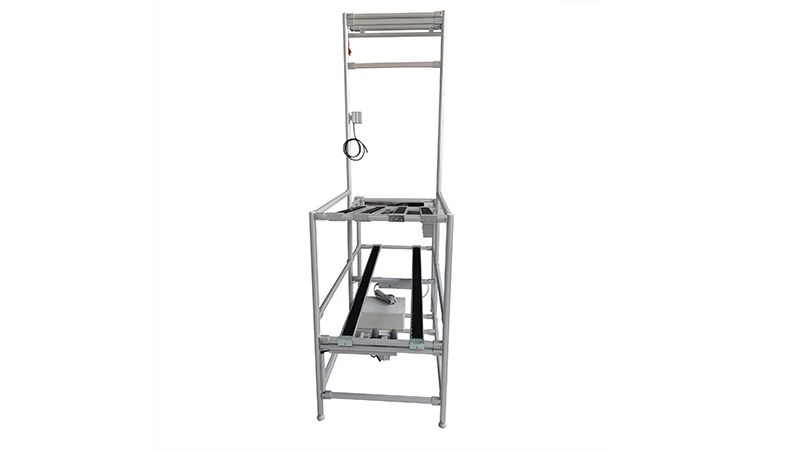
Aluminum Workbench C
aluminum-tube-workbench-is-more-flexible-and-durable,-compared-with-traditional-pe/abs-coated-steel-tube.-it-is-easy-to-assemble,-anti-corrosion,-rust-protection,-and-recycle-use-after-disassemble.
Walk into any manufacturing plant, warehouse, or workshop, and you'll notice one piece of equipment that's the unsung hero of daily operations: the workbench. It's where parts are assembled, tools are organized, and ideas turn into products. But not all workbenches are created equal. When it comes to durability—the kind that stands up to years of heavy use, spills, and the chaos of a busy shop floor—two options often rise to the top: the aluminum workbench C (built with sturdy aluminum profile ) and traditional powder-coated steel workbenches. Today, we're diving deep into this showdown to help you decide which one truly earns the title of "workhorse" for your space.
Let's start with a scenario we've all seen (or lived). Imagine Maria, a production supervisor at a mid-sized electronics assembly plant. Her team has been using the same powder-coated steel workbench for five years. Lately, though, she's noticed rust spots peeking through the chipped paint where a spilled cleaning solution ate through the coating. The bench is also so heavy that rearranging the shop floor for a new lean system setup requires four people and a forklift. "We need something that lasts longer and doesn't feel like moving a boulder," she tells her team. That's when a rep from a local supplier mentions the aluminum workbench C—a sleek, modular option made with aluminum profile. But Maria's skeptical: "Aluminum? Isn't that too lightweight? Will it hold up to our daily grind?"
If Maria's dilemma sounds familiar, you're in the right place. We're breaking down durability from every angle: material science, real-world performance, maintenance, and even how each option fits into modern lean system goals. By the end, you'll know whether aluminum workbench C or powder-coated steel deserves a spot in your workspace.
What Even Is "Durability" for a Workbench?
Before we pit these two contenders against each other, let's define what "durability" really means here. A durable workbench isn't just one that "doesn't break." It's a combination of factors that let it thrive in tough environments:
- Resistance to wear and tear: Can it handle daily scrubbing, tool drops, and parts sliding across its surface without showing signs of damage?
- Load capacity: Will it sag or warp when you stack 200 pounds of components on it—day in, day out?
- Corrosion resistance: How does it stand up to oil spills, cleaning chemicals, or humid conditions?
- Impact resistance: If a heavy tool slips and slams into the frame, does it dent or crack?
- Longevity: How many years can you realistically expect it to perform before needing replacement?
With that checklist in mind, let's meet our competitors.
Contender 1: Aluminum Workbench C
This isn't just any aluminum workbench. The "C" model is built using high-grade
aluminum profile
—think extruded aluminum beams that are precision-engineered for strength and flexibility. It's designed with modularity in mind, meaning you can add shelves, tool rails, or bins without welding or drilling. But modularity doesn't mean flimsy; the aluminum profile here is thick-walled (often 1.5–2mm) and reinforced at stress points like corners and joints.
Contender 2: Powder-Coated Steel Workbenches
The classic choice for heavy-duty environments. These workbenches feature steel frames (usually 14–16 gauge) and a steel top, all coated in a layer of powder paint baked on at high temperatures for a hard finish. They're known for their heft—often 50–100 pounds heavier than aluminum alternatives—and reputation for handling extreme loads.
Material Deep Dive: Aluminum Profile vs. Powder-Coated Steel
At the heart of this showdown is the material each workbench is made from. Let's break down how aluminum profile and powder-coated steel stack up in the durability department.
Aluminum Profile: The Lightweight Powerhouse
Aluminum gets a bad rap sometimes for being "soft" or "weak," but that's a myth—especially when we're talking about aluminum profile used in industrial workbenches. Here's why it's a durability star:
1. Corrosion resistance that's built-in. Aluminum naturally forms a thin oxide layer when exposed to air, acting as a shield against rust and corrosion. Unlike steel, which needs a coating to fight rust, aluminum's defense is part of its chemistry. That means even if you spill battery acid, motor oil, or cleaning solvents on an aluminum workbench C, you won't wake up to orange rust spots the next day. In humid warehouses or coastal facilities (where salt air accelerates corrosion), this is a game-changer.
2. Strength without the bulk. Aluminum profile has an impressive strength-to-weight ratio. A 2mm thick aluminum beam can support nearly as much weight as a 14-gauge steel beam but weighs 40–50% less. For Maria's team, that means the aluminum workbench C can handle 500+ pounds on the top deck (more than enough for most assembly tasks) but is light enough for two people to move during a lean system reorganization. No forklift needed.
3. Impact resistance that surprises. Aluminum is more malleable than steel, which sounds like a weakness—until you realize that means it bends rather than cracks under impact. drop a 10-pound wrench on an aluminum frame, and you might get a small dent; drop it on a steel frame, and you could chip the powder coating (exposing the steel underneath to rust) or even crack a weld. Over time, those small dents in aluminum are cosmetic, while chipped steel becomes a maintenance headache.
Powder-Coated Steel: The Heavyweight Contender
Steel has been the gold standard for durability for decades, and for good reason. Powder-coated steel workbenches are tough—but they have hidden vulnerabilities:
1. The coating is only as good as its integrity. Powder coating is great at preventing rust—when it's intact. But in a busy shop, chips and scratches are inevitable. A dropped tool, a sliding part, or even a sharp edge can nick the coating, leaving the steel underneath exposed. Once that happens, moisture creeps in, and rust starts to spread. It's like a tiny wound that festers; before you know it, a small chip becomes a large rust patch, weakening the frame over time.
2. Weight: A double-edged sword. Steel's weight gives it stability (no wobbling under heavy loads), but it's also a liability. Moving a steel workbench is a hassle, which means it's less likely to be reconfigured as your lean system evolves. Over time, this rigidity can lead to inefficiencies—like workers walking extra steps because the bench can't be shifted closer to the assembly line.
3. Susceptible to temperature swings. Steel expands and contracts more than aluminum with temperature changes. In facilities with unregulated heat (like a summer warehouse without AC), this can cause the powder coating to crack over time, even without impact. Aluminum, with its lower thermal expansion rate, stays stable, keeping its surface (and structural integrity) intact.

Real-World Performance: How They Stack Up in Daily Use
Spec sheets tell part of the story, but real durability is tested on the shop floor. Let's imagine Maria's plant runs both workbenches side by side for a year. Here's what she might observe.
| Scenario | Aluminum Workbench C (Aluminum Profile) | Powder-Coated Steel Workbench |
|---|---|---|
| Daily Load: 300 lbs of parts | No sagging; top deck remains flat. Aluminum profile distributes weight evenly across the frame. | No sagging initially, but steel top may start to bow slightly after 6+ months of constant load. |
| Spill: Cleaning solvent left overnight | Solvent wipes off with no discoloration or pitting. Aluminum oxide layer prevents chemical damage. | Solvent seeps into tiny coating chips, causing rust spots to form by morning. Requires sanding and touch-up paint. |
| Impact: 15-lb tool drops on frame | Small, shallow dent in aluminum profile. No structural damage; frame remains stable. | Powder coating chips off, exposing steel. Dent is deeper, and rust starts forming within a week. |
| Humid Season (80% humidity for 3 months) | No visible changes. Aluminum resists moisture even in high humidity. | Coating along welds and edges starts to bubble as rust forms underneath. Requires scraping and re-coating. |
| Reconfiguration for Lean System | Two workers move it in 10 minutes. Modular accessories (shelves, bins) reattach easily with bolts. | Requires four workers and a pallet jack. Welded shelves can't be moved without cutting, limiting flexibility. |
After a year, the aluminum workbench C might have a few cosmetic dents, but its structural integrity is unshaken. The powder-coated steel bench, meanwhile, has rust spots, a slightly bowed top, and requires 2–3 hours of maintenance (sanding, painting, tightening loose bolts) to keep it functional. For Maria, that maintenance time isn't just a hassle—it's downtime her team can't afford.

The Lean System Connection: Durability + Adaptability = Efficiency
Durability isn't just about lasting long—it's about lasting usefully . In modern manufacturing, lean system principles demand that tools and equipment adapt to changing needs. A workbench that lasts 10 years but can't be reconfigured is less valuable than one that lasts 8 years but evolves with your process.
Aluminum workbench C shines here. Its aluminum profile frame uses T-slot connections, meaning you can add a shelf today, a tool rail next month, and a bin holder next year—all without modifying the frame itself. The lightweight design also makes it easy to reposition, so when Maria's team rearranges the assembly line to cut down on waste, the workbench moves with them. It's durable and adaptable, aligning perfectly with lean goals of continuous improvement.
Powder-coated steel workbenches, with their welded frames and heavy weight, are stuck in place. If you need to add a shelf, you're drilling into steel (risking coating damage) or welding (which weakens the metal around the weld). Over time, this "permanence" becomes a liability, as processes change and the workbench becomes a bottleneck rather than a tool.
"We switched to aluminum workbench C last year, and the difference is night and day. When we redesigned our cell layout for lean, we just wheeled the benches into place—no forklift, no back strain. And after a year of oil spills and tool drops? The frame still looks new. Our old steel bench? It's rusting in the corner, waiting to be scrapped." – Raj, Production Lead at a Automotive Parts Plant

Maintenance: The Hidden Cost of "Durable" Workbenches
Durability isn't just about how long a workbench lasts—it's about how much effort you put into keeping it alive. Let's talk maintenance.
Aluminum Workbench C Maintenance: Minimal. Wipe it down with soap and water to clean off grease or dirt. If it gets a dent, you can leave it (it won't rust) or tap it out gently with a rubber mallet. No painting, no rust treatment, no annual inspections for coating chips. For busy teams, this translates to more time building products and less time fixing workbenches.
Powder-Coated Steel Maintenance: Ongoing. Every few months, you'll need to inspect for chipped paint and touch up with matching powder coat (or at least rust-resistant paint). If rust starts to spread, you'll have to sand it down to bare metal, prime, and repaint—a process that takes 1–2 hours per bench. In humid or chemical-heavy environments, this becomes a quarterly chore. Over five years, that's 10–20 hours of maintenance per steel bench—time and labor that adds up.
Maria crunches the numbers: Her team has 10 workbenches. If each steel bench needs 2 hours of maintenance per year, that's 20 hours annually—time her technicians could spend on actual production. With aluminum workbench C, that maintenance time drops to near zero. "It's not just about the workbench lasting—it's about the workbench working for us ," she says.
Cost Over Time: The Durability Investment
Let's talk money. Aluminum workbench C often costs 10–20% more upfront than a comparable powder-coated steel bench. At first glance, steel seems like the budget-friendly choice. But durability isn't just about purchase price—it's about total cost of ownership (TCO) over 5–10 years.
Let's run the numbers for Maria's plant (10 workbenches):
- Initial Cost: Steel = $500/bench ($5,000 total); Aluminum C = $600/bench ($6,000 total). Aluminum costs $1,000 more upfront.
- Maintenance Cost: Steel = $50/bench/year (paint, sandpaper, labor); Aluminum = $0. Over 5 years: Steel = $2,500 total; Aluminum = $0. Aluminum saves $2,500.
- Replacement: Steel benches need replacement after 5–7 years (due to rust/structural wear); Aluminum C lasts 10–15 years. If Maria replaces steel benches at year 6, that's another $5,000. Aluminum? Still going strong.
After 6 years, steel has cost $5,000 (initial) + $2,500 (maintenance) + $5,000 (replacement) = $12,500. Aluminum? $6,000 (initial) + $0 (maintenance) = $6,000. That's a 52% lower TCO for aluminum workbench C.
"We used to buy steel benches because they were cheaper upfront," Maria says. "But after replacing them every 5 years and paying for maintenance, we're actually saving money with aluminum. It's an investment that pays for itself."
The Verdict: Aluminum Workbench C Wins the Durability Crown
Powder-coated steel workbenches have their place—if you need a stationary bench for extremely heavy loads (1,000+ lbs) in a dry, low-traffic area. But for most manufacturing, assembly, or warehouse environments, aluminum workbench C (with its aluminum profile construction) is the clear durability winner.
It resists corrosion, handles impacts without permanent damage, adapts to lean system changes, and slashes maintenance costs. And while it costs a bit more upfront, its longevity and low upkeep make it the smarter investment over time.
So, if you're tired of replacing rusted steel benches or spending weekends on maintenance, it might be time to make the switch. Your shop floor (and your budget) will thank you.