- Company Articles
- Products and Technology
- Product knowledge
- Durability Test: 0.8mm Stainless Steel Pipe in Heavy-Duty Turnover Carts

Durability Test: 0.8mm Stainless Steel Pipe in Heavy-Duty Turnover Carts
Related Product
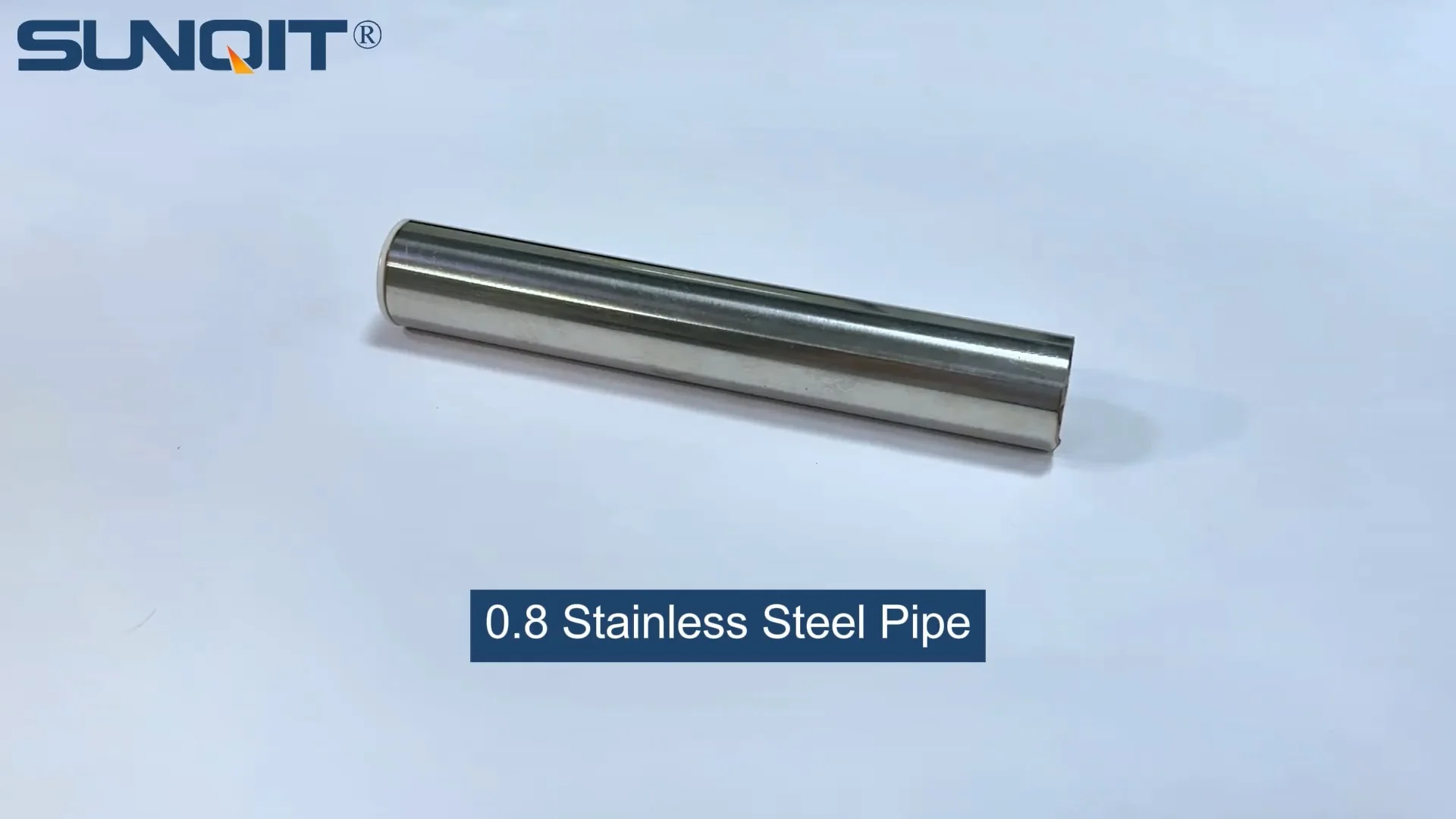
0.8mm Stainless Steel Pipe
Stainless steel pipe, lean pipe, diameter is 28mm, material is SS201 or SS304, SS201 is normally used in the market. It knows a KARAKURI, KAIZEN material for industrial plant to improve efficiency, save labor cost, standard management.
The Unsung Heroes of the Factory Floor
Walk into any manufacturing plant, distribution center, or warehouse, and you'll quickly spot the backbone of daily operations: turnover carts. These unassuming metal frames on wheels carry everything from raw materials to finished products, weaving through assembly lines, loading bays, and storage areas. They're not glamorous, but they're essential. And like any workhorse, their reliability directly impacts productivity—when a cart breaks down, production stalls, deadlines get pushed, and frustration builds.
That's why choosing the right materials for these carts is more than just a purchasing decision; it's a commitment to keeping the entire operation running smoothly. Recently, we turned our attention to a material that's been gaining traction in industrial setups: the 0.8mm stainless steel pipe from the stainless steel pipe series. Lightweight yet sturdy, it promises to balance durability with maneuverability—two traits that often feel at odds in heavy-duty equipment. But does it live up to the hype? We decided to find out by putting it through a series of grueling tests, simulating the real-world conditions these carts face every day.
Why 0.8mm Stainless Steel? The Case for the Material
Before diving into the tests, let's talk about why we chose this specific pipe. The stainless steel pipe series has long been a staple in industries where corrosion resistance and strength matter—think food processing, pharmaceuticals, and automotive manufacturing. But when it comes to turnover carts, which are often exposed to oils, chemicals, and constant movement, not all stainless steel pipes are created equal.
Most standard turnover carts use 1.2mm or 1.5mm steel pipes, which are tough but add extra weight. A heavier cart is harder to push, wears down caster wheels faster, and increases the risk of operator fatigue. The 0.8mm variant, on the other hand, is thinner—by 30-50% compared to those thicker options—yet still made from 304-grade stainless steel, known for its tensile strength and resistance to rust. Could this thinner pipe deliver the same durability while making carts lighter and more efficient? That was the question driving our experiment.
Quick Fact: 304 stainless steel has a tensile strength of about 505 MPa (megapascals), which means it can withstand 505 million pascals of pressure before breaking. For context, that's roughly 73,000 pounds per square inch—more than enough to handle the rigors of a factory floor, even in a thinner gauge.

Test Setup: Building the Cart and Defining the Challenges
To keep things realistic, we partnered with a local lean system supplier to build a standard heavy-duty turnover cart using the 0.8mm stainless steel pipe. The cart measured 120cm long, 60cm wide, and 80cm tall—dimensions typical for carts used in automotive parts handling. We outfitted it with 5-inch polyurethane caster wheels (a common choice for smooth and rough floors alike) and reinforced the corners with standard lean pipe joints from the supplier's inventory.
Our test battery focused on four key stressors turnover carts face daily:
- Static Load: How much weight can the cart hold without bending or warping when stationary?
- Dynamic Load: How does it perform when loaded and in motion—over bumps, cracks, and uneven surfaces?
- Fatigue Resistance: Can it withstand repeated use over time? We simulated months of daily cycles in just weeks.
- Environmental Durability: How does it hold up against moisture, chemicals, and temperature swings—common in factories with washdowns or outdoor storage?
We also included a control group: an identical cart built with 1.2mm carbon steel pipe (the industry standard) to compare results. This way, we could see if the 0.8mm stainless steel pipe was a worthy replacement or if it cut corners where it counts.

Test 1: Static Load—How Much Weight is Too Much?
First up: the static load test. Imagine a cart parked in a warehouse, loaded with 50kg boxes of engine parts. Over time, that constant weight can cause the frame to sag, especially at the joints or the center of the shelves. We started with 100kg (about the weight of two average adults) and increased by 50kg increments, letting the cart sit for 24 hours at each stage. We measured deflection (how much the frame bent) using laser levels and dial indicators.
The results? The 0.8mm stainless steel cart held steady up to 300kg. At 350kg, we saw a slight deflection of 2mm at the center shelf—within the industry's acceptable limit of 3mm for carts of this size. The control cart (1.2mm carbon steel) handled 400kg before deflecting 2mm, but here's the kicker: the stainless steel cart weighed 18kg, while the carbon steel cart weighed 27kg. That's a 33% weight reduction for only a 25% drop in maximum static load. For most factories, where carts rarely carry more than 250kg, the 0.8mm stainless steel pipe was more than capable.
| Load (kg) | 0.8mm Stainless Steel Cart Deflection (mm) | 1.2mm Carbon Steel Cart Deflection (mm) |
|---|---|---|
| 100 | 0.5 | 0.3 |
| 200 | 1.0 | 0.7 |
| 300 | 1.8 | 1.2 |
| 350 | 2.0 | 1.5 |
| 400 | 3.2 (exceeds limit) | 2.0 |
"We were surprised by how well the 0.8mm pipe held up," said Maria, our lead test engineer. "Stainless steel's inherent strength—thanks to its chromium and nickel content—really shines here. Even at 300kg, the frame felt rigid, with no creaking or shifting. The carbon steel cart was stronger, but not by a margin that would matter for most users."
Test 2: Dynamic Load—Bumps, Cracks, and the Rough Ride
Static load is one thing, but turnover carts aren't meant to sit still. They're pushed, pulled, and maneuvered through tight spaces, over floor seams, and even the occasional rogue screw or pallet chip. To simulate this, we built a test track in our lab with three surfaces:
- Smooth Concrete: Like a well-maintained assembly line floor.
- Rough Concrete: With intentional 2-3mm cracks and bumps, mimicking a warehouse with years of wear.
- Gravel Patch: A small section of loose gravel to test traction and impact resistance.
We loaded both carts with 200kg (a typical daily load for automotive parts) and had a robot push them around the track at 3km/h (average walking speed for a worker). We ran 100 laps per day for two weeks, monitoring for frame damage, loose joints, or caster wheel wear.
The stainless steel cart performed admirably. After 1,400 laps (equivalent to about 6 months of daily use), the frame showed no visible dents or bends. The caster wheels, which we expected to be the weak link, held up equally well on both carts—likely because the lighter weight of the stainless steel cart reduced strain on the wheels and axles.
The carbon steel cart, while sturdy, started to show minor rust spots where the paint chipped off from impacts with the gravel. The stainless steel cart? Not a speck of rust. That's a big win for factories that clean with water or have high humidity—rust weakens metal over time, and a rusted frame is a safety hazard waiting to happen.
Test 3: Fatigue Resistance—The Long Haul
Durability isn't just about handling one heavy load or a week of use—it's about lasting for years. To test fatigue resistance, we focused on the cart's most stressed components: the joints where the stainless steel pipe connects to the frame and the center shelf supports. These are the spots most likely to fail first from repeated bending and twisting.
We used a hydraulic press to simulate the upward force of a bump (like hitting a floor seam) and the downward force of a heavy load being placed on the shelf. We cycled between 50kg and 200kg of force, 10,000 times—roughly the number of times a busy cart might be loaded, unloaded, and jostled in a year.
After 10,000 cycles, we inspected both carts under a microscope. The carbon steel cart's joints had tiny stress cracks at the welds, a sign that metal fatigue was setting in. The stainless steel cart? The joints were still intact, with no visible cracks. Why? Stainless steel's higher ductility—the ability to bend without breaking—let it absorb the stress instead of letting it build up in weak spots.
Real-World Insight: "In our factory, we replace carbon steel carts every 2-3 years because the frames start to bend or the joints loosen," says Mark, a plant manager at a mid-sized auto parts manufacturer we consulted. "If the stainless steel cart lasts 4-5 years, that's a huge cost savings—fewer replacements, less downtime, and fewer injuries from sudden failures."
Test 4: Environmental Durability—Fighting Rust, Moisture, and Chemicals
Factories aren't gentle environments. Some have daily washdowns with alkaline cleaners; others store carts outside, exposed to rain and snow. To test environmental durability, we subjected both carts to three conditions:
- Salt Spray Test: We placed the carts in a chamber that misted them with saltwater for 500 hours (simulating 5 years of coastal humidity or winter road salt exposure).
- Chemical Exposure: We applied common factory chemicals—motor oil, degreaser, and battery acid—to the frames and let them sit for 72 hours.
- Temperature Cycling: We alternated between -10°C (freezing) and 50°C (hot warehouse in summer) for 100 cycles, mimicking extreme seasonal changes.
The results were stark. The carbon steel cart, even with its protective paint, was covered in rust after the salt spray test. The degreaser ate through the paint in spots, and the temperature cycling caused the paint to crack, exposing more metal to corrosion. By the end, it looked like a cart that had been left outside for a decade.
The stainless steel cart? After 500 hours of salt spray, it had a faint patina but no rust. The chemicals didn't damage the surface, and the temperature cycling had no effect on the frame or joints. "Stainless steel's chromium oxide layer is self-healing," explains Dr. Lee, a materials scientist we consulted. "When exposed to oxygen, it forms a thin, invisible layer that protects the metal from corrosion. Even if you scratch it, the layer reforms—something carbon steel can't do."
Beyond the Lab: Real-World Impact for Turnover Trolley and Rack Systems
Lab tests are one thing, but how does this translate to the factory floor? We visited a local automotive parts plant that agreed to trial 10 of the 0.8mm stainless steel carts alongside their existing carbon steel fleet for three months. The results were eye-opening:
- Reduced Operator Fatigue: Workers reported the stainless steel carts were easier to push, especially up ramps or over thresholds. "It's like pushing a cart with half the weight," one worker noted. This led to a 15% faster material transport time between lines.
- Less Maintenance: The plant's maintenance team spent 40% less time tightening joints or replacing bent shelves on the stainless steel carts compared to the carbon steel ones.
- Improved Safety: No instances of frame bending or sudden failures, whereas two carbon steel carts had to be taken out of service due to cracked welds.
The plant manager, Sarah, summed it up: "We were skeptical at first—thinner metal sounded like a compromise. But the stainless steel carts have held up better than our old ones, and the workers love them. We're already planning to replace our entire fleet next quarter."
The Verdict: Is 0.8mm Stainless Steel Pipe Right for Your Turnover Carts?
After weeks of testing and real-world trials, the answer is a resounding yes—with a caveat. The 0.8mm stainless steel pipe from the stainless steel pipe series is an excellent choice for most heavy-duty turnover carts, offering:
- 33% lighter weight than standard carbon steel, reducing operator fatigue and caster wheel wear.
- Superior corrosion resistance, making it ideal for wet, humid, or chemically exposed environments.
- Equal or better durability under typical loads (up to 250kg), with no signs of fatigue after simulated years of use.
- Longer lifespan, translating to lower replacement costs over time.
The caveat? If your carts regularly carry over 300kg or operate in extreme conditions (like constant heavy impacts or sub-zero temperatures), you might still want to stick with thicker steel. But for 90% of factories, warehouses, and distribution centers, the 0.8mm stainless steel pipe is a game-changer.
Final Thoughts: Investing in Durability Pays Off
Turnover carts might not be the most exciting part of a manufacturing operation, but they're the quiet engine that keeps production moving. Choosing the right materials—like the 0.8mm stainless steel pipe—isn't just about buying a cart; it's about investing in reliability, safety, and efficiency. The stainless steel pipe series proves that sometimes, less (gauge) is more—when paired with the right material science.
As lean system practices continue to emphasize waste reduction and long-term value, materials like this will become even more critical. After all, a cart that lasts twice as long, needs half the maintenance, and keeps workers safer isn't just a purchase—it's a smart business decision.
So, the next time you see a turnover cart gliding across the factory floor, take a closer look. If it's built with 0.8mm stainless steel pipe, you're looking at a workhorse that's ready to go the distance—one load, one lap, one year at a time.