- Company Articles
- Products and Technology
- Product knowledge
- E-Commerce Fulfillment Centers: Four Way Straight Lean Pipe Joint Chrome for Picking Racks

E-Commerce Fulfillment Centers: Four Way Straight Lean Pipe Joint Chrome for Picking Racks
Related Product
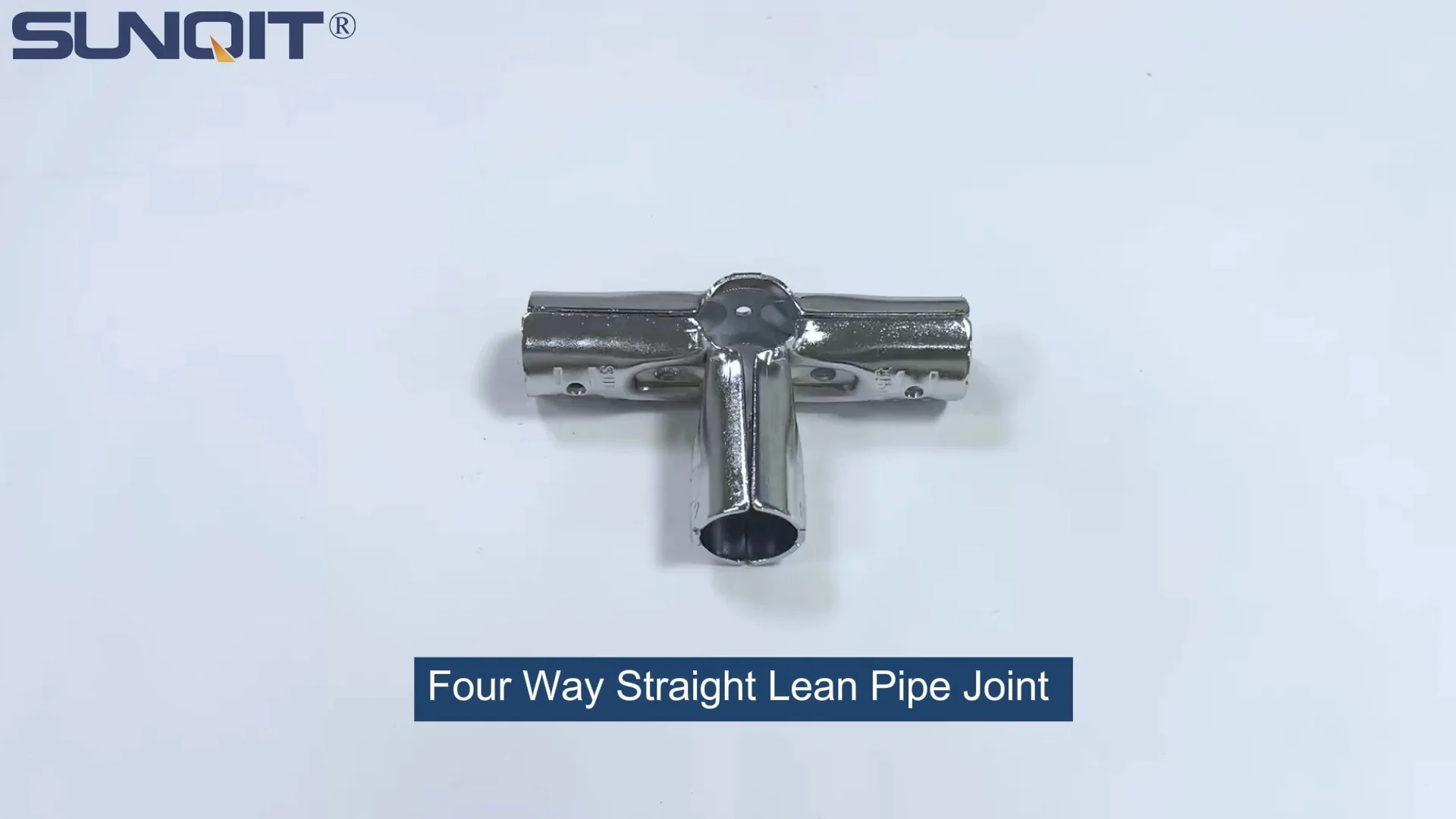
Four Way Straight Lean Pipe Joint Chrome
Four way lean pipe joint for 4 pcs 28MM lean pipe connection in straight angle, which used widely in workbench, flow rack, hand trolley frame connection.
In the world of e-commerce, where customers expect packages to arrive at their doorsteps faster than ever—sometimes even the same day—the backbone of success lies in the fulfillment center. These bustling hubs are where orders are picked, packed, and shipped, and their efficiency can make or break a brand's reputation. But here's the thing: as order volumes skyrocket and product catalogs expand, traditional storage and picking systems often struggle to keep up. That's where lean pipe systems, and specifically the four way straight lean pipe joint chrome, step in to revolutionize how fulfillment centers operate.
Picking racks, the unsung heroes of these centers, are more than just metal shelves. They're the pathways through which workers navigate to retrieve items, the structure that determines how much inventory can be stored, and the foundation of a smooth order fulfillment process. Yet, for many e-commerce businesses, picking racks have become a bottleneck—rigid, hard to reconfigure, and ill-equipped to handle the dynamic needs of modern retail. Let's dive into how the right tools, like the four way straight lean pipe joint chrome, are changing that narrative.
The Critical Role of Picking Racks in E-Commerce Fulfillment
Think about a typical e-commerce order. A customer clicks "buy" on a website, and within seconds, that order is sent to a fulfillment center. There, a worker—often armed with a scanner—must locate the exact product(s) from thousands of SKUs, pick them, and send them to a packing station. The time it takes to complete this "picking" step directly impacts how quickly the order ships. In fact, industry studies show that picking can account for up to 55% of a fulfillment center's labor costs and 40% of its total operational time. That's why optimizing picking racks isn't just about storage—it's about speed, accuracy, and keeping up with customer demands.
Modern fulfillment centers need picking racks that can do more than just hold boxes. They need to adapt to seasonal spikes (hello, Black Friday and holiday rushes), accommodate new product lines of varying sizes, and support faster picking methods like batch picking or zone picking. They also need to be safe, durable, and easy to navigate—because a cluttered or disorganized rack system doesn't just slow workers down; it increases the risk of errors and accidents.
When Traditional Picking Racks Fall Short: The Hidden Costs of Rigidity
For decades, fulfillment centers relied on traditional steel racks—heavy, welded, and built to last "forever." But in the age of e-commerce, "forever" is a risky timeline. Traditional racks are designed with a one-size-fits-all mindset: they're installed once, and reconfiguring them means hiring contractors, cutting metal, and halting operations for days. Want to add a shelf? You'll need to drill new holes. Need to adjust the height to fit taller items? Good luck—those welds aren't budging. And if your business grows (or shifts focus), you might end up tearing out perfectly good racks and starting over, wasting time and money.
Another issue? Weight and flexibility. Traditional steel racks are sturdy, but their weight makes them hard to move, even for small adjustments. They also lack the modularity to integrate with other systems, like conveyor belts or automated picking tools. For example, if you want to add a flow rack (a gravity-fed system that moves products toward the front of the rack as items are picked) to a traditional steel rack, you're often looking at custom fabrication, which is both expensive and time-consuming. And let's not forget corrosion: in busy centers where spills happen or humidity is high, uncoated steel racks can rust, weakening their structure over time.
Enter Lean Pipe Systems: Building for Agility
Lean pipe systems, also known as "flexible pipe systems," were originally developed in manufacturing to support lean production principles—eliminating waste, improving efficiency, and adapting to change. Today, they're making waves in e-commerce fulfillment centers, and for good reason. At their core, lean pipe systems are modular: they use lightweight pipes (often steel, aluminum, or stainless steel) and connectors to build everything from picking racks and workbenches to trolleys and shelving units. No welding, no drilling, no permanent structures—just simple, tool-free assembly that can be reconfigured in minutes.
What makes lean pipe systems so appealing? For starters, they're flexible . Need to add a shelf to a picking rack to accommodate a new product line? Just slide a few pipes into new connectors. Want to shrink a rack during a slow season to free up floor space? Disassemble and rebuild it in a different layout. This adaptability is a game-changer for e-commerce businesses, where inventory needs can shift overnight.
They're also lightweight but surprisingly strong. Unlike traditional steel racks, lean pipe systems are easy to maneuver, which reduces the risk of injury during setup or reconfiguration. And because they're made with materials like aluminum or chrome-plated steel, they're resistant to corrosion, making them durable enough to handle the wear and tear of a busy fulfillment center. Plus, they're cost-effective: instead of replacing entire rack systems when needs change, you can simply add or remove components, saving on long-term expenses.

The Unsung Hero: Four Way Straight Lean Pipe Joint Chrome
If lean pipe systems are the backbone of a flexible fulfillment center, then the connectors are its joints—and none are more versatile than the four way straight lean pipe joint chrome. This small but mighty component is what holds the system together, allowing you to build complex, customized structures with ease. Let's break down why it's become a staple in modern picking racks.
Design That Delivers: What Makes This Joint Stand Out?
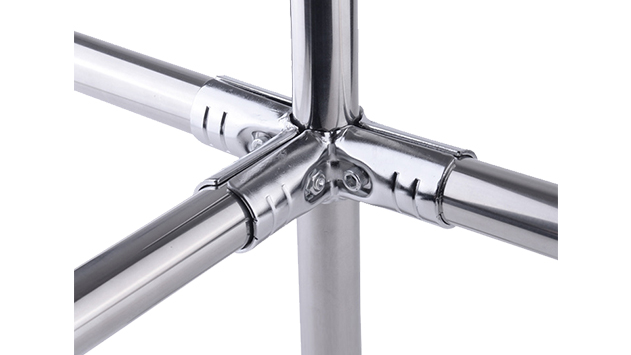
First, let's talk about the "four way" part. As the name suggests, this joint has four connection points—one on each side—allowing pipes to extend in four directions (up, down, left, right). This means you can build multi-level picking racks, add cross-bracing for stability, or even attach accessories like bins or label holders without needing extra connectors. For example, a standard picking rack might have vertical pipes for height and horizontal pipes for shelves; with a four way joint, you can add diagonal pipes for extra support or attach a side shelf for small parts—all with a single connector.
Then there's the "chrome" finish. Chrome plating isn't just for looks (though it does give the joint a sleek, professional appearance). It's a protective layer that resists rust and corrosion, which is crucial in fulfillment centers where spills, humidity, or cleaning chemicals can damage uncoated metal. This durability ensures the joint will last for years, even in high-traffic areas.
Perhaps the most underrated feature? Ease of use . Unlike traditional connectors that require tools or tight tolerances, the four way straight lean pipe joint chrome uses a simple clamping mechanism. Just slide a pipe into the joint, tighten a screw (often by hand or with a basic hex key), and it's secure. This tool-free assembly means workers can reconfigure racks without specialized training, saving time and reducing downtime.
And let's not forget load capacity. Despite its lightweight design, the four way straight lean pipe joint chrome is built to handle heavy loads. Chrome-plated steel construction ensures it can support the weight of fully stocked shelves, making it reliable for even the busiest picking racks. Whether you're storing small electronics or bulkier items like apparel or home goods, this joint won't bend or break under pressure.
Beyond the Joint: Creating a Cohesive Fulfillment Ecosystem
The four way straight lean pipe joint chrome is powerful on its own, but its true potential shines when paired with other lean components. Fulfillment centers aren't just about picking racks—they're about creating a seamless flow from storage to shipping. Let's look at how this joint integrates with other tools to build a complete, efficient system.
Flow Racks: Keeping Products Moving
Flow racks are a favorite in fulfillment centers because they use gravity to move products toward the front of the rack as items are picked, reducing the need for workers to reach deep into shelves. By using the four way straight lean pipe joint chrome, you can easily attach flow rack components (like roller tracks) to picking racks. For example, a picking rack with a flow rack section at the front allows workers to grab items from the rolling track, which automatically replenishes from the back—cutting down on picking time and reducing errors.
Lean Pipe Workbenches: From Picking to Packing
Once items are picked, they need to be packed—and that's where lean pipe workbenches come in. These workbenches, built with the same lean pipe and connectors, can be customized with shelves, bins, and even conveyor belt attachments to streamline packing. The four way joint ensures the workbench is sturdy enough to hold packing materials, scales, and label printers, while remaining flexible enough to adjust height or add accessories as needed.
Conveyors: Moving Goods with Ease
In larger fulfillment centers, conveyors are essential for moving picked items from the racks to packing stations or shipping docks. Lean pipe systems, with the help of the four way joint, can be used to build lightweight conveyor supports or guide rails, ensuring conveyors stay aligned and stable. This integration means you can extend or reposition conveyors as your layout changes, without overhauling the entire system.
Aluminum Profile: Adding Strength and Style
For centers that need extra structural support, aluminum profile (extruded aluminum beams with T-slots) can be combined with lean pipe systems. The four way straight lean pipe joint chrome works seamlessly with aluminum profile accessories, allowing you to build hybrid structures that are both lightweight and ultra-durable. For example, using aluminum profile for the vertical supports of a picking rack and lean pipe for the horizontal shelves creates a system that's strong enough for heavy loads but easy to reconfigure.
| Feature | Traditional Picking Racks | Lean Pipe Picking Racks (with Four Way Joint Chrome) |
|---|---|---|
| Reconfiguration Ease | Requires welding/drilling; often permanent | Tool-free, modular; reconfigurable in minutes |
| Weight Capacity | High, but rigid | High, with flexible load distribution |
| Corrosion Resistance | Often uncoated; prone to rust | Chrome finish or aluminum; rust-resistant |
| Customization Options | Limited; pre-designed sizes only | Unlimited; build to fit any product/SKU |
| Cost Over Time | High (replacement costs for new layouts) | Low (reuse components; minimal replacement) |
From Theory to Practice: Real Results in E-Commerce
Let's put this all into context with a hypothetical example. Imagine a mid-sized e-commerce fulfillment center that specializes in electronics. Last year, their order volume grew by 40%, and their product catalog expanded to include larger items like laptops and tablets. Their traditional steel picking racks, which had worked fine for smaller items, were suddenly too rigid: they couldn't add shelves tall enough for the new products, and reconfiguring them would take weeks of downtime.
The operations manager decided to switch to a lean pipe system, using four way straight lean pipe joint chrome to build new picking racks. Within a weekend, the team disassembled the old racks and built new ones that were taller, had adjustable shelves, and included flow rack sections for fast-moving items like phone chargers. They also added lean pipe workbenches at the end of each rack aisle, where workers could pack orders immediately after picking, cutting down on travel time.
The results? Picking time decreased by 25% because workers no longer had to reach deep into shelves (thanks to the flow racks). Storage density increased by 30%, as the adjustable shelves allowed them to fit more products in the same floor space. And during the holiday rush, they reconfigured half the racks in a single day to accommodate seasonal inventory, something that would have been impossible with traditional systems. The four way joint chrome was key here—its versatility meant they could add, remove, or adjust components without slowing down operations.
Choosing Your Lean Pipe Partner: What to Look For
Now that you're convinced of the benefits, how do you choose the right lean pipe system for your fulfillment center? It starts with finding a supplier that understands your unique needs. Look for a partner that offers a wide range of components—not just pipes and joints, but also accessories like roller tracks, casters, and workbench tops. This ensures you can build a cohesive system without mixing and matching parts from different brands (which can lead to compatibility issues).
Quality is also non-negotiable. The four way straight lean pipe joint chrome, for example, should be made from high-grade steel with a thick chrome plating to resist corrosion. Ask for load capacity specs and test reports—you don't want to skimp on durability only to have racks fail under heavy inventory. Customization is another factor: a good supplier will work with you to design systems tailored to your space, product types, and workflow, not just sell you off-the-shelf solutions.
Finally, consider after-sales support. Even the most modular systems can have learning curves, so look for suppliers that offer training, installation help, or troubleshooting assistance. A partner that's invested in your success will go a long way in ensuring your lean pipe system delivers the results you need.
Future-Proofing Your Fulfillment Center: Lean Systems in the Age of Speed
As e-commerce continues to evolve—with trends like same-day delivery, AI-powered inventory management, and even automated picking robots—fulfillment centers need systems that can grow and adapt. Lean pipe systems, with their modular design and four way straight lean pipe joint chrome, are built for this future. They're compatible with automation tools (think: robot-friendly roller tracks or sensor-equipped shelves), and their flexibility means they can integrate with new technologies without requiring a complete overhaul.
For example, as more centers adopt collaborative robots (cobots) to assist with picking, lean pipe racks can be reconfigured to create wider aisles or lower shelves to accommodate these machines. Or, as AI predicts seasonal demand spikes, lean systems can be quickly expanded to add temporary storage, then scaled back when the rush is over. In a world where speed and adaptability are everything, lean pipe systems aren't just a trend—they're a necessity.
At the end of the day, e-commerce fulfillment is all about delivering on promises—promises of fast shipping, accurate orders, and reliable service. Picking racks might not be the most glamorous part of that equation, but they're critical. By upgrading to lean pipe systems and leveraging tools like the four way straight lean pipe joint chrome, fulfillment centers can transform from chaotic warehouses into well-oiled machines, ready to tackle whatever the future of e-commerce throws their way. So, if you're looking to boost efficiency, reduce costs, and stay ahead of the competition, it might be time to rethink your racks—and let lean pipe systems lead the way.