- Company Articles
- Products and Technology
- Product knowledge
- Eco-Friendly Adjustable Leveling Feet: Recyclable Materials in Lean Manufacturing

Eco-Friendly Adjustable Leveling Feet: Recyclable Materials in Lean Manufacturing
Related Product
Adjustable Leveling Feet
Adjustable leveling feet are designed to keep machines level when placed on uneven or sloped ground. Otherwise known as adjustable equipment feet, they are available to order in a wide variety of size and load capacity combinations.
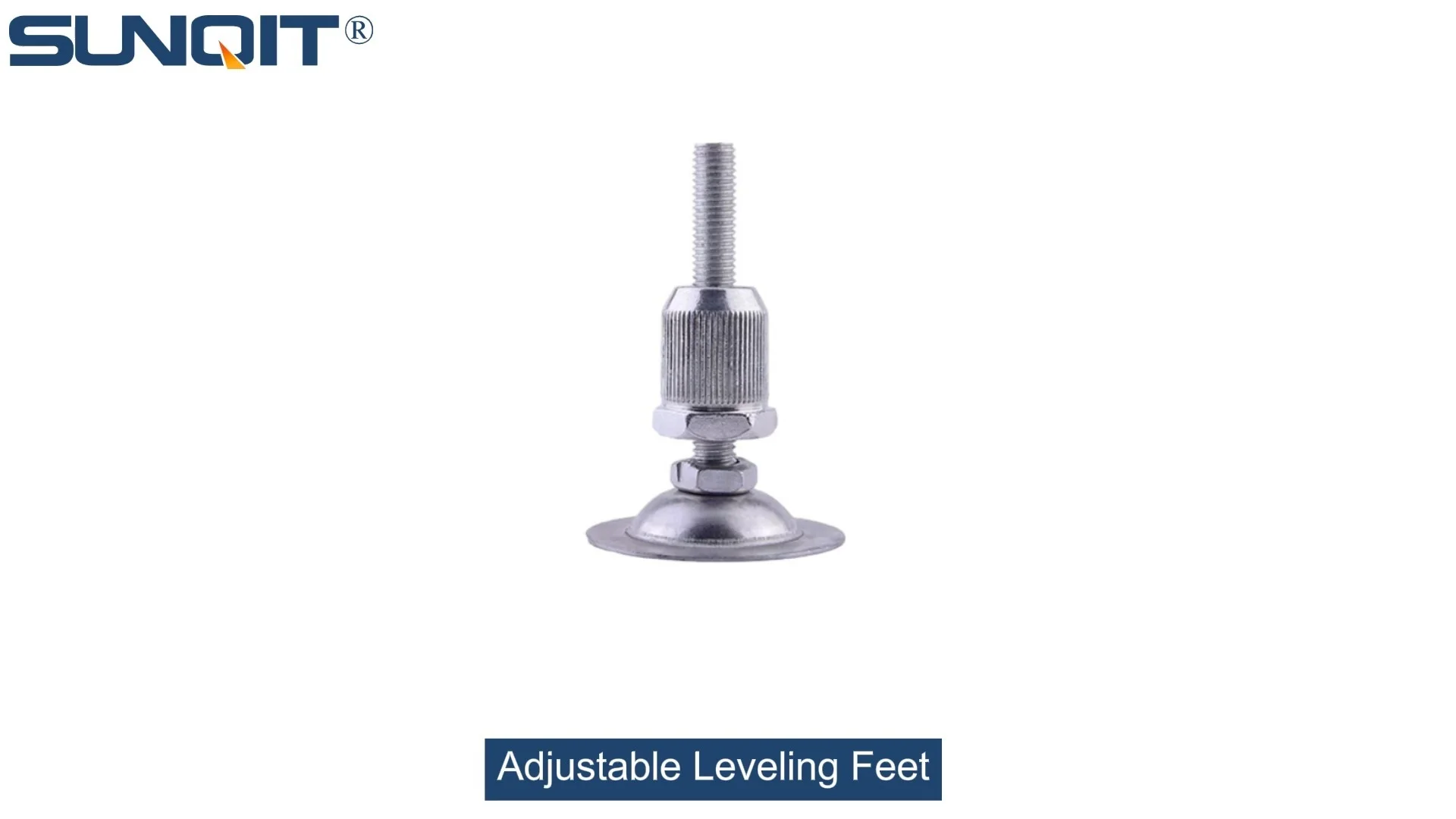
In the bustling world of manufacturing, where every second counts and every resource matters, there's a quiet revolution happening. It's not in the flashy robots or the high-tech software—though those have their place. It's in the small, unassuming components that hold everything together. Components like adjustable leveling feet. These humble pieces, often overlooked, are the unsung heroes of lean manufacturing, ensuring workbenches stay steady, conveyors run smoothly, and material racks stand firm. But here's the thing: in today's push for sustainability, even the smallest parts are getting a green makeover. Enter eco-friendly adjustable leveling feet, crafted from recyclable materials, and how they're reshaping the future of lean systems one stable workbench at a time.
Lean Manufacturing: Where Efficiency Meets Purpose
Lean manufacturing isn't just a buzzword—it's a philosophy. Born from the Toyota Production System decades ago, it's rooted in two simple ideas: eliminate waste and continuous improvement. But in 2025, "waste" isn't just about time or defective products. It's about the planet, too. Manufacturers are waking up to a powerful truth: lean systems can't truly thrive if they're built on unsustainable practices. The goal now? Create processes that are as kind to the environment as they are to the bottom line.
Think about it: a traditional lean setup might focus on cutting down on excess inventory or streamlining workflows, but if the tools and components used to build that setup end up in landfills after a short lifespan, is that really "lean"? Hardly. Today's manufacturers are asking smarter questions: What if the materials we use can be recycled? What if even the smallest parts, like leveling feet, contribute to a circular economy? This shift isn't just about checking a "green" box—it's about resilience. A lean system that prioritizes recyclable materials isn't just more responsible; it's more adaptable, less dependent on finite resources, and better equipped to weather supply chain shocks.
Why Adjustable Leveling Feet Matter More Than You Think
Let's talk about the star of the show: adjustable leveling feet. If you've ever walked into a factory, you've seen them—those small, threaded devices bolted to the bottom of workbenches, conveyor frames, or material racks. Their job sounds simple: keep things level. But "level" isn't just about comfort. In precision manufacturing, a wobbly workbench can throw off measurements by millimeters, leading to defective products. A uneven conveyor might cause parts to jam, halting production lines. A shaky material rack could even pose safety risks, with tools or components teetering on the edge.
Adjustable leveling feet solve these problems by letting operators tweak height with a twist, compensating for uneven floors or worn surfaces. They're the difference between a smooth, efficient workflow and a frustrating day of stops and starts. But here's the catch: traditional leveling feet are often made from materials like non-recyclable plastic or solid cast iron. Plastic feet crack under heavy loads; cast iron, while durable, is heavy to transport (adding to carbon emissions) and tough to recycle without significant energy use. Enter recyclable materials—aluminum profile, in particular—and suddenly, these small components become part of the sustainability solution.

Aluminum Profile: The Recyclable Workhorse of Modern Manufacturing
When we talk about recyclable materials in manufacturing, aluminum profile is a name that comes up again and again—and for good reason. Aluminum is one of the most recyclable materials on the planet. Unlike plastic, which degrades in quality each time it's recycled, aluminum can be melted down and reused infinitely without losing strength or durability. In fact, recycling aluminum uses just 5% of the energy needed to produce it from raw ore. That's a game-changer for manufacturers looking to shrink their carbon footprint.
But aluminum profile isn't just eco-friendly—it's also a dream for lean systems. Aluminum is lightweight, making it easy to transport and install (no more straining to lift heavy cast iron feet). It's resistant to corrosion, so it holds up in damp or dusty factory environments. And it's infinitely customizable. Thanks to aluminum profile accessories like brackets, clamps, and connectors, manufacturers can design leveling feet that fit their exact needs—whether it's a short, stubby foot for a low workbench or an extra-tall, threaded version for a wobbly conveyor.
Consider a scenario: a electronics manufacturer in Vietnam switches from plastic leveling feet to aluminum profile-based ones. The old plastic feet would crack after 6–8 months of heavy use, ending up in landfills. The new aluminum feet? They've been in place for two years, show no signs of wear, and when they eventually need replacing, the manufacturer can send them back to their lean pipe supplier to be melted down and turned into new components. No waste, no guilt—just a closed-loop system that aligns with their lean goals.

The Lean Pipe Supplier: Your Partner in Sustainable Sourcing
Of course, none of this works without the right partner: the lean pipe supplier. These suppliers aren't just vendors—they're collaborators in the sustainability journey. A forward-thinking lean pipe supplier doesn't just sell parts; they understand the nuances of lean systems and the importance of recyclable materials. They'll work with you to choose the right aluminum profile for your leveling feet, recommend accessories that enhance durability, and even help design custom solutions for unique challenges.
Take, for example, a mid-sized automotive parts plant in Mexico. They needed leveling feet for their new line of aluminum workbenches—workbenches that would hold heavy tooling and see constant use. Their lean pipe supplier didn't just ship off generic feet. Instead, they analyzed the plant's floor plans, noted the uneven concrete in the back corner, and suggested adjustable aluminum feet with larger, non-slip bases. The result? The workbenches stayed steady, even in the tricky corner, and the aluminum material meant the plant could meet its sustainability targets for the quarter. It's partnerships like these that turn "green goals" into tangible results.
But what should you look for in a lean pipe supplier when prioritizing eco-friendly adjustable leveling feet? Start with their material sourcing: Do they use recycled aluminum? Can they provide certificates of recyclability? Next, check their design capabilities—can they customize feet to fit your specific equipment? Finally, ask about their end-of-life process: Will they take back old components for recycling? A supplier that checks these boxes isn't just selling you parts; they're investing in your long-term success.

Traditional vs. Eco-Friendly Leveling Feet: A Side-by-Side Comparison
Still on the fence about making the switch? Let's break it down. The table below compares traditional leveling feet materials with eco-friendly options like aluminum profile, so you can see the difference for yourself:
| Material | Recyclability | Durability (Average Lifespan) | Weight (Per Unit) | Short-Term Cost | Long-Term Cost | Environmental Impact |
|---|---|---|---|---|---|---|
| Plastic (Traditional) | Low; often non-recyclable curbside | 6–8 months | 0.2 lbs | Low ($2–$5/unit) | High (frequent replacement) | High; ends in landfills, emits toxins when incinerated |
| Cast Iron (Traditional) | Medium; recyclable but energy-intensive | 3–5 years | 2.5 lbs | Medium ($8–$12/unit) | Medium (durable but heavy shipping costs) | Medium; high carbon footprint from mining/transport |
| Aluminum Profile (Eco-Friendly) | High; 100% recyclable, low energy to reuse | 5–7 years (or more) | 0.5 lbs | Medium-High ($10–$15/unit) | Low (minimal replacement, recyclable value) | Low; recycled materials, lightweight shipping, closed-loop potential |
| Recycled Stainless Steel (Eco-Friendly) | High; infinitely recyclable | 7–10 years | 1.2 lbs | High ($15–$20/unit) | Low (extremely durable, recyclable) | Low; uses 70% less energy than virgin stainless steel |
As the table shows, eco-friendly options like aluminum profile require a slightly higher upfront investment, but they pay off in the long run—both financially and environmentally. And when you factor in the alignment with lean principles (reducing waste, improving efficiency), the choice becomes clear: sustainable leveling feet aren't just good for the planet; they're good for business.
Beyond the Feet: How Small Changes Spark Big Shifts
Adjustable leveling feet are just the start. Once manufacturers embrace recyclable materials in these small components, it's easier to see the potential for other parts of the lean system. Maybe the workbench tops, traditionally made from particleboard (which often contains formaldehyde), could switch to aluminum honeycomb panels—lightweight, strong, and fully recyclable. Or the casters on turnover trolleys, which wear out quickly, could be upgraded to aluminum or recycled steel versions. It's a ripple effect: one sustainable choice leads to another, and suddenly, the entire factory floor becomes a model of eco-friendly efficiency.
Take the example of a medical device manufacturer in Germany. They started by switching to aluminum profile leveling feet for their assembly workbenches. A year later, they noticed how well the aluminum held up, so they replaced their plastic roller track guide rails with aluminum ones. Now, they're working with their lean pipe supplier to design a fully recyclable material rack system, using aluminum profile and recycled stainless steel components. "It started with the feet," their operations manager told me, "but once we saw how easy it was to be sustainable without sacrificing performance, we couldn't stop."
The Future of Lean Manufacturing: Small Parts, Big Impact
So, what does the future hold for eco-friendly adjustable leveling feet and recyclable materials in lean manufacturing? If current trends are any indication, the future is bright—and green. As regulations around sustainability tighten (the EU's new circular economy laws, for example, require manufacturers to reduce waste by 50% by 2030), and as consumers demand more responsible products, even the smallest components will come under scrutiny. Adjustable leveling feet made from aluminum profile won't just be an "option"—they'll be the standard.
Innovation will play a role, too. We're already seeing lean pipe suppliers experiment with aluminum alloys that are even stronger and lighter than traditional aluminum profile. There's talk of "smart" leveling feet with built-in sensors that alert operators when they're loose—saving time on inspections and reducing waste from premature replacements. And as 3D printing technology advances, we might one day see custom aluminum leveling feet printed on-site, using recycled aluminum powder, cutting down on shipping emissions entirely.
But perhaps the most exciting part? The mindset shift. Manufacturers are starting to realize that sustainability and efficiency aren't opposites—they're partners. A lean system that uses recyclable materials isn't just "greener"; it's more efficient. It reduces waste, cuts down on replacement costs, and builds resilience into the supply chain. And it all starts with the small stuff: the adjustable leveling feet, the roller tracks, the brackets. The parts that don't make headlines, but make all the difference.
Conclusion: The Power of Small Choices
At the end of the day, eco-friendly adjustable leveling feet are more than just a product. They're a statement. A statement that says, "We care about more than just the bottom line. We care about how we build, what we use, and the world we leave behind." In the grand scheme of lean manufacturing, they might seem tiny—but tiny things have a way of adding up. A thousand adjustable leveling feet, each made from recycled aluminum, each keeping a workbench steady, each avoiding a trip to the landfill—that's a thousand small wins for efficiency, for sustainability, and for the future of manufacturing.
So, the next time you walk into a factory, take a moment to look down. Notice those little feet holding up the workbenches, the conveyors, the racks. They might not look like much, but in their quiet, steady way, they're building a better, greener, more lean world—one level surface at a time.