- Company Articles
- Products and Technology
- Product knowledge
- Eco-Friendly Aluminum Pipe with Tray Holder: Reusable & Sustainable Design

Eco-Friendly Aluminum Pipe with Tray Holder: Reusable & Sustainable Design
Related Product
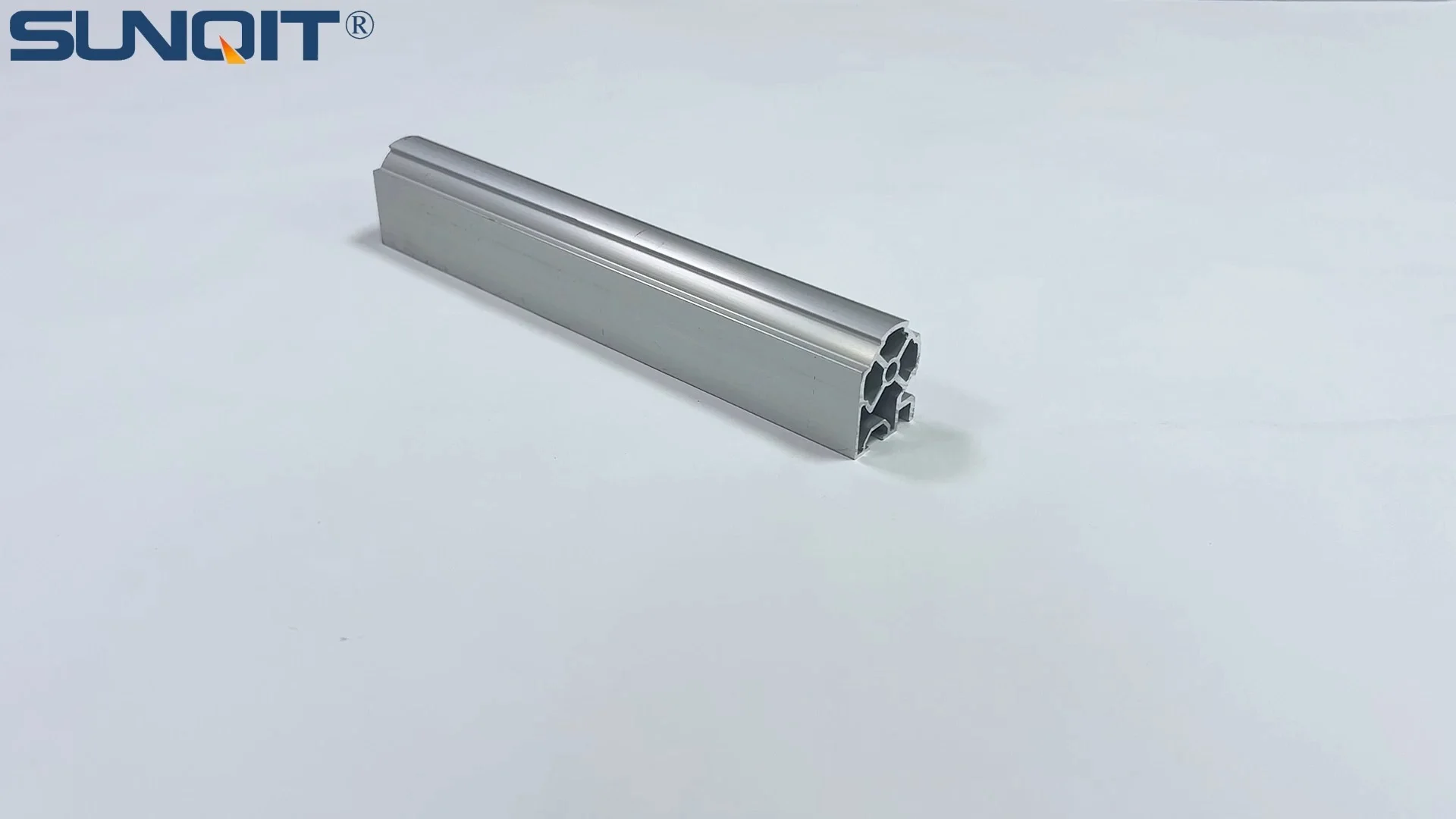
Aluminum Pipe with Tray Holder
Aluminum pipe with tray holder,the pipe one side connected by a joint, the other side with a slot which can hold a tray or a aluminum pannel.
How modular aluminum solutions are reshaping sustainable workspaces and lean manufacturing
The Sustainability Shift: Why Workspaces Are Going Green
Walk into any modern factory, warehouse, or office today, and you'll likely notice a quiet revolution unfolding. It's not just about faster machines or fancier gadgets—it's about purpose. Businesses everywhere are waking up to a critical truth: long-term success isn't just measured in profits, but in how well we steward the resources we've been given. Sustainability, once a "nice-to-have" buzzword, has become a core value, driving decisions from product design to daily operations. And nowhere is this shift more tangible than in the tools and systems we use to build our workspaces.
Think about it: traditional workbenches, material racks, and production lines are often built with single-use materials or rigid structures that end up in landfills when needs change. Steel pipes rust, plastic components degrade, and wood warps—leaving businesses with no choice but to replace entire systems, wasting time, money, and resources. But what if there was a better way? What if the very structures that power our workflows could also reduce our environmental footprint? Enter the eco-friendly aluminum pipe with tray holder: a simple yet transformative solution that marries durability, adaptability, and sustainability in one sleek package.
What Is an Eco-Friendly Aluminum Pipe with Tray Holder?
Let's start with the basics. At its core, an eco-friendly aluminum pipe with tray holder is a modular building system designed for workspaces. It combines lightweight, high-strength aluminum pipes with specialized tray holders (and a range of accessories) to create everything from workbenches and material racks to assembly lines and storage solutions. But what truly sets it apart is its commitment to sustainability—right down to the materials and design.
Aluminum, the star of the show, is a wonder material for the environmentally conscious. Unlike steel, which requires intensive mining and processing, aluminum is 100% recyclable. In fact, nearly 75% of all aluminum ever produced is still in use today, thanks to its ability to be melted down and repurposed without losing quality. And recycling aluminum uses just 5% of the energy needed to produce new aluminum—a staggering reduction that slashes carbon footprints. For businesses looking to cut emissions, that's a game-changer.
Then there's the tray holder itself. Far more than a simple shelf, it's engineered for functionality and ergonomics. Most designs feature adjustable heights, non-slip surfaces, and curved edges to prevent materials from sliding off—perfect for holding tools, components, or finished products within arm's reach. Whether you're assembling electronics on a workbench or organizing parts in a warehouse, the tray holder keeps your space clutter-free, your workflow smooth, and your team efficient.

The Reusable Advantage: Beyond "Use It and Lose It"
Here's where the magic really happens: reusability. Traditional workspace systems are often "set it and forget it"—once built, they're hard to modify, and when your needs change (say, you launch a new product line or expand your team), you're stuck tearing everything down and starting over. That's not just frustrating—it's wasteful. All that old steel, wood, or plastic? Most of it ends up in landfills, contributing to the 2 billion tons of waste generated globally each year by businesses.
Eco-friendly aluminum pipe systems flip the script. They're built on the principle of modularity: pipes connect to joints, tray holders clip onto rails, and accessories (like casters or extra shelves) snap into place—no welding, no heavy tools, no permanent commitments. Need to shorten a workbench? Unscrew a few joints, remove a pipe, and you're done. Want to add a second tray holder for more storage? Slide it onto the aluminum guide rail and tighten a clamp. When your entire operation relocates? Disassemble the whole system, pack it in boxes, and rebuild it at the new site. It's like building with giant, industrial-grade Legos—only better, because these "blocks" last for decades.
This reusability translates to serious cost savings, too. Let's do the math: A traditional wooden workbench might cost $200 upfront, but if you need to replace it in 3 years (due to warping or a workflow change), that's $67 per year. An aluminum lean pipe workbench, on the other hand, might cost $300 initially, but with proper care, it can last 15+ years—and you can reconfigure it 10 times over without buying new parts. That drops the annual cost to $20 or less. Over time, sustainability pays for itself.

Integrating with Lean Systems: Efficiency Meets Green Goals
If you've spent any time in manufacturing or operations, you've probably heard of "lean systems"—the methodology focused on minimizing waste (whether that's time, materials, or energy) while maximizing value. It's all about streamlining workflows, reducing bottlenecks, and making every action count. What you might not have realized is how perfectly eco-friendly aluminum pipes align with lean principles.
Take waste reduction, for example. Lean systems hate "muda" (the Japanese term for waste), and one of the biggest culprits is "excess inventory" or "overproduction." But what if your workspace itself is a form of waste? A rigid, non-adaptable system forces you to work around it, leading to inefficient movements, lost time, and even over-ordering of materials to compensate for poor storage. Aluminum lean pipe systems solve this by adapting to your workflow, not the other way around. Need a material rack that feeds parts directly to your assembly line? Build it with aluminum pipes and roller tracks. Want a workbench that moves with your team as they shift tasks? Add casters to the base. By designing your space to fit your process, you cut out the waste—both in time and resources.
Then there's "kaizen," the lean principle of continuous improvement. Workspaces aren't static, and neither are your goals. With aluminum pipes, you can tweak, adjust, and optimize your setup as you learn what works. Maybe you realize the tray holder would be more useful at waist height instead of chest height—no problem, just loosen the joints and reposition it. Or perhaps you need to add a third shelf to a material rack during peak season—grab a few extra pipes and connectors, and you're done. This flexibility ensures your workspace grows and evolves with your business, so you never stop improving.
Aluminum Profile Accessories: The Secret to Versatility
A great system is only as good as its accessories, and eco-friendly aluminum pipe systems don't disappoint. Aluminum profile accessories are the unsung heroes that turn basic pipes and tray holders into fully customized solutions. Let's take a closer look at a few standouts:
Internal Rotatary Aluminum Joints:
These nifty connectors let you pivot pipes at almost any angle—90 degrees, 45 degrees, even 135 degrees—without losing stability. Need a workbench with a corner shelf? Rotate a joint, lock it in place, and you're golden. They're perfect for tight spaces or unique layouts where straight lines just won't cut it.
Aluminum Guide Rails:
Think of these as the "highways" for your tray holders. Guide rails (like Aluminum Guide Rail A or B) mount to aluminum pipes, allowing tray holders (or even small carts) to slide smoothly along the length. No more lifting heavy materials—just push, and they glide into place. It's a small detail that makes a huge difference in reducing physical strain on your team.
Plastic Roller Track Guide Rails:
For even smoother movement, these yellow or grey plastic rails add a low-friction surface to your setup. They're ideal for tray holders carrying lightweight parts or for assembly lines where components need to flow from station to station without jamming. Plus, they're resistant to scratches and corrosion, so they'll keep working like new for years.
Caster Wheels:
Want your workbench or material rack to be mobile? Add caster wheels with brakes to the base. Suddenly, your stationary setup becomes a portable workstation that can follow your team across the floor—perfect for dynamic environments where flexibility is key.
The best part? All these accessories are designed to work together seamlessly. Mix and match joints, rails, and casters to create a system that's uniquely yours. No more forcing square pegs into round holes—with aluminum profile accessories, your workspace fits your needs, not the other way around.
Traditional vs. Aluminum Lean Pipes: A Side-by-Side Comparison
Still on the fence about making the switch? Let's put traditional materials head-to-head with aluminum lean pipes. The table below breaks down the key differences—from cost and durability to environmental impact:
| Feature | Traditional Steel/Plastic Pipes | Eco-Friendly Aluminum Lean Pipes |
|---|---|---|
| Recyclability | Steel is recyclable but requires energy; plastic is rarely recycled (only 9% globally) | 100% recyclable, with 75% of all aluminum ever made still in use |
| Weight | Heavy (steel) or flimsy (plastic); hard to move without machinery | Lightweight (1/3 the weight of steel); easy to assemble/disassemble by hand |
| Durability | Steel rusts; plastic cracks/ fades in sunlight; lifespan of 3–5 years | Resistant to rust, corrosion, and UV damage; lifespan of 15+ years |
| Modularity | Rigid; requires welding or permanent fasteners; hard to modify | Tool-free assembly; joints twist and lock; easy to reconfigure in minutes |
| Environmental Impact | High carbon footprint (steel mining/processing); plastic contributes to landfill waste | Low carbon footprint (recycled aluminum uses 5% of new aluminum's energy); zero waste from modification |
| Long-Term Cost | Low upfront cost, but high replacement costs (needs replacing every 3–5 years) | Slightly higher upfront cost, but minimal replacement costs (lasts 15+ years; reusable parts) |
The verdict? While traditional materials might seem cheaper at first glance, aluminum lean pipes deliver more value over time—both for your bottom line and the planet. They're an investment in sustainability, efficiency, and adaptability that pays dividends for years to come.
Real-World Impact: Workbenches That Work Harder (and Greener)
Let's bring this to life with a real example: the humble workbench. In factories, labs, and workshops worldwide, workbenches are the heart of daily operations. They're where ideas become products, where teams collaborate, and where efficiency (or inefficiency) can make or break a day. Traditional workbenches are often bulky, fixed, and made of particleboard or steel—sturdy, but far from sustainable.
Now imagine an aluminum lean pipe workbench with a tray holder. Here's how it transforms the space:
Ergonomics First:
The height is adjustable—no more hunching over or straining to reach tools. The tray holder sits at waist level, so parts and gadgets are always within arm's reach, cutting down on wasted movement (and worker fatigue).
Built to Last:
Aluminum pipes resist scratches, dents, and rust, even in messy environments (think oil, coolant, or dust). Spill something? Wipe it off with a cloth—no stains, no warping, no need for replacement.
On the Go:
Add caster wheels, and suddenly your workbench can roll to wherever it's needed. Need to collaborate with a teammate across the floor? Push it over. Moving to a new facility? Disassemble it in 20 minutes, pack it in a box, and rebuild it at the new location—no waste, no hassle.
Grows with You:
Launching a new product that requires more workspace? Add an extra section to the workbench with a few pipes and joints. Need to store larger tools? Swap out the small tray holder for a deeper one. Your workbench evolves with your business, so you never outgrow it.
This isn't just a better workbench—it's a better way to work. And when you multiply that impact across every workbench, material rack, and assembly line in your facility, the sustainability gains add up fast.
The Numbers Don't Lie: Environmental Impact by the Stats
Let's talk numbers—because sustainability isn't just about good intentions; it's about measurable results. Here's how eco-friendly aluminum pipe systems stack up:
Recycling Wins:
As mentioned earlier, aluminum recycling uses 5% of the energy of producing new aluminum. To put that in perspective: recycling one ton of aluminum saves 14,000 kWh of energy—enough to power a home for over a year. For a mid-sized factory using 10 tons of aluminum pipes, that's 140,000 kWh saved over the system's lifetime.
Waste Reduction:
Traditional workspace systems generate an average of 500 pounds of waste per 100 square feet when replaced. Aluminum lean pipes? Zero waste from replacement, since parts are reused. Over 15 years, that's 7,500 pounds of waste kept out of landfills for a single facility—equivalent to taking 3 cars off the road for a year.
Carbon Footprint Cut:
Producing new steel emits 1.8 tons of CO2 per ton; aluminum (when recycled) emits just 0.1 tons per ton. For a business switching from steel to aluminum, that's a 94% reduction in carbon emissions for their workspace systems. Multiply that by facilities worldwide, and the impact is massive.
These numbers aren't just impressive—they're actionable. Every business that chooses aluminum lean pipes is taking a concrete step toward a greener future. And as more companies join the movement, the collective impact could be transformative.
Choosing the Right System: What to Look For
Ready to make the switch? Great—but not all aluminum pipe systems are created equal. To ensure you're getting a truly eco-friendly, high-quality solution, keep an eye out for these key features:
Certified Recyclable Materials:
Not all aluminum is recycled. Look for systems made from post-consumer recycled (PCR) aluminum, which has the lowest carbon footprint. Many reputable suppliers will share their recycling certifications—don't be afraid to ask!
Modular Design:
Avoid systems that require special tools or permanent fasteners. The best aluminum lean pipe systems use simple, twist-lock joints that anyone can assemble in minutes.
Warranty Coverage:
A strong warranty (5 years or more) is a sign the manufacturer stands behind their product's durability. It also gives you peace of mind that your investment will last.
Eco-Friendly Packaging:
Even the greenest product can be let down by excessive plastic packaging. Look for suppliers who use recycled cardboard, biodegradable peanuts, or minimal packaging to reduce waste.
Remember, sustainability is a journey, not a destination. Start small—maybe replace one workbench or material rack—and scale up as you see the benefits. Every step counts.
The Future of Workspaces: Sustainable, Efficient, and Human-Centered
As we look ahead, one thing is clear: the workspaces of tomorrow will be defined by two priorities: sustainability and humanity. We won't just build spaces to make things—we'll build them to respect the planet and support the people who use them. Eco-friendly aluminum pipes with tray holders are a cornerstone of that vision.
They're sustainable, cutting waste and carbon emissions. They're efficient, supporting lean systems that reduce frustration and boost productivity. And they're human-centered, adapting to the needs of your team rather than forcing them to adapt to rigid structures. In a world where businesses are under pressure to do more with less—less energy, less waste, less cost—aluminum lean pipe systems deliver on all fronts.
So whether you're a small workshop owner or a large manufacturing plant, consider this: your workspace isn't just a place to work. It's a reflection of your values. By choosing eco-friendly aluminum pipes with tray holders, you're saying that sustainability matters, that efficiency matters, and that the future matters. And that's a message worth building into every corner of your business.