- Company Articles
- Products and Technology
- Product knowledge
- Eco-Friendly & Reusable: Why Two Way Aluminum Pipe Joints Support Sustainable Production

Eco-Friendly & Reusable: Why Two Way Aluminum Pipe Joints Support Sustainable Production
Related Product
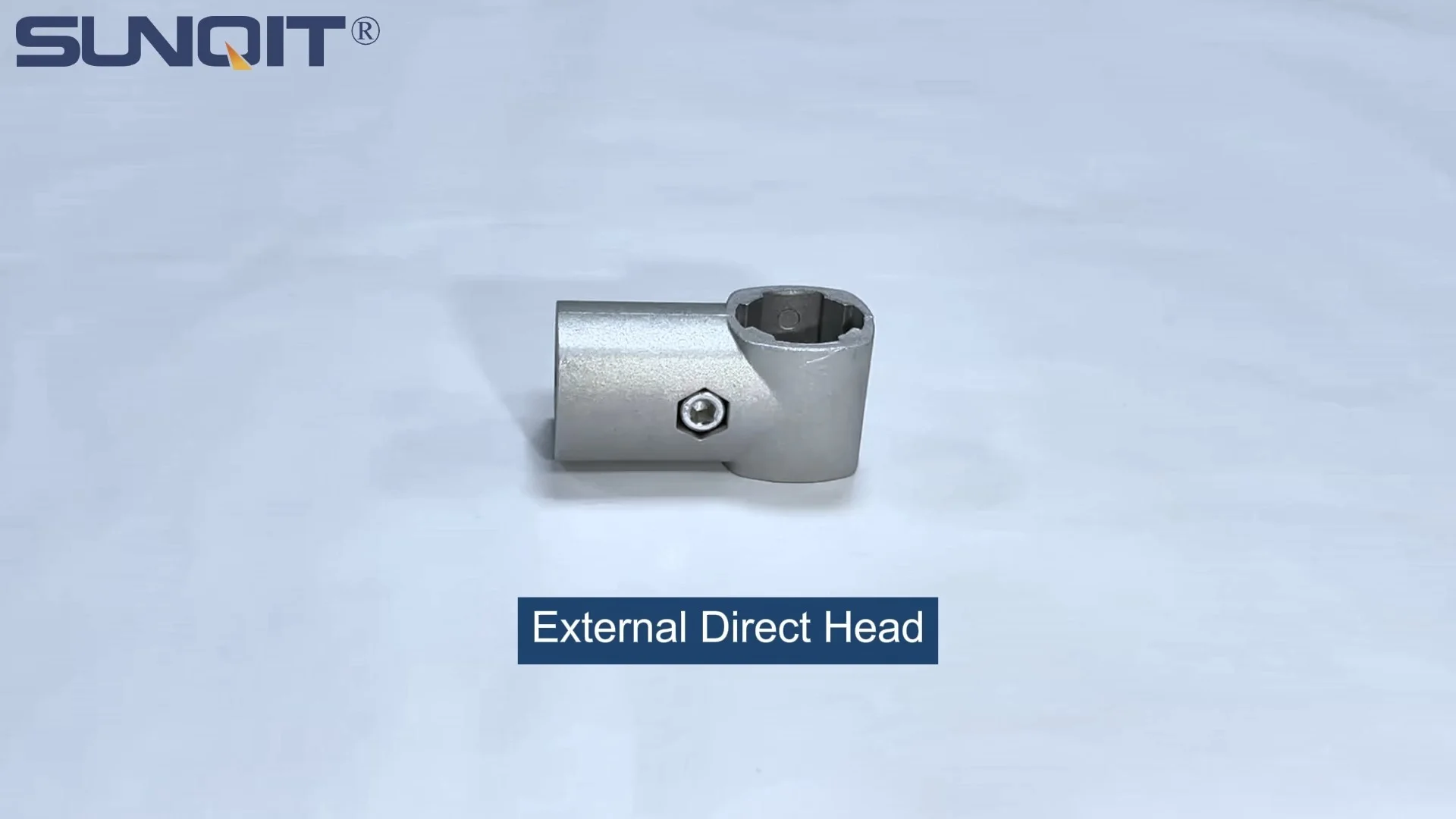
Two Way Aluminum Pipe Joint
Aluminum 2 way pipe joint for 28mm aluminum pipe connection in 2 direction.
In today's manufacturing landscape, the pressure to "go green" isn't just a trend—it's a business imperative. From tightening environmental regulations to consumers demanding eco-conscious products, manufacturers are rethinking every aspect of their operations to reduce waste, cut carbon footprints, and embrace sustainability. But here's the thing: sustainability doesn't have to mean overhauling entire production lines or investing in costly new technology. Sometimes, the most impactful changes come from the smallest components. Enter the two way aluminum pipe joint—a humble yet powerful tool that's quietly revolutionizing how factories build, adapt, and sustain their workflows. In this article, we'll explore how these unassuming joints are becoming a cornerstone of sustainable production, aligning with lean system principles, and proving that eco-friendliness and efficiency can go hand in hand.
The Sustainability Challenge in Modern Manufacturing
Let's start with the basics: why does sustainability matter in manufacturing? For decades, the industry thrived on a "take-make-dispose" model—extract raw materials, produce goods, discard waste. But this approach is no longer viable. The numbers tell the story: according to the United Nations Industrial Development Organization (UNIDO), manufacturing accounts for 28% of global energy use and 24% of carbon emissions. Meanwhile, the Ellen MacArthur Foundation estimates that only 9% of the world's materials are recycled, with the rest ending up in landfills or oceans. For manufacturers, this isn't just an environmental problem—it's a financial one. Waste equals lost resources, and lost resources equal higher costs. Add in rising energy prices and stricter regulations (like the EU's Carbon Border Adjustment Mechanism or California's SB 54 mandate for recycled packaging), and it's clear: sustainability isn't optional. It's survival.
But here's the good news: sustainability and profitability aren't enemies. In fact, they're often allies. A McKinsey report found that companies with strong environmental, social, and governance (ESG) performance outperform their peers by 10% in terms of return on invested capital. The key is to find solutions that reduce waste and improve efficiency. That's where modular, reusable components like the two way aluminum pipe joint come into play. These small but mighty parts are designed to address one of manufacturing's biggest sustainability pain points: inflexibility. Traditional production setups—think welded steel frames, fixed conveyor belts, or custom plastic workstations—are built to last "forever," but in reality, production needs change. A new product line, a shift in demand, or a process upgrade can render these fixed structures obsolete, sending them straight to the scrapyard. The result? Tons of wasted material, energy, and money. Two way aluminum pipe joints solve this by prioritizing adaptability—letting manufacturers build, reconfigure, and reuse their equipment without the waste.
What Are Two Way Aluminum Pipe Joints, Anyway?
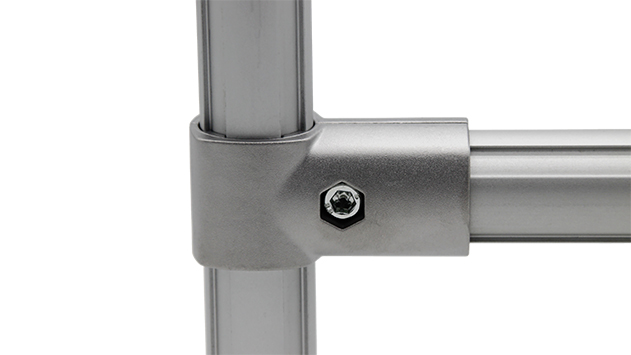
Before we dive into their sustainability superpowers, let's get familiar with the star of the show: the two way aluminum pipe joint. At its core, this component is exactly what it sounds like: a connector designed to join aluminum pipes at (you guessed it) two points, typically at 90-degree angles or along a straight line. But don't let its simplicity fool you. These joints are engineered with precision, featuring a T-slot design that allows for quick, tool-free assembly. Made from high-grade aluminum—often 6063-T5, a lightweight yet durable alloy—they're built to withstand the rigors of factory floors, from heavy loads to constant vibration.
What sets two way aluminum pipe joints apart from traditional connectors (like welded steel brackets or plastic clips) is their modularity. Unlike welding, which permanently fuses metal, or adhesives that degrade over time, these joints use mechanical fastening—think bolts, screws, or spring-loaded pins—to secure pipes. This means you can assemble a workstation in minutes, take it apart just as quickly, and reuse the pipes and joints elsewhere. Pair them with aluminum profile (another sustainability all-star) and aluminum pipe accessories like end caps or clamps, and you've got a system that's as flexible as it is eco-friendly.
But why aluminum? Because when it comes to sustainability, aluminum is in a league of its own. Let's break it down: aluminum is 100% recyclable, and recycling it uses just 5% of the energy required to produce new aluminum from raw bauxite ore. That's a 95% energy savings—no other commonly used metal comes close. What's more, recycled aluminum retains its original quality, so a two way aluminum pipe joint that's been in use for a decade can be melted down, reshaped, and turned into a new joint (or a bike frame, or a soda can) with zero loss in strength. Compare that to plastic, which degrades with each recycling cycle, or steel, which requires intensive energy to recycle and often ends up as lower-grade material. Aluminum's circular lifecycle is a game-changer for sustainability.
Design for Reusability: The Secret to Reducing Waste
If there's one word that defines sustainable manufacturing, it's "reusability." The less we throw away, the less we need to produce—and two way aluminum pipe joints are masters of reuse. Let's paint a picture: imagine a electronics manufacturer that needs to reconfigure its assembly line to accommodate a new smartphone model. With a traditional welded steel workstation, this would mean cutting the old frame apart, hauling it to a scrapyard, and welding a new frame from scratch. The result? Hundreds of pounds of steel waste, hours of labor, and a carbon footprint from transporting and processing the scrap. Now, swap that steel frame for an aluminum profile setup using two way aluminum pipe joints. To reconfigure, workers simply loosen the bolts, disassemble the joints, rearrange the pipes, and reassemble. No cutting, no welding, no waste. The same pipes and joints that held circuit boards yesterday can hold screens tomorrow—and when that model is phased out? They'll be reused again for the next project.
This isn't just hypothetical. Take Toyota, a pioneer in lean manufacturing, which has used aluminum modular systems for years. In their Kentucky plant, assembly line workstations are built with aluminum pipes and two way joints, allowing teams to adjust heights, add shelves, or reposition tools in minutes. According to Toyota's sustainability report, this flexibility has reduced workstation waste by 62% over fixed steel setups and cut reconfiguration time by 75%. That's a win for both the planet and productivity.
But reusability isn't just about big-ticket items like workstations. It extends to the smallest aluminum pipe accessories, too. End caps, which protect pipe ends from dust and damage, can be popped off and reused on new pipes. Clamps, which secure tools or shelves to the frame, can be adjusted or moved without being replaced. Even the bolts and screws used with two way joints are reusable, as they don't strip or degrade with repeated use. This "no single-use" philosophy is why aluminum modular systems are often called "the Lego of manufacturing"—every piece is designed to be part of an endless cycle of assembly and disassembly.
Case Study: A Furniture Manufacturer's Sustainability Makeover
The Challenge: A mid-sized furniture manufacturer in North Carolina was struggling with waste from its custom workstation production. Each new furniture line required unique workbenches, and old steel workstations were often scrapped, generating 15-20 tons of metal waste annually. Energy costs for welding and transporting steel were also eating into profits.
The Solution: The manufacturer switched to aluminum profile workstations using two way aluminum pipe joints and aluminum extrusion profile. Workers could now adjust bench heights, add tool hooks, or expand surfaces using pre-cut aluminum pipes and reusable joints.
The Results: Over two years, workstation waste dropped by 89% (from 20 tons to 2.2 tons annually). Energy costs for welding fell by 40%, and reconfiguration time for new lines went from 2 days to 4 hours. The manufacturer also saved $120,000 in material costs by reusing pipes and joints across projects.

Aluminum vs. Steel vs. Plastic: A Sustainability Showdown
To truly appreciate the eco-friendly credentials of two way aluminum pipe joints, let's compare them to the materials they're replacing: steel and plastic. Below is a breakdown of how these materials stack up in key sustainability categories:
| Category | Two Way Aluminum Pipe Joints | Traditional Steel Joints | Plastic (PVC/ABS) Joints |
|---|---|---|---|
| Recyclability | 100% recyclable; retains 100% quality after recycling | 85% recyclable; quality degrades slightly with each cycle | 5-15% recyclable (most ends up in landfills); releases toxins when incinerated |
| Energy Use (Production) | High for virgin aluminum, but 95% energy savings when recycled | High energy use for mining and smelting; 70% savings when recycled | Moderate energy use, but relies on fossil fuels (non-renewable) |
| Reusability | Unlimited reusability; joints can be disassembled/reassembled thousands of times | Low reusability; welded joints are permanent; bolts degrade with reuse | Low reusability; plastic weakens with UV exposure and repeated stress |
| Lifespan | 15-20 years in industrial settings (resistant to corrosion) | 10-12 years (prone to rust in humid environments) | 3-5 years (degrades from chemicals, heat, and impact) |
| Carbon Footprint (per kg) | 2.5 kg CO₂e (recycled aluminum); 13 kg CO₂e (virgin) | 3.5 kg CO₂e (recycled steel); 1.8 kg CO₂e (virgin) | 6 kg CO₂e (PVC production) |
The takeaway? While virgin aluminum has a higher carbon footprint than virgin steel, its recyclability and reusability make it the clear winner over time. For example, a two way aluminum pipe joint made from recycled aluminum has a carbon footprint 75% lower than a plastic joint and 30% lower than a recycled steel joint. And when you factor in lifespan—15-20 years for aluminum vs. 3-5 for plastic—aluminum's sustainability edge becomes undeniable.

Aligning with Lean Systems: Waste Reduction, by Design
Sustainability and lean manufacturing are two sides of the same coin. Lean systems aim to eliminate waste ("muda") in all forms—overproduction, excess inventory, unnecessary motion—and two way aluminum pipe joints are tailor-made for this mission. Let's break down how they tackle the seven types of lean waste:
- Overproduction: Fixed workstations often lead to overbuilding—manufacturers build extra frames "just in case" demand changes. With modular aluminum systems, you build only what you need, reusing components later.
- Inventory: Storing spare parts for fixed steel setups ties up capital and space. Aluminum pipe accessories are standardized, so you need fewer spares—and they're lightweight, reducing storage costs.
- Motion: Workers waste time moving around fixed workstations. Modular setups let you position tools and materials within arm's reach, cutting motion waste by up to 40%.
- Waiting: Reconfiguring welded steel takes days, leaving workers idle. Two way joints reduce downtime to hours (or minutes), keeping production flowing.
- Transport: Steel frames are heavy, requiring forklifts or multiple workers to move. Aluminum's lightweight design (1/3 the weight of steel) cuts transport energy use and labor.
- Overprocessing: Welding, painting, or custom-cutting steel adds unnecessary steps. Aluminum joints require no finishing—just assemble and go.
- Defects: Welded joints are prone to cracks or weak points, leading to rework. Two way aluminum joints have standardized tolerances, reducing defects by 50%.
Take, for example, a automotive parts supplier using lean principles. By switching to aluminum profile workstations with two way joints, they reduced inventory of spare frames by 80%, cut worker motion by 35%, and eliminated overprocessing (no more welding). The result? A 25% reduction in overall waste and a 15% boost in productivity—proving that sustainability and efficiency can drive each other.
The Future of Sustainable Manufacturing: Beyond the Joint
As manufacturers push for net-zero goals, components like two way aluminum pipe joints are just the beginning. Innovations in aluminum extrusion profile are making pipes lighter and stronger, while smart T-slot designs allow for integration with IoT sensors—monitoring joint wear, temperature, or vibration to predict maintenance needs and extend lifespan. Even aluminum pipe accessories are getting an upgrade: solar-powered LED lights that clip into T-slots, reducing reliance on grid electricity, or magnetic tool holders that eliminate the need for plastic hooks.
Perhaps most exciting is the rise of "circular supplier networks." Forward-thinking lean system suppliers are now offering take-back programs for aluminum components: when a manufacturer upgrades, the supplier collects old pipes and joints, recycles them, and provides credits toward new parts. This closes the loop, ensuring aluminum stays in use indefinitely.
Conclusion: Small Components, Big Impact
Sustainable manufacturing isn't about grand gestures—it's about the choices we make every day, in every component. Two way aluminum pipe joints may seem small, but their impact is huge: reducing waste, cutting energy use, and aligning with lean systems to create factories that are both eco-friendly and efficient. As more manufacturers embrace these modular, reusable solutions, we're one step closer to a future where "sustainable" isn't a buzzword, but the default way of doing business.
So, the next time you walk through a factory, take a closer look at those aluminum frames and joints. They're not just holding up workbenches or conveyors—they're holding up a more sustainable future. And that's something worth building toward.