- Company Articles
- Products and Technology
- Product knowledge
- Eco-Friendly Castor Install Base Materials: Supporting Green Manufacturing Goals

Eco-Friendly Castor Install Base Materials: Supporting Green Manufacturing Goals
Related Product
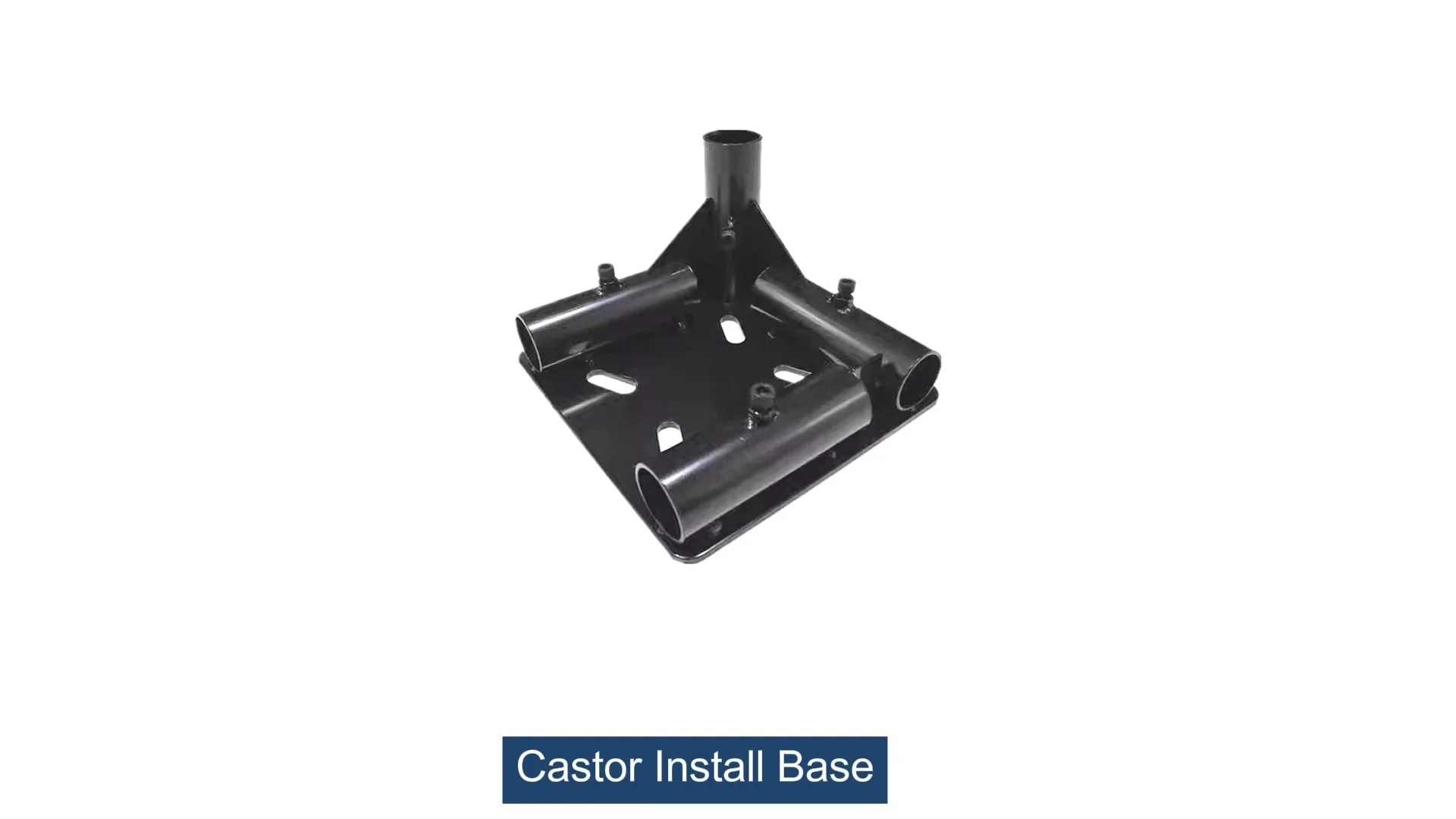
Castor Install Base
Castor install base, used for connection between pipe and castor, it can connect 4 pcs pipe by 1 pcs castor base, to make the structure strong and stable.
In today's manufacturing landscape, the push for sustainability isn't just a trend—it's a necessity. Factories, warehouses, and production facilities worldwide are rethinking every component of their operations, from energy use to waste management, in a bid to reduce their environmental footprint. One often-overlooked yet critical element in this journey is the humble castor install base —the foundational component that connects casters to workbenches, trolleys, and flow racks, enabling smooth mobility across the shop floor. While it may seem small, the choice of materials for these bases plays a significant role in aligning manufacturing practices with green goals. This article explores how eco-friendly castor install base materials are becoming a cornerstone of sustainable operations, with a focus on aluminum profile and its integration into lean systems.
The Green Manufacturing Imperative: Why Materials Matter
Sustainability in manufacturing is no longer optional. Regulatory pressures, consumer demand for eco-conscious products, and the long-term cost savings of efficient resource use have made it a business imperative. According to the United Nations Industrial Development Organization (UNIDO), the manufacturing sector accounts for approximately 28% of global energy consumption and 24% of greenhouse gas emissions. Reducing this impact requires re-evaluating even the most basic components, including those that enable the mobility of equipment—like castor install bases.
Traditional castor install bases have historically been made from materials like carbon steel or non-recyclable plastics, which come with high carbon footprints and limited end-of-life options. Steel production, for example, involves mining iron ore, smelting, and refining—processes that release significant CO2. Non-recyclable plastics, meanwhile, contribute to landfill waste and microplastic pollution. For manufacturers aiming to adopt circular economy principles, these materials are increasingly incompatible with their goals.
Eco-friendly alternatives, however, offer a path forward. By prioritizing materials that are recyclable, energy-efficient to produce, and durable enough to withstand industrial use, manufacturers can reduce waste, lower emissions, and support a more sustainable supply chain. Among these alternatives, aluminum profile stands out as a leader—offering a unique blend of sustainability, versatility, and performance that makes it ideal for castor install bases and beyond.
Eco-Friendly Materials for Castor Install Bases: A Comparative Analysis
Not all "green" materials are created equal. When selecting castor install base materials, manufacturers must balance environmental impact with functionality—ensuring the base can support heavy loads, resist corrosion, and integrate seamlessly with existing equipment like flow racks and workbenches. Below is a comparison of leading eco-friendly materials, highlighting their sustainability credentials and practical benefits:
| Material | Recyclability Rate | Estimated Lifespan (Industrial Use) | Carbon Footprint (kg CO2 per kg) | Key Applications |
|---|---|---|---|---|
| Aluminum Profile | 95%+ (infinitely recyclable with minimal loss of quality) | 15–20 years | 8–10 (vs. 20–25 for steel) | Castor install bases, flow racks, ESD workbenches, lean system components |
| Recycled Plastic (HDPE/PP) | 70–80% (recyclable, but quality degrades over cycles) | 5–8 years (lower load capacity) | 2–3 (if made from post-consumer waste) | Light-duty castor bases, non-industrial trolleys |
| Stainless Steel (304/316) | 85–90% (recyclable, but energy-intensive to refine) | 20–25 years | 15–18 | Heavy-duty castor bases, food/pharmaceutical environments |
| Carbon Steel (Recycled) | 90%+ (recyclable, but high initial production emissions) | 10–15 years (prone to corrosion without coating) | 12–15 (if made from 100% recycled scrap) | Traditional castor bases, non-corrosive environments |
Aluminum profile emerges as a clear front-runner, thanks to its high recyclability, long lifespan, and lower carbon footprint compared to steel. Unlike plastic, it offers the structural integrity needed for heavy-duty applications—critical for castor install bases that must support loaded trolleys or workbenches. Its natural resistance to corrosion also eliminates the need for toxic coatings, further reducing environmental impact.

Aluminum Profile: The Sustainable Backbone of Modern Castor Install Bases
Why Aluminum Stands Out
Aluminum's sustainability story begins with its production. While primary aluminum production (from bauxite ore) is energy-intensive, recycled aluminum—often used in profiles—requires just 5% of the energy needed to produce new aluminum. This translates to a 95% reduction in CO2 emissions, making recycled aluminum profile a low-carbon alternative to virgin materials. For manufacturers, this means sourcing aluminum castor install bases can significantly lower their Scope 3 emissions (emissions from upstream supply chains).
Durability is another key advantage. Aluminum profile is inherently strong yet lightweight, allowing castor install bases to support heavy loads without adding unnecessary weight to equipment. This lightweight nature reduces energy use during transportation (both of the base itself and the equipment it's attached to) and makes manual handling easier for workers—supporting ergonomic goals alongside sustainability. Unlike steel, aluminum doesn't rust, even in humid or chemical-exposed environments, reducing the need for frequent replacements and minimizing waste.
Versatility is equally important. Aluminum profiles are designed with T-slots, which allow for easy integration with accessories like brackets, clamps, and casters. This modularity means castor install bases can be customized to fit specific equipment—whether it's a small ESD workbench in an electronics assembly line or a large turnover trolley in a warehouse. Modularity also supports the circular economy: if a base is no longer needed for one application, it can be disassembled, reconfigured, and reused elsewhere, extending its lifespan and reducing waste.
Real-World Impact: Aluminum Castor Bases in Lean Systems
To understand the practical benefits of aluminum profile castor install bases, consider a mid-sized electronics manufacturer in Singapore that recently transitioned from steel to aluminum. The company, which produces circuit boards, relied on steel-based trolleys and flow racks to move components between assembly stations. Over time, the steel bases began to rust in the humid factory environment, requiring replacement every 5–7 years. The switch to aluminum profile bases addressed this issue: not only did the new bases resist corrosion, but their lighter weight reduced worker fatigue during trolley movement. Additionally, the T-slot design allowed the company to add custom brackets for tool storage, eliminating the need for separate tool carts and streamlining workflows—a core principle of lean systems .
From a sustainability perspective, the impact was measurable. The aluminum bases were made from 80% recycled material, cutting the company's carbon footprint for these components by 60%. Their extended lifespan (projected at 18 years) means fewer replacements, reducing waste and lowering long-term costs. By integrating these bases into their lean system, the manufacturer achieved a "double win": operational efficiency and environmental responsibility.

Beyond the Base: Aluminum Profile in a Holistic Green Manufacturing Strategy
Castor install bases are just one piece of the sustainability puzzle. Aluminum profile's versatility allows it to play a role in nearly every aspect of a green manufacturing setup, from workbenches to material handling systems. For example, flow racks —used to store and transport materials in a first-in, first-out (FIFO) manner—are often constructed with aluminum profiles. Their lightweight design reduces the energy needed to install and reposition racks, while their durability ensures they can withstand constant use without degradation.
In ESD workbenches, aluminum profile's conductivity (when properly treated) helps dissipate static electricity, protecting sensitive electronics from damage. Unlike plastic workbenches, which may contain harmful flame retardants, aluminum is non-toxic and emits no volatile organic compounds (VOCs), supporting healthier indoor air quality for workers. When combined with aluminum honeycomb panels for workbench surfaces, the result is a system that's both sustainable and high-performance.
The circular economy benefits extend to end-of-life management. When an aluminum castor install base or profile reaches the end of its useful life, it can be recycled at local facilities, with the recycled material used to produce new profiles, cans, or automotive parts. This closed-loop system minimizes reliance on virgin resources and keeps aluminum out of landfills—a stark contrast to non-recyclable plastics or corroded steel, which often end up as waste.

Challenges and Considerations: Adopting Eco-Friendly Castor Install Bases
While aluminum profile and other eco-friendly materials offer clear benefits, transitioning to them isn't without challenges. Initial costs can be a barrier: recycled aluminum profile may have a higher upfront price than steel or plastic, though this is often offset by lower lifecycle costs (fewer replacements, lower energy use). To address this, many manufacturers opt for a phased transition, replacing bases as old equipment is retired rather than overhauling entire fleets at once.
Sourcing is another consideration. Not all suppliers prioritize sustainability, so manufacturers must vet partners to ensure aluminum profiles are made from recycled content and produced using renewable energy. Certifications like the Aluminum Stewardship Initiative (ASI) can help identify responsible suppliers, ensuring the material's sustainability claims are credible.
Finally, worker training may be needed. Aluminum profile systems, with their modular T-slot design, require different assembly techniques than traditional steel bases. Providing training on how to safely cut, drill, and assemble profiles ensures workers can maximize the material's versatility and avoid errors that could compromise durability.
The Future of Green Manufacturing: Aluminum Profile and Beyond
As manufacturing continues to evolve, the role of eco-friendly materials like aluminum profile will only grow. Innovations in aluminum extrusion technology are making profiles even stronger and lighter, while advances in recycling processes are further reducing their carbon footprint. Looking ahead, we may see the integration of smart technologies: for example, aluminum castor install bases with embedded sensors to monitor load capacity and wear, enabling predictive maintenance and further extending lifespan.
Beyond aluminum, other materials are emerging as potential contenders. Hemp-based composites, for instance, offer biodegradability and low emissions, though they currently lack the load-bearing capacity needed for heavy industrial use. For now, aluminum profile remains the gold standard—proven, reliable, and aligned with both sustainability and operational goals.
Conclusion: Small Components, Big Impact
Eco-friendly castor install bases may seem like a minor detail in the grand scheme of manufacturing, but their impact is anything but small. By choosing materials like aluminum profile, manufacturers can reduce emissions, minimize waste, and build more resilient, circular operations. Whether integrated into lean systems , flow racks, or ESD workbenches, these bases are a tangible expression of a company's commitment to sustainability—one that benefits the planet, workers, and the bottom line.
As the manufacturing industry continues its green transition, the message is clear: sustainability isn't about grand gestures alone. It's about reimagining every component, from the largest machinery to the smallest castor base, and choosing materials that support a healthier, more efficient future. Aluminum profile, with its unbeatable combination of sustainability, durability, and versatility, is leading the way—proving that even the humblest parts can drive meaningful change.