- Company Articles
- Products and Technology
- Technology Sharing
- Eco-Friendly Chrome Plating for Vertical Lean Pipe Joints: Green Practices

Eco-Friendly Chrome Plating for Vertical Lean Pipe Joints: Green Practices
Related Product
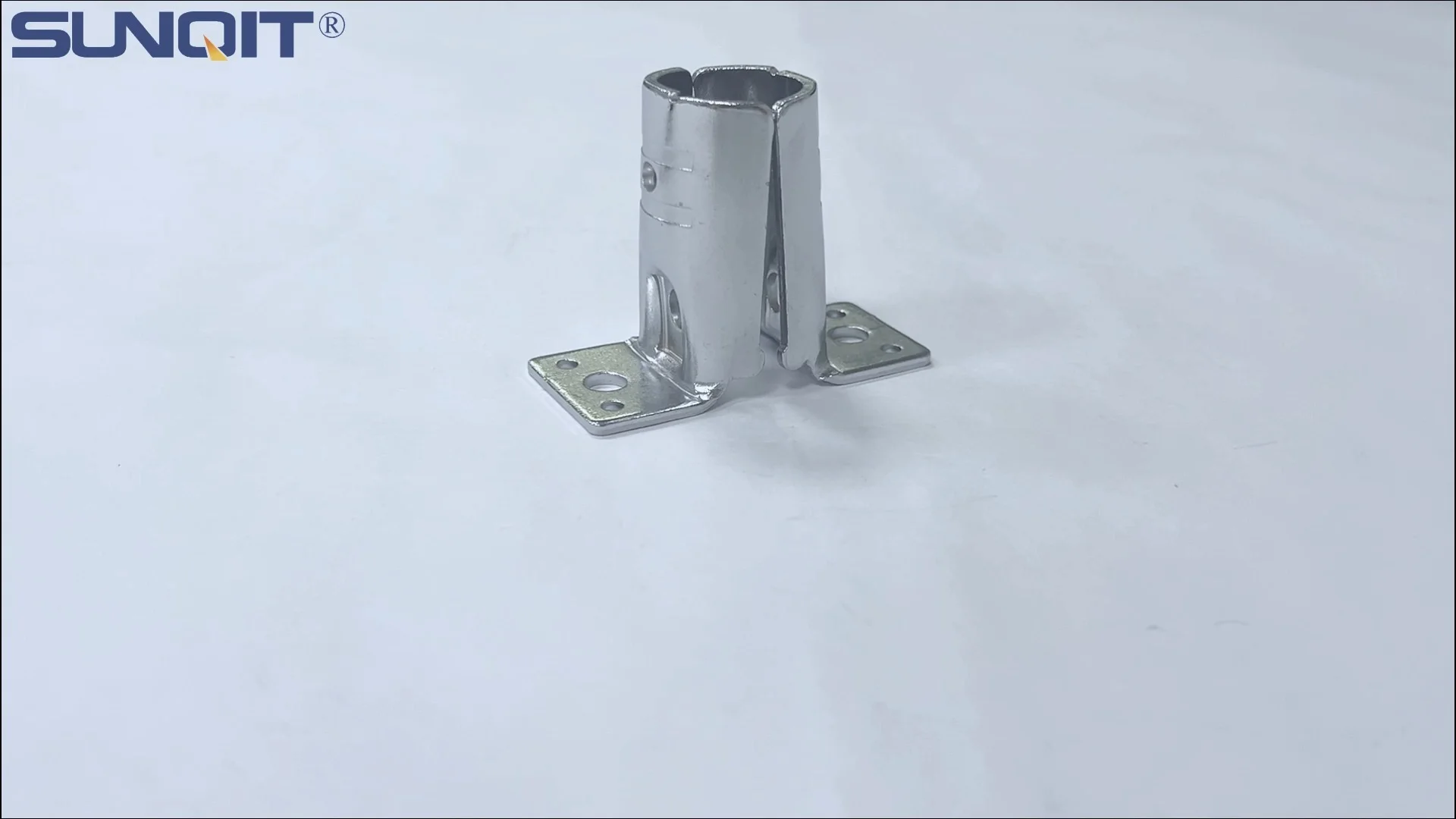
Vertical Lean Pipe Joint
Vertical lean pipe joint is used for 28mm lean pipe fixed on ground and keep it stable.
Introduction: The Intersection of Lean Manufacturing and Sustainability
In the fast-paced world of manufacturing, where efficiency and productivity often take center stage, a quiet revolution is unfolding. More and more businesses are waking up to a simple truth: sustainability isn't just a buzzword—it's a cornerstone of long-term success. This shift isn't just about reducing carbon footprints or meeting regulatory checklists; it's about reimagining how we build, operate, and sustain the systems that power our production lines. And at the heart of this transformation lies a humble yet critical component: the vertical lean pipe joint.
If you've ever walked through a factory floor, warehouse, or assembly line, you've likely seen them—those unassuming metal connectors that hold together workbenches, material racks, and flow racks. These are vertical lean pipe joints, the unsung heroes of lean manufacturing. They're designed to be flexible, durable, and easy to reconfigure, making them indispensable for creating efficient workflows. But for decades, their durability came with a hidden cost: traditional chrome plating, a process that has long been prized for its corrosion resistance and sleek finish but carries significant environmental risks.
Today, we're going to dive deep into the world of vertical lean pipe joints—specifically, how the shift to eco-friendly chrome plating is changing the game for manufacturers, suppliers, and the planet. We'll explore why traditional chrome plating became the norm, the environmental challenges it poses, and the innovative green practices that are replacing it. Along the way, we'll hear from lean pipe suppliers who are leading the charge, and discover how choosing sustainable options like eco-friendly vertical lean pipe joints isn't just good for the Earth—it's good for your bottom line, too.
The Role of Vertical Lean Pipe Joints in Modern Manufacturing
Before we tackle the "how" of eco-friendly plating, let's first understand the "what" and "why" of vertical lean pipe joints. Lean manufacturing, a philosophy born from Toyota's production system, focuses on minimizing waste while maximizing value. Central to this is the ability to adapt quickly to changing demands—and that's where vertical lean pipe joints shine.
A vertical lean pipe joint is exactly what it sounds like: a connector designed to join lean pipes (hollow metal tubes) at vertical angles, forming the backbone of structures like workbenches, trolleys, and material racks. What makes them special is their modularity. Unlike fixed metal brackets, these joints can be easily adjusted, disassembled, and reused, allowing manufacturers to reconfigure their workspace in hours instead of days. This flexibility reduces downtime, cuts costs, and supports the "just-in-time" principles that define lean manufacturing.
But to deliver on this promise of durability and longevity, vertical lean pipe joints need a protective coating. Enter chrome plating. For decades, traditional hexavalent chrome plating was the go-to choice. It creates a hard, shiny surface that resists rust, scratches, and wear—essential for parts that are constantly being adjusted, moved, and exposed to oils, chemicals, and moisture on the factory floor. A vertical lean pipe joint chrome-plated with hexavalent chrome could last for years, even in harsh environments. But as we'll see, that longevity came with a steep environmental price tag.

The Dark Side of Traditional Chrome Plating
To understand why eco-friendly alternatives are so crucial, let's start by unpacking how traditional chrome plating works. Hexavalent chrome plating (Cr6+) involves submerging metal parts in a bath of chromic acid, along with other chemicals, and passing an electric current through the solution. This process deposits a thin layer of chromium onto the surface of the vertical lean pipe joint, creating that familiar mirror-like finish and tough protective barrier.
The problem? Hexavalent chromium is a known carcinogen. According to the Environmental Protection Agency (EPA), exposure to Cr6+ can cause lung cancer, skin ulcers, and damage to the liver and kidneys. Beyond human health, the plating process itself is water-intensive and generates toxic wastewater containing heavy metals. Improper disposal of this wastewater can contaminate soil and groundwater, leaving a legacy of pollution that lasts for decades.
Take, for example, the case of a small manufacturing town in the Midwest that relied on a local lean pipe supplier for its vertical lean pipe joints. For years, the supplier used traditional chrome plating, and unbeknownst to the community, wastewater from the plating facility seeped into the local aquifer. By the time the contamination was discovered, chromium levels in drinking water were 10 times the legal limit, forcing residents to rely on bottled water for years. Lawsuits, cleanup costs, and reputational damage followed—all avoidable with safer alternatives.
Regulations have tightened in recent years, with agencies like the EPA and the European union's REACH (Registration, Evaluation, Authorization, and Restriction of Chemicals) imposing strict limits on hexavalent chrome use. But compliance alone isn't enough. Forward-thinking manufacturers and lean pipe suppliers are realizing that sustainability is no longer optional—it's a competitive advantage.

Eco-Friendly Chrome Plating: A New Era for Vertical Lean Pipe Joints
So, if traditional hexavalent chrome plating is so problematic, what's replacing it? The answer lies in a wave of innovative, eco-friendly plating technologies that prioritize both performance and sustainability. Let's explore the most promising options reshaping the industry today.
Trivalent Chrome Plating: A Safer Alternative
Trivalent chrome plating (Cr3+) is quickly becoming the gold standard for eco-friendly vertical lean pipe joints. Unlike its hexavalent cousin, trivalent chromium is far less toxic—so much so that it's classified as a "low hazard" by the EPA. The plating process uses trivalent chromium salts instead of chromic acid, reducing the risk of worker exposure and environmental contamination.
But does it work as well as traditional plating? Early versions of trivalent chrome had drawbacks: thinner coatings, less shine, and lower corrosion resistance. Today, thanks to advancements in chemistry and plating techniques, modern trivalent chrome coatings rival hexavalent chrome in performance. They offer excellent rust resistance, a smooth finish, and can withstand the wear and tear of daily use in manufacturing environments. For a vertical lean pipe joint that's constantly being adjusted or moved, this durability is non-negotiable.
One lean pipe supplier in California, which recently switched to trivalent chrome plating for its vertical lean pipe joints, reported a 60% reduction in wastewater treatment costs and a 40% drop in worker compensation claims related to chemical exposure. "We were skeptical at first," says the supplier's operations manager. "But after testing the trivalent-coated joints in our clients' factories for a year, we found they lasted just as long as the hexavalent ones—without the environmental guilt."
Electroless Nickel Plating: Durability Without Electricity
Another rising star in eco-friendly plating is electroless nickel plating (ENP). Unlike electroplating (which uses electricity to deposit metal), ENP relies on a chemical reaction to coat the vertical lean pipe joint with a uniform layer of nickel-phosphorus alloy. This process offers several sustainability benefits: it uses fewer toxic chemicals, generates less waste, and requires lower energy input than traditional chrome plating.
ENP also boasts unique performance advantages. The coating is incredibly even, even on complex shapes like the grooves and threads of a vertical lean pipe joint, ensuring no weak spots where corrosion could start. It's also harder than chrome, making it ideal for joints that bear heavy loads, like those in material racks or conveyor systems. And because there's no need for electricity, ENP reduces the carbon footprint of the plating process—a win for suppliers looking to cut their energy use.
Powder Coating: A Greener Finish for Non-Traditional Needs
For manufacturers who don't require the high shine of chrome, powder coating is emerging as a viable, eco-friendly alternative. Powder coating involves applying a dry powder (typically polyester or epoxy) to the vertical lean pipe joint, then curing it in an oven to form a hard, protective layer. The process emits almost no volatile organic compounds (VOCs), uses 95% of the powder (minimizing waste), and the overspray can be recycled and reused.
While powder coating isn't technically "chrome plating," it's worth mentioning because of its sustainability credentials. It's available in a range of colors, which can help with workplace organization (e.g., color-coding joints for different workstations), and it offers excellent resistance to chipping and fading. However, it's not as corrosion-resistant as chrome or nickel, so it's best suited for indoor applications with minimal exposure to moisture or chemicals.

The Business Case for Eco-Friendly Vertical Lean Pipe Joints
At this point, you might be thinking: "Eco-friendly plating sounds great, but is it affordable?" The short answer: yes—and in many cases, it's more cost-effective than traditional methods in the long run. Let's break down the business benefits for manufacturers and lean pipe suppliers alike.
| Factor | Traditional Hexavalent Chrome Plating | Eco-Friendly Plating (Trivalent Chrome/ENP) |
|---|---|---|
| Regulatory Compliance Costs | High (permits, wastewater treatment, safety gear) | Low (fewer permits, simpler waste disposal) |
| Worker Health Costs | High (training, PPE, potential medical claims) | Low (reduced exposure, fewer health risks) |
| Durability/Lifespan | 10–15 years (with proper maintenance) | 8–15 years (comparable, depending on method) |
| Customer Demand | Declining (due to sustainability concerns) | Growing (driven by green manufacturing trends) |
| Carbon Footprint | High (energy-intensive, toxic waste) | Low (reduced energy use, recyclable waste) |
As the table shows, eco-friendly plating reduces costs in areas that often fly under the radar: regulatory compliance, worker safety, and waste management. For example, a lean pipe supplier in Texas calculated that switching to trivalent chrome plating saved them $75,000 annually in wastewater treatment alone. Add in lower insurance premiums (thanks to reduced liability) and increased sales to eco-conscious clients, and the ROI becomes clear.
But the benefits go beyond dollars and cents. Today's consumers—both B2B and B2C—are increasingly prioritizing sustainability when choosing suppliers. A 2023 survey by McKinsey found that 60% of manufacturers are willing to pay a 5–10% premium for components that meet green standards. For a lean pipe supplier, offering eco-friendly vertical lean pipe joints isn't just a niche offering—it's a way to tap into a growing market.
Take, for instance, a major automotive manufacturer that recently updated its supplier requirements to include only eco-friendly plated components. Overnight, lean pipe suppliers without sustainable options were cut from the supply chain, while those offering trivalent chrome or ENP-coated vertical lean pipe joints saw a 30% increase in orders. "Sustainability is no longer a 'nice-to-have' for our clients," says the purchasing manager at the automotive company. "It's a 'must-have'—and we're willing to partner only with suppliers who get that."
From Supplier to Factory Floor: The Lifecycle of an Eco-Friendly Vertical Lean Pipe Joint
Sustainability isn't just about the plating process—it's about the entire lifecycle of the vertical lean pipe joint, from raw material extraction to end-of-life disposal. Let's walk through this journey and see how lean pipe suppliers are embedding green practices at every stage.
Raw Materials: Choosing Recycled and Low-Impact Metals
It all starts with the metal itself. Many leading lean pipe suppliers now use recycled steel or aluminum for their vertical lean pipe joints, reducing the need for mining and lowering the carbon footprint of production. For example, using recycled steel saves 70–90% of the energy required to produce steel from raw iron ore, according to the Steel Recycling Institute. Some suppliers even source metals from local mills to cut down on transportation emissions—a small step that adds up to big savings over time.
Manufacturing: Energy Efficiency and Waste Reduction
Once the raw materials are sourced, the manufacturing process begins. Forward-thinking suppliers are investing in energy-efficient machinery, solar-powered factories, and closed-loop water systems that recycle wastewater from plating. For instance, a lean pipe supplier in Germany uses a closed-loop system for its trivalent chrome plating, reusing 95% of the water and reducing its freshwater consumption by 80%. "We used to truck in thousands of gallons of water each week," says the supplier's sustainability director. "Now, we're almost self-sufficient—and our utility bills have never been lower."
Transportation: Minimizing Emissions
Getting the finished vertical lean pipe joints to customers is another area where sustainability comes into play. Many suppliers are optimizing their shipping routes, using electric or hybrid delivery trucks, and even offering "bulk order" discounts to reduce the number of shipments. For international clients, some are partnering with logistics companies that use carbon offsets, ensuring that the journey from factory to warehouse doesn't undo the green gains of the plating process.
End-of-Life: Reuse, Recycle, Repeat
The final stage of the lifecycle is disposal—and here, the modular design of vertical lean pipe joints becomes a sustainability superpower. Unlike fixed metal structures, which often end up in landfills, these joints can be disassembled, cleaned, and reused. Many lean pipe suppliers even offer take-back programs, where old joints are collected, stripped of their plating (in an eco-friendly way), and melted down to make new joints. This circular economy model reduces waste and ensures that the metal in a vertical lean pipe joint never goes to waste.
The Future of Eco-Friendly Chrome Plating: What's Next?
As technology advances and sustainability becomes even more central to manufacturing, the future of eco-friendly chrome plating for vertical lean pipe joints looks brighter than ever. Here are a few trends to watch:
Bio-Based Coatings: Nature's Answer to Corrosion
Researchers are exploring bio-based coatings made from plant oils, fungi, and bacteria that can protect vertical lean pipe joints from corrosion. While still in the experimental stage, these coatings could one day offer a completely toxin-free alternative to metal plating. Imagine a vertical lean pipe joint coated in a substance derived from soybeans—tough enough to withstand factory conditions, yet biodegradable at the end of its life. It sounds like science fiction, but early tests are promising.
Smart Coatings: Self-Healing and Self-Cleaning
Another exciting development is smart coatings that can repair themselves when scratched or damaged. These coatings contain microcapsules of healing agents that rupture when the surface is compromised, filling in the scratch and preventing corrosion. For vertical lean pipe joints that see heavy use, this could extend their lifespan even further, reducing the need for replacements and cutting waste.
AI-Driven Plating: Precision and Efficiency
Artificial intelligence is also making its way into plating facilities, optimizing processes to reduce chemical use and energy consumption. AI algorithms can monitor plating baths in real time, adjusting chemical concentrations and temperature to ensure the perfect coating every time—minimizing waste and maximizing efficiency. For lean pipe suppliers, this means lower costs, higher quality, and a smaller environmental footprint.
Conclusion: Choosing Green Isn't Just a Choice—It's a Responsibility
The story of eco-friendly chrome plating for vertical lean pipe joints is more than just a tale of technological innovation. It's a story about redefining success in manufacturing—where efficiency and sustainability go hand in hand, and where every component, no matter how small, has the power to make a difference.
From the toxic legacy of traditional hexavalent chrome to the promise of trivalent plating, electroless nickel, and beyond, we've seen how lean pipe suppliers are leading the charge toward a greener future. They're proving that sustainability doesn't require sacrificing durability or cost-effectiveness—in fact, it often enhances both. By choosing eco-friendly vertical lean pipe joints, manufacturers aren't just reducing their environmental impact; they're building more resilient, adaptable, and future-proof operations.
So, what's next for you? If you're a manufacturer, take a closer look at your supply chain. Ask your lean pipe supplier about their plating processes. Demand transparency. Choose partners who prioritize sustainability, not just for compliance, but because it's the right thing to do. If you're a supplier, invest in green technologies, train your team, and shout about your eco-friendly practices—your customers are looking for you.
At the end of the day, the vertical lean pipe joint may be small, but its impact is huge. It's a reminder that sustainability isn't about grand gestures—it's about the choices we make every day, in every corner of the factory floor. And when those choices add up, they have the power to change the world—one joint at a time.