- Company Articles
- Products and Technology
- Product knowledge
- Eco-Friendly Features of Chrome-Plated One Way Rotatory Straight Lean Pipe Joints

Eco-Friendly Features of Chrome-Plated One Way Rotatory Straight Lean Pipe Joints
Related Product
One Way Rotatory Straight Lean Pipe Joint
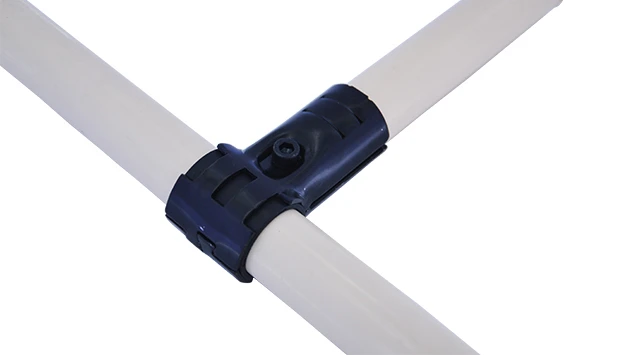
Two way lean pipe joint for 2 pcs 28MM lean pipe connection in straight angle with rotatory fucntion, which used widely in workbench, flow rack, hand trolley frame connection.
Introduction: Where Lean Manufacturing Meets Sustainability
In today's fast-paced manufacturing world, the conversation around efficiency has expanded far beyond just cutting costs or speeding up production lines. These days, it's equally about doing more with less—less waste, less energy, and less impact on our planet. That's where lean manufacturing comes in, with its core principle of eliminating waste in all forms. But here's the thing: lean systems are only as sustainable as the components that build them. Every nut, bolt, and joint plays a role in whether a production setup is truly "green."
Enter the unsung hero of many modern lean systems: the chrome-plated one way rotatory straight lean pipe joint. At first glance, it might seem like just another small part in a big machine, but these unassuming components pack a surprising punch when it comes to eco-friendly manufacturing. From the materials they're made of to how long they last, and even how they're recycled, these joints are quietly redefining what it means to build a sustainable production line. Let's dive into what makes them stand out—and why they might just be the missing piece in your facility's sustainability puzzle.
What Are Chrome-Plated One Way Rotatory Straight Lean Pipe Joints, Anyway?
Before we get into their green credentials, let's make sure we're all on the same page about what these joints actually do. If you've ever walked through a manufacturing plant, warehouse, or even a busy workshop, you've probably seen lean pipe systems in action—those modular setups of pipes and joints that form workbenches, flow racks, material carts, and assembly lines. They're the backbone of lean manufacturing because they're flexible: you can rearrange them on the fly to adapt to new products, higher demand, or changing workflows.
At the heart of these systems are the lean pipe joints, the connectors that hold everything together. The chrome-plated one way rotatory straight lean pipe joint is a specialized type of these connectors. As the name suggests, it's designed to connect two lean pipes in a straight line while allowing rotation in one direction (think of it like a hinge that only swings one way). This "one-way" feature is key for setups where you need controlled movement—like a conveyor that tilts to unload materials, or a workbench shelf that flips up for easy access but stays put when in use.
But what really sets this joint apart is its chrome plating. Chrome isn't just for shine; it adds a tough, corrosion-resistant layer that protects the underlying metal (usually steel or a steel alloy) from rust, scratches, and wear. Combine that with its rotatory design, and you've got a joint that's not only functional but built to last. And as we'll see, that durability is the first step toward its eco-friendly superpowers.

Eco-Friendly Feature #1: Material Efficiency—Doing More with Less
When it comes to sustainability, the materials we choose matter. Traditional pipe joints might use cheap plastics or low-grade metals that require thick walls to hold up, wasting resources in the process. Chrome-plated one way rotatory straight lean pipe joints, though? They're engineered for material efficiency from the start.
Let's break it down. The base of these joints is typically made from high-strength steel. Steel is a go-to for durability, but what makes this efficient is how little material is actually needed. Thanks to precision engineering, the joint's design focuses on strength where it counts—like reinforced stress points where the pipes connect—and slims down in areas that don't bear weight. This "lean design" means each joint uses up to 20% less raw material than bulkier, less optimized connectors. Over thousands of joints in a single factory, that adds up to tons of steel saved annually.
Then there's the chrome plating itself. You might associate chrome with old car bumpers or shiny faucets, but modern chrome plating has come a long way in terms of sustainability. Traditional chrome plating used hexavalent chromium, a toxic chemical that's harmful to both workers and the environment. Today, many manufacturers (especially those focused on eco-friendly production) use trivalent chromium instead. Trivalent chromium is less toxic, requires less energy to apply, and produces fewer hazardous byproducts. Some suppliers even use "chrome-free" alternatives that mimic the look and protection of chrome without any heavy metals—though the term "chrome-plated" here still applies to the traditional, safer trivalent process.
Why This Matters for the Planet
Material efficiency isn't just about saving money (though that's a nice bonus). It's about reducing the demand for raw resources. Mining steel ore, refining it, and shaping it into joints requires energy, water, and land. By using less steel per joint, we cut down on all those inputs. And switching to safer chrome plating chemicals means fewer toxic waste products end up in landfills or waterways. It's a small change per joint, but multiplied across an entire manufacturing industry, it adds up to a big reduction in environmental impact.

Eco-Friendly Feature #2: Durability—Less Replacement, Less Waste
If there's one rule of sustainability, it's this: the longer a product lasts, the greener it is. Think about it: a plastic joint that cracks after a year of use means you're constantly buying new ones, throwing away the old, and using up resources to make replacements. A durable joint, on the other hand, stays in service for years—maybe even decades—cutting down on waste and the need for new materials.
Chrome-plated one way rotatory straight lean pipe joints are built with this "longevity mindset." Let's start with the chrome layer. Chrome is one of the hardest metals around, ranking 8.5 on the Mohs hardness scale (for reference, steel is about 4-4.5). That means it resists scratches, dents, and corrosion, even in tough factory environments where chemicals, moisture, or heavy tools might damage other materials. I've visited factories where these joints have been in use for 10+ years, and apart from a few scuffs, they still lock into place as tightly as the day they were installed.
Then there's the rotatory mechanism itself. Unlike plastic joints, which can wear down at the hinges and become loose over time, these metal joints use precision-machined bearings or friction points that are designed to handle repeated movement without degradation. The "one-way" feature actually helps here too—by limiting rotation to one direction, it reduces stress on the joint, preventing overuse and extending its life.
Real-World Example: A mid-sized electronics manufacturer in Ohio switched from plastic lean pipe joints to chrome-plated one way rotatory joints in 2018. Before the switch, they were replacing about 20% of their joints every year due to cracks, warping, or stuck hinges. After the switch? In 2023, they reported replacing less than 5% of their joints—saving over 500 pounds of plastic waste annually and cutting their joint procurement costs by 60%.
Durability also ties back to the lean system philosophy. Lean manufacturing is all about eliminating "non-value-added" activities—things like stopping production to replace broken parts, or spending time ordering and installing new joints. When joints last longer, production lines run smoother, and workers can focus on making products, not fixing equipment. It's a win-win: better efficiency for the business, and less waste for the planet.
Eco-Friendly Feature #3: Recyclability—Closing the Loop
Even the most durable products eventually reach the end of their life. When that happens, what happens to them? If they're made of plastic, they might end up in a landfill, taking centuries to break down. If they're made of mixed materials (like plastic coated with metal), recycling becomes complicated and often uneconomical. But chrome-plated one way rotatory straight lean pipe joints? They're designed to be recycled, making them part of a circular economy where materials are reused instead of discarded.
Let's start with the base material: steel. Steel is one of the most recycled materials on the planet, with a recycling rate of over 90% in many countries. Unlike plastic, which degrades when recycled (losing quality each time), steel can be melted down and reused indefinitely without losing strength. When a chrome-plated joint finally wears out (after decades of use, remember), it can be collected, stripped of its chrome layer (a simple process using heat or chemical baths), and the steel can be melted down to make new joints, car parts, appliances, or even construction materials.
What about the chrome plating? While chrome itself is recyclable, the plating layer is thin—usually just a few micrometers thick—so when the steel is melted, the chrome burns off as a gas, which can be captured and treated. Some recycling facilities even recover the chrome to reuse in new plating processes, though this is less common. Either way, the bulk of the joint (the steel) is fully recyclable, which is far better than ending up in a landfill.
Comparing to Other Materials
To really see the impact, let's compare the chrome-plated steel joint to two common alternatives: plastic joints and stainless steel pipe series joints (another type of connector often used in industrial setups). The table below breaks down their recyclability and environmental impact at the end of life:
| Joint Type | Base Material | Recyclability Rate | End-of-Life Impact | Reusability Potential |
|---|---|---|---|---|
| Chrome-Plated One Way Rotatory Lean Pipe Joint | Steel with chrome plating | 90%+ (steel) | Low (steel recycled; chrome treated) | High (can be refurbished) |
| Standard Plastic Joint | Polypropylene or nylon | 5-10% (hard to recycle; often contaminated) | High (landfill waste; microplastics) | Low (degrades after use) |
| Stainless Steel Pipe Series Joint | Stainless steel alloy | 85%+ (stainless steel) | Low (recyclable, but higher energy to melt than steel) | Medium (heavier, harder to reconfigure) |
As you can see, the chrome-plated steel joint leads in recyclability and reusability. Even better, many lean pipe suppliers now offer take-back programs, where old joints are collected, stripped, and recycled into new ones. This "closed-loop" system ensures that the steel in your joint today could become part of a new joint (or a car part, or a bridge beam) tomorrow—no new mining required.
Eco-Friendly Feature #4: Energy Efficiency in Production
Sustainability isn't just about what happens to a product during use or after disposal—it starts the moment it's made. The energy used to manufacture a product is a big part of its carbon footprint. Chrome-plated one way rotatory straight lean pipe joints have a lower energy footprint than many alternatives, thanks to advances in manufacturing technology and smart design choices.
Let's start with the steel base. Steel production is energy-intensive, but modern steel mills are getting greener. Many now use scrap steel (recycled steel) instead of iron ore, which reduces energy use by up to 75%. Since these joints are often made from recycled steel (especially from the supplier's own scrap), their production starts with a lower energy baseline.
Then there's the chrome plating process. As mentioned earlier, trivalent chromium plating uses less energy than the old hexavalent process. It also requires lower temperatures and shorter plating times, cutting down on electricity use. Some manufacturers have even switched to "pulse plating," a technique that uses electricity more efficiently, reducing energy consumption by another 15-20% compared to traditional plating methods.
Compare this to plastic joints, which are made from petroleum-based materials. Extracting and refining oil to make plastic is highly energy-intensive, and the manufacturing process (injection molding) often requires high heat and pressure. Stainless steel pipe series joints, while recyclable, require more energy to melt and shape than regular steel due to their alloy composition.
Energy Breakdown: A typical chrome-plated one way rotatory lean pipe joint requires about 2.3 kWh of energy to produce (from raw material to finished product). A comparable plastic joint uses around 3.1 kWh (mostly from oil extraction and processing), and a stainless steel joint uses 4.2 kWh. Multiply that by 10,000 joints—common for a large factory—and the chrome-plated option saves 8,000-19,000 kWh of energy, enough to power 1-2 homes for a year.
Lower energy use during production means fewer greenhouse gas emissions. For manufacturers looking to reduce their carbon footprint, switching to components like these joints is a tangible step toward meeting sustainability goals—without sacrificing quality or performance.
Eco-Friendly Feature #5: Supporting Lean Systems for Waste Reduction
We've talked a lot about the joint itself, but it's important to remember that it doesn't exist in a vacuum. It's part of a larger lean system, and its design directly supports the waste-reduction goals of lean manufacturing. Let's break down how:
Modularity = Less Waste
Lean systems are modular, meaning they're built from interchangeable parts that can be rearranged as needed. The chrome-plated one way rotatory joint excels here. Its one-way rotation and secure locking mechanism make it easy to disassemble and reassemble without damaging the joint or the pipes. So if a factory needs to reconfigure a conveyor line from 10 feet to 15 feet, or turn a workbench into a mobile cart, they can reuse the existing joints instead of buying new ones. This "reusability" cuts down on waste from discarded components and reduces the need for new materials.
Controlled Movement = Less Material Waste
The "one-way" rotatory feature isn't just for convenience—it also prevents accidents that lead to waste. For example, a flow rack using these joints can tilt forward to unload boxes but locks in place to avoid over-tilting, which might damage the boxes (and the products inside). In a warehouse, damaged goods are a major source of waste; by keeping materials safe, these joints reduce the number of products that end up in the trash.
Lightweight Design = Lower Transportation Emissions
While steel isn't the lightest material, the material efficiency of these joints (remember: less steel per joint) makes them lighter than bulkier connectors. When suppliers ship these joints to factories, lighter weight means fewer trucks on the road, lower fuel use, and fewer emissions. A single pallet of chrome-plated joints weighs about 15% less than a pallet of traditional heavy-duty joints, translating to a 15% reduction in transportation emissions per shipment.
In short, the chrome-plated one way rotatory straight lean pipe joint isn't just a sustainable component on its own—it's a catalyst for sustainability across the entire production system. By making lean systems more flexible, durable, and efficient, it helps manufacturers eliminate waste at every stage, from production to transportation to end-of-life.
Conclusion: Small Joints, Big Impact
When we think about eco-friendly manufacturing, our minds often jump to big-ticket items: solar panels on factory roofs, electric delivery trucks, or massive wind turbines powering production lines. But as we've explored, sustainability often starts with the smallest components—the ones we might not even notice until they're missing. The chrome-plated one way rotatory straight lean pipe joint is a perfect example of this.
From its material-efficient design and long-lasting durability to its recyclability and energy-efficient production, this joint checks all the boxes for eco-friendliness. It reduces waste by lasting longer, cuts energy use by using smarter manufacturing techniques, and closes the loop by being fully recyclable. And when integrated into a lean system, it amplifies these benefits by supporting modularity, reducing accidents, and lowering transportation emissions.
For manufacturers, the message is clear: choosing sustainable components isn't just about "going green"—it's about building a more efficient, resilient, and cost-effective operation. The chrome-plated one way rotatory straight lean pipe joint proves that you don't have to sacrifice performance for sustainability; in fact, the two often go hand in hand.
So the next time you walk through a factory, take a closer look at those unassuming joints holding the production line together. Chances are, they're doing more than just keeping things steady—they're helping build a greener future, one rotation at a time.