- Company Articles
- Products and Technology
- Product knowledge
- Eco-Friendly Lean Pipe Clamp B: Reducing Waste in Production Systems

Eco-Friendly Lean Pipe Clamp B: Reducing Waste in Production Systems
Related Product
Lean Pipe Clamp
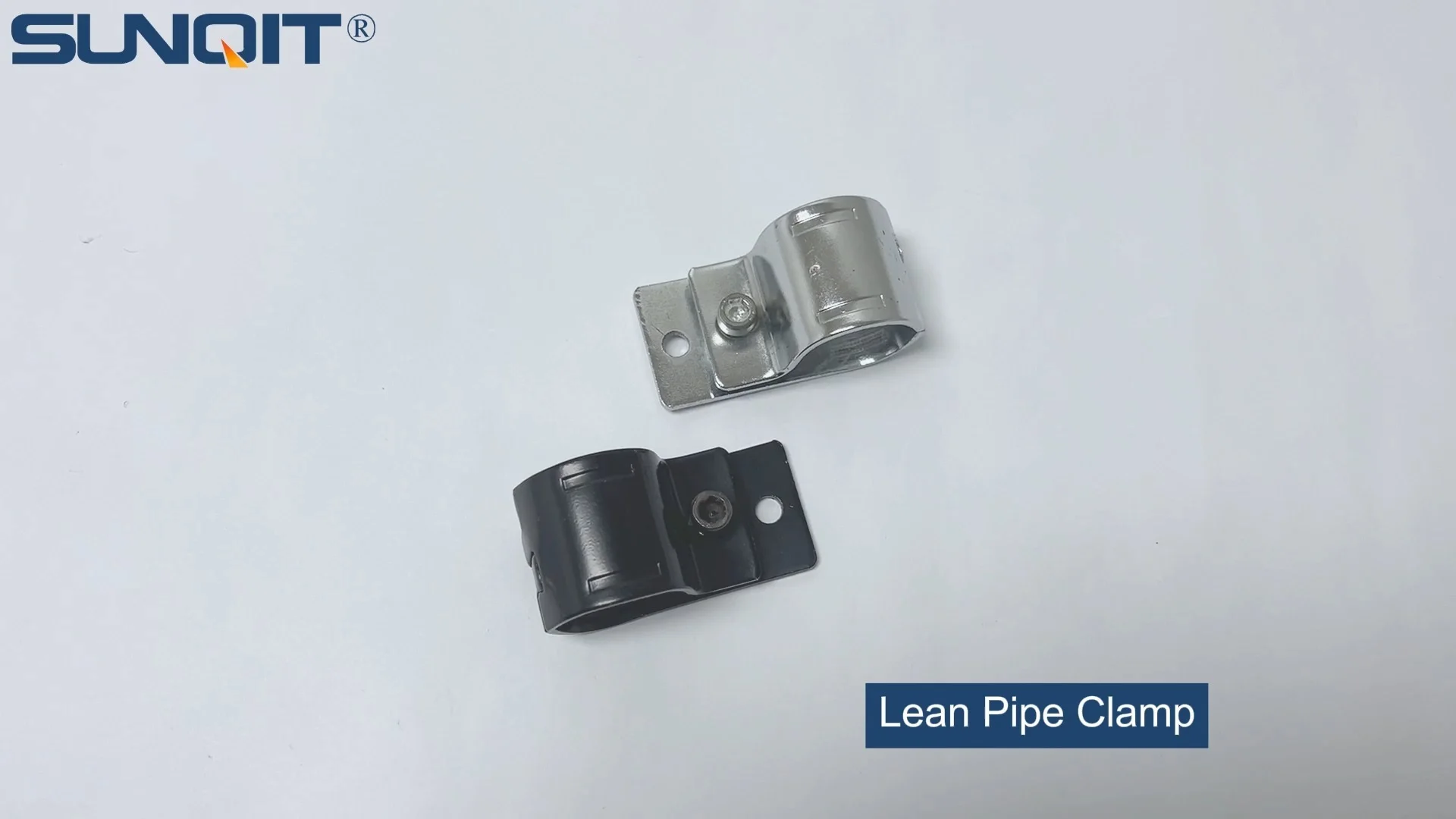
Lean pipe clamp is used for rack system hang monitor or other panel for workbenck, flowrack in production daily use.
It's 7:30 AM on a Tuesday, and Maria, a production line supervisor at a mid-sized electronics factory, is already staring at a mountain of paperwork. The night shift left a note: three workstations broke down because the clamps holding the lean pipes loosened overnight, causing bins of circuit boards to crash to the floor. Two boxes are damaged beyond repair, and the team is now scrambling to reconfigure the line before the day shift starts. "Again?" she mutters, rubbing her temples. "We just replaced those clamps last month."
If you've spent any time in manufacturing, you know Maria's frustration. Loose joints, flimsy components, and wasteful workarounds are par for the course in many factories. But what if there was a small part—a single clamp—that could turn those mornings around? Enter the Eco-Friendly Lean Pipe Clamp B. It's not just a piece of hardware; it's a quiet revolution in how we build, adapt, and sustain production systems. Let's dive into how this unassuming tool is helping factories cut waste, save time, and do right by the planet—one tight connection at a time.
The Hidden Cost of Waste in Modern Production
Waste in manufacturing isn't just about scrap metal or broken parts. It's the 20 minutes Juan, a line worker, spends every morning tightening loose lean pipe joints instead of assembling products. It's the box of discarded clamps in the back of the warehouse—plastics that cracked after three months of use, destined for a landfill. It's the energy wasted shipping replacement parts halfway across the country because the original ones couldn't handle daily wear and tear. The Lean Manufacturing Institute estimates that up to 30% of a factory's operating costs can be tied to waste—time, materials, and resources that don't add value to the end product.
"We used to joke that our lean system was anything but lean," says Raj, a plant manager with 15 years of experience. "We'd spend hours building a workstation, and within weeks, the joints would slip. So we'd overcompensate—using extra clamps, welding parts that should be modular, buying more materials than we needed 'just in case.' It was like trying to patch a leaky boat with duct tape."
The problem isn't just financial. Every cracked clamp, every reconfigured workstation, and every wasted hour contributes to a larger environmental footprint. Factories are under increasing pressure to reduce emissions and meet sustainability goals, but outdated tools make that nearly impossible. "Our CEO kept asking for a lower carbon footprint," Raj recalls, "but how do you reduce waste when your own production line is leaking resources left and right?"
What Even Is a Lean System, Anyway?
Before we get to the star of the show—Clamp B—let's make sure we're on the same page about lean systems. At its core, a lean system is all about eliminating waste to create more value. Think of it as the opposite of "throwing money at the problem." Instead of overproducing, stockpiling, or tolerating inefficiencies, lean systems focus on flow : getting materials, workers, and processes moving smoothly, with as few hiccups as possible.
And here's where lean pipes come in. These lightweight, modular tubes are the backbone of many lean systems. Unlike rigid metal frames or welded structures, lean pipes (often made of steel, aluminum, or plastic) can be quickly assembled, disassembled, and reconfigured using joints and clamps. Need a new workstation for a taller worker? Swap out a few pipes. Launching a new product line? Rearrange the flow racks in an hour. It's like building with industrial Legos—flexible, adaptable, and designed to evolve with your needs.
But here's the catch: none of that flexibility matters if the connections between pipes— the clamps and joints —fail. A loose clamp can turn a "5-minute reconfiguration" into a 2-hour repair. A brittle joint can render an entire workstation useless. For lean systems to truly work, every component has to pull its weight. And until recently, the clamps holding everything together were often the weakest link.

Meet Lean Pipe Clamp B: The Unsung Hero of Lean Systems
Enter Lean Pipe Clamp B. Developed by a team of engineers who'd spent years listening to workers like Maria and Raj, this clamp was designed from the ground up to solve two big problems: waste and sustainability. Let's start with the basics: what is it?
At first glance, Clamp B looks like any other lean pipe clamp—a small, C-shaped piece of hardware with a bolt for tightening. But pick it up, and you'll notice the difference. The plastic feels denser, more durable than the flimsy versions you might be used to. The metal bolt is coated in a rust-resistant finish, and the inner grip has tiny, rubberized teeth that look like they mean business. "It's the little things," says Priya, an engineer on the design team. "We spent six months testing different rubber compounds for those teeth. We wanted something that would grip the pipe tight but not scratch it—so you can reuse the pipe if you reconfigure later."
But the real innovation is in the materials. Clamp B's body is made from 85% post-industrial recycled plastic—think leftover scraps from car parts and electronics casings that would've otherwise gone to landfills. The steel bolt? 100% recycled. Even the packaging is minimal: just a cardboard box with no plastic wrap, printed with soy-based ink. "We didn't want to create a 'green' product that was only green on paper," Priya explains. "Every step of the way, we asked: How can this part do more with less?"

How Clamp B Slashes Waste (Yes, Even the "Invisible" Kind)
Let's talk about waste—all kinds of it. In manufacturing, waste isn't just physical trash; it's time, energy, and even frustration. Clamp B attacks all three.
1. Material Waste: "We Used to Throw Away Clamps by the Box"
Raj still remembers the "clamp graveyard" in his old factory—a corner of the warehouse where broken, cracked, or stripped clamps piled up. "We'd order 500 clamps, and within three months, half of them were useless," he says. "The plastic would snap when you tightened them too much, or the bolts would rust and seize up. We were throwing away money—and plastic—like it was nothing."
Clamp B changes that. Thanks to its reinforced recycled plastic and corrosion-resistant bolt, it lasts three times longer than standard clamps, according to third-party testing. Maria's factory switched to Clamp B a year ago, and she estimates they've cut clamp orders by 70%. "We used to replace clamps every 6-8 weeks," she says. "Now? We've only needed to swap out a handful in 12 months. And when we do reconfigure a workstation, we can reuse the clamps—they don't get bent or stripped. It's like getting a raise, honestly."
And because Clamp B is designed to grip without damaging pipes, the pipes themselves last longer too. "Before, we'd have to replace pipes because the old clamps chewed up the coating," Maria adds. "Now the pipes look brand-new, even after multiple reconfigurations. Less scrap, less ordering, less hassle."
2. Time Waste: "No More Morning Tightening Marathons"
Time is money, and in factories, wasted time can derail entire production goals. For Juan, the line worker, mornings used to mean grabbing a wrench and doing a "clamp check" on every workstation. "I'd spend 45 minutes before my shift even started, tightening loose clamps," he says. "If I missed one, parts would start sliding off the flow rack by 10 AM. It was stressful—like playing whack-a-mole with bolts."
Clamp B's secret weapon here is its "click-and-hold" design. When you tighten the bolt, the rubberized teeth bite into the pipe with a satisfying click —a clear signal that it's secure. And unlike standard clamps, which often loosen over time due to vibration, Clamp B's grip actually improves with minor jostling, as the teeth settle deeper into the pipe's surface. "I haven't touched a wrench for clamp checks in months," Juan grins. "Now I spend that 45 minutes prepping materials or helping new hires. It's like getting an extra hour in the day."
Reconfiguration time has plummeted too. Maria's team recently needed to shrink a workstation to make space for a new machine. With old clamps, that would've meant wrestling with seized bolts and replacing half the clamps that broke during disassembly. "With Clamp B? We had the whole thing taken apart and rebuilt in 22 minutes," she says. "The bolts unscrewed smoothly, no cracks, no stripped threads. The team was shocked—they kept waiting for the 'catch.'"
3. Energy Waste: "Our Shipping Costs Dropped by 15%"
Sustainability isn't just about what happens in the factory—it's about the entire lifecycle of a product. Clamp B's lightweight design (it's 20% lighter than standard steel clamps) means more clamps fit into a single shipping box. "We used to ship 500 clamps in two boxes," says Lina, who manages logistics for a lean pipe supplier. "Now we can fit 800 in one box. That's fewer trucks on the road, less fuel used, and lower emissions. And because the recycled plastic is locally sourced, we're cutting down on transportation miles for raw materials too."
Even the manufacturing process is energy-efficient. The factory that makes Clamp B runs on solar power, and the recycled plastic requires 60% less energy to melt and mold than virgin plastic. "We're not just reducing waste in the factory—we're preventing it before the clamp even gets there," Priya says.
| Waste Type | With Standard Clamps | With Eco-Friendly Lean Pipe Clamp B | Reduction |
|---|---|---|---|
| Material Waste (Clamps/Year) | 500 clamps | 150 clamps | 70% |
| Time Spent Tightening/Week | 3.5 hours | 0.5 hours | 86% |
| Shipping Emissions (Per 1000 Clamps) | 120 kg CO₂ | 72 kg CO₂ | 40% |
| Reconfiguration Time | 2+ hours | 22 minutes | 82% |

Beyond the Factory: Clamp B's Ripple Effect on Sustainability
It's easy to think of sustainability in big terms—solar panels, electric trucks, zero-waste factories. But sometimes, the smallest parts make the biggest waves. Clamp B is a perfect example. Let's break down its environmental impact beyond the factory walls.
First, the recycled plastic. Every 10,000 Clamp Bs keep approximately 1 ton of plastic out of landfills. That's the equivalent of 20,000 plastic bottles. Multiply that by the tens of thousands of clamps used in factories worldwide, and the numbers start to add up. "We had a customer in Germany order 50,000 Clamp Bs last year," Lina says. "That's 5 tons of plastic saved. It feels good to tell that story to our kids—'Mommy's job helps keep trash out of the ocean.'"
Then there's the reduced need for virgin materials. Making plastic from scratch requires oil, and extracting oil is a major contributor to greenhouse gas emissions. By using recycled plastic, Clamp B cuts down on that demand. "We're not solving climate change with a clamp," Priya admits. "But we're showing that every part, no matter how small, can be part of the solution. If every factory component was designed with this mindset, imagine the impact."
And let's not forget the human impact. When workers like Juan and Maria spend less time fixing broken clamps and more time doing meaningful work, job satisfaction goes up. "I used to dread Monday mornings because I knew I'd be dealing with clamp failures," Maria says. "Now? I walk in, and the line is ready to go. The team is happier, turnover is down, and we're hitting our sustainability goals. It's a win-win-win."
The Future of Lean Systems: Small Parts, Big Dreams
Clamp B is just the beginning. The team behind it is already working on eco-friendly versions of other lean pipe accessories—joints made from recycled aluminum, end caps crafted from plant-based plastics. "We're not stopping at clamps," Priya says. "The goal is to create a full ecosystem of lean components that are modular, durable, and kind to the planet. Imagine a workstation where every part—from the pipe to the caster—is recycled or recyclable. That's the future we're building."
Raj, for one, is on board. "I've been in manufacturing long enough to know that change is slow," he says. "But Clamp B showed me that small changes can happen—and they can spread. When our workers saw how much easier the clamps made their jobs, they started asking, 'What else can we improve?' Now we're auditing all our tools for waste. It's like a ripple effect."
Wrapping Up: Why a Clamp Matters
At the end of the day, Lean Pipe Clamp B is more than a piece of hardware. It's a reminder that sustainability and efficiency don't have to be trade-offs. That the "little things" in manufacturing—like a clamp that holds tight, lasts long, and leaves a smaller footprint—can add up to big change.
For Maria, it's about more than just numbers. "Last month, our CEO brought in a group of high school students to tour the factory," she says. "One kid asked, 'How do you help the environment here?' I showed them the Clamp Bs, explained the recycled plastic, and watched their eyes light up. 'So even the small parts matter?' he asked. I told him, 'Kid, the small parts are all that matter.'"
So the next time you walk through a factory, take a closer look at the workstations, the flow racks, the lean pipes. Chances are, there's a clamp holding it all together. And if it's a Clamp B? You're looking at more than a connection between pipes—you're looking at a connection between efficiency, sustainability, and the people who make it all work.
Here's to the small parts. The ones that hold us together, keep us moving forward, and remind us that even the tiniest change can make the world a little better. One clamp at a time.