- Company Articles
- Products and Technology
- Product knowledge
- Eco-Friendly Manufacturing: Recyclable Three Way Aluminum Pipe Joints

Eco-Friendly Manufacturing: Recyclable Three Way Aluminum Pipe Joints
Related Product
Three Way Aluminum Pipe Joint
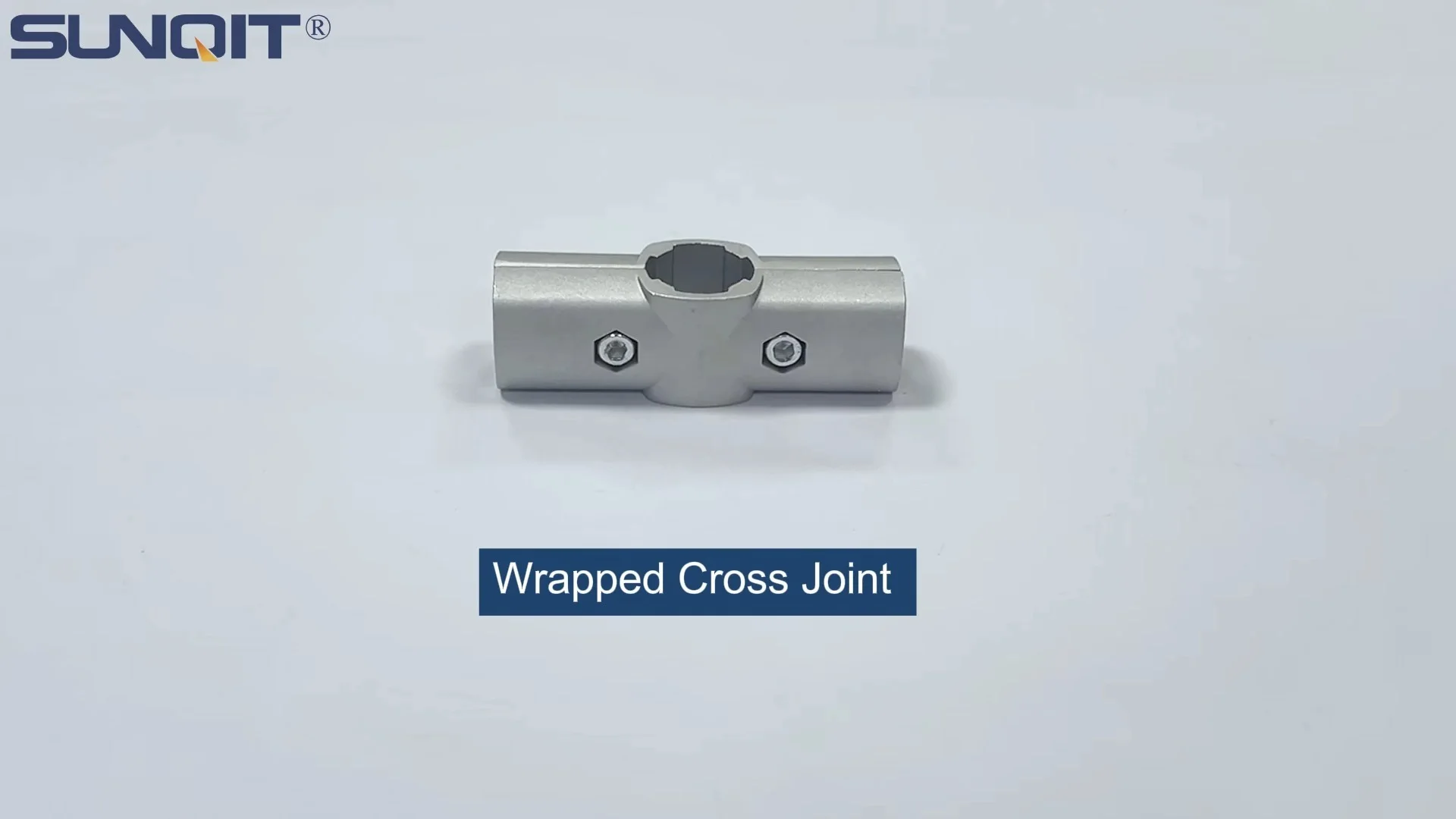
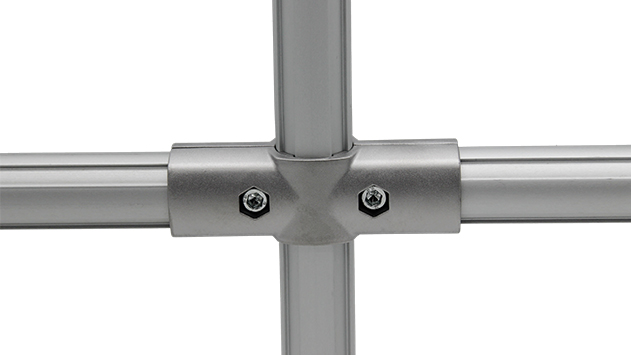
Aluminum 3 way pipe joint for 28mm aluminum pipe connection in 3 direction.
The Hidden Weight of Waste in Modern Factories
Walk through any manufacturing plant, and you'll likely notice the hum of machinery, the rhythm of assembly lines, and the focused energy of workers bringing products to life. But there's another, quieter presence that lingers in the corners: waste. Piles of discarded metal scraps by the loading dock, broken plastic components in trash bins, and outdated equipment gathering dust in storage—these are the silent costs of traditional manufacturing. For plant managers like Raj, who oversees a mid-sized electronics assembly facility in Ohio, this waste isn't just an eyesore. It's a constant source of stress.
"Last quarter, we spent over $12,000 on disposal fees alone," Raj says, gesturing to a stack of crumpled invoices on his desk. "And that doesn't include the cost of the materials we're throwing away. Stainless steel pipes, plastic joints, rusted connectors—they all add up. Worse, our sustainability report is getting harder to defend. Customers are asking questions about our carbon footprint, and I don't have good answers."
Raj's frustration is shared by thousands of manufacturing leaders worldwide. As industries pivot toward eco-conscious practices, the spotlight is turning to the small, often overlooked components that keep factories running: the pipes, joints, and rails that form the backbone of workbenches, material racks, and conveyor systems. These components, once seen as "unremarkable" and "disposable," are now emerging as critical players in the quest for sustainability. And among them, one innovation stands out: the recyclable three way aluminum pipe joint.
Why "Small Parts" Mean Big Change for Sustainability
When we talk about eco-friendly manufacturing, the conversation often centers on large-scale solutions: solar panels on factory roofs, electric delivery trucks, or carbon-neutral production lines. But experts argue that true sustainability starts smaller—with the building blocks of the factory itself. "Think of it like a house," says Dr. Elena Marquez, a materials scientist specializing in industrial sustainability. "You can install energy-efficient windows, but if the foundation is made of non-recyclable materials, you're still building on a shaky, wasteful base."
In manufacturing, that "foundation" includes the modular systems that structure workflow: workbenches, flow racks, turnover trolleys, and conveyor tracks. These systems rely on pipe joints to connect aluminum or steel tubes, forming sturdy, customizable structures. For decades, many factories relied on steel joints (prone to rust) or plastic joints (prone to cracking). When these joints failed, they were tossed in the trash, along with the pipes they connected. The result? Tons of waste annually, and a cycle of constant replacement that drained both budgets and resources.
Enter aluminum—a material that's been quietly revolutionizing sustainable manufacturing. Lightweight yet strong, resistant to corrosion, and infinitely recyclable, aluminum has become the gold standard for eco-conscious component design. And when paired with innovative joint designs, like the three way aluminum pipe joint, it transforms how factories build, adapt, and eventually recycle their equipment.
Aluminum: The Unsung Hero of Circular Manufacturing
To understand why aluminum is a game-changer, let's start with the basics. Unlike steel, which requires intensive mining and processing, aluminum is abundant and infinitely recyclable. "Recycling aluminum uses 95% less energy than producing it from raw bauxite ore," explains Dr. Marquez. "That's like recycling one can saving enough energy to power a laptop for five hours. Now imagine scaling that to industrial-grade pipes and joints— the impact is staggering."
But aluminum's benefits go beyond energy savings. Its natural resistance to rust means it lasts longer in factory environments, where moisture, oils, and chemicals are part of daily life. This durability reduces the need for frequent replacements, cutting down on waste. And when an aluminum component does reach the end of its life, it doesn't end up in a landfill. It's melted down, purified, and reshaped into new pipes, joints, or even entirely different products—with no loss in quality.
This circularity is what sets aluminum apart. "Steel can be recycled, but it often loses structural integrity after multiple cycles," notes Raj, who recently switched his facility to aluminum-based systems. "Plastic? Most factory plastics aren't recyclable at all. Aluminum? We've had joints that lasted eight years, then sent them to a local recycler and got credit toward new components. It's a closed loop."

Three Way Aluminum Pipe Joints: Flexibility Meets Sustainability
At the heart of this aluminum revolution is the three way aluminum pipe joint—a deceptively simple component that solves two critical problems: waste and rigidity. Traditional joints, whether steel or plastic, are often fixed in design. If a factory needs to reconfigure a workbench or expand a flow rack, old joints are pried off, bent, or broken, rendering them useless. The three way aluminum pipe joint, by contrast, is engineered for adaptability.
"The beauty of the three way design is its versatility," says Mia Chen, an engineer at a leading aluminum extrusion profile supplier. "It lets you connect three pipes at once—say, a vertical support, a horizontal shelf, and a diagonal brace—without needing extra hardware. And because it's made of high-grade aluminum alloy, it's strong enough to support heavy loads but lightweight enough to adjust by hand. No wrenches, no hammers, no broken parts."
Mia demonstrates by twisting a joint in her hands. "See this internal locking mechanism? It tightens with a simple turn, but it won't slip under pressure. When you need to reconfigure, just loosen it, adjust the pipes, and retighten. The joint stays intact, the pipes stay undamaged, and you avoid creating waste. It's like building with Legos, but for factories."
This flexibility is a boon for lean manufacturing—a philosophy focused on minimizing waste and maximizing efficiency. In lean systems, workflows are constantly optimized, and factory layouts evolve to meet new demands. With traditional joints, reconfiguring a line meant downtime and new material costs. With three way aluminum pipe joints, Raj's team recently rearranged their assembly line in a single afternoon, using the same joints and pipes they'd had for years. "We saved $8,000 in new materials alone," he says. "And the line is now 20% more efficient. It's a win-win."

Comparing the Options: Why Three Way Aluminum Joints Outshine the Rest
Still not convinced? Let's break down how three way aluminum pipe joints stack up against traditional alternatives. The table below compares key factors like recyclability, durability, cost, and environmental impact:
| Feature | Three Way Aluminum Pipe Joint | Traditional Steel Joint | Plastic Joint |
|---|---|---|---|
| Recyclability | 100% recyclable; can be melted and reused indefinitely | Recyclable but loses strength after 2-3 cycles | Non-recyclable (most factory plastics); ends in landfills |
| Durability | Resistant to rust, corrosion, and impact; lasts 8-10 years | Prone to rust in humid environments; lasts 3-5 years | Brittle; cracks under heavy loads or temperature changes; lasts 1-2 years |
| Installation/Adjustment | Tool-free; hand-tightened and reconfigurable | Requires wrenches; difficult to adjust without damaging threads | Snaps into place but breaks if twisted; not reusable after removal |
| Weight | Lightweight (1/3 the weight of steel) | Heavy; increases shipping and handling costs | Lightweight but flimsy |
| Environmental Impact | Low carbon footprint; recyclable energy savings | High carbon footprint from mining/processing; rust leaches toxins | Derived from fossil fuels; microplastics released as it degrades |
| Long-Term Cost | Higher upfront cost, but lower over time (no replacements) | Low upfront cost, but high replacement costs | Cheapest upfront, but frequent replacements drive long-term costs up |
The data speaks for itself. While aluminum joints may cost more initially, their longevity, recyclability, and adaptability make them a smarter investment for factories prioritizing sustainability and efficiency. "We used to replace plastic joints every six months," Raj says. "The aluminum ones? We've had them for three years, and they still look brand new. The ROI was clear within the first year."
Beyond Joints: Building a Lean, Green Ecosystem
Three way aluminum pipe joints don't work in isolation. They're part of a larger ecosystem of sustainable manufacturing components, including aluminum extrusion profiles, roller tracks, and modular workbenches. Together, these elements create a system that's not just eco-friendly, but inherently lean.
Take aluminum extrusion profiles, for example. These are lightweight, customizable rails that form the base of workbenches and material racks. When paired with three way joints, they allow factories to build structures tailored to their exact needs—no more over-ordering prefab equipment that doesn't fit. "We used to buy massive steel workbenches that took up half the floor," Raj recalls. "Now we build our own with aluminum profiles and joints. If a product line changes, we take it apart and rebuild it in hours. No more wasted space, no more wasted money."
This modularity also supports just-in-time production, a cornerstone of lean manufacturing. By designing workstations that adapt to changing demand, factories reduce excess inventory and idle time. And because aluminum systems are lightweight, workers can rearrange them without heavy machinery, boosting productivity and reducing the risk of injuries.
"Our assembly line used to have workers walking 20 extra steps per hour to reach tools," Raj says. "With the new aluminum workbench—built with three way joints and custom shelves—everything is within arm's reach. Productivity went up 15%, and our team is less fatigued at the end of the day. It's not just about sustainability; it's about respecting your workers, too."
Case Study: How GreenTech Assemblies Cut Waste by 62% with Aluminum Joints
To see the real-world impact of three way aluminum pipe joints, let's look at GreenTech Assemblies, a California-based manufacturer of solar panel components. In 2022, their sustainability director, Priya, faced a crisis: the company's waste disposal costs had spiked by 40%, and their parent company threatened to cut funding if they didn't reduce their carbon footprint.
"Our factory was using plastic joints for everything—workbenches, flow racks, even our conveyor tracks," Priya explains. "They'd crack under the weight of solar panels, so we were replacing them every three months. The trash bins were overflowing with broken plastic, and our recycling hauler couldn't process it. We felt stuck."
Priya's team researched alternatives and settled on aluminum extrusion profiles with three way aluminum pipe joints. The transition wasn't easy—they had to train workers on the new system and absorb the upfront cost of replacing old equipment. But within six months, the results were undeniable:
- Waste disposal costs dropped by 62%, saving $34,000 annually.
- Equipment replacement costs fell by 75%, as aluminum joints lasted 3x longer than plastic.
- Assembly line downtime decreased by 30%, as reconfiguring workstations took hours instead of days.
- Employee satisfaction scores rose by 22%, with workers citing "less frustration with broken tools" as a key reason.
"The best part?" Priya says, smiling. "Last month, we recycled our first batch of old aluminum joints. The recycler paid us $2,100 for the scrap, which we put toward new safety gear. It's a cycle that feeds itself."
The Lifecycle of a Three Way Aluminum Pipe Joint: From Mine to Factory to Recycling Bin (and Back)
To truly appreciate aluminum's sustainability, let's trace the lifecycle of a single three way aluminum pipe joint:
1. Sourcing: Responsible Mining and Extrusion
It starts with bauxite ore, mined in regions like Australia and Guinea. Modern mines adhere to strict environmental standards, replanting vegetation and restoring ecosystems post-mining. The ore is refined into alumina, then smelted into aluminum ingots. From there, the ingots are heated and pressed through dies to form aluminum extrusion profiles—long, thin rails with precise shapes. These profiles are cut into smaller pieces to become pipe joints.
2. Manufacturing: Precision Engineering for Durability
At the factory, the aluminum pieces are machined into three way joints, with internal threads and locking mechanisms added for stability. High-quality joints undergo stress testing to ensure they can withstand years of use. "We test each batch by applying 500 pounds of pressure—more than any factory would ever need," says Mia Chen, the engineer. "If a joint bends or cracks, it doesn't leave the facility."
3. Use: Years of Reliable Service
The joints are shipped to manufacturing plants, where they're paired with aluminum pipes to build workbenches, racks, and conveyor systems. Thanks to their durability, they serve for 8-10 years on average, adapting to countless reconfigurations as factory needs change.
4. Recycling: Closing the Loop
When a joint finally wears out (or the factory upgrades its layout), it's collected and sent to a recycling facility. There, it's shredded, melted in a furnace, and purified to remove any impurities. The molten aluminum is then cast into new ingots, ready to be extruded into pipes, joints, or other products. The entire process takes just 60 days, and the recycled aluminum is indistinguishable from "new" aluminum in quality.
"This is the future of manufacturing," Dr. Marquez says. "A world where nothing is 'disposable'—everything is a resource in waiting."
Choosing the Right Partner: Why Supplier Values Matter
Switching to aluminum joints is a big decision, and it starts with choosing the right supplier. Not all aluminum components are created equal—some suppliers cut corners with low-grade alloys or non-recyclable coatings. To ensure your investment aligns with your sustainability goals, look for suppliers who:
- Use 100% recycled aluminum for at least part of their production.
- Offer take-back programs to recycle old joints and pipes.
- Adhere to ISO 14001 standards for environmental management.
- Provide transparency about their supply chain and manufacturing processes.
"We partnered with a supplier who sends us a quarterly sustainability report," Raj says. "They track how much recycled aluminum goes into each joint, how much energy they saved, and even the carbon footprint of shipping. It's not just about buying a product—it's about joining a movement."
The Future of Sustainable Manufacturing: Innovations on the Horizon
As demand for eco-friendly solutions grows, manufacturers are pushing the boundaries of aluminum design. One emerging trend is "smart joints"—aluminum connectors embedded with sensors that monitor wear and tear, alerting managers when maintenance is needed. "Imagine a joint sending a text to your phone saying, 'I'm starting to loosen—tighten me soon!'" Mia laughs. "It sounds like science fiction, but we're testing prototypes now."
Another innovation is bio-based coatings for aluminum components, made from plant-derived materials that enhance durability without harmful chemicals. And researchers are exploring ways to blend aluminum with recycled plastic fibers, creating hybrid joints that are even lighter and stronger.
But perhaps the most exciting development is the rise of circular economy networks—groups of factories that share recycling resources and swap used components. "Why buy new joints when another factory down the road has extras they're not using?" Dr. Marquez asks. "Collaboration is the next frontier of sustainability."
Small Joints, Big Impact: The Bottom Line
At the end of the day, three way aluminum pipe joints are more than just hardware. They're a symbol of a manufacturing industry in transition—one that's moving from "take-make-waste" to "reduce-reuse-recycle." For Raj, Priya, and thousands of other plant managers, they represent hope: hope for lower costs, happier workers, and a planet that's healthier for future generations.
"When I walk through the factory now, I don't see waste bins overflowing," Raj says. "I see a system that works with nature, not against it. And that? That's the best innovation of all."
So the next time you're in a manufacturing plant, take a closer look at the workbenches and racks. If you see sleek, silver joints connecting aluminum pipes, you're looking at the future—one recycled joint at a time.