- Company Articles
- Products and Technology
- Product knowledge
- Eco-Friendly Swivel Stem Caster Wheels: Sustainable Materials & Reusability

Eco-Friendly Swivel Stem Caster Wheels: Sustainable Materials & Reusability
Related Product
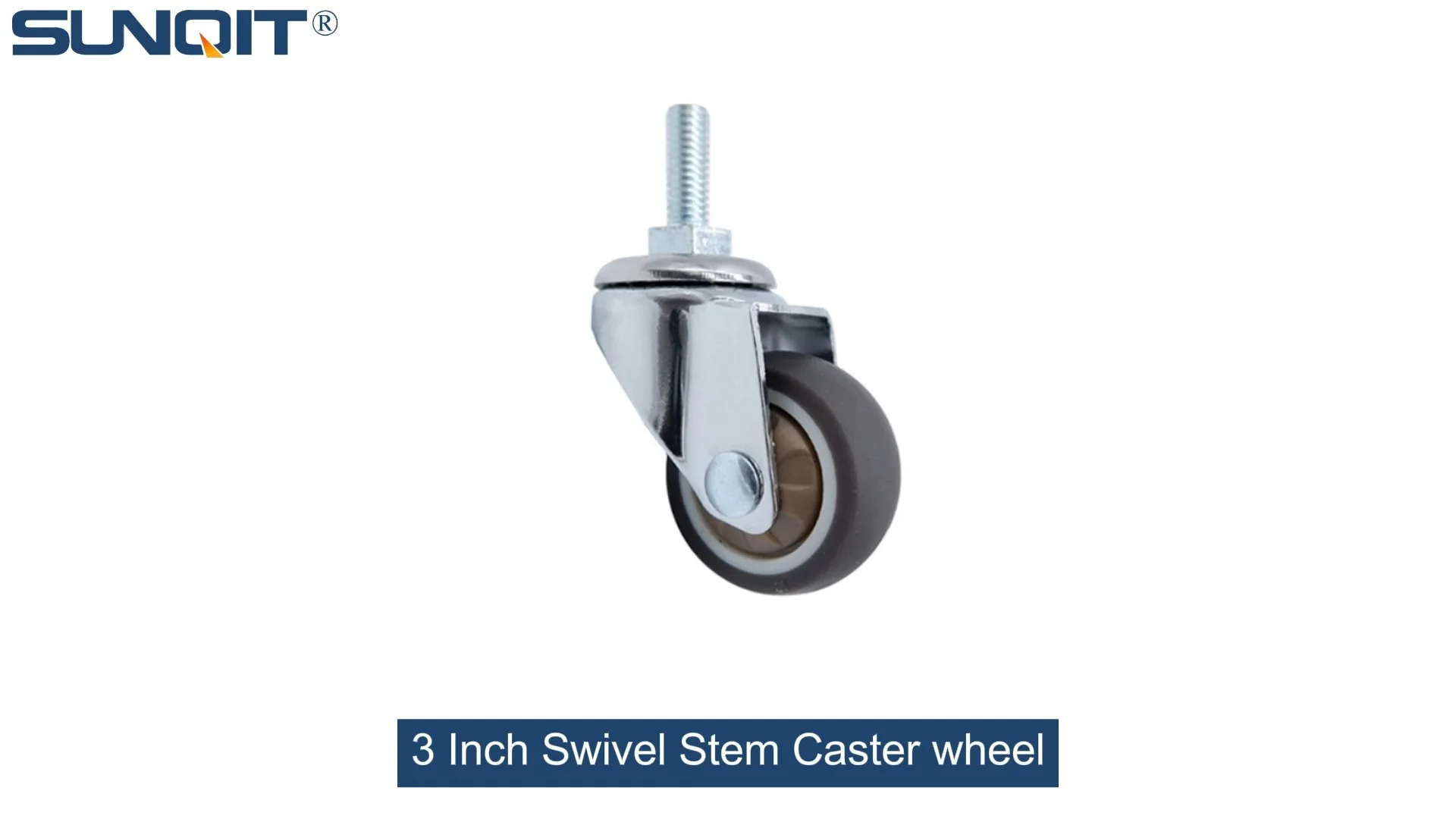
Swivel Stem Caster wheel
360 Degree Swivel Stem Caster. Threaded-post mount design, castors diameter 3 inch.Each swivel caster wheels loading 70KGS. Heavy enough and widely suit for carts, chairs, cabinet, flow rack, workbench, turnover rolley.
In the hum of a busy factory, where every second counts and efficiency is king, there's a quiet hero working behind the scenes: the caster wheel. It's the unsung component that lets workers glide heavy trolleys across floors, positions workbenches with precision, and keeps production lines moving like clockwork. But in an era where sustainability isn't just a buzzword but a business imperative, even the humble caster wheel is getting a green makeover. Enter eco-friendly swivel stem caster wheels—designed not just to perform, but to protect our planet, too. Let's dive into how these small but mighty tools are redefining industrial mobility, one roll at a time.
Why Sustainability Matters in Industrial Components
Factories and warehouses are often seen as hubs of production, but they're also significant consumers of resources. From energy to raw materials, the industrial sector leaves a substantial carbon footprint. In recent years, though, a shift has begun. Businesses are waking up to the reality that sustainability isn't just good for the planet—it's good for the bottom line, too. Customers demand it, regulations require it, and employees take pride in working for companies that prioritize the environment. That's where components like the swivel stem caster wheel come in. They might seem small, but when you consider how many casters are used in a single facility—on trolleys, workbenches, conveyor systems, and racks—the collective impact of choosing eco-friendly options adds up fast.
Traditional caster wheels often rely on materials like untreated steel or non-recyclable plastics, which can corrode, wear out quickly, and end up in landfills after a short lifespan. Eco-friendly alternatives, by contrast, are built with longevity, recyclability, and resource efficiency in mind. They're part of a larger movement toward lean system principles—reducing waste, optimizing resources, and creating systems that work smarter, not harder. And when paired with compatible materials like aluminum profile or recycled steel, these casters become even more powerful tools for sustainable manufacturing.
Did you know? The global caster wheel market is projected to grow by over 5% annually in the next decade, driven in part by demand for sustainable and durable options. Choosing eco-friendly casters today could mean millions of fewer pounds of waste in landfills tomorrow.
What Makes a Swivel Stem Caster Wheel "Eco-Friendly"?
Eco-friendly swivel stem caster wheels aren't just regular casters with a green label. They're engineered from the ground up with sustainability in mind. Let's break down the key features that set them apart:
1. Sustainable Materials: Beyond Steel and Plastic
The first step in making a caster wheel eco-friendly is choosing the right materials. Traditional casters often use solid steel for frames and cheap plastics for wheels, both of which have downsides. Steel is heavy (increasing energy use during transportation and operation), prone to rust (shortening lifespan), and energy-intensive to produce. Low-quality plastics, meanwhile, can crack under pressure and are rarely recyclable.
Eco-friendly casters, on the other hand, prioritize materials like recycled aluminum, reclaimed rubber, and bio-based plastics. Aluminum, in particular, is a star player here. Unlike steel, aluminum is 100% recyclable—meaning it can be melted down and reused repeatedly without losing quality. It's also lightweight, which reduces the energy needed to move trolleys and equipment. When paired with aluminum profile frames or workbenches, these casters create a fully recyclable system that minimizes waste from the start.
Another material gaining traction is recycled rubber for wheel treads. Instead of using new rubber (which requires harvesting natural resources or producing synthetic alternatives), manufacturers are repurposing old tires or industrial rubber waste. The result? A durable, shock-absorbing wheel that keeps waste out of landfills and gives new life to existing materials.
2. Design for Longevity: Built to Last (and Be Repaired)
Sustainability isn't just about what a product is made of—it's about how long it lasts. A caster wheel that needs to be replaced every six months is wasteful, no matter what it's made of. Eco-friendly swivel stem casters are designed with durability in mind. They feature reinforced stems, corrosion-resistant coatings, and high-quality bearings that stand up to heavy loads and constant use.
But even the toughest casters need maintenance, which is why many eco-friendly models are modular. Instead of replacing the entire wheel when a bearing wears out, you can swap in a new bearing. If the tread gets damaged, you can replace just the wheel, not the stem or mounting hardware. This "repairable by design" approach reduces waste and extends the product's lifespan—core tenets of the lean system philosophy, which focuses on minimizing waste in all forms.
3. Energy-Efficient Production: Green from the Start
It's not enough for the caster itself to be green—the process of making it matters, too. Eco-friendly caster manufacturers prioritize energy-efficient production methods, like using solar power in factories or optimizing manufacturing workflows to reduce emissions. Some even source materials locally to cut down on transportation-related carbon footprints. For example, a caster made with aluminum profile extruded at a nearby facility requires far less energy to transport than one made with steel shipped from overseas.

The Role of Aluminum Profile in Eco-Friendly Caster Systems
If eco-friendly caster wheels are the stars, then aluminum profile is their perfect co-star. Aluminum extrusion profiles are lightweight, strong, and infinitely customizable—making them ideal for building the frames, workbenches, and trolleys that casters attach to. But their real superpower? Sustainability.
Aluminum profile is made by pushing molten aluminum through a die to create specific shapes—think T-slots, angles, or tubes. This process uses far less energy than forging steel, and the resulting profiles are 100% recyclable. When you pair aluminum profile frames with eco-friendly swivel stem casters, you get a system that's not just durable and flexible, but fully circular. At the end of its life, the entire setup can be disassembled, melted down, and turned into new profiles or casters—no waste, no guilt.
What's more, aluminum profile's modularity aligns perfectly with lean system principles. Need to reconfigure a production line? Simply adjust the profile frames and reposition the casters. No need to buy new equipment—just repurpose what you already have. This flexibility reduces the need for new materials and keeps old systems in use longer, further cutting down on waste.

Caster Accessories: Small Parts, Big Sustainability Impact
A caster wheel is only as good as its accessories. From brakes to mounting plates, these add-ons can make or break a caster's performance—and its sustainability. Eco-friendly caster accessories are designed to complement the wheels themselves, enhancing durability, recyclability, and functionality.
Take brake mechanisms, for example. Traditional caster brakes often use plastic components that can crack or wear out, rendering the brake useless. Eco-friendly alternatives use recycled metal or reinforced, bio-based plastics that last longer and are easier to recycle. Some even feature adjustable tension, so you can fine-tune the brake to your needs, reducing the likelihood of overuse and wear.
Mounting hardware is another area where sustainability shines. Instead of using disposable plastic clips or non-recyclable adhesives, eco-friendly casters use stainless steel bolts or aluminum brackets—both of which are recyclable and reusable. Some manufacturers even offer magnetic mounting options, eliminating the need for hardware altogether and making disassembly a breeze when it's time to repair or recycle.

Traditional vs. Eco-Friendly Casters: A Side-by-Side Comparison
| Feature | Traditional Caster Wheels | Eco-Friendly Swivel Stem Caster Wheels |
|---|---|---|
| Materials | Untreated steel, non-recyclable plastics | Recycled aluminum, reclaimed rubber, bio-plastics |
| Recyclability | Low (often ends up in landfills) | High (100% recyclable materials, modular design for repair) |
| Durability | Prone to rust, wear, and corrosion | Corrosion-resistant, reinforced components, long lifespan |
| Energy Use in Production | High (steel production is energy-intensive) | Low (aluminum recycling uses 95% less energy than new aluminum) |
| Compatibility with Lean Systems | Limited (hard to repair, not modular) | High (modular design, repairable, works with aluminum profile setups) |
Real-World Impact: How Eco-Friendly Casters Transform Workplaces
Let's paint a picture: Imagine a mid-sized electronics manufacturer that uses 50 trolleys daily to move components between assembly stations. Each trolley has four traditional steel casters, which need replacement every 8 months due to rust and wear. Over a year, that's 300 caster wheels ending up in landfills, not to mention the energy used to produce and ship new ones.
Now, swap those steel casters for eco-friendly swivel stem casters made with recycled aluminum and rubber treads. Suddenly, the lifespan jumps to 3 years—thanks to corrosion resistance and durable bearings. When parts do wear out, the manufacturer can replace just the bearings or treads, not the entire wheel. Over the same time frame, they use 75% fewer casters, reduce waste by hundreds of pounds, and cut energy costs from production and shipping. Plus, the lighter aluminum casters make the trolleys easier to push, reducing worker fatigue and boosting productivity. It's a win-win-win: for the planet, the workers, and the company's budget.
This isn't just a hypothetical scenario. Companies across industries—from automotive to food and beverage—are already seeing results. A leading automotive parts supplier in Europe, for example, reported a 40% reduction in waste after switching to eco-friendly casters and aluminum profile trolleys, along with a 15% drop in energy costs due to lighter equipment. These stories prove that sustainability and efficiency can go hand in hand.
Choosing the Right Eco-Friendly Caster: What to Look For
Ready to make the switch to eco-friendly swivel stem casters? Here's what to keep in mind:
1. Material Matters
Look for casters made with recycled or recyclable materials, like aluminum stems, recycled rubber treads, or bio-based plastics. If your facility uses aluminum profile workbenches or trolleys, opt for casters that match that material for a fully recyclable system.
2. Check for Modularity
Can you replace individual parts (bearings, treads, brakes) instead of the whole caster? Modular design is key to extending lifespan and reducing waste.
3. Ask About Production Practices
A responsible manufacturer will be transparent about their sustainability efforts. Do they use renewable energy in production? Source materials locally? Look for certifications like ISO 14001 (environmental management) or third-party eco-labels.
4. Don't Overlook Caster Accessories
Brakes, mounting plates, and other accessories should be just as eco-friendly as the wheels themselves. Choose metal or recycled plastic accessories that are durable and recyclable.
5. Think About Your Needs
Eco-friendly doesn't mean sacrificing performance. Consider load capacity, floor type (smooth concrete vs. uneven warehouse floors), and usage frequency. A caster that's too weak for the job will wear out faster, negating its sustainability benefits.
The Future of Eco-Friendly Casters: Innovation on the Horizon
The journey to sustainable industrial components is just beginning, and caster wheels are at the forefront of innovation. Researchers are experimenting with new materials, like mushroom-based mycelium foam for treads (a 100% biodegradable alternative to plastic) and carbon fiber-reinforced aluminum for even lighter, stronger stems. There's also growing interest in "smart casters"—equipped with sensors that monitor wear and tear, alerting maintenance teams when parts need replacement before they fail. This predictive maintenance could further extend caster lifespans and reduce waste.
Another exciting trend is the integration of renewable energy. Imagine a caster wheel with a small generator that captures energy as it rolls, powering lights on trolleys or sensors that track inventory. While still in the prototype phase, these innovations show that the future of casters is about more than just movement—it's about adding value while reducing environmental impact.
Conclusion: Small Wheels, Big Change
In the grand scheme of industrial production, the caster wheel might seem (tiny). But as we've explored, it's a powerful symbol of how sustainability can transform even the most ordinary components into tools for positive change. Eco-friendly swivel stem caster wheels—with their recycled materials, modular design, and alignment with lean system principles—are more than just a green choice; they're a smart business move. They reduce waste, cut costs, and show employees, customers, and regulators that your company is committed to a better future.
So the next time you see a trolley gliding across a factory floor, take a closer look at the casters. Chances are, they're not just moving equipment—they're moving us toward a more sustainable world. And that's a roll we can all get behind.