- Company Articles
- Products and Technology
- Product knowledge
- Efficiency Gains: Faster Assembly with Lean Pipe Clamp B

Efficiency Gains: Faster Assembly with Lean Pipe Clamp B
Related Product
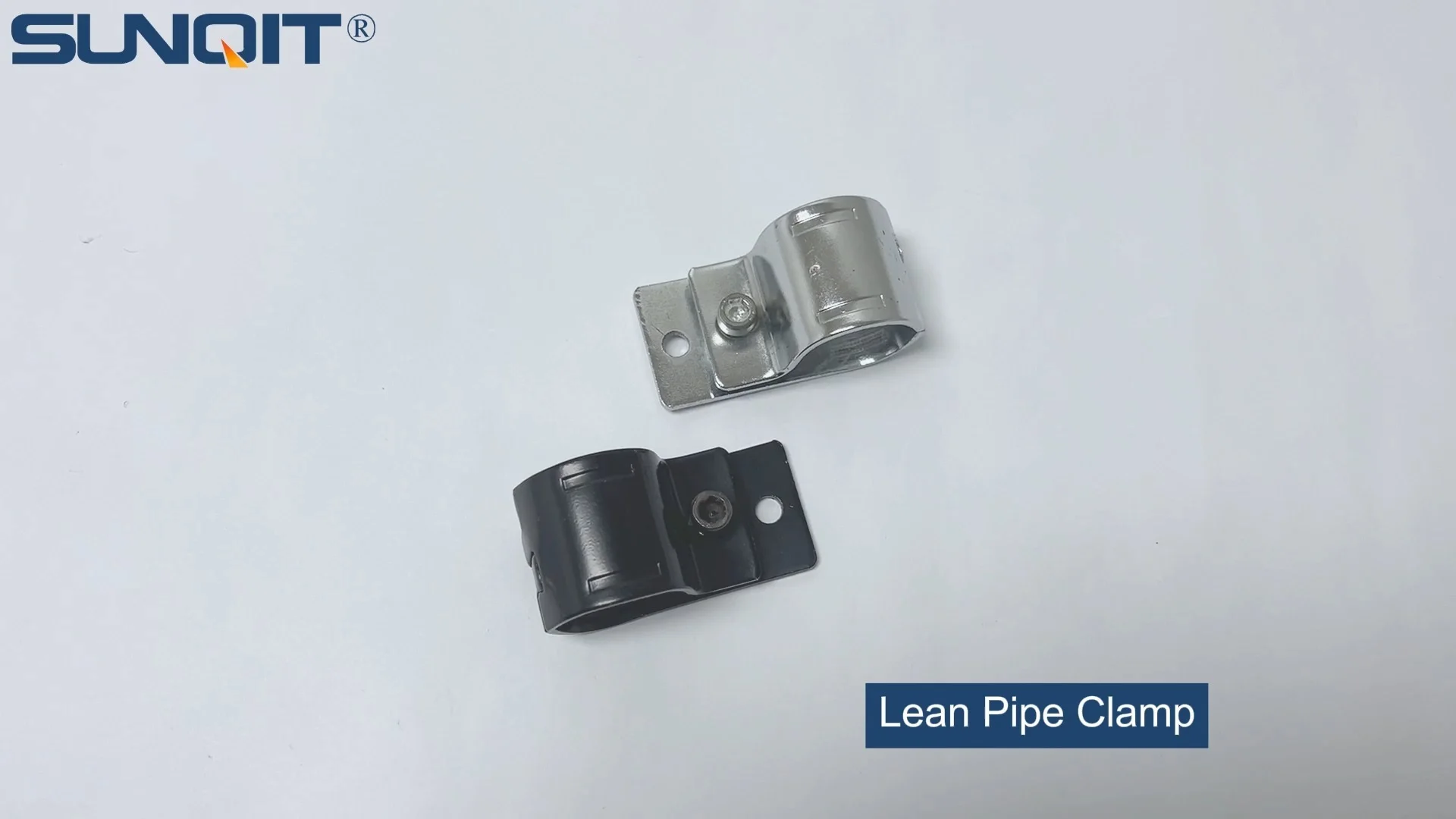
Lean Pipe Clamp
Lean pipe clamp is used for rack system hang monitor or other panel for workbenck, flowrack in production daily use.
Introduction: The Race for Speed in Modern Manufacturing
In today's fast-paced manufacturing world, every second counts. Whether you're running a small workshop or a large-scale production facility, the ability to assemble workstations, transport materials, and reconfigure layouts quickly can mean the difference between meeting tight deadlines and falling behind. This is especially true in lean manufacturing, where the goal is to eliminate waste—including wasted time. Yet, for many teams, traditional assembly methods remain a bottleneck. Welding, drilling, and relying on fixed, rigid structures not only slow down setup but also make it nearly impossible to adapt to changing production needs. Enter tools like the lean pipe clamp B—a but powerful component that's quietly revolutionizing how teams build, modify, and scale their workspaces. In this article, we'll explore how this simple clamp is driving efficiency gains, reducing assembly time, and empowering manufacturers to stay agile in an increasingly competitive landscape.
The Hidden Costs of Slow Assembly: Pain Points in Traditional Workspace Setup
Before diving into the solution, let's first understand the problem. Traditional assembly methods for workbenches, material racks, and turnover trolleys are often rooted in inflexibility and time-consuming processes. For example, building a basic workbench might involve cutting steel pipes to length, welding them together, sanding rough edges, and painting—steps that can take hours, even for experienced teams. If a project requires a last-minute adjustment, like adding a shelf or raising the height, the process starts over: more cutting, more welding, more downtime.
Then there's the issue of tool dependency. Welding torches, grinders, and drills are expensive, require trained operators, and aren't always accessible on the shop floor. A single missing tool can bring an entire assembly project to a halt. Even bolted structures, while better than welded ones, often require precise alignment and multiple tools (wrenches, screwdrivers, levels) to ensure stability—adding minutes, if not hours, to setup time.
Another hidden cost is rigidity. Once a traditional workbench or rack is built, it's fixed. If your production line shifts to a new product with different material sizes, or if you need to reorganize the workflow to reduce bottlenecks, that fixed structure becomes a liability. You either live with inefficiency or spend more time (and money) dismantling and rebuilding from scratch. In a lean system, where adaptability is key, this rigidity directly contradicts the principles of continuous improvement.
Finally, there's the human factor. Slow, tedious assembly work is demotivating for teams. When employees spend hours on repetitive tasks like tightening bolts or waiting for welds to cool, they're not focusing on higher-value activities—like optimizing workflows or solving production problems. Over time, this can lead to frustration, lower productivity, and even higher turnover.

What is Lean Pipe Clamp B? A Closer Look at the Game-Changing Component
At its core, lean pipe clamp B is a modular connector designed to simplify the assembly of structures using lean pipes—hollow tubes (often aluminum, steel, or stainless steel) commonly used in lean manufacturing setups. Unlike traditional connectors that require welding, drilling, or complex tools, lean pipe clamp B is engineered for speed, simplicity, and versatility. Let's break down its key features:
Design: Built for Quick, Tool-Less Assembly
Most lean pipe clamp B models feature a two-piece design: a base that attaches to a lean pipe and a clamping mechanism that secures a second pipe at a specific angle (often 90 degrees, though some models allow for adjustable angles). What sets it apart is its locking system—typically a hand-tightened screw or lever that eliminates the need for power tools. Imagine being able to connect two pipes by simply placing the clamp around them, twisting a knob, and pulling a lever—no welding, no drilling, no hassle. This design cuts assembly time dramatically, as even a novice can master the process in minutes.
Material: Durable Yet Lightweight
Lean pipe clamp B is usually made from high-grade aluminum or zinc-plated steel, striking a balance between strength and weight. Aluminum clamps are lightweight, corrosion-resistant, and ideal for applications where portability matters—like turnover trolleys or mobile workbenches. Steel clamps, on the other hand, offer extra durability for heavy-duty use, such as material racks holding bulky components. Both materials are built to withstand the wear and tear of daily manufacturing life, ensuring that once assembled, structures stay stable and secure.
Modularity: Mix, Match, and Reuse
Perhaps the most powerful aspect of lean pipe clamp B is its compatibility with standard lean pipes and other lean system components. Whether you're using aluminum lean pipes, stainless steel pipe series, or even basic aluminum tubes, the clamp is designed to fit common diameters (typically 28mm or 30mm for standard lean pipes). This means you can mix and match components from different suppliers, repurpose old pipes, and build custom structures without worrying about compatibility issues. And because it's reusable, you can disassemble a structure, take the clamps off, and use them again to build something entirely new—eliminating waste and reducing long-term costs.

How Lean Pipe Clamp B Solves Assembly Speed Issues: The Mechanics of Faster Setup
Now that we understand what lean pipe clamp B is, let's explore how it directly addresses the pain points of traditional assembly. The secret lies in three key benefits: speed, flexibility, and tool independence. Let's unpack each:
Speed: From Hours to Minutes
Traditional workbench assembly might take 3–4 hours (including cutting, welding, and finishing). With lean pipe clamp B, that same workbench can be built in under an hour. How? Because there's no cutting (lean pipes come pre-cut to standard lengths, or can be easily trimmed with a basic pipe cutter), no welding (the clamps hold everything together), and no finishing (the pipes and clamps are ready to use out of the box). Even complex structures, like a multi-tier material rack with roller tracks, can be assembled in a fraction of the time. For example, a three-row, three-floor material rack that once took a full day to weld can now be put together in 2–3 hours—with one person instead of two.
Flexibility: Adapt on the Fly
In traditional setups, changing a workbench's height or adding a shelf requires re-welding or re-drilling—disruptive and time-consuming. With lean pipe clamp B, adjustments are as simple as loosening a screw, moving the clamp, and tightening it again. Need to raise a shelf by 6 inches to fit taller bins? Done in 2 minutes. Want to add a side rail to a turnover trolley to prevent materials from falling off? Just attach a new pipe with a clamp. This flexibility means teams can adapt to new projects, seasonal demands, or workflow changes without halting production.
Tool Independence: No More Waiting for the Welding Cart
One of the biggest time-wasters in traditional assembly is tool dependency. If the only welding torch in the shop is being used on another project, your assembly team is stuck. Lean pipe clamp B eliminates this problem. Most models require nothing more than a standard hex key (Allen wrench) or even just a hand-tightened knob—tools that are small, portable, and easy to keep on hand. This means assembly can happen anywhere on the shop floor, anytime, without waiting for specialized equipment or trained operators.

Real-World Applications: Where Lean Pipe Clamp B Shines Brightest
Lean pipe clamp B isn't just a theoretical improvement—it's a practical tool that transforms how teams build everyday structures. Let's look at three common applications where its impact is most noticeable: workbenches, turnover trolleys, and material racks.
Workbenches: Building Custom Workstations in Record Time
Workbenches are the backbone of any production line, and their design directly impacts operator efficiency. With lean pipe clamp B, building a custom workbench is a breeze. Start with four vertical lean pipes as legs, connect them with horizontal pipes using 90-degree clamps to form the frame, then add a top (like an aluminum honeycomb panel or wooden board) secured with additional clamps. Need a shelf for tools? Attach two more horizontal pipes halfway up the legs. Want to add a light bar or tool holder? Clamp it on. The entire process takes less than an hour, and if you later need to adjust the height or add components, it's just a matter of repositioning the clamps.
For example, a team assembling electronics might need a workbench with ESD (electrostatic discharge) protection to prevent damage to sensitive components. Using lean pipe clamp B, they can quickly build a frame, add an ESD workbench top, and attach grounding straps—all without specialized tools. If the next project requires a larger surface area, they can extend the bench by adding more pipes and clamps, rather than building a new one from scratch.
Turnover Trolleys: Lightweight, Sturdy, and Ready in Minutes
Turnover trolleys are essential for moving materials between workstations, but traditional metal trolleys are heavy, expensive, and hard to modify. Lean pipe clamp B changes that. By combining lean pipes, clamps, and caster wheels, teams can build lightweight yet sturdy trolleys tailored to their needs. For instance, a trolley for transporting small parts might have a simple flat base with low side rails, while one for larger components could include multiple shelves or dividers—all assembled with clamps.
The speed here is game-changing. A traditional trolley might take a day to weld and paint; with lean pipe clamp B, the same trolley can be built in 30 minutes. And when the trolley isn't needed anymore? Disassemble it, and reuse the pipes and clamps to build something else—no waste, no storage headaches.
Material Racks: Creating Flow with Minimal Effort
Material racks, especially flow racks with roller tracks, are critical for lean material handling—ensuring parts move smoothly from storage to assembly. Building a flow rack traditionally involves mounting roller tracks to a fixed steel frame, a process that requires precise drilling and alignment. With lean pipe clamp B, teams can assemble the frame in minutes, then attach roller tracks (like plastic roller track guide rails or aluminum guide rails) using compatible clamps. Adjusting the height of the roller tracks? Just loosen the clamps, move them up or down, and retighten. This not only speeds up initial assembly but also makes it easy to optimize the rack for different part sizes or workflow changes.
Compatibility: Fitting Seamlessly into Lean Systems
One of the greatest strengths of lean pipe clamp B is its ability to work with a wide range of lean system components, making it a versatile addition to any manufacturing toolkit. Let's explore how it pairs with other key elements:
Lean Pipes: The Foundation of Modularity
Lean pipe clamp B is designed to work with standard lean pipes, including aluminum lean pipes, stainless steel pipe series, and even pe-coated lean pipes. This compatibility means you can mix materials based on your needs—using lightweight aluminum pipes for mobile structures and durable stainless steel for heavy-duty racks—without worrying about clamp fit. For example, a workbench might use aluminum pipes for the frame (to keep it light) and steel pipes for the legs (for extra stability), all connected with the same clamps.
Roller Tracks and Accessories: Building Flow into Your Layout
Flow racks and conveyor systems rely on roller tracks to move materials efficiently. Lean pipe clamp B pairs seamlessly with roller track accessories like roller track placon mounts (used to attach tracks to frames) and roller track connectors (for joining track sections). For instance, to build a flow rack, you'd first assemble the frame with lean pipes and clamps, then use placon mounts (clamped to the frame) to secure the roller tracks. This modular approach lets you adjust track angles, add curves, or extend lengths in minutes—something that would take hours with traditional bolted or welded track systems.
Casters and Feet: Adding Mobility or Stability
Whether you need a mobile trolley or a stationary workbench, lean pipe clamp B works with casters and adjustable feet. Casters can be clamped directly to the bottom of vertical pipes, while anti-slip adjustable leveling feet (used to stabilize workbenches on uneven floors) attach just as easily. This means you can switch between mobile and stationary setups by swapping out components—no drilling or reworking the frame.
Durability and Cost-Effectiveness: Long-Term Gains Beyond Speed
While speed is the most obvious benefit of lean pipe clamp B, its long-term value lies in durability and cost savings. Let's break this down:
Built to Last: Withstanding Daily Wear and Tear
Despite their simple design, lean pipe clamp B models are built tough. Aluminum and steel construction resists rust and corrosion, even in humid or dusty shop environments. The clamping mechanisms are engineered to maintain tension over time, ensuring structures stay stable through repeated use. Many manufacturers back their clamps with warranties, guaranteeing they'll hold up under heavy loads (some models support up to 50kg per connection).
Compare this to welded structures, which can weaken at the weld points over time, or bolted structures, where bolts can loosen and require constant retightening. Lean pipe clamp B's secure, adjustable grip means less maintenance and longer lifespans for your assemblies.
Cost Savings: Reducing Labor, Waste, and Storage
The upfront cost of lean pipe clamp B is higher than a bag of bolts, but the return on investment is rapid. Labor savings alone are significant: if a traditional assembly takes 4 hours and lean pipe clamp B cuts it to 1 hour, you're saving 3 hours of labor per project. Multiply that by dozens of assemblies per year, and the savings add up quickly.
Then there's waste reduction. Traditional assembly often results in scrap material (cut pipes, welding slag) and unused structures that end up in landfills. Lean pipe clamp B's modularity means components are reused, not discarded. A single set of pipes and clamps can be repurposed dozens of times, reducing material costs and environmental impact.
Storage costs are another area of savings. Disassembled lean pipes and clamps take up far less space than bulky, pre-built workbenches or racks. This is especially valuable for small shops where floor space is limited.
The Numbers Speak: A Case Study in Efficiency
Case Study: ABC Electronics Cuts Assembly Time by 75% with Lean Pipe Clamp B
Background: ABC Electronics, a mid-sized manufacturer of circuit boards, was struggling with slow workstation setup. Their old process involved welding steel workbenches and material racks, which took 4–6 hours per bench and required a dedicated maintenance team. With frequent product changes, they often needed to reconfigure layouts, leading to costly downtime.
Solution: The team switched to a lean system centered on aluminum lean pipes and lean pipe clamp B. They trained all production staff to use the clamps, eliminating the need for maintenance to handle assembly.
Results: Within the first month, setup time for a new workbench dropped from 6 hours to 1.5 hours—a 75% reduction. Reconfiguring an existing bench (e.g., adding a shelf or adjusting height) took just 20 minutes, compared to 2 hours with welding. The maintenance team was freed up to focus on other tasks, and the ability to quickly adapt layouts helped ABC meet a 20% increase in order volume without adding staff.
Long-Term Impact: After six months, ABC estimated they'd saved over 200 labor hours and reduced material waste by 40%. Employees reported higher satisfaction, noting that the ability to build and adjust their own workstations made them feel more in control of their productivity.
Conclusion: Small Tool, Big Impact on Lean Manufacturing
In the world of lean manufacturing, tools that reduce waste and boost flexibility are worth their weight in gold. Lean pipe clamp B may seem like a simple component, but its ability to cut assembly time, simplify reconfiguration, and work seamlessly with other lean system components makes it a cornerstone of modern, agile manufacturing. By eliminating the need for welding, specialized tools, and fixed structures, it empowers teams to build, adapt, and innovate faster than ever before.
Whether you're assembling a workbench, a turnover trolley, or a material rack, lean pipe clamp B turns what was once a time-consuming chore into a quick, even enjoyable task. And in a world where speed and adaptability are critical, that's not just an efficiency gain—it's a competitive advantage.
So, the next time you look at your shop floor and see a bottleneck in setup or reconfiguration, remember: sometimes the biggest gains come from the smallest tools. Lean pipe clamp B isn't just changing how we assemble—it's changing how we think about manufacturing itself.