- Company Articles
- Products and Technology
- Product knowledge
- Electrical Conductivity of 2040 EU Standard Aluminum Profile: Applications in Electronics

Electrical Conductivity of 2040 EU Standard Aluminum Profile: Applications in Electronics
Related Product
2040 EU Standard Aluminum Profile
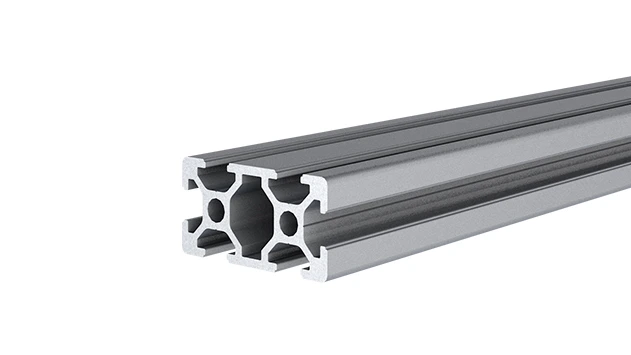
2040 is a 2.00 x 4.00CM fractional 20 series square extrusion T-slot profile with four open T-slots, two side with 2.00cm face, the other side with 4.00cm face. The profile has align-a-grooves to assist in aligning connecting profiles.
In the fast-paced world of electronics manufacturing, where precision is everything and even the smallest static charge can ruin a $100 microchip, the materials we build our workspaces with matter more than we often realize. Walk into any modern electronics factory, and you'll notice a common thread: sleek, modular structures that seem to balance strength, flexibility, and an almost invisible quality—electrical conductivity. Among these, one material stands out for its quiet reliability: the 2040 EU standard aluminum profile . It's not just a frame or a support beam; it's a silent guardian, ensuring that sensitive components stay safe from static damage, assembly lines run smoothly, and workbenches adapt to the ever-changing needs of production. But what makes this specific aluminum profile so indispensable in electronics? Let's dive into its electrical conductivity, how it's engineered, and why it's become a cornerstone of smart manufacturing.
What Even Is a 2040 EU Standard Aluminum Profile?
Before we get into conductivity, let's make sure we're all on the same page about what a 2040 aluminum profile is. Picture a long, rectangular tube—20 millimeters wide, 40 millimeters tall—with a T-slot running along its length. That T-slot is where the magic happens: it lets you attach brackets, panels, shelves, or just about any accessory you can think of, without welding or drilling. But this isn't just any aluminum tube. The "EU standard" tag means it's built to strict European quality benchmarks for strength, durability, and dimensional accuracy. And the "2040"? That's its cross-section—20x40mm—making it the Goldilocks of profiles: not too bulky for tight workspaces, not too flimsy for heavy equipment.
What truly sets it apart, though, is how it's made. This profile is crafted using aluminum extrusion profile technology—a process where heated aluminum alloy is forced through a die, shaping it into that precise 20x40mm form with the T-slot. Extrusion isn't just about shaping metal; it's about preserving the material's inherent properties, like conductivity. Unlike casting or machining, which can introduce stress or impurities, extrusion keeps the aluminum's grain structure relatively uniform, ensuring consistent performance across the entire length of the profile. That consistency is critical when you're relying on the material to conduct electricity evenly—no weak spots, no surprises.
Why Electrical Conductivity Matters in Electronics Manufacturing
Let's start with a horror story every electronics engineer has heard: a brand-new circuit board, fresh off the assembly line, suddenly fails testing. The culprit? A single static discharge—maybe from a worker's sleeve, maybe from a plastic workbench—that zapped a tiny transistor. Static electricity is the silent killer in electronics. Even voltages as low as 50 volts (too small to feel) can damage sensitive components like microchips or LEDs. And in a factory, where parts are moving, people are bustling, and machines are running, static builds up everywhere.
This is where electrical conductivity comes in. A conductive material doesn't just let electricity flow through it—it dissipates static charges, grounding them safely before they can build up to harmful levels. Think of it like a lightning rod for your workstation: instead of letting static linger on a plastic surface, a conductive aluminum profile acts as a path to the ground, neutralizing the charge. But conductivity in electronics manufacturing isn't just about static. It also plays a role in heat management (conductive materials disperse heat from machinery more efficiently) and even in some automated systems, where low-voltage signals might travel through structural components to sensors or switches.
Not all conductivity is created equal, though. You don't want a material that conducts too well—like copper—because that could interfere with nearby electronic signals or create short circuits if not properly insulated. And you definitely don't want a material that doesn't conduct at all—like plastic or wood—which traps static like a sponge. What you need is a balance: enough conductivity to dissipate static and manage heat, but not so much that it becomes a hazard. Enter the 2040 EU standard aluminum profile.

The Science Behind 2040 Aluminum Profile's Conductivity
Aluminum itself is a naturally conductive metal. Pure aluminum has a conductivity rating of about 61% IACS (International Annealed Copper Standard), where copper is 100%. But pure aluminum is soft and weak—great for wiring, terrible for building workbenches or material racks. So manufacturers mix it with other elements (like magnesium, silicon, or manganese) to create alloys that are strong and conductive. The 2040 EU standard profile is typically made from an alloy in the 6000 series—most commonly 6063 or 6061—known for its excellent balance of strength, corrosion resistance, and yes, conductivity.
6063 aluminum, for example, has a conductivity of around 43-45% IACS. That might sound low compared to pure aluminum, but remember: we're not using this profile to transmit electricity like a wire. We're using it to dissipate static charges, which require just enough conductivity to move the charge to ground without creating a current. 43% IACS is perfect for this—enough to bleed off static quickly, but not so conductive that it becomes a risk for electrical interference. And because the extrusion process preserves the alloy's microstructure, this conductivity remains consistent across the entire profile, even in complex shapes like the T-slot.
| Material | Conductivity (% IACS) | Key Use Case in Electronics | Weight (kg/m for 20x40mm profile) |
|---|---|---|---|
| 2040 EU Standard Aluminum (6063 Alloy) | 43-45% | Static dissipation, grounding, structural support | ~0.8-1.0 |
| Copper (Pure) | 100% | Electrical wiring, heat sinks | ~2.5-3.0 |
| Stainless Steel (304) | 2-3% | Corrosion-resistant structural parts (non-conductive) | ~1.8-2.0 |
| Plastic (PVC) | <0.01% | Insulation, non-conductive enclosures | ~0.4-0.5 |
The table above tells the story: 2040 aluminum profile hits the sweet spot. It's lighter than stainless steel and copper, conductive enough to manage static, and strong enough to support heavy equipment. Compare that to plastic, which is lightweight but traps static, or stainless steel, which is strong but barely conducts—making it useless for static dissipation. For electronics manufacturing, where every gram of weight and every volt of static matters, this balance is game-changing.
Why 2040 Profile Stands Out for Electronics Workspaces
So, we know the 2040 aluminum profile conducts electricity well enough to manage static. But why this specific size? Why not a bigger profile, like 4040, or a smaller one, like 2020? The answer lies in the unique demands of electronics manufacturing workspaces—where space is tight, flexibility is key, and every component has to pull its weight.
First, the 20x40mm cross-section is versatile . It's narrow enough to build compact workstations (critical in labs or cleanrooms where space is at a premium) but wide enough to support shelves, tool holders, or even small conveyor systems. Unlike bulkier profiles, it doesn't dominate the workspace, leaving room for operators to maneuver or for multiple workstations to be arranged in tight configurations. And because it's part of the EU standard system, it's compatible with a huge range of aluminum profile accessories —joints, brackets, end caps, and even specialized parts like ESD-safe handles or grounding clips. This modularity means you can design a workstation that's not just conductive but custom to your needs: add a shelf here, a cable management tray there, or a static-dissipative mat on top—all without reengineering the entire structure.
Second, its conductivity pairs perfectly with ESD workbench design. ESD (Electrostatic Discharge) workbenches are the frontline defense in electronics manufacturing, where sensitive components like semiconductors or PCBs are assembled. A typical ESD workstation includes a conductive work surface, grounding straps for operators, and often a conductive frame to ensure everything is grounded. The 2040 profile isn't just the frame—it's part of the grounding system. By connecting the profile to a building's ground via a simple wire (often through a conductive caster or foot), the entire workstation becomes a single, grounded unit. Any static that builds up on the surface, on tools, or even on the operator's arms is channeled through the aluminum profile and safely into the ground. It's a seamless system—no extra wires, no complicated setups—just the profile doing double duty as structure and static protector.
Real-World Applications: How 2040 Profile Powers Electronics Factories
Let's step into a hypothetical (but realistic) electronics manufacturing plant to see the 2040 aluminum profile in action. Meet Maria, a production manager at a company that builds smart home sensors. Her team assembles tiny PCBs with components so small they're barely visible to the naked eye. A single static discharge could ruin a batch of 500 sensors, costing thousands of dollars. Three years ago, they were using plastic workbenches and steel racks, and static-related failures were happening once a month. Today, they've switched to 2040 aluminum profiles, and failures are down to zero. Here's how it works in their facility:
1. ESD Workstations: The Heart of Assembly
Maria's assembly line features 12 ESD workstations, each built with 2040 aluminum profiles. The frames are bolted together using conductive aluminum joints (another EU standard accessory), and the work surfaces are ESD-safe laminates bonded directly to the aluminum frame. Each workstation is grounded via a conductive caster wheel (with a copper brush that touches the floor) and a backup grounding wire connected to the profile. "Before, we had to check each workbench with a static meter every morning," Maria says. "Now, the aluminum frame ensures the entire station is grounded 24/7. Even if a caster gets a little dust, the profile itself conducts the charge. It's one less thing to worry about."
The T-slots in the 2040 profiles are put to work, too. Each workstation has adjustable tool holders, LED task lights, and cable management clips—all clipped into the T-slots without drilling. "Last month, we switched to a new sensor model with smaller components," Maria explains. "We needed to lower the work surface by 5cm to make it easier for operators to see. With the old steel benches, that would've meant welding new legs. With the aluminum profiles? We just loosened the joints, adjusted the height, and tightened them back up. Done in 10 minutes per station."
2. Material Racks: Static-Free Storage
Upstream from the assembly line, in the component storage area, 2040 profiles form the backbone of the material racks. These racks hold trays of resistors, capacitors, and ICs—all of which are static-sensitive. The racks are built with 2040 uprights and crossbars, and the shelves are made of conductive aluminum honeycomb panels (another accessory compatible with the T-slots). "Plastic racks would trap static, especially in dry winter months," Maria notes. "We'd open a tray and find half the components already damaged. Now, the aluminum racks ground the trays, so even if someone slides a tray out quickly, the static dissipates through the profile. We've cut component waste by 30% just from switching the racks."
3. Conveyor Systems: Smooth, Static-Free Transport
Between workstations, small conveyor belts move PCBs from assembly to testing. The conveyor frames are built with 2040 profiles, and the rollers are conductive plastic (another ESD-safe accessory). As the PCBs glide along, any static they pick up from the rollers is transferred to the aluminum frame and grounded. "Before, we had plastic conveyors, and we'd have to stop the line every hour to wipe down the rollers with anti-static spray," Maria says. "Now, the aluminum frame does the work. The line runs longer, and we're not wasting time on maintenance."
Aluminum Profile Accessories: Making Conductivity Work Harder
A profile is only as good as the accessories that connect it. The 2040 EU standard aluminum profile's real power lies in how well it pairs with aluminum profile accessories —joints, brackets, feet, and more—that enhance its conductivity and functionality. Let's break down a few key ones:
- Conductive Joints: Most aluminum profile joints are made from the same 6063 alloy as the profiles, ensuring conductivity across connections. Even when you bolt two profiles together with a joint, the metal-to-metal contact maintains the grounding path. No gaps, no static buildup at the seams.
- Grounding Feet: Many 2040 workstations use adjustable aluminum feet with conductive rubber pads. These feet not only level the workstation but also create a direct path from the profile to the floor (and thus to the building's ground). Some even have a built-in terminal for attaching a grounding wire, adding an extra layer of safety.
- ESD-Safe Panels: Aluminum honeycomb or solid aluminum panels clip into the T-slots to create work surfaces or shelves. These panels are conductive (thanks to their aluminum construction) and can be grounded via the profile, turning the entire surface into a static-dissipative zone.
- Cable Management: T-slot cable clips and trays keep wires organized and off the floor. But they also play a role in conductivity: by routing grounding wires through the same T-slots as power cables, you ensure the grounding system is integrated into the workstation's design, not an afterthought.
The beauty of these accessories is that they're designed to work with the 2040 profile's conductivity, not against it. Unlike plastic accessories, which would insulate the profile and trap static, aluminum accessories enhance the grounding system, creating a holistic solution for static management.
Why Not Just Use Copper or Stainless Steel?
You might be wondering: if conductivity is so important, why not use copper profiles instead? Copper is more conductive (100% IACS vs. 43% for 2040 aluminum), so wouldn't it be better at dissipating static? In theory, yes—but in practice, copper is heavy, expensive, and prone to corrosion. A 20x40mm copper profile would weigh more than twice as much as aluminum, making workstations harder to move and racks more difficult to assemble. It also costs 3-4 times more than aluminum, which adds up quickly in a factory with dozens of workstations.
Stainless steel, on the other hand, is strong and corrosion-resistant but has almost no conductivity (2-3% IACS). It's great for environments where hygiene is critical (like food processing) but useless for electronics, where static dissipation is a must. Plastic is cheap and lightweight but traps static, making it a liability. So while other materials have their strengths, none balance conductivity, strength, weight, and cost quite like the 2040 EU standard aluminum profile.
The Future: Miniaturization and the Demand for Smarter Conductivity
Electronics aren't getting bigger—they're getting smaller. Today's microchips have components measured in nanometers, and sensors are shrinking to fit into wearables, medical devices, and IoT gadgets. As components get smaller, they become even more vulnerable to static. A discharge that might have damaged a single transistor in a 2010-era chip could wipe out an entire circuit in a 2025 model. This means the demand for reliable, consistent conductivity in manufacturing materials will only grow.
The 2040 EU standard aluminum profile is well-positioned to meet this demand. Manufacturers are already experimenting with new alloys (like 6082, which offers slightly higher strength with similar conductivity) and improved extrusion techniques to make profiles even more consistent. There's also a trend toward integrating smart features: embedding tiny sensors into the profiles to monitor static levels in real time, or adding conductive coatings to enhance dissipation. Imagine a workstation that alerts you if its grounding path is broken—all because the aluminum profile itself is part of the monitoring system.
Sustainability is another driver. Aluminum is 100% recyclable, and recycled aluminum has the same conductivity as virgin material. As factories aim to reduce their carbon footprints, using recycled 2040 profiles (and accessories) becomes an easy win—eco-friendly and effective.
Conclusion: More Than a Profile—A Foundation for Reliable Electronics
At first glance, the 2040 EU standard aluminum profile might seem like just another piece of industrial hardware. But in the world of electronics manufacturing, it's so much more. It's a static dissipator, a heat manager, a structural backbone, and a modular platform—all in one 20x40mm package. Its conductivity, balanced perfectly for electronics needs, ensures that sensitive components stay safe from static damage. Its modularity, thanks to EU standard accessories, lets factories adapt quickly to new products and processes. And its durability and sustainability make it a long-term investment, not just a short-term fix.
For engineers like Maria, the 2040 profile isn't just a tool—it's a problem-solver. It turns chaotic workspaces into organized, static-safe zones. It reduces waste, cuts downtime, and lets teams focus on what they do best: building the next generation of electronics. So the next time you pick up a smartphone, a smartwatch, or a medical device, take a moment to appreciate the quiet hero behind its creation: the 2040 EU standard aluminum profile, conducting electricity—and innovation—one workstation at a time.