- Company Articles
- Products and Technology
- Product knowledge
- Electronics Manufacturing: Straight Lean Pipe Joint Square End Chrome for ESD-Safe Workbenches

Electronics Manufacturing: Straight Lean Pipe Joint Square End Chrome for ESD-Safe Workbenches
Related Product
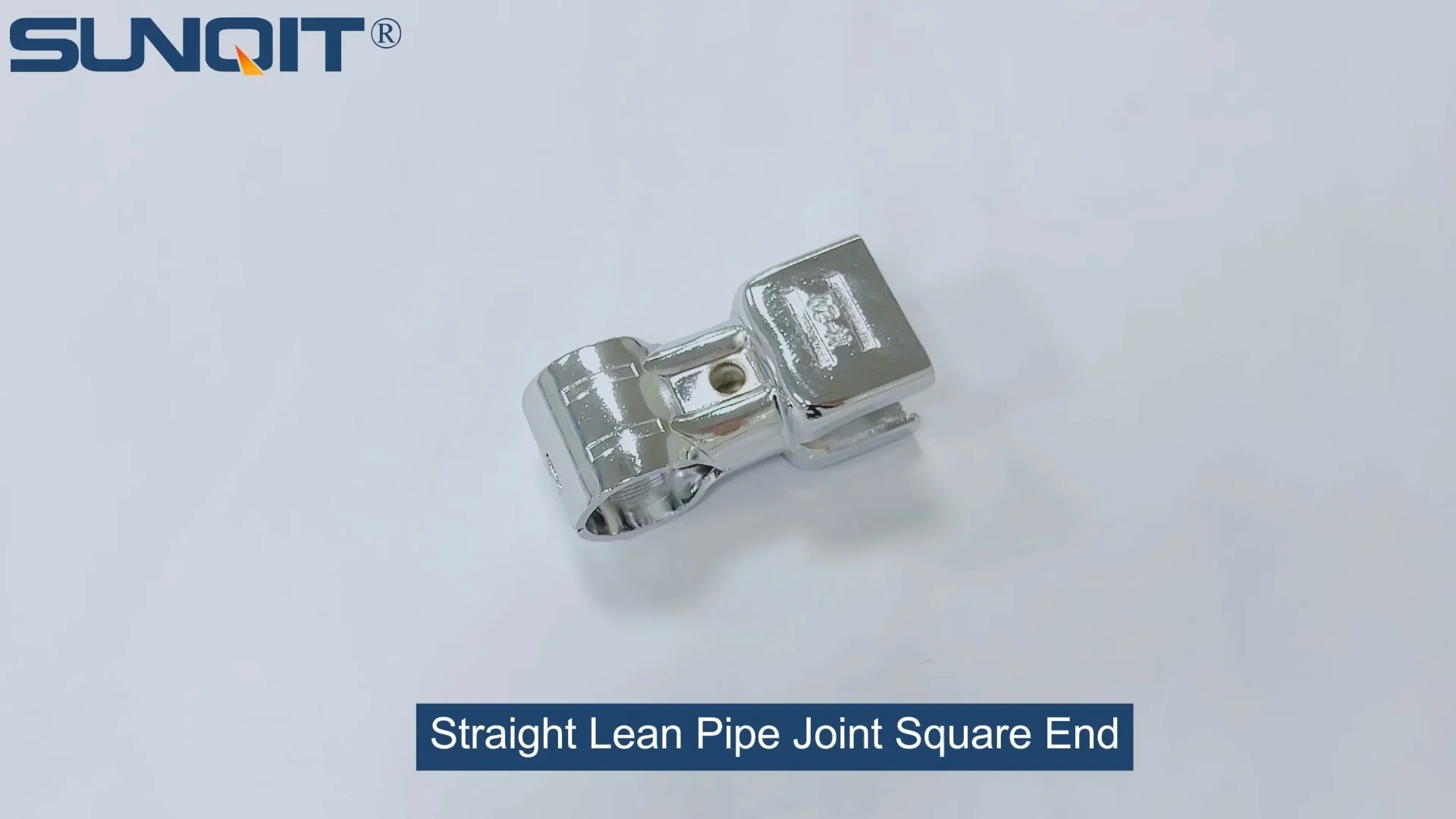
Straight Lean Pipe Joint Square End Chrome
Straight lean pipe joint square end, one side connect with 28mm round pipe, the other side connect with square tube.
Walk into any modern electronics manufacturing facility, and you'll notice a quiet rhythm: technicians hunched over workbenches, hands steady as they assemble circuit boards; conveyor belts gliding with precision, carrying components from station to station; and the soft hum of machinery that never seems to pause. In this world, where a single misplaced microchip or a split-second delay can derail production, every detail matters. But there's an invisible threat lurking here—one that doesn't make a sound, yet can cost manufacturers millions: electrostatic discharge (ESD). And at the heart of defending against this threat, while keeping operations lean and efficient, lies a humble yet critical tool: the ESD-safe workbench. But not just any workbench. Today, we're diving into how lean pipe systems, and specifically the straight lean pipe joint square end chrome, are revolutionizing how electronics manufacturers build, adapt, and thrive.
The Silent Enemy: Why ESD Safety Can't Be an Afterthought
Imagine a technician carefully placing a 0.5mm microprocessor onto a circuit board. They've spent 20 minutes aligning components, double-checking schematics, and ensuring every connection is perfect. Then, as they reach for a soldering iron, a tiny spark—imperceptible to the eye—jumps from their finger to the chip. Later, during quality testing, that chip fails. The cause? ESD. Static electricity, built up from simple movements like walking across a carpet or sliding a chair, can discharge at voltages as high as 30,000 volts—enough to fry delicate semiconductors without a single visible sign.
In the electronics industry, ESD damage is estimated to cost billions annually in scrapped components, rework, and warranty claims. For manufacturers of smartphones, medical devices, or aerospace electronics, where components can cost hundreds of dollars each, the stakes are even higher. This is why ESD-safe workstations aren't just a "nice-to-have"—they're a non-negotiable foundation of reliable production.
An ESD-safe workstation must do more than just "resist" static. It needs to dissipate it—safely channeling any built-up charge away from sensitive components and into the ground. This requires specialized materials: conductive or dissipative surfaces, grounded frames, and components that won't generate static themselves. But here's the catch: electronics manufacturing lines are rarely static. Product designs change, production volumes fluctuate, and new tools or processes are introduced. A workstation that works perfectly for today's smartphone may be obsolete next month when a larger tablet model enters production. So, the ideal ESD workstation must balance two conflicting needs: uncompromising ESD safety and flexible adaptability . Enter lean pipe systems.
Lean Pipe Systems: Building Workstations That Grow With You
Lean manufacturing isn't just a buzzword—it's a philosophy centered on eliminating waste, streamlining processes, and maximizing value. And at the heart of lean principles is the idea that tools and workspaces should adapt to people , not the other way around. Traditional fixed workbenches—welded steel frames, heavy wooden tops—are the antithesis of this. They're expensive to customize, hard to reconfigure, and nearly impossible to repurpose when needs change. Lean pipe systems, by contrast, are modular by design.
At their core, lean pipe systems consist of lightweight metal pipes (often steel, aluminum, or stainless steel) and connectors (joints) that allow users to build, modify, and disassemble structures quickly—no welding, no specialized tools, just a hex key or wrench. This modularity means a single set of pipes and joints can become a workbench one week, a material rack the next, and a turnover trolley the month after. For electronics manufacturers, this flexibility is a game-changer: as product lines shift, workstations can be reconfigured in hours, not weeks, reducing downtime and capital expenditure.
But not all lean pipe systems are created equal. When it comes to ESD safety, the choice of materials and components becomes critical. Steel pipes, for example, are strong and conductive—excellent for grounding—but they can rust in humid factory environments. Aluminum is lightweight and corrosion-resistant but may require additional conductive treatments. And then there are the joints: the unsung heroes that hold the entire system together. A weak or poorly designed joint can compromise stability, create static buildup, or fail under the weight of tools and components. This is where the straight lean pipe joint square end chrome shines.

The Straight Lean Pipe Joint Square End Chrome: Small Component, Big Impact
If a lean pipe workstation is a symphony, the joints are the conductors. They dictate how pipes connect, how much weight the structure can bear, and how easily it can be reconfigured. The straight lean pipe joint square end chrome is a standout in this orchestra—and for good reason. Let's break down what makes it indispensable for ESD-safe electronics workbenches.
1. Design: Square End for Unwavering Stability
Unlike rounded or swivel joints, the square end design of this joint creates a flush, rigid connection between pipes. When building a workbench frame, stability is non-negotiable. A technician leaning on the bench, or a heavy soldering station placed on top, shouldn't cause so much as a millimeter of wobble. The square end ensures that pipes lock into place without twisting or shifting, distributing weight evenly across the structure. This rigidity is especially important for ESD safety: a stable workstation minimizes friction between components, reducing the risk of static buildup from moving parts.
2. Chrome Plating: Conductivity + Corrosion Resistance
Chrome isn't just for shine—it's a functional coating. Chrome-plated steel joints are highly conductive, creating a continuous grounding path from the workbench surface to the floor. This ensures that any static charge that might accumulate on the bench or tools is immediately dissipated, never reaching sensitive components. Additionally, chrome is incredibly resistant to corrosion and wear. In factories where humidity levels are carefully controlled (a common practice to mitigate ESD), steel joints without chrome plating can rust over time, weakening the connection and disrupting conductivity. Chrome-plated joints, however, stand up to years of use, maintaining their conductivity and structural integrity.
3. Versatility: More Than Just Straight Connections
Don't let the name fool you: "straight" doesn't mean limited. While this joint excels at creating straight horizontal or vertical connections, it pairs seamlessly with other joint types (like 90° fixed joints or swivel joints) to build complex structures. Need a workbench with a shelf for tools? Use straight joints for the main frame and 90° joints for the shelf brackets. Want to add a roller track for component trays? Straight joints provide a stable base to mount the track. This versatility means manufacturers aren't locked into a single design—they can mix and match joints to create workstations tailored to their unique needs.
| Joint Type | Material | ESD Conductivity | Best For |
|---|---|---|---|
| Straight Lean Pipe Joint Square End Chrome | Chrome-plated steel | Excellent (continuous grounding) | ESD workbench frames, material racks, heavy-duty structures |
| 90° Fixed Lean Pipe Joint | Zinc-plated steel | Good (requires tight connections) | Corner connections, shelves, light-duty structures |
| Swivel Lean Pipe Joint | Plastic-coated steel | Poor (insulating coating) | Non-ESD applications, temporary structures |
4. Ease of Use: No Expertise Required
One of the biggest advantages of lean pipe systems is their accessibility. You don't need a master welder or engineer to build a workstation—just a few basic tools. The straight lean pipe joint square end chrome is designed with this in mind. Its simple clamp-style mechanism allows pipes to be inserted and tightened with a hex key, creating a secure connection in seconds. This means even line operators can make minor adjustments or repairs without waiting for maintenance teams, keeping production flowing.

Building the Perfect ESD Workstation: A Day in the Life
Let's put this all into context with a scenario: Maria, a lead technician at a mid-sized electronics manufacturer, has just been tasked with setting up a new ESD workstation for a upcoming smartwatch production line. The old workbench, a fixed wooden model, is too small and lacks proper grounding—several components were damaged by ESD last month. Here's how the straight lean pipe joint square end chrome helps her build a better solution:
- 8:00 AM: Planning Maria reviews the smartwatch's specs: the assembly requires a 6-foot-wide workspace, room for a soldering station, and a material rack for components. She sketches a design using lean pipe: a frame with 1.5mm steel pipes (for conductivity) and straight square end chrome joints for the main structure. She adds 90° joints for the material rack shelves and a roller track (using aluminum guide rails) for sliding component trays.
- 9:30 AM: Assembly With two colleagues, Maria starts building. She inserts pipes into the square end joints, tightens them with a hex key, and is amazed by how rigid the frame feels—no wobbling, even when they lift it. The chrome plating glints under the factory lights, and she notes how easy it is to keep clean (important for ESD, as dust can trap static).
- 11:00 AM: Grounding They attach conductive casters to the base and connect a grounding wire from the frame to the factory's earth ground. A quick test with an ESD meter confirms the charge dissipates instantly—perfect.
- 1:00 PM: Customization The smartwatch team needs a small shelf for calibration tools. Maria adds two short pipes and a square end joint to the side of the workbench—done in 10 minutes. No welding, no waiting.
- 3:00 PM: First Use The first technician, Raj, starts assembling. "This is solid," he says, placing a circuit board on the dissipative top. "No more sliding around. And I don't get shocked when I touch the frame!" Maria smiles—this workstation will adapt as production scales, and the chrome joints will keep it grounded for years.
This isn't just a story—it's the reality of lean pipe systems done right. The straight lean pipe joint square end chrome turns a vision for a better workstation into something tangible, quickly and affordably.
Beyond the Workbench: Long-Term Value in Every Joint
In manufacturing, every decision comes down to value: cost, durability, flexibility. The straight lean pipe joint square end chrome delivers on all three. Its chrome plating resists rust and wear, meaning it outlasts zinc-plated or plastic joints by years. Its modular design reduces waste—when the workstation is no longer needed, the joints and pipes can be reused to build something new. And because it's compatible with standard lean pipe sizes, there's no need to invest in proprietary components.
For ESD-sensitive electronics manufacturing, the value is even clearer. A single ESD-related failure can cost hundreds of dollars in components and hours of rework. The square end chrome joint's reliable conductivity and stability help prevent those failures, protecting the bottom line and keeping production on track.
Conclusion: The Right Joint for the Job
Electronics manufacturing is a world of precision, pressure, and constant change. To thrive, manufacturers need tools that are as adaptable as they are reliable. The straight lean pipe joint square end chrome may be small, but it embodies these qualities—stability for ESD safety, flexibility for lean manufacturing, and durability for long-term value. It's a reminder that in the race to build better technology, sometimes the most critical innovations are the ones that hold everything together.
So, the next time you pick up a smartphone or use a medical device, take a moment to appreciate the unseen heroes: the workbenches, the lean pipe systems, and the humble joints that help bring these technologies to life—safely, efficiently, and with a little help from chrome-plated precision.