- Company Articles
- Products and Technology
- Installation And Maintenance
- Employee Training: Operating 40 Aluminum Roller Track Green Safely

Employee Training: Operating 40 Aluminum Roller Track Green Safely
Related Product
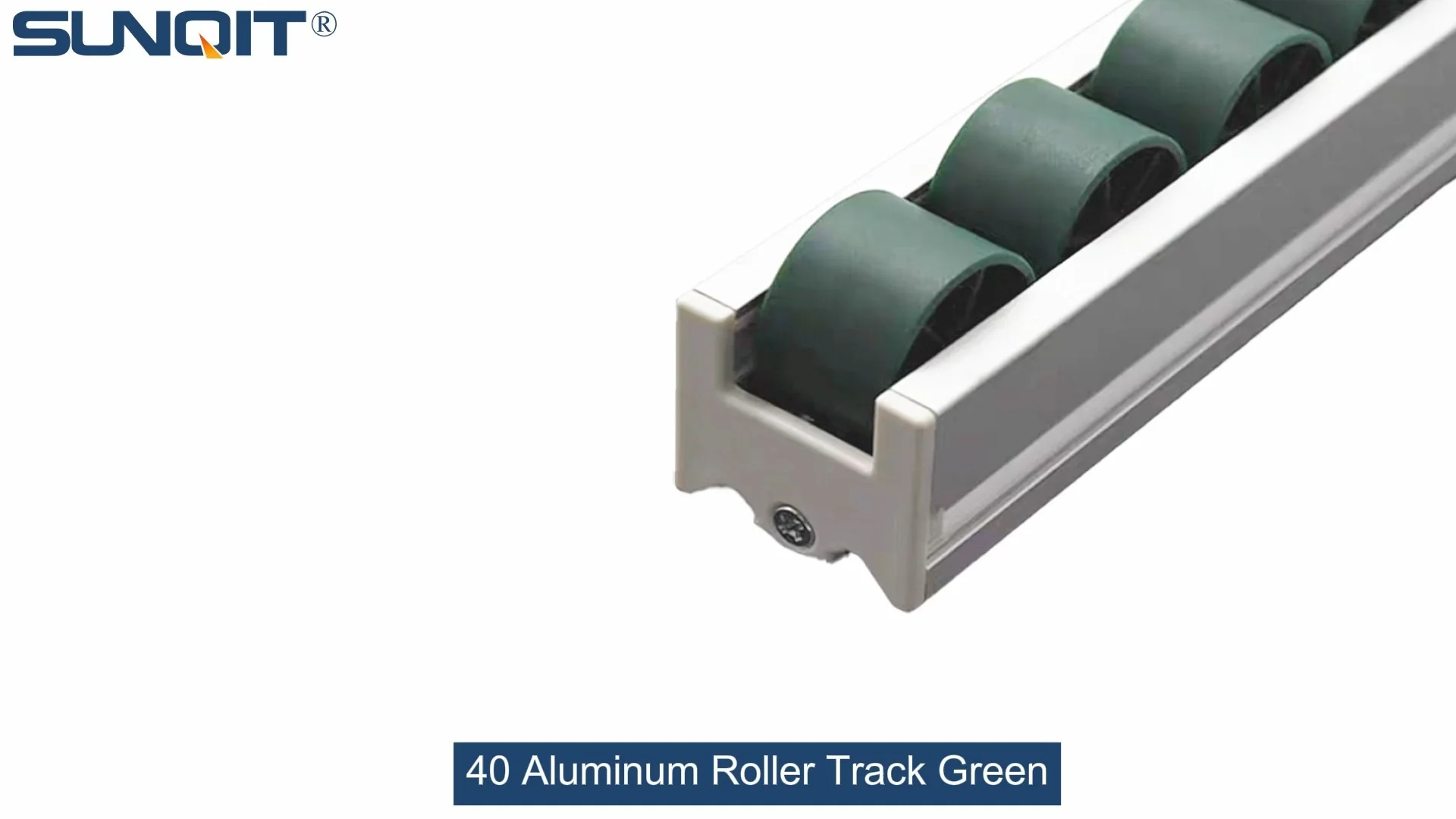
40 Aluminum Roller Track Green
Durable and smooth-running modular roller rails. The system is fully assembled. The roller rail profile contains plastic rollers mounted on steel axles. Aluminum frame with plastic wheel make it anti corrosion,and material convey more smooth.
Employee Training: Operating 40 Aluminum Roller Track Green Safely
Welcome to today's training session on safely operating the 40 aluminum roller track green. If you've ever worked with flow racks or conveyor systems in our facility, you've probably seen this component—those bright green rollers that make moving parts and products smooth and efficient. But even though it looks simple, using it the right way is key to keeping everyone safe and our lean system running like a well-oiled machine.
First, let's get clear on what exactly the 40 aluminum roller track green is. It's a type of roller track made from aluminum profiles, designed to handle medium to heavy loads in manufacturing and warehouse settings. The '40' refers to the width (40mm), and the green coating isn't just for looks—it's a durable finish that resists wear and tear, which is perfect for our busy production lines. This roller track is often used in flow racks, where parts slide down to the workstation, or as part of conveyor systems that move products between stations.
Why does safety matter here? Well, if you don't load items properly, they could slip off and cause injuries. If you ignore a loose roller track connector, the whole section might come apart, leading to downtime or even accidents. And since this roller track is part of our lean system, keeping it in good shape helps us maintain the efficiency we need to meet our goals. So let's dive into the details, step by step.
Pre-Operation Safety Checks
Before you start using the 40 aluminum roller track green, there are a few quick checks you need to do every time. Think of it like checking your car before a drive—small steps that prevent big problems later.
First, inspect the roller track itself. Look for any bent or damaged rollers. If a roller is stuck or doesn't spin freely, it can cause items to jam or slide unevenly. When checking the rollers, spin each one with your finger. If it doesn't spin for at least 2-3 seconds, it's not moving freely enough. Next, check the roller track connectors. Are they tight? Loose connectors can make the track shift, which is a safety hazard. Look for any signs of rust or corrosion—especially if the track is in a damp area. Rust can weaken the connector, so replace it if you see any. Also, look at the aluminum profile that holds the rollers—are there any cracks or dents? A damaged profile might not support the load properly.
Another thing to check is the load capacity. The 40 aluminum roller track green has a specific weight limit, usually around 50 kilograms per meter (but always check the label on the track for the exact maximum load it can handle). Never exceed that limit—overloading can bend the track or break rollers, leading to accidents. For example, if the track's label says 50kg, don't try to move a 60kg box on it.
Let's make this easier with a quick checklist. Here's what you should verify each time:
| Check Item | What to Look For |
|---|---|
| Roller Condition | No bent/damaged rollers; all spin smoothly for at least 2-3 seconds when spun by hand |
| Connectors | Tight and secure; no rust, corrosion, or missing parts |
| Aluminum Profile | No cracks, dents, or signs of wear that could affect structural integrity |
| Load Capacity Label | Visible and not exceeded by the items you plan to move |
| Track Alignment | Track is level and aligned with adjacent components (like flow rack shelves) |
Taking just 2-3 minutes to do these checks can save you a lot of trouble down the line. It's part of our lean approach—prevention is better than fixing problems after they happen. Last month, we had an incident where an employee skipped the pre-operation check and loaded a heavy box onto a track with a loose connector. The track shifted, causing the box to fall off and damage a few expensive components. That's a situation we can easily avoid with a quick check.
Another example: A team member noticed that some rollers on a track weren't spinning properly during their pre-check. They cleaned the debris between the rollers and applied a small amount of lubricant, which fixed the issue. If they hadn't done that check, the next item moved on the track would have jammed, leading to a delay in production.
So remember, pre-operation checks aren't just a formality—they're a critical part of keeping our workplace safe and efficient.
Correct Operating Procedures
Now that you've done your pre-operation checks, let's talk about how to use the 40 aluminum roller track green correctly.
First, loading items. When placing items on the track, make sure they're centered. If you load them off to one side, the weight distribution is uneven, which can cause the item to tip or the track to bend. Also, avoid dropping items onto the track—gentle placement prevents damage to both the item and the rollers. For fragile items, like glass components, place a soft mat under them on the track to prevent scratches or breaks. For irregularly shaped items, secure them with straps or brackets before moving to ensure they don't slip off.
For larger items, ask a coworker to help you lift and position them. Teamwork is key here—trying to move a heavy item alone can lead to back injuries or dropping the item. When lifting, use proper technique: bend at the knees, keep your back straight, and lift with your legs, not your back.
Next, moving items along the track. Push items with steady, even pressure. Don't use sudden jerks or pulls—this can make the item slide too fast and potentially fall off. If the item is moving too quickly, use your hand to slow it down gently. Never let an item slide down the track without controlling its speed, especially if it's heavy or fragile.
If the item is stuck, don't force it. Stop and check why: is there a damaged roller? Is the track misaligned? Is there debris blocking the way? Fix the issue before proceeding. Forcing a stuck item can damage the track or cause the item to break free suddenly, leading to accidents.
Unloading is just as important. When an item reaches its destination, grab it firmly with both hands and lift it off the track. Don't let it slide off the end onto the floor—this can damage the item and create a tripping hazard. If the item is heavy, use a helper or a lifting tool to move it to its final location.
Another key point: never walk on the roller track. Even if it looks sturdy, it's not designed to support human weight. Stepping on it can bend the aluminum profile or break rollers, and you might slip and fall. Also, keep your hands and fingers away from the gaps between the rollers—they can get caught if the roller spins suddenly.
Let's go through a scenario to make this concrete. Suppose you're moving a box of electronic components from the flow rack to your workstation using the 40 aluminum roller track green. Here's the right way:
1. **Pre-check**: Spin the rollers—they all spin smoothly. Check connectors—tight and rust-free. Load capacity label says 50kg; your box is 30kg, which is okay. Track is level and aligned.
2. **Loading**: Ask a coworker to help you lift the box. Center it on the track gently.
3. **Moving**: Push the box slowly towards your station, keeping your hand on it to control speed. If it starts to speed up, slow it down with your palm.
4. **Unloading**: When the box reaches your workstation, grab it with both hands and lift it off the track. Place it on your desk carefully.
5. **Post-check**: Do a quick check of the track—rollers are still spinning, connectors are tight, no damage.
That's simple, but following these steps every time ensures safety and efficiency.
Let's talk about another scenario: moving a large, irregularly shaped metal part.
1. **Pre-check**: Same as before—track is in good condition.
2. **Loading**: Secure the metal part with straps to a wooden pallet. Make sure the pallet is centered on the track.
3. **Moving**: Push the pallet slowly, using both hands for even pressure. Have a coworker stand at the other end to help guide it.
4. **Unloading**: Use a forklift or a lifting tool to move the pallet off the track. Never try to lift it manually—it's too heavy.
By following these procedures, you can avoid accidents and keep our production lines running smoothly.
Maintenance & Troubleshooting
Daily maintenance is crucial to keep the 40 aluminum roller track green working well. Let's break down what you need to do regularly.
First, cleaning. Dust and debris can get stuck between the rollers, making them spin less smoothly. At the end of each shift, wipe down the track with a dry cloth to remove any dirt. For stubborn grime, use a mild cleaner like soap and water—avoid harsh chemicals that might damage the green coating. If the track is in a dusty area, you might need to clean it more often, like twice a shift.
Lubrication is another part of maintenance. Every month, apply a small amount of lubricant to the roller bearings. Use a light machine oil or a silicone-based lubricant—these work best for roller bearings. Apply the lubricant to the center of each roller, where the bearing is located. Be careful not to over-lubricate, though—too much oil can attract dust and cause more problems. A few drops per roller is enough.
Inspection is also part of maintenance. Every week, do a more thorough inspection of the track. Check all connectors for tightness, look for any signs of wear on the aluminum profile, and replace any damaged rollers or connectors. Keep a log of your inspections so you can track when parts were replaced and plan for future maintenance.
Now, let's talk about common issues and how to fix them.
**Issue 1: Rollers are stuck.**
Solution: First, check for debris between the rollers. Use a small brush to remove any dirt or dust. If that's not it, apply a little lubricant to the bearing. If the roller is still stuck, it might be damaged—replace it with a new one using the proper roller track connector. To replace a roller, loosen the connector holding the roller in place, remove the old roller, and insert the new one. Tighten the connector securely.
**Issue 2: Track is misaligned.**
Solution: Check the connectors. If they're loose, tighten them with a wrench. If the track is bent, you might need to replace the aluminum profile section. To replace a profile section, loosen the connectors at both ends of the damaged section, remove it, and insert a new one. Make sure the new section is aligned with the rest of the track before tightening the connectors.
**Issue 3: Items are sliding too slowly.**
Solution: This could be due to dirty rollers or lack of lubrication. Clean the track and lubricate the bearings. If that doesn't help, check if the track is level—an uneven track can slow items down. Use a level tool to check the track. If it's not level, adjust the supports under the track to make it level.
**Issue 4: Connectors are broken.**
Solution: replace the broken connector immediately. Use the correct replacement part (make sure it's compatible with the 40 aluminum roller track green) and tighten it securely. Never use a connector that's not designed for this track—using the wrong part can lead to misalignment or breakage.
**Issue 5: Rollers are making noise.**
Solution: This is usually a sign of dry bearings. Apply lubricant to the bearings. If the noise persists, the roller might be damaged and need replacement.
Remember, if you're not sure how to fix a problem, don't try to do it yourself—ask a supervisor or the maintenance team. Safety first!
Let's create a maintenance schedule table to keep track:
| Task | Frequency | Details |
|---|---|---|
| Daily Cleaning | End of each shift | Wipe track with dry cloth; remove debris between rollers with brush |
| Lubrication | Monthly | Apply 2-3 drops of light oil to each roller bearing; avoid over-lubrication |
| Weekly Inspection | Every Friday | Check connectors for tightness; inspect rollers and profile for damage; replace worn parts |
| Roller Replacement | As needed | replace damaged rollers using correct connector; ensure new roller matches size and coating |
| Profile Replacement | As needed | replace bent/damaged profile sections; align new section with existing track
Following this schedule will extend the life of the roller track and keep it safe to use. It also helps us maintain our lean system by reducing downtime from broken equipment. A well-maintained track works efficiently, which means we can produce more with less waste.
Integration with Lean Systems
The 40 aluminum roller track green isn't just a standalone component—it's an integral part of our lean system. Let's see how it fits into the bigger picture.
In our facility, this roller track is often used in flow racks. Flow racks are designed to keep items moving smoothly from storage to the production line, which reduces waste and improves efficiency—core principles of lean manufacturing. The 40 aluminum roller track green is perfect for this because it allows items to slide down to the workstation using gravity, so workers don't have to reach for parts or carry them long distances. This saves time and reduces the risk of back injuries.
Flow racks using this roller track also support the "first-in, first-out" (FIFO) method. This means the first items placed on the rack are the first ones used, reducing waste from expired or outdated parts. For example, in our warehouse, we use flow racks with the 40 aluminum roller track green to store electronic components. The oldest components are at the front of the rack, so they're used first, preventing them from becoming obsolete.
This roller track is also used in conveyor systems. Conveyors move products between stations, and the roller track helps keep the flow steady. For example, in our 3C assembly line, the roller track is part of the conveyor that moves phone components from the testing station to the packaging station. This keeps the line moving without delays, which is essential for meeting production targets.
Another way it integrates with lean systems is through customization. Since it's made from aluminum profiles, it's easy to adjust and reconfigure. If we need to change the layout of our flow rack or conveyor, we can simply disconnect the roller track connectors, rearrange the sections, and reconnect them. This flexibility supports continuous improvement, a key part of lean philosophy. For example, if we find that a certain section of the conveyor is causing bottlenecks, we can adjust the roller track to create a smoother flow.
The 40 aluminum roller track green is also reusable and durable, which aligns with our sustainability goals. We don't have to replace it as often as other components, which saves money and reduces waste. This is part of our commitment to creating a more sustainable workplace.
So next time you use this roller track, remember that it's not just a tool—it's a piece of our lean system that helps us all work smarter, not harder. By using it safely and maintaining it properly, you're contributing to our team's efficiency and success.
Conclusion
Let's wrap up today's training. We've covered why safely operating the 40 aluminum roller track green is important, pre-operation checks, correct procedures, maintenance, and how it fits into our lean system.
The key takeaways are:
- **Pre-checks first**: Always do your pre-operation checks to prevent accidents.
- **Safe handling**: Load and unload items carefully, center them on the track, and control their speed.
- **Regular maintenance**: Clean, lubricate, and inspect the track to keep it working well.
- **Fix issues promptly**: If something's wrong, fix it or ask for help—don't ignore it.
- **Lean integration**: Remember its role in our flow racks and conveyors, and how it supports efficiency and sustainability.
By following these guidelines, you'll keep yourself and your coworkers safe, and help our facility run efficiently. Safety isn't just a rule—it's a responsibility we all share.
Thank you for attending this training. If you have any questions, feel free to ask your supervisor or the maintenance team. Now, let's put what we've learned into practice!