- Company Articles
- Products and Technology
- Product knowledge
- Energy Efficiency: 40 Aluminum Roller Track Green vs. Motorized Conveyors

Energy Efficiency: 40 Aluminum Roller Track Green vs. Motorized Conveyors
Related Product
40 Aluminum Roller Track Green
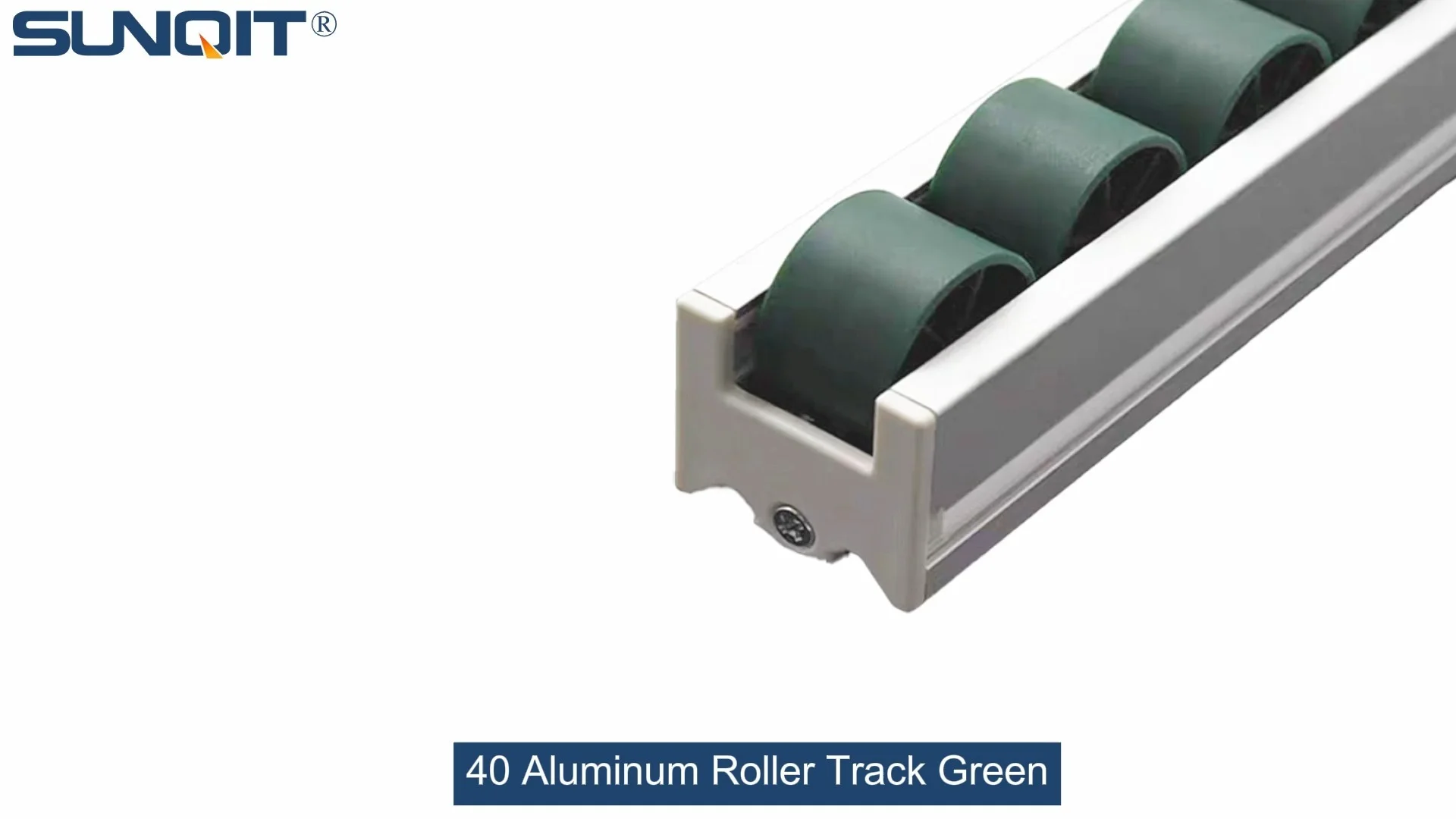
Durable and smooth-running modular roller rails. The system is fully assembled. The roller rail profile contains plastic rollers mounted on steel axles. Aluminum frame with plastic wheel make it anti corrosion,and material convey more smooth.
Energy Efficiency: 40 Aluminum Roller Track Green vs. Motorized Conveyors
In today's manufacturing landscape, every decision counts—especially when it comes to cutting costs and reducing environmental impact. For many facilities, conveyors are the backbone of their production lines, moving parts from one station to the next with precision. But not all conveyors are created equal. When it comes to energy efficiency, two options often stand out: the 40 Aluminum Roller Track Green and traditional motorized conveyors. Which one is the better choice for your lean system? Let's dive in and find out.
What Is the 40 Aluminum Roller Track Green?
If you're unfamiliar with gravity-driven conveyors, the 40 Aluminum Roller Track Green is a perfect introduction to this energy-saving technology. Made from high-quality green-colored aluminum profile, this track is designed to move parts and products using nothing but gravity—no electricity, no motors, no ongoing energy costs. It's a core component of lean systems, aligning perfectly with the principles of waste reduction and continuous improvement.
One of the key benefits of this roller track is its flexibility. Unlike fixed motorized conveyors, it's modular, meaning you can easily adjust its length, angle, or layout to fit changing workflow needs. This makes it ideal for lean environments where processes are constantly being optimized. It also works seamlessly with other lean equipment, like flow racks (for storing parts above the track) and lean pipe workbenches (for connecting stations directly to the track).
Durability is another strong point. The aluminum profile is resistant to rust and wear, so it can withstand daily use in busy factories—whether you're in 3C assembly, medical device production, or warehousing logistics. And since it's modular, if a section gets damaged, you don't have to replace the entire track; just swap out the affected part, saving time and money.
Motorized Conveyors: The Traditional (But Energy-Hungry) Choice
Motorized conveyors have been a staple in factories for decades. They use electric motors to move parts along belts or rollers, making them suitable for heavy loads or long distances where gravity alone isn't enough. But while they're effective, they come with significant downsides—especially when it comes to energy efficiency.
First, motorized conveyors consume electricity non-stop. Even when there are no parts on the track, the motor keeps running (unless you have a smart system, which adds extra cost). Over time, this constant energy use adds up, increasing your facility's utility bills and carbon footprint. Second, they require regular maintenance: lubricating motors, replacing worn belts, fixing electrical issues—all of which take time and money away from your core operations.
Another issue is flexibility. Motorized conveyors are often fixed in place, so reconfiguring them to adapt to new workflows is difficult and expensive. This goes against the lean principle of continuous improvement, where processes should be easy to adjust as you find ways to reduce waste.
Head-to-Head Comparison: Which Conveyor Is Right for You?
| Aspect | 40 Aluminum Roller Track Green | Motorized Conveyors |
|---|---|---|
| Energy Consumption | Zero (gravity-driven; no electricity needed) | High (constant electricity use for motors) |
| Initial Cost | Lower (modular design with no motor components) | Higher (includes motors, control systems, and complex parts) |
| Maintenance Cost | Minimal (occasional cleaning/lubrication of rollers; no motor upkeep) | High (regular motor maintenance, belt replacements, electrical repairs) |
| Flexibility | Excellent (easily reconfigured, adjusted, or expanded as workflow changes) | Low (fixed layout; hard to modify without significant cost) |
| Sustainability | Top-tier (100% recyclable aluminum; no energy waste; modular design reduces landfill waste) | Moderate (depends on energy source; more waste from replacement parts) |
| Ideal Use Cases | Short to medium distances, light to medium loads (3C assembly, medical device production, small warehouse picking lines) | Long distances, heavy loads (bulk material handling, large automotive parts) |
Real-World Applications of the 40 Aluminum Roller Track Green
To understand the value of this roller track, let's look at some real-world examples where it's making a difference in lean systems:
1. 3C Assembly Lines
In a 3C assembly factory (producing smartphones, laptops, or tablets), every second counts. Workers need parts to arrive at their stations quickly and smoothly. The 40 Aluminum Roller Track Green is installed between lean pipe workbenches, moving components like screens, batteries, and circuit boards from one station to the next. Since the track uses gravity, there's no wait time for motors to start—parts flow continuously at the perfect pace. This reduces idle time for workers and cuts down on energy costs, all while aligning with lean's focus on waste reduction.
2. Medical Device Production
Medical device manufacturing requires sterile, quiet environments. Motorized conveyors can generate noise and dust (from moving parts), which is a no-go for sterile areas. The 40 Aluminum Roller Track Green solves this problem: it's silent, dust-free, and easy to sanitize. It's used to move sterile components from cleaning stations to assembly stations, ensuring that parts remain contamination-free. Plus, its modular design allows for quick adjustments as production lines switch between different medical devices—perfect for facilities that need to adapt to changing demand.
3. Warehousing Logistics
Warehouses often struggle with energy costs from running conveyors 24/7. The 40 Aluminum Roller Track Green is a game-changer here. It's used in picking lines, where workers place boxes at the top of the track, and gravity moves them down to packing stations. Since it doesn't use electricity, warehouses can reduce their energy bills significantly. It also integrates with flow racks, where products are stored above the track for easy access—making the picking process faster and more efficient.
Why the 40 Aluminum Roller Track Green Fits Lean Solutions
Lean manufacturing is all about eliminating waste (muda) and improving processes continuously (kaizen). The 40 Aluminum Roller Track Green checks both boxes:
Waste Reduction
Energy waste is one of the biggest forms of muda in factories. The roller track eliminates this by using gravity instead of electricity. It also reduces maintenance waste—since there are no motors, you don't have to spend time or money fixing them. And its modular design reduces material waste: if you need to change your workflow, you can reuse existing sections instead of buying new conveyors.
Continuous Improvement
Lean systems require flexibility, and the roller track delivers. You can adjust its angle to change the speed of parts, add sections to extend the track, or move it to a new location—all without any special tools or expertise. This makes it easy to implement kaizen changes, like optimizing the flow of parts between stations or reducing the distance workers have to walk.
Compatibility with Other Lean Equipment
The 40 Aluminum Roller Track Green works seamlessly with other lean products from the supplier, like:
- Lean Pipe Workbenches: Connect the track directly to workbenches so parts arrive right at the worker's fingertips.
- Flow Racks: Store parts above the track for quick loading—no need to carry parts from racks to the track.
- Turnover Trolleys: Move finished products off the track into trolleys for easy transport to storage or shipping.
This compatibility makes it easy to build a complete lean system that's tailored to your facility's needs.
Common Misconceptions About Gravity-Driven Roller Tracks
Despite their benefits, gravity-driven roller tracks are often misunderstood. Let's clear up some common myths:
Myth: They're Only for Small Parts
Fact: The 40 Aluminum Roller Track Green can handle medium loads—up to several dozen kilograms. This is more than enough for most 3C components, medical devices, or small warehouse boxes. If you need to move heavier loads, you can add more rollers or use a sturdier aluminum profile (the supplier offers custom solutions to fit your needs).
Myth: They're Too Slow
Fact: The speed of the track is adjustable by changing its angle. You can set it to move parts at exactly the pace your workers need—no faster, no slower. This reduces errors, since workers don't have to rush to keep up with fast motorized conveyors. It also improves safety, as parts won't fly off the track at high speeds.
Myth: They're Not Durable
Fact: Made from high-quality aluminum profile, the 40 Aluminum Roller Track Green is built to last. It's resistant to rust, corrosion, and wear—even with daily use. And since it's modular, if one section gets damaged, you can replace just that section instead of the entire track. This saves money and reduces waste, aligning with lean's sustainability goals.
How to Implement the 40 Aluminum Roller Track Green in Your Facility
Ready to switch to a more energy-efficient conveyor system? Here's how to get started:
1. Assess Your Workflow
First, take a look at your current processes. Are parts moving short distances between stations? Are the loads light to medium? If yes, the 40 Aluminum Roller Track Green is a great fit. If you have long distances or heavy loads, you might want to combine it with motorized conveyors for a hybrid solution (the supplier can help with this).
2. Customize Your Design
The supplier offers custom lean solutions, so you can work with their team to design the perfect track for your facility. They'll consider factors like the size of your parts, the distance between stations, and how the track will integrate with your existing equipment (like lean pipe workbenches or flow racks). This ensures that the track fits your needs exactly.
3. Install and Test
The track is easy to install—modular parts snap together with simple connectors. You don't need any special tools or expertise. Once installed, test it with your actual parts to make sure the speed and flow are right. If adjustments are needed, you can change the angle or add sections quickly.
4. Optimize Over Time
Lean systems are never finished—there's always room for improvement. As you find ways to optimize your workflow, adjust the track. For example, if you notice that parts are moving too slowly, increase the angle. If you add a new station, extend the track to connect it. This flexibility is what makes the 40 Aluminum Roller Track Green such a valuable part of any lean system.
Conclusion
When it comes to energy efficiency and lean systems, the 40 Aluminum Roller Track Green is a clear winner. It's zero-energy, cost-effective, flexible, and sustainable—all key factors for modern manufacturing facilities. Whether you're in 3C assembly, medical device production, or warehousing logistics, this roller track can help you reduce energy waste, cut costs, and improve your processes.
Unlike motorized conveyors, which are energy-hungry and inflexible, the 40 Aluminum Roller Track Green aligns perfectly with lean principles. It's easy to install, adjust, and maintain, making it a smart choice for any facility looking to embrace continuous improvement.
If you're ready to take your energy efficiency to the next level, consider the 40 Aluminum Roller Track Green. It's not just a conveyor—it's a lean solution that will help your facility thrive in today's competitive manufacturing landscape.