- Company Articles
- Products and Technology
- Product knowledge
- Enhancing 3C Assembly Efficiency with Parallel Lean Pipe Joints

Enhancing 3C Assembly Efficiency with Parallel Lean Pipe Joints
Related Product
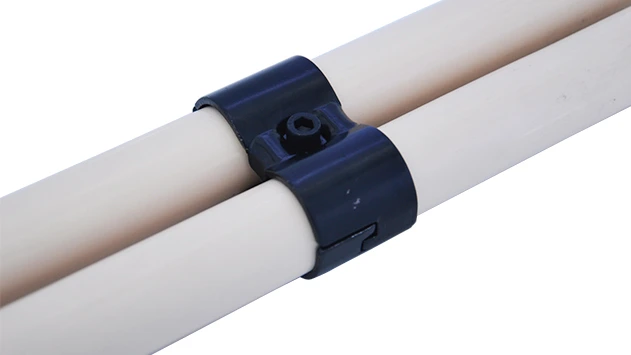
Parallel Lean Pipe Joint
Parallel lean pipe joint used for 2 pcs 28MM lean pipe connection in parallel direction to enhance frame structure, usually for heavy payload requirement for workbench. flow rack, hand trolley.
In the fast-paced world of 3C manufacturing—where computers, communication devices, and consumer electronics fly off production lines by the millions—efficiency isn't just a goal; it's the lifeblood of staying competitive. Every second of downtime, every awkward movement of a worker, every rigid assembly line that can't adapt to a new product model chips away at profit margins and market share. That's where lean manufacturing steps in, and at the heart of lean systems lies a humble yet powerful component: the parallel lean pipe joint. In this article, we'll explore how these unassuming connectors are transforming 3C assembly floors, turning rigid, slow-moving lines into agile, high-performance ecosystems that keep up with the industry's relentless demand for speed, precision, and adaptability.
The 3C Assembly Challenge: Speed, Precision, and the Need for Flexibility
Walk into any 3C manufacturing plant, and you'll be met with a symphony of whirring machines, conveyor belts, and workers focused on tasks that demand microscopic precision. Whether it's assembling a smartphone's circuit board, fitting components into a laptop chassis, or testing a smartwatch's touchscreen, the process leaves no room for error. But here's the catch: 3C products have lifecycles shorter than ever. A new phone model hits the market, and within months, a refreshed version with updated features is already in the works. Assembly lines that took weeks to set up for one product now need to reconfigure in days—or even hours—to keep up.
Traditional assembly setups often struggle with this reality. Welded steel frames, fixed workbenches, and one-size-fits-all conveyor systems are built for stability, not change. When a new product comes in, teams spend (valuable) time dismantling old structures, re-welding frames, or purchasing entirely new equipment. Meanwhile, workers navigate clunky, inflexible workstations, wasting motion on tasks like reaching for tools or adjusting to poorly positioned components. All of this adds up to wasted time, higher costs, and missed deadlines—precisely the waste lean manufacturing aims to eliminate.
Lean Manufacturing: The Foundation of Efficient 3C Assembly
At its core, lean manufacturing is about one thing: eliminating waste. From unnecessary movement and overproduction to waiting times and defects, lean principles guide teams to streamline processes, optimize workflows, and create systems that adapt rather than resist change. In 3C assembly, where product diversity and rapid iteration are the norms, lean isn't just a methodology—it's a survival strategy.
Central to lean systems are modular, flexible tools that can evolve with production needs. This is where lean pipe systems come into play. Made from materials like aluminum profile or stainless steel, these systems use pipes, joints, and accessories to build everything from workbenches and material racks to conveyor lines and turnover trolleys. Unlike traditional fixed structures, lean pipe systems are designed to be reconfigured, extended, or repurposed with minimal effort—no welding, no heavy machinery, just basic tools and a little know-how.
And among the many components that make lean pipe systems tick, parallel lean pipe joints stand out as a critical innovation. These specialized connectors are engineered to join two or more pipes in parallel, creating stable, rigid structures that maintain alignment even under heavy loads. But their real magic lies in their ability to balance stability with flexibility—a combination that's game-changing for 3C assembly lines.

What Are Parallel Lean Pipe Joints, and Why Do They Matter?
At first glance, a parallel lean pipe joint might look like just another metal connector. But dig deeper, and you'll see it's a feat of practical engineering. Designed to secure parallel pipes—whether aluminum, steel, or plastic-coated lean tube—these joints ensure that the pipes remain evenly spaced and firmly attached, even when supporting heavy equipment or constant movement. They come in various materials, from lightweight aluminum for standard applications to rugged stainless steel for high-stress environments, and they're compatible with a wide range of pipe diameters and accessories.
But why does this matter for 3C assembly? Let's break it down:
Flexibility Without Compromise: In 3C manufacturing, assembly lines rarely stay the same for long. A factory might produce 50,000 units of a smartphone model one month, then switch to a tablet the next, requiring entirely different workbench heights, conveyor layouts, or material flow paths. Parallel lean pipe joints make reconfiguration a breeze. Unlike welded joints, which are permanent, these connectors can be loosened, adjusted, and re-tightened in minutes. Need to widen a workbench to accommodate a larger component? Swap out a few joints, add a pipe, and you're done. Want to angle a roller track to improve material flow? Adjust the parallel joints to tilt the structure—no need for a new frame.
Stability for Precision Tasks: 3C components are delicate. A slight wobble in a workbench or a misalignment in a conveyor can lead to defects, rework, or even damaged parts. Parallel lean pipe joints ensure that structures like lean pipe workbenches or roller tracks remain rock-solid. By evenly distributing weight across parallel pipes and locking them in place, these joints minimize vibration and movement, creating a stable platform for tasks that demand precision—like soldering tiny circuit boards or aligning screen components.
Compatibility with Lean Ecosystems: No component works in isolation on an assembly line. Parallel lean pipe joints are designed to play well with other lean accessories, from caster wheels that add mobility to roller track connectors that link material flow systems. This compatibility means manufacturers can build fully integrated workflows: a lean pipe workbench with parallel joints might feed into a roller track system (supported by the same joint technology), which in turn connects to a conveyor line, creating a seamless path from component intake to final assembly.

Real-World Impact: How Parallel Lean Pipe Joints Boost 3C Assembly Efficiency
To understand the true value of parallel lean pipe joints, let's look at how they transform specific areas of 3C assembly—from workbenches to material flow systems.
1. Lean Pipe Workbenches: Customized, Comfortable, and Adaptable
The workbench is the heart of any assembly station. It's where workers spend hours each day, performing tasks that require focus, precision, and ergonomic comfort. Traditional workbenches are often one-size-fits-all—fixed heights, limited storage, and no room for adjustment. For 3C workers, who might alternate between assembling small circuit boards and larger device housings, this rigidity is a major pain point.
With parallel lean pipe joints, workbenches become customizable ecosystems. Manufacturers can adjust height to match worker preferences (reducing strain and fatigue), add shelves or tool holders using parallel pipes and joints, and even integrate features like ESD (electrostatic discharge) protection for sensitive electronics. When a new product requires a different layout—say, a deeper work surface for a tablet assembly—teams can simply loosen the parallel joints, reposition the pipes, and reattach. What once took days (or required buying a new bench) now takes hours, if not minutes.
Consider a hypothetical 3C plant producing smartwatches. When the company launches a new model with a larger screen, the assembly team needs workbenches with extra space for screen alignment tools. Using parallel lean pipe joints, they reconfigure existing benches by adding a parallel pipe extension, attaching a new shelf for tools, and adjusting the height to reduce worker bending. The entire process takes a single shift, and production resumes without missing a beat. No downtime, no new equipment costs—just a quick, efficient adjustment.
2. Roller Track Systems: Smooth Material Flow, Minimized Jams
In 3C assembly, materials and components need to flow seamlessly from one station to the next. Whether it's PCBs moving from soldering to testing or finished devices heading to packaging, any disruption in this flow—like a jammed conveyor or misaligned roller track—can bring production to a halt. Roller track systems, which use gravity or powered rollers to move items, are a staple of lean material flow, but their effectiveness depends on precise alignment.
This is where parallel lean pipe joints shine. By securing the side rails of roller tracks in parallel, these joints ensure the tracks remain perfectly aligned, even under the constant stress of rolling components. Misalignment is a common cause of jams—when one rail is slightly higher than the other, items can get stuck or tip over. Parallel joints eliminate this risk by locking the rails in place, creating a smooth, consistent path for materials. Additionally, when production needs change—like adding a new branch to the track or adjusting the angle for faster flow—parallel joints make reconfiguration simple. Loosen a few bolts, adjust the pipes, and the track is ready for the new workflow.
For example, a 3C manufacturer producing wireless earbuds might use a roller track system to move component trays between assembly stations. With parallel lean pipe joints securing the track's rails, the trays glide smoothly, reducing the risk of jams and ensuring components arrive at each station on time. When the company introduces a new earbud model with a larger tray, the team can extend the track by adding more pipes and parallel joints, keeping the flow uninterrupted.
3. Conveyor Systems: Stable, Scalable, and Cost-Effective
Conveyors are the arteries of large-scale 3C assembly lines, moving products between stations, testing areas, and packaging. Traditional conveyor systems are often heavy, expensive, and difficult to modify. If production needs change—like adding a new testing station or rerouting the line to accommodate a new machine—manufacturers face costly downtime and complex reengineering.
Lean conveyor systems, built with aluminum profile frames and parallel lean pipe joints, offer a better alternative. These systems are lightweight yet durable, with frames that can be extended or reconfigured using parallel joints. For instance, a powered roller conveyor might use parallel pipes supported by joints to create a stable base, with roller track connectors linking the rollers to the frame. If the line needs to be extended by 10 feet, teams can add new pipes and joints, connect the rollers, and have the conveyor up and running in a fraction of the time it would take with a traditional system.
What's more, parallel lean pipe joints reduce the need for custom fabrication. Instead of ordering expensive, one-off conveyor sections, manufacturers can use standard pipes and joints to build exactly what they need—saving money and reducing lead times. For 3C plants operating on tight budgets and even tighter deadlines, this flexibility is invaluable.
Traditional vs. Parallel Lean Pipe Joint Setups: A Comparative Look
To quantify the impact of parallel lean pipe joints, let's compare traditional assembly setups with those using parallel lean pipe joints across key efficiency metrics. The table below highlights real-world differences reported by 3C manufacturers that have made the switch:
| Efficiency Metric | Traditional Fixed Setup | Parallel Lean Pipe Joint Setup | Improvement |
|---|---|---|---|
| Time to reconfigure for new product | 8–12 hours (requires tools, welding, or new parts) | 1–2 hours (basic hand tools, no welding) | 75–90% faster |
| Worker motion waste (steps/movement per shift) | High (awkward reaching, walking to storage) | Low (customizable workbench layout, tools within arm's reach) | 30–40% reduction in wasted motion |
| Material flow downtime (jams, misalignment) | 15–20 incidents per week | 2–3 incidents per week | 85–90% fewer disruptions |
| Initial setup cost | High (custom fabrication, specialized labor) | Moderate (standard components, modular design) | 20–30% lower upfront cost |
| Long-term durability (maintenance frequency) | Moderate (welds weaken over time, fixed parts hard to replace) | High (aluminum/stainless steel joints resist wear, easy part replacement) | 50% reduction in maintenance needs |
These numbers tell a clear story: parallel lean pipe joints don't just improve efficiency—they transform how 3C assembly lines operate. By reducing reconfiguration time, minimizing waste, and lowering costs, they enable manufacturers to respond faster to market demands, produce higher-quality products, and stay ahead of competitors.
Choosing the Right Parallel Lean Pipe Joints: Key Considerations
Not all parallel lean pipe joints are created equal. To maximize efficiency and durability, 3C manufacturers should consider a few key factors when selecting joints for their assembly lines:
Material Matters
Joints are available in materials like aluminum, steel, and plastic. Aluminum is lightweight and corrosion-resistant, making it ideal for standard assembly environments. Steel joints offer extra strength for heavy-duty applications (like supporting large conveyor systems). For ESD-sensitive areas (common in electronics assembly), look for joints with conductive coatings to prevent static buildup.
Load Capacity
Different joints are rated for different weight limits. A joint used in a lightweight workbench might only need to support 50kg, while one in a conveyor system could need to handle 200kg or more. Always check load ratings and factor in dynamic loads (like moving components) when selecting joints.
Compatibility
Ensure joints are compatible with your existing lean pipe system. Most manufacturers use standard pipe diameters (e.g., 28mm for lean tube, 30mm for aluminum profile), but it's always best to verify. Look for joints that work with common accessories like caster wheels, roller track connectors, and leveling feet to maximize flexibility.
Ease of Use
The best joints are those that are easy to install and adjust. Look for designs with tool-free or quick-release mechanisms, which reduce setup time and make reconfiguration a breeze. Avoid joints that require specialized tools or excessive force to tighten—these can slow down teams and lead to errors.
Conclusion: Parallel Lean Pipe Joints—Small Component, Big Impact
In the high-stakes world of 3C assembly, where every second counts and adaptability is non-negotiable, parallel lean pipe joints are more than just connectors—they're enablers of efficiency. By combining stability with flexibility, they transform rigid, wasteful assembly lines into agile, responsive systems that can keep up with the industry's relentless pace.
From customizable lean pipe workbenches that reduce worker fatigue to roller track systems that minimize material flow disruptions, parallel lean pipe joints touch every aspect of 3C production. They reduce setup time, lower costs, and create environments where workers can focus on what they do best: building high-quality products.
As 3C manufacturers continue to face pressure to innovate faster, produce more, and cut costs, the importance of tools like parallel lean pipe joints will only grow. They're a testament to the power of lean thinking—proving that even the smallest components can drive meaningful, lasting change. So the next time you walk through a 3C assembly plant, take a closer look at those unassuming metal joints holding the line together. Chances are, they're the unsung heroes keeping the products we rely on rolling off the line—faster, better, and more efficiently than ever before.