- Company Articles
- Products and Technology
- Solution
- Enhancing Automotive Production Flow with End Support for Roller Track Placon Mount with Wheel

Enhancing Automotive Production Flow with End Support for Roller Track Placon Mount with Wheel
Related Product
End Support for Roller Track Placon Mount with Wheel
End support for roller track placon mount with wheel,the special design with end wheel,make it with more flexible function for roller track and pipe connection and give more option for selection for building flow rack system.
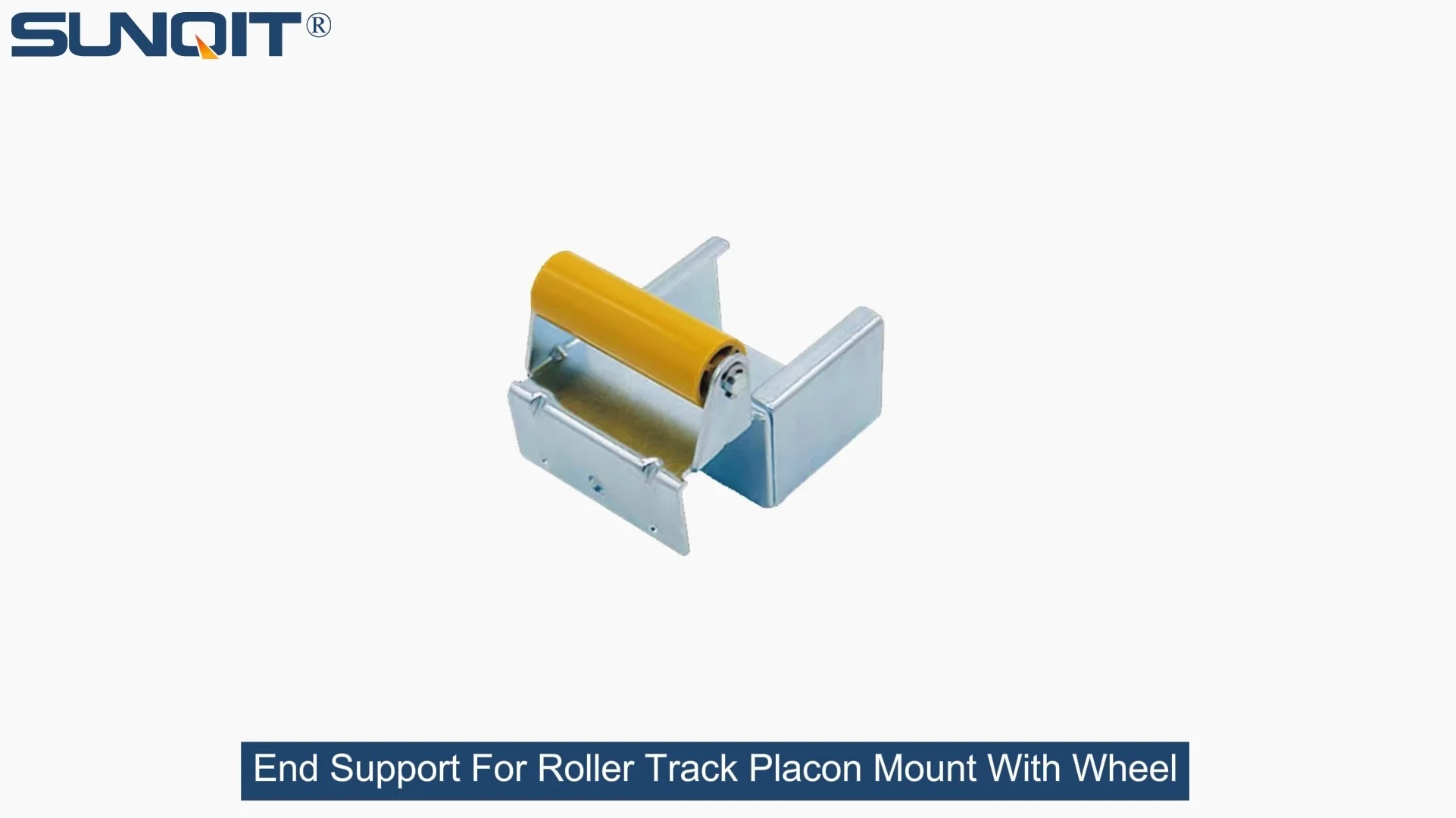
In the fast-paced world of automotive manufacturing, every second counts. From the moment raw materials arrive on the factory floor to the final inspection of a fully assembled vehicle, the efficiency of material flow can make or break production targets. Yet, one often-overlooked component quietly impacts this flow: the roller track system. Today, we're diving into how a specific innovation—the End Support for Roller Track Placon Mount with Wheel —is transforming automotive production lines, working hand-in-hand with lean pipe structures, flow racks, and conveyors to create smoother, more resilient workflows.
The Hidden Hurdles in Automotive Material Flow
Ask any automotive production manager about daily frustrations, and you'll likely hear the same complaints: jamming roller tracks, wobbly material racks, and time wasted on frequent repairs. These issues aren't just minor nuisances—they cascade into bigger problems:
- Delayed production cycles : A stuck roller track can halt an entire assembly line, causing bottlenecks that ripple through shifts.
- Increased labor fatigue : Workers end up manually pushing heavy components over uneven tracks, leading to slower pace and higher injury risks.
- Unplanned maintenance costs : Constantly replacing bent supports or loose wheels eats into budgets, diverting funds from innovation.
Take, for example, the transmission assembly area. Here, precision parts weighing 15-20 kg slide along roller tracks to each workstation. A traditional fixed-end support might hold the track steady at first, but over time, vibrations from constant use loosen bolts. The track sags, parts get stuck, and suddenly, a process that should take 2 minutes per unit now takes 5. Multiply that by 500 units a day, and you're looking at hours of lost productivity.
End Support for Roller Track Placon Mount with Wheel: Small Part, Big Impact
Enter the End Support for Roller Track Placon Mount with Wheel—a deceptively simple component designed to address these pain points head-on. Let's break down how it works and why it matters in automotive settings:
What Makes This Support Stand Out?
Unlike rigid, fixed-end supports, this design combines a sturdy aluminum frame with a swivel wheel base. The wheel allows the track to adjust slightly to uneven floor surfaces, while the placon mount system locks the track in place to prevent lateral movement. Think of it as a "shock absorber" for your roller track—absorbing vibrations, adapting to minor floor imperfections, and keeping materials gliding smoothly.
Traditional Supports vs. End Support with Wheel: A Side-by-Side Look
| Feature | Traditional Fixed Support | End Support for Roller Track Placon Mount with Wheel |
|---|---|---|
| Adaptability to Floor Unevenness | Low (causes track sagging over time) | High (wheel base adjusts to minor bumps) |
| Installation Time | 30-45 minutes (requires precise alignment) | 15-20 minutes (tool-free placon mount system) |
| Maintenance Frequency | Monthly (bolt tightening, part replacement) | Quarterly (minimal checks, no bolt loosening) |
| Noise Level During Operation | 65-70 dB (metal-on-metal friction) | 50-55 dB (smooth wheel movement, reduced vibration) |
| Weight Capacity | Up to 150 kg per support | Up to 200 kg per support (reinforced aluminum frame) |

Building a Lean Ecosystem: How It Works with Lean Pipe, Flow Racks, and Conveyors
Great components don't work in isolation. The true power of the End Support for Roller Track Placon Mount with Wheel shines when integrated into a broader lean system—combining lean pipe structures, flow racks, and conveyors to create a seamless material flow network. Let's explore this integration:
1. Lean Pipe: The Backbone of Flexibility
Automotive production lines rarely stay static. New models, design changes, or seasonal demand spikes require reconfiguring workstations quickly. Lean pipe (or aluminum lean pipe) provides the flexibility to build adjustable frames for roller tracks, workbenches, and flow racks. The End Support pairs perfectly with lean pipe structures—its lightweight aluminum design matches the pipe's modularity, allowing teams to disassemble, relocate, and reassemble tracks without welding or heavy tools.
For example, when a car manufacturer introduces a new SUV model with larger door panels, the existing roller track for door assembly might need to be extended by 2 meters. With lean pipe frames and the End Support's easy mounting, the team can add the extension in under an hour, whereas traditional steel frames would take half a day.
2. Flow Racks: Keeping Parts Within Reach
Near the assembly line, flow racks hold small components like bolts, gaskets, and wiring harnesses. These racks rely on gravity to feed parts to the front, but uneven rack alignment can cause jams. By mounting flow racks on roller tracks supported by our End Support, workers can adjust the rack's angle slightly to ensure consistent part flow. No more shaking racks to dislodge stuck components—just smooth, gravity-powered feeding that reduces pick-and-place time by 15-20%.
3. Conveyors: Bridging the Gaps
Between workstations, conveyors move larger assemblies like engines or dashboards. When conveyors connect to roller tracks, misalignment is common, leading to parts getting caught at the transfer point. The End Support's wheel base compensates for small height differences between conveyor and track, creating a gradual transition. In one case study, a European automaker reduced transfer-point jams by 80% after upgrading to these supports, cutting maintenance calls from 12 per week to just 2.

Real-World Results: A Day in the Life of an Upgraded Line
Let's step into a mid-sized automotive plant in Michigan that recently integrated the End Support for Roller Track Placon Mount with Wheel into its chassis assembly line. Here's how the upgrade transformed their workflow over 3 months:
Before the Upgrade
- Chassis components (average weight: 35 kg) moved along a 15-meter roller track with fixed steel supports.
- Daily issues: 3-4 track jams, requiring workers to stop and manually free components.
- Weekly maintenance: 2 hours spent tightening bolts and replacing worn support pads.
- Production target: 300 chassis/day; actual output: 260-270/day (due to downtime).
After Installing the New End Supports
- Jams dropped to 0-1 per week—mostly due to rare (foreign objects) on the track, not track misalignment.
- Maintenance time reduced to 30 minutes/week—just visual checks of the wheel bases and placon mounts.
- Workers reported less physical strain: "Pushing the chassis along the track used to feel like pushing a boulder uphill; now it glides like it's on ice," said one assembly line operator.
- Output stabilized at 305-310 chassis/day—exceeding targets and reducing overtime costs by $12,000/month.

Beyond Efficiency: Supporting Lean and Sustainable Manufacturing
Automotive manufacturers today aren't just chasing efficiency—they're also prioritizing sustainability and the circular economy. The End Support aligns with these goals in two key ways:
- Reusability : Made from durable aluminum, the support can be repurposed when lines are reconfigured. Unlike plastic supports that crack or steel ones that rust, aluminum withstands years of use, reducing waste from frequent replacements.
- Energy savings : Smoother material flow means less manual intervention, which lowers energy consumption from powered conveyors (since workers rely less on backup motors to unjam tracks).
One plant in Germany calculated that by extending the lifespan of their roller track system from 3 years to 7 years using these supports, they reduced carbon emissions from manufacturing new tracks by 62% over a decade.
Why the End Support Matters for Your Automotive Line
In automotive manufacturing, success lies in the details. The End Support for Roller Track Placon Mount with Wheel may seem like a small part, but its impact ripples through every stage of production—reducing downtime, easing worker strain, and supporting the flexibility and sustainability that modern plants need. When paired with lean pipe structures, flow racks, and conveyors, it becomes part of a holistic lean system that adapts to change, minimizes waste, and keeps your production line moving forward.
So, the next time you walk your factory floor and hear a roller track jam or see a worker struggling with a heavy load, remember: sometimes the solution is as simple as upgrading a support. After all, in the race to build better cars faster, even the smallest innovations can drive big results.