- Company Articles
- Products and Technology
- Product knowledge
- Enhancing Flow Racks with Parallel Rotatory Lean Pipe Joints

Enhancing Flow Racks with Parallel Rotatory Lean Pipe Joints
Related Product
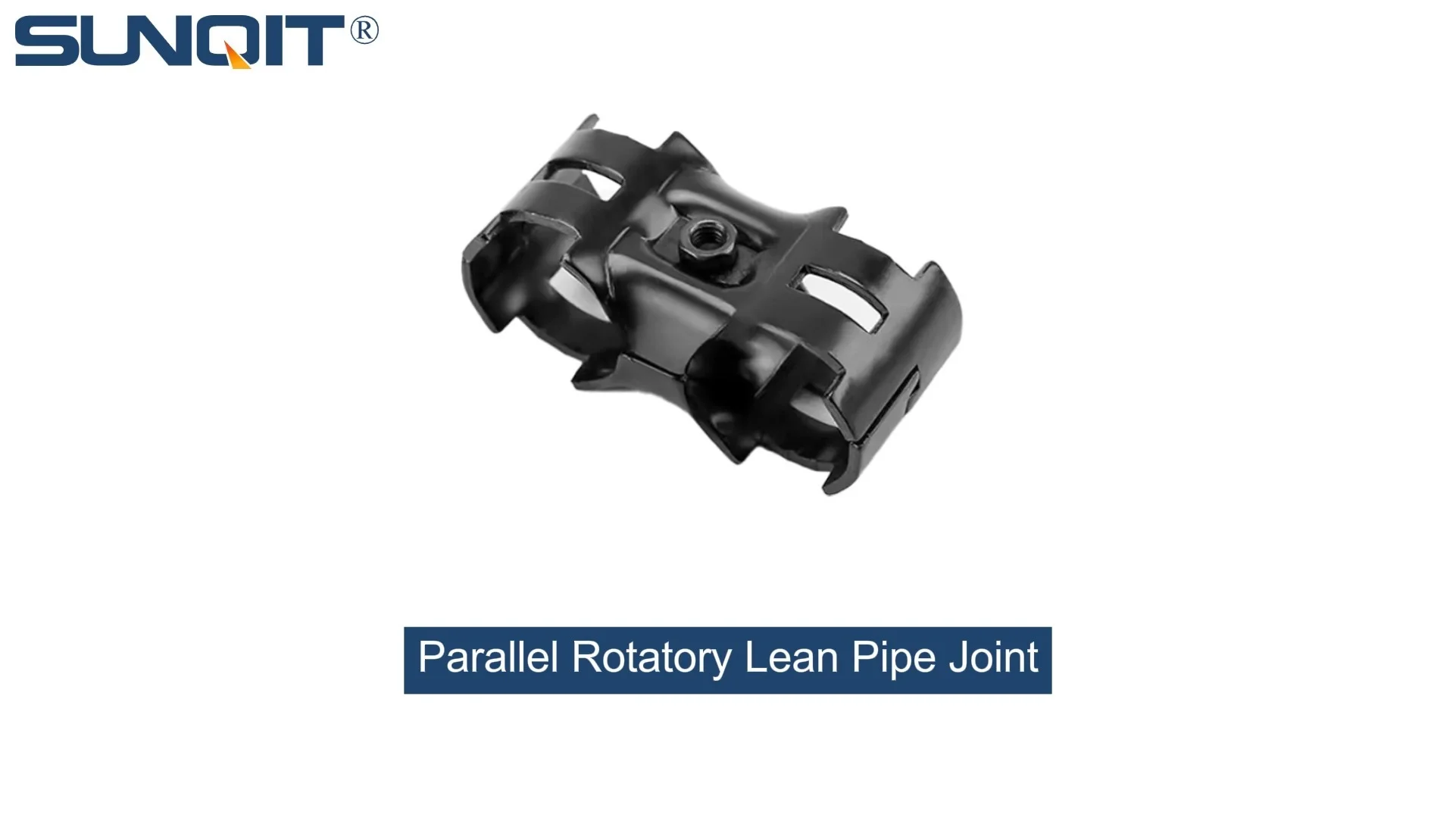
Parallel Rotatory Lean Pipe Joint
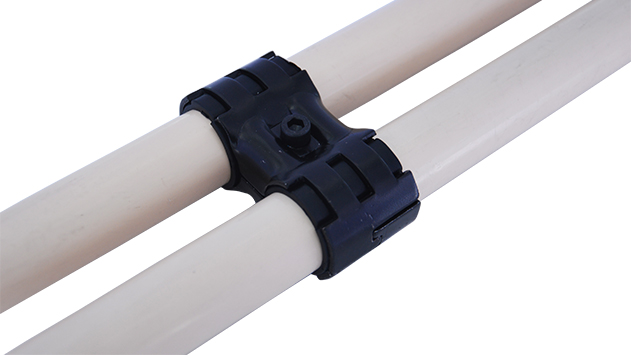
Parallel rotatory lean pipe joint, for 2 pcs pipe conenction in parallel direction with rotatory function.
In the fast-paced world of manufacturing and warehousing, every second counts. The difference between meeting a tight production deadline and falling behind often lies in the efficiency of material flow—the way parts, components, and products move from one workstation to the next. At the heart of this process are flow racks: simple yet powerful structures designed to streamline access, save space, and maintain a first-in-first-out (FIFO) order. But even the best flow racks can fall short if their joints—the critical connectors that hold everything together—lack flexibility. That's where parallel rotatory lean pipe joints come in. These unassuming components are quietly revolutionizing how teams build, adjust, and optimize flow racks, turning rigid structures into adaptable tools that keep pace with changing production needs.
Understanding Flow Racks: The Backbone of Efficient Material Handling
Before diving into the specifics of parallel rotatory lean pipe joints, let's take a moment to appreciate the role flow racks play in modern operations. Imagine a busy assembly line where workers need quick access to small parts, or a warehouse where picking orders demands speed and accuracy. Flow racks, with their inclined shelves and roller tracks, allow materials to "flow" forward as items are removed, ensuring the oldest stock is used first and reducing the risk of stagnant inventory. They're a staple in industries ranging from automotive and electronics to e-commerce and pharmaceuticals, and for good reason: they maximize vertical space, minimize walking time for workers, and create a visual system that's easy to monitor.
Traditional flow racks are typically built using a combination of pipes, brackets, and fixed joints. While effective for static operations, they often struggle when production needs change. A sudden shift in product size, a new assembly process, or a seasonal spike in demand can leave teams scrambling to reconfigure their flow racks—only to find that fixed joints make adjustments time-consuming, labor-intensive, and even disruptive. This rigidity isn't just an inconvenience; it's a bottleneck that can slow down workflows and eat into profits.
The Hidden Cost of Rigid Joints: Why Traditional Flow Racks Fall Short
To understand the problem with traditional flow rack joints, let's walk through a common scenario. Suppose a electronics manufacturer uses flow racks to supply circuit boards to its assembly line. For months, the setup works perfectly: boards slide smoothly from the back to the front, and workers grab what they need without a second thought. Then, the company introduces a new, larger circuit board. Suddenly, the existing flow rack's height is too low, and the roller tracks are too narrow. To adjust, the team must loosen bolts, disassemble sections of the rack, and rebuild it with new brackets—a process that takes hours, if not days, of downtime. Worse, if another product change happens six months later, the same tedious process repeats.
The root of the issue? Fixed joints. Traditional flow rack joints—often made of rigid plastic or metal—lock pipes and shelves into place at specific angles. While they're strong, they offer little room for on-the-fly adjustments. Want to tilt a shelf slightly to speed up material flow? You'll need to swap out brackets. Need to widen the gap between roller tracks for bulkier items? Prepare to drill new holes. Over time, these small inefficiencies add up, leading to lost productivity, frustrated teams, and racks that become obsolete faster than the products they support.
Introducing Parallel Rotatory Lean Pipe Joints: Flexibility Redefined
Parallel rotatory lean pipe joints are designed to solve this rigidity problem. Unlike fixed joints, which lock components into static positions, these joints feature a rotating mechanism that allows pipes and shelves to pivot, tilt, and adjust with minimal effort. Think of them as the "swivel joints" of the flow rack world—small in size but mighty in impact. Made from durable materials like aluminum or steel, they connect lean pipes (hollow tubes used in modular systems) and roller tracks, but with a key difference: instead of requiring disassembly to change angles, they can be rotated by hand, locked into place with a simple lever or bolt, and ready for use in minutes.
But what exactly makes parallel rotatory joints so special? Let's break it down. First, their rotation range. Most models allow for 360-degree rotation, meaning shelves can be tilted forward for faster material flow, angled backward to slow it down, or even adjusted horizontally to create custom configurations. Second, their compatibility. They work seamlessly with standard lean pipes, aluminum profiles, and roller track accessories, making them easy to integrate into existing systems without a complete overhaul. Third, their load capacity. Despite their flexibility, these joints are built to handle heavy loads—often up to 200 kg per joint—ensuring they're not just adaptable but also reliable in high-stress environments.

The Benefits of Parallel Rotatory Lean Pipe Joints in Flow Racks
The true value of parallel rotatory lean pipe joints becomes clear when you see them in action. Here are just a few of the ways they enhance flow racks and, by extension, overall operations:
1. Reduced Downtime During Reconfigurations : Remember the earlier example of the electronics manufacturer needing to adjust flow rack height for a new circuit board? With parallel rotatory joints, that process would take minutes instead of hours. Workers simply unlock the joints, rotate the pipes to the desired angle, relock them, and the rack is ready. No disassembly, no drilling, no waiting for maintenance teams. This agility is a game-changer for facilities that frequently switch between product lines or seasonal inventory.
2. Customizable Material Flow Rates : Not all materials flow the same way. A lightweight plastic component might need a steeper incline to slide forward, while a heavy metal part could require a gentler slope to prevent damage. Parallel rotatory joints let teams fine-tune the angle of roller tracks, ensuring each item moves at the optimal speed. This reduces jams, minimizes product damage, and keeps workflows smooth.
3. Improved Ergonomics for Workers : Repetitive strain injuries are a common concern in warehouses and factories, often caused by workers reaching, bending, or stretching to access materials. By adjusting the height and angle of flow rack shelves with parallel rotatory joints, teams can create ergonomic setups that reduce physical stress. For example, a shelf holding heavy tools can be lowered to waist height, while one with small parts can be tilted upward for better visibility—small changes that make a big difference in worker comfort and long-term health.
4. Cost Savings Over Time : While parallel rotatory joints may have a slightly higher upfront cost than traditional fixed joints, they more than pay for themselves in the long run. Their reusability means teams don't need to buy new brackets or pipes every time a configuration changes. Their durability reduces replacement costs, and their ability to minimize downtime keeps production on track, avoiding costly delays.

Comparing Joint Types: How Parallel Rotatory Joints Stack Up
To put the benefits of parallel rotatory lean pipe joints into perspective, let's compare them to three common alternatives: fixed joints, swivel joints, and three-way joints. The table below highlights key factors like flexibility, installation time, and adaptability—critical considerations for anyone building or upgrading flow racks.
Table 1: Comparison of Flow Rack Joint Types
| Joint Type | Flexibility (Angle Adjustment) | Installation Time | Reconfiguration Ease | Load Capacity (Typical) | Best For |
|---|---|---|---|---|---|
| Fixed Joints | None (fixed at 90° or preset angles) | 30-60 minutes (requires drilling/bolting) | Low (requires full disassembly) | High (250-300 kg) | Static, long-term setups with no changes |
| Swivel Joints | Limited (90-180° rotation) | 15-30 minutes (some tools needed) | Medium (partial disassembly required) | Medium (150-200 kg) | Occasional adjustments, moderate flexibility |
| Three-Way Joints | None (fixed T or Y shapes) | 20-45 minutes (tools required for setup) | Low (permanent once installed) | High (200-250 kg) | Branching structures with fixed pathways |
| Parallel Rotatory Lean Pipe Joints | High (360° rotation, infinite angles) | 5-10 minutes (tool-free adjustment) | High (adjust by hand, no disassembly) | Medium-High (180-220 kg) | Dynamic environments with frequent changes |
As the table shows, parallel rotatory joints outshine traditional options in flexibility and reconfiguration ease, with load capacities that rival fixed joints. For facilities that value agility—think startups scaling quickly, contract manufacturers with changing client needs, or warehouses handling seasonal inventory—this combination is hard to beat.
Integrating Parallel Rotatory Joints with Lean Pipe and Aluminum Profile Systems
One of the biggest advantages of parallel rotatory lean pipe joints is their compatibility with modular systems. Lean pipe (also known as "lean tube") systems have been popular for decades because they allow teams to build custom workbenches, trolleys, and racks using simple pipes and joints. When paired with aluminum profiles—extruded aluminum beams with T-slots for easy accessory mounting—they become even more versatile. Parallel rotatory joints bridge the gap between these two systems, acting as the "glue" that holds lean pipes, aluminum profiles, and roller tracks together in a cohesive, adjustable unit.
Let's take a practical example: building a flow rack for small electronic components. Using lean pipes for the frame, aluminum profiles for the side rails, and roller tracks for material flow, a team can use parallel rotatory joints to connect the roller tracks to the aluminum profiles. If the components are lightweight, they might tilt the tracks at a 5° angle for gentle flow. If a new, heavier component is introduced, they can rotate the joints to a 10° angle to increase flow speed—all without removing a single bolt. Later, if the rack needs to be moved to a different part of the factory, the joints can be loosened, the rack disassembled into smaller sections, and reassembled in the new location with minimal effort.
This modularity also extends to accessories. Parallel rotatory joints work with everything from caster wheels (for mobile flow racks) to plastic roller track guide rails (yellow or grey, depending on visibility needs) and even swivel roller balls (small, omnidirectional rollers for smooth material movement). This means teams aren't locked into a single supplier or product line—they can mix and match components to create a flow rack that's tailored to their exact needs.
Real-World Applications: How Parallel Rotatory Joints Are Making a Difference
To truly appreciate the impact of parallel rotatory lean pipe joints, let's look at a real-world case study. A mid-sized automotive parts manufacturer was struggling with its assembly line flow racks. The company produced multiple car models, each with slightly different component sizes, and reconfiguring the racks to accommodate new parts was taking 4-6 hours of downtime per changeover. This not only delayed production but also frustrated workers, who often had to improvise with temporary fixes in the meantime.
After switching to parallel rotatory lean pipe joints, the results were striking. The first changeover—adjusting shelf heights and roller track angles for a new brake component—took just 45 minutes. Workers simply unlocked the joints, rotated the pipes to the new dimensions, and locked them back in place. Over the next six months, the company saw a 30% reduction in changeover time and a 15% increase in assembly line productivity. Perhaps more importantly, the team reported higher morale: instead of dreading reconfigurations, they viewed the flow racks as tools they could adapt on the fly, giving them a sense of control over their workspace.
Another example comes from a third-party logistics (3PL) warehouse handling e-commerce returns. The warehouse needed flow racks that could quickly switch between holding small packages (like clothing) and larger items (like electronics). With parallel rotatory joints, they adjusted roller track spacing in minutes, using grey plastic guide rails for small items and yellow ones for larger, high-visibility packages. This adaptability helped them process 20% more returns per day during peak seasons.
Maintenance and Longevity: Keeping Parallel Rotatory Joints in Top Shape
Like any piece of equipment, parallel rotatory lean pipe joints require basic maintenance to ensure they last. Fortunately, their design makes upkeep simple. Here are a few tips to keep them performing at their best:
1. Regular Cleaning : Dust, grease, and debris can build up in the joint's rotating mechanism over time, making adjustments stiff. Wiping them down with a dry cloth weekly and using a mild degreaser monthly (for oilier environments) keeps things moving smoothly.
2. Lubrication : A drop of machine oil or silicone spray on the rotation points every 3-6 months prevents rust and ensures easy movement. Avoid over-lubricating, as this can attract more dust.
3. Tightening Connections : Over time, the bolts or levers that lock the joints in place may loosen due to vibration. A quick check with a wrench or screwdriver every month ensures they stay secure, especially in high-traffic areas.
4. Inspecting for Wear : Check for signs of damage like cracks, bent levers, or worn locking mechanisms. Most manufacturers offer replacement parts (like springs or levers), so small issues can be fixed without replacing the entire joint.
With proper care, parallel rotatory lean pipe joints can last 5-10 years or more—making them a cost-effective investment in the long run.
The Future of Flow Racks: Adaptability in an Era of Change
As manufacturing and warehousing continue to evolve—driven by trends like automation, small-batch production, and just-in-time inventory—the demand for adaptable equipment will only grow. Flow racks, once seen as static fixtures, are becoming dynamic tools that need to keep up with shorter product lifecycles and more frequent changes. Parallel rotatory lean pipe joints are at the forefront of this shift, offering a glimpse into the future of material handling: systems that are not just built to last, but built to change.
Looking ahead, we can expect to see even more innovation in this space. Some manufacturers are experimenting with smart joints that include sensors to monitor load capacity or rotation frequency, alerting teams when maintenance is needed. Others are exploring lighter materials like carbon fiber to reduce weight while maintaining strength. But even without these advancements, parallel rotatory joints are already proving that sometimes, the simplest solutions have the biggest impact.
Conclusion: Building Flow Racks That Grow with Your Business
Flow racks are more than just shelves—they're the circulatory system of your operation, carrying the lifeblood of materials to where they're needed most. And like any circulatory system, they need to be flexible to adapt to changing conditions. Parallel rotatory lean pipe joints may not be the most glamorous part of your workflow, but they're a critical investment in efficiency, agility, and worker satisfaction. By replacing rigid, fixed joints with these adaptable connectors, you're not just building a flow rack—you're building a system that can evolve with your business, tackle new challenges, and keep your team moving forward, one rotation at a time.
So, the next time you look at your flow racks, take a closer look at the joints. Are they holding you back, or helping you move forward? If it's the former, maybe it's time to consider the power of parallel rotatory lean pipe joints. Your team—and your bottom line—will thank you.