- Company Articles
- Products and Technology
- Solution
- Enhancing Lean Manufacturing with Suction Cup Anti-Slip Foot Adjusters

Enhancing Lean Manufacturing with Suction Cup Anti-Slip Foot Adjusters
Related Product
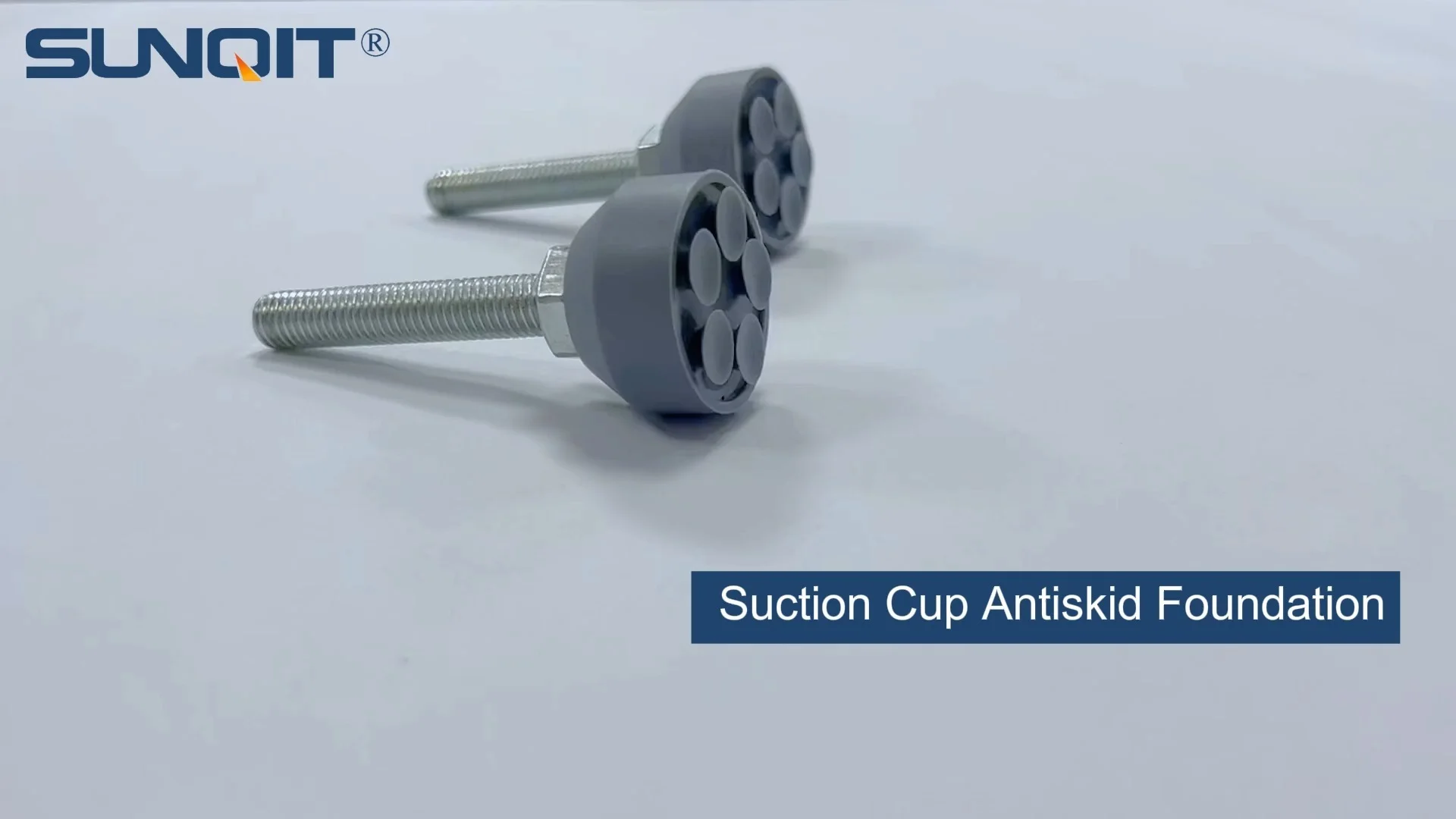
Suction Cup Anti-slip Foot Adjuster
D=35mm suction cup anti-slip foot adjusterï¼screw M10*55ï¼with a blot, used for workbench, flowrack pipe contact with groud.
Walk into any modern manufacturing facility, and you'll likely hear the hum of efficiency: conveyor belts gliding, teams collaborating seamlessly, and products moving from station to station with barely a hiccup. Behind this harmony lies a philosophy that's transformed industries worldwide: lean manufacturing. At its core, lean is about stripping away waste—whether it's time, materials, or effort—to create systems that work smarter, not harder. But here's the thing about lean: its success often hinges on the smallest details. A wobbly workbench, a stuck roller track, or a slipping machine can throw off an entire production line, turning "lean" into "clunky" in seconds. Today, we're diving into one such unsung hero of lean systems: the suction cup anti-slip foot adjuster. This unassuming component might not grab headlines, but it's quietly revolutionizing how workbenches, material racks, and assembly stations perform—making them more stable, adaptable, and aligned with lean principles than ever before.
The Heart of Lean: Why Stability Matters in Every Workbench
To understand why suction cup anti-slip foot adjusters are game-changers, let's first revisit what makes lean manufacturing tick. Lean isn't just about cutting costs; it's about creating value for customers by eliminating anything that doesn't add to that value. Think of it as tidying up a cluttered desk: when everything has a place and works as it should, you waste less time searching, fixing, or redoing tasks. In manufacturing, this translates to workbenches that stay put during assembly, material racks that don't shift under heavy loads, and production lines where every movement feels intentional.
Now, imagine a scenario in an electronics plant. Maria, an assembly line worker, is tasked with attaching tiny circuit boards to a mainframe—work that requires steady hands and a stable surface. Her workbench, made from durable aluminum profile, should be her most reliable tool. But today, every time she leans in to solder a connection, the bench shifts slightly. The floor, polished concrete to keep the space clean, offers little traction for the bench's standard rubber feet. She pauses, readjusts the bench, and gets back to work—losing 10 seconds here, 15 seconds there. By the end of her shift, those seconds add up to dozens of lost minutes. Worse, a misaligned bench increases the risk of a wobbly solder joint, which could lead to product defects down the line. That's waste—time wasted, potential rework wasted, and Maria's focus wasted—all because of a stability issue that's easy to overlook.
Key Lean Principle: Stability isn't just about safety (though that's critical). It's about predictability. In lean systems, predictable processes mean consistent output, fewer errors, and easier continuous improvement. A workbench that stays in place isn't just "nice to have"—it's a foundation for meeting production goals, reducing defects, and keeping teams motivated.
The Problem with Traditional Workbench Supports
For decades, manufacturers relied on basic foot adjusters to keep workbenches steady. These ranged from simple rubber pads screwed into the bottom of bench legs to threaded metal feet that could be twisted to level uneven surfaces. While functional, they often fell short in three critical areas—areas that directly contradict lean ideals:
1. Slippage on Smooth Floors: Many lean facilities use polished concrete, tile, or epoxy floors to minimize dust and simplify cleaning—all great for lean's "5S" (Sort, Set in Order, Shine, Standardize, Sustain) methodology. But these smooth surfaces are kryptonite for traditional rubber feet. Even with grippy materials, the lack of texture means benches can slide when bumped or when workers apply pressure during tasks like drilling or heavy assembly.
2. Limited Adaptability to Uneven Floors: No factory floor is perfectly flat. Over time, concrete can settle, or heavy machinery can create small indentations. Traditional foot adjusters let you tweak height, but they don't account for the micro-variations that make a bench rock slightly. This "rocking" forces workers to compensate, leading to fatigue and inconsistent work quality.
3. Floor Damage: Metal feet, while sturdy, can scratch or dent floors—especially when benches are moved (even slightly) for cleaning or reconfiguration. Repairing those scratches takes time and money, and damaged floors can become trip hazards. Rubber feet fare better, but they wear down quickly, losing their grip and requiring frequent replacement—another form of waste.
Then there's the issue of overcompensation . Some facilities solve slippage by bolting workbenches to the floor, but that kills flexibility—a cornerstone of lean. Lean systems thrive on adaptability: reconfiguring a line to accommodate a new product, scaling up a station during peak demand, or shifting workflows to optimize material flow. Bolted-down benches turn "adaptable" into "stuck," making it harder to respond to changing needs.

Suction Cup Anti-Slip Foot Adjusters: A Lean Solution from the Ground Up
Enter the suction cup anti-slip foot adjuster. At first glance, it looks similar to a standard foot adjuster: a threaded stem topped with a nut for height adjustment, and a base that connects to the workbench leg. But the base is where the magic happens: instead of rubber or metal, it's a durable, flexible suction cup made from high-grade silicone or polyurethane. When pressed onto a smooth floor, the cup creates a vacuum seal, locking the bench in place. Twist the threaded stem, and you can level the bench on uneven surfaces while maintaining that seal. It's simple, but the impact is profound.
Let's circle back to Maria's scenario. If her aluminum profile workbench were fitted with suction cup foot adjusters, here's what would change: When she first sets up the bench, she presses down firmly on each corner. The suction cups grip the polished concrete, creating a bond strong enough to resist accidental bumps. When she leans in to solder, the bench stays anchored. No more pauses to readjust. No more wasted seconds. And because the cups are made from soft, non-abrasive material, they won't scratch the floor—even if the bench is moved occasionally for cleaning. Over a week, those saved seconds add up to hours of productive work. Over a year? It could mean hundreds of additional units produced, all from a component that costs a fraction of a new machine.
"We switched to suction cup foot adjusters on our electronics assembly benches six months ago, and the difference is night and day. Our defect rate for soldering errors dropped by 18%, and workers say they feel 'more in control' during tasks. It's one of those small changes that ripples through the entire line." — Raj, Production Manager at a Mid-Sized Electronics Firm

Key Features That Make Suction Cup Foot Adjusters a Lean Powerhouse
What exactly makes these foot adjusters so effective in lean systems? Let's break down their standout features and how they align with lean goals:
1. Unmatched Stability on Smooth Floors: The vacuum seal created by the suction cup is far stronger than friction alone. Tests show that a single 4-inch suction cup can withstand lateral forces of up to 50 pounds—enough to keep a workbench steady even during heavy assembly tasks. For context, that's like having a small anchor holding each leg in place.
2. Effortless Adjustability: Lean thrives on adaptability, and these foot adjusters deliver. The threaded stem allows for precise height tweaks (typically 0.5 to 2 inches of adjustment) to level benches on uneven floors. Unlike bolt-down systems, there's no drilling or permanent installation—so when you need to reconfigure the line, you can simply lift the bench (breaking the suction seal) and move it. Re-sealing takes seconds, so downtime is minimal.
3. Floor Protection, No Compromises: Traditional metal feet scratch floors; rubber feet wear down and leave marks. Suction cups, made from flexible, non-marking materials, protect even the most delicate floors (like epoxy or vinyl) while maintaining grip. This reduces maintenance costs and keeps facilities looking clean—critical for 5S compliance.
4. Durability That Reduces Waste: High-quality suction cups are resistant to oils, chemicals, and temperature fluctuations—common in manufacturing environments. They last 2–3 times longer than standard rubber feet, meaning fewer replacements and less material waste. When they do wear out, many models allow you to replace just the cup, not the entire adjuster—another win for sustainability (and lean's "reduce waste" ethos).

How Suction Cup Foot Adjusters Play Well with Other Lean Tools
Lean systems are rarely about one component working in isolation. They're about ecosystems: workbenches paired with roller tracks for material flow, aluminum profile frames for modularity, and caster wheels for mobility. Suction cup foot adjusters fit into this ecosystem seamlessly, enhancing the performance of other tools:
With Aluminum Profiles: Most modern workbenches are built using aluminum profiles—lightweight, strong, and easy to customize. Suction cup foot adjusters attach directly to these profiles via standard T-slot nuts, requiring no special tools or modifications. This modularity means you can upgrade existing benches without replacing the entire frame, saving time and money.
With Caster Wheels: Many lean workbenches are designed to be mobile, using caster wheels for easy repositioning. But when it's time to work, mobility becomes a liability—you don't want the bench rolling mid-task. Suction cup foot adjusters solve this by acting as a "brake." When the bench is in place, lower the adjusters to lift the casters slightly and create suction; when you need to move, raise the adjusters to engage the wheels. It's the best of both worlds: mobility when you need it, stability when you don't.
With Roller Tracks: Roller tracks are the backbone of material flow in lean systems, moving parts from one station to the next. But if the workbench at the end of the track is unstable, parts can jostle or get stuck as they're loaded or unloaded. A stable bench, anchored by suction cup adjusters, ensures a smooth transition—keeping the flow "lean" and uninterrupted.
| Feature | Traditional Rubber Foot Adjusters | Suction Cup Anti-Slip Foot Adjusters | Lean Benefit of Suction Cups |
|---|---|---|---|
| Stability on Smooth Floors | Low (relies on friction alone) | High (vacuum seal resists slipping) | Reduces downtime from readjustments; cuts defects from unstable work surfaces |
| Adaptability to Uneven Floors | Moderate (height adjustment, but no grip enhancement) | High (adjustable height + maintains suction on uneven surfaces) | Ensures consistent work quality across varied floor conditions |
| Floor Protection | Moderate (rubber wears down, may leave marks) | Excellent (non-abrasive suction cup material) | Reduces floor repair costs; supports 5S "Shine" standards |
| Durability | Low (replaced every 6–12 months) | High (replaced every 24–36 months) | Less material waste; lower long-term maintenance costs |
| Compatibility with Mobility (Casters) | Poor (no built-in "brake" function) | Excellent (can lift casters to lock bench in place) | Enables flexible, on-demand mobility without sacrificing stability |
Real-World Impact: From Factories to Results
Numbers tell the story best. Let's look at two case studies where suction cup anti-slip foot adjusters made a measurable difference in lean performance:
Case Study 1: Automotive Parts Supplier
A supplier of brake components was struggling with instability on their assembly workbenches, which sat on epoxy floors. Workers reported adjusting benches 8–10 times per shift, and the defect rate for precision-machined parts was 4.2%—well above the company's 2% target. After retrofitting 20 workbenches with suction cup foot adjusters, the results were clear: bench adjustments dropped to 1–2 per shift, and the defect rate fell to 2.1% within three months. The ROI? The total cost of the adjusters ($1,200) was recouped in six weeks through reduced rework and saved labor time.
Case Study 2: Medical Device Manufacturer
A manufacturer of surgical tools needed to comply with strict cleanroom standards, including smooth, non-porous floors. Their existing metal foot adjusters were scratching the floors, requiring monthly repairs costing $800. Switching to suction cup adjusters eliminated scratches entirely, saving $9,600 annually. Additionally, the stability of the workbenches reduced the time needed for quality checks by 15%, as inspectors no longer had to account for bench movement when measuring tool dimensions.
Why Suction Cup Foot Adjusters Are More Than a "Nice-to-Have"
In lean manufacturing, every decision comes down to value: Does this component add value for the customer, the team, or the bottom line? Suction cup anti-slip foot adjusters pass this test with flying colors. They're not a luxury—they're a strategic investment in reducing waste, improving quality, and empowering workers to do their best. In a world where margins are tight and competition is fierce, leaning into these small, high-impact solutions is what separates good lean systems from great ones.
So, the next time you walk through a manufacturing facility, take a moment to look down. Underneath those workbenches, aluminum profiles, and roller tracks, you might just spot the unsung heroes keeping the line running smoothly: suction cup anti-slip foot adjusters. They may not be glamorous, but in the world of lean, that's the point. Sometimes, the most powerful tools are the ones that work quietly, consistently, and without fanfare—making every other part of the system better, one stable workbench at a time.