- Company Articles
- Products and Technology
- Product knowledge
- Enhancing Material Rack B Stability with One Way Rotatory Straight Lean Pipe Joints

Enhancing Material Rack B Stability with One Way Rotatory Straight Lean Pipe Joints
Related Product
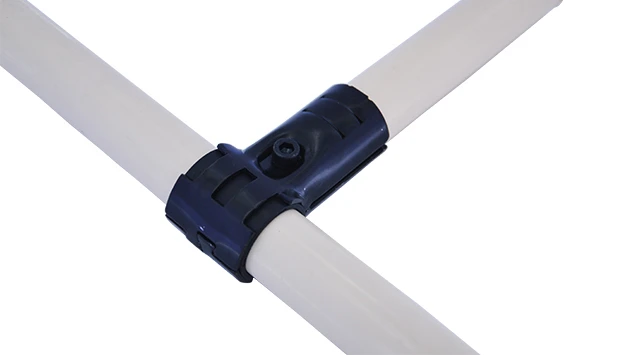
One Way Rotatory Straight Lean Pipe Joint
Two way lean pipe joint for 2 pcs 28MM lean pipe connection in straight angle with rotatory fucntion, which used widely in workbench, flow rack, hand trolley frame connection.
The Unsung Heroes of Manufacturing: Why Stable Material Racks Matter
Walk into any bustling factory or warehouse, and you'll quickly notice the backbone of daily operations: material racks. These unassuming structures hold everything from raw components to finished products, keeping workflows moving and teams productive. But what happens when a rack wobbles under the weight of inventory? Or worse, when a shelf gives way, scattering parts across the floor? The answer is simple: delays mount, frustration rises, and safety risks spike. In the world of lean manufacturing, where efficiency and reliability are everything, unstable material racks aren't just a nuisance—they're a bottleneck.
For many facilities, Material Rack B (3 row and 3 floor) has become a go-to solution. Its three-tiered, three-row design maximizes vertical storage, making it ideal for small to medium-sized parts in assembly lines, electronics workshops, and distribution centers. But even the most thoughtfully designed rack is only as strong as its weakest link: the joints that hold its structure together. That's where One Way Rotatory Straight Lean Pipe Joints come in—quietly revolutionizing how we build and trust our material storage systems.
Material Rack B: A Workhorse with Room for Improvement
Let's start by getting to know Material Rack B better. Imagine a rack standing at roughly 1.8 meters tall, with three horizontal shelves (or "floors") stacked vertically, each divided into three parallel rows. This design is a space-saver, allowing teams to categorize parts by type, production stage, or urgency—think resistors on the top row, capacitors in the middle, and diodes on the bottom, all within arm's reach of a nearby assembly station.
On paper, it's a model of efficiency. But in practice, Material Rack B operators often hit a wall: stability. Traditional racks of this style, built with standard lean pipe joints, can start to wobble after months of use. Why? Because every time a worker loads or unloads parts, the joints absorb the impact. Over time, bolts loosen, connections shift, and what was once a sturdy structure begins to sway. For a rack holding hundreds of kilograms of materials, that sway isn't just unsettling—it's dangerous.
Consider Maria, a production supervisor at a mid-sized electronics plant. "We installed Material Rack B in our circuit board area last year," she recalls. "At first, it was great—we could finally organize all our tiny components without cluttering the workbenches. But after six months, the middle shelf started to dip. The joints at the corners had loosened, so every time someone pulled a bin from the top row, the whole rack would creak. We had to limit how much we stored on it, which defeated the purpose. We were back to stacking bins on the floor."

The Hidden Flaw in Traditional Lean Pipe Joints
To understand why Maria's rack failed, we need to talk about the unsung heroes (and sometimes villains) of lean pipe structures: the joints. Traditional lean pipe joints —often made of plastic or basic metal—rely on friction and simple bolts to hold pipes together. They're affordable and easy to install, but they have a critical weakness: they're designed for static stability, not dynamic stress.
Every time a rack is loaded, unloaded, or even bumped by a forklift, the joints experience torque. Standard joints can't always distribute that torque evenly, leading to uneven wear. Over time, the bolts loosen, the plastic deforms, or the metal bends. For Material Rack B, with its three floors and rows, this problem is amplified: more joints mean more potential failure points. Factor in daily use, and it's no wonder racks like Maria's start to falter.
| Feature | Traditional Lean Pipe Joints | One Way Rotatory Straight Lean Pipe Joints |
|---|---|---|
| Locking Mechanism | Friction/bolt-based; prone to loosening | One-way rotatory lock; self-tightens under load |
| Torque Distribution | Uneven; stress on bolts | Even; spreads load across joint body |
| Adjustability | Limited; requires re-tightening to adjust | High; rotatory design allows fine-tuning during setup |
| Lifespan Under Heavy Use | 6–12 months (typical replacement) | 3–5 years (minimal maintenance) |
The table above tells the story: traditional joints are built for simplicity, not longevity. For Material Rack B, which often holds 50–100 kg per shelf, that's a recipe for frustration and risk.

One Way Rotatory Straight Lean Pipe Joints: Engineering Stability from the Ground Up
Enter the One Way Rotatory Straight Lean Pipe Joint . At first glance, it looks similar to a standard joint—a small, cylindrical connector with ports for lean pipes. But look closer, and you'll notice a game-changing detail: a built-in rotatory mechanism that locks in one direction. Here's how it works:
When assembling the rack, you insert the lean pipes into the joint and rotate them to align the shelves. The joint's internal gears allow smooth rotation during setup, making it easy to get angles perfect. Once in place, you twist the joint clockwise (or counterclockwise, depending on the design), and the mechanism locks—permanently. Unlike traditional bolts, which can loosen with vibration, this one-way lock tightens under load. Every time the rack bears weight, the gears grip tighter, creating a connection that's not just strong, but self-reinforcing.
Most of these joints are made from high-grade aluminum or stainless steel, with a durable coating to resist corrosion—critical for factories with high humidity or frequent cleaning. Some even feature rubber gaskets inside to dampen vibration, further reducing wear and tear. For Material Rack B, which relies on vertical and horizontal pipes intersecting at 90-degree angles, these joints are a perfect fit: they secure each intersection point without adding bulk, keeping the rack lightweight but rock-solid.
Installing Stability: How These Joints Transform Material Rack B
Let's walk through how One Way Rotatory Straight Lean Pipe Joints enhance Material Rack B, step by step. Imagine Maria's team deciding to upgrade their wobbly rack. Here's what the process might look like:
- Disassembling the Old Rack: First, they remove the existing shelves and pipes, noting which joints are loose or damaged. Many of the traditional plastic joints are cracked or misshapen—no surprise, given the stress they've endured.
- Preparing the Pipes: The team cleans the aluminum lean pipes (a common choice for Material Rack B due to its lightweight strength) and checks for dents or bends. Straight pipes are crucial for even weight distribution.
- Assembling with New Joints: Starting with the base frame, they attach the one-way rotatory joints to the vertical pipes. Unlike before, where bolts required careful tightening, these joints simply click into place. As they add horizontal pipes for the shelves, they rotate the joints to level each floor—no more shimming with washers to fix unevenness.
- Locking In Place: Once all pipes are aligned, they twist each joint to engage the one-way lock. The sound is satisfying—a faint "click" as the gears lock. They give each joint a gentle tug; nothing moves. Even when they load the bottom shelf with 80 kg of metal components, the rack stands firm.
- Testing the Load: To be sure, they stack all three shelves to their maximum capacity. The rack doesn't creak. The shelves don't dip. When Maria pulls a heavy bin from the top row, there's no sway—just the smooth glide of the bin sliding out.
"It was like night and day," Maria says now. "We've had the upgraded rack for a year, and not a single joint has loosened. We're storing 30% more parts than before, and the assembly line workers no longer hesitate to reach for the top shelf. It's the little things—like not worrying if the rack will hold—that make the biggest difference in morale."
Beyond Stability: The Ripple Effects of Better Joints
The benefits of One Way Rotatory Straight Lean Pipe Joints go far beyond just a sturdier rack. For manufacturers, stability translates to tangible improvements in efficiency, safety, and cost savings:
- Higher Load Capacity: With joints that distribute weight evenly, Material Rack B can safely hold 20–30% more than with traditional joints. That means fewer racks cluttering the floor and more space for production.
- Less Maintenance: No more weekly checks to tighten bolts or replace cracked joints. Facilities report cutting maintenance time for material racks by up to 70% after switching to these joints.
- Fewer Accidents: Wobbly racks are a safety hazard—parts can fall, or the rack itself might tip. By eliminating sway, these joints reduce the risk of workplace injuries and damage to expensive components.
- Flexibility for Future Changes: Need to reconfigure the rack to hold larger parts? The one-way rotatory joints can be unlocked (with a special tool, to prevent accidental loosening) and readjusted, making it easy to adapt to new production needs.
For a lean manufacturing environment, where every second and every square meter counts, these benefits add up. A stable, efficient Material Rack B isn't just about storage—it's about creating a workflow where teams can focus on building quality products, not fixing wobbly shelves.
Choosing the Right Partner: Why Your Lean Pipe Supplier Matters
Of course, not all one-way rotatory joints are created equal. The market is flooded with cheap imitations—joints made from low-grade metal that bend under load, or with poorly designed locks that fail after a few months. That's why choosing a reputable lean pipe supplier is just as important as choosing the right joint.
A trustworthy supplier will prioritize quality: their joints will be made from certified aluminum or stainless steel, with rigorous testing for load capacity and durability. They'll also offer technical support—helping you calculate the right number of joints for Material Rack B, or advising on compatibility with existing lean pipe accessories like roller tracks or caster wheels. Maria's team learned this the hard way: "We first tried a cheap joint from an unknown supplier," she admits. "They looked the same, but after two months, the locks started slipping. We switched to a supplier recommended by our lean consultant, and we haven't had a problem since."
When evaluating suppliers, ask for:
- Material certifications (e.g., ISO standards for aluminum or stainless steel).
- Load capacity test reports for the joints.
- Warranty information—reputable suppliers stand behind their products with at least a 1-year warranty.
- Customer reviews or case studies from other manufacturers using their joints on Material Rack B.
Conclusion: Small Joints, Big Impact
In the grand scheme of manufacturing, a lean pipe joint might seem. But as Maria and her team discovered, it's the small details that define efficiency and safety. Material Rack B (3 row and 3 floor) is a powerful tool for organizing production, but its true potential is unlocked when paired with One Way Rotatory Straight Lean Pipe Joints —joints that turn a wobbly structure into a rock-solid foundation for success.
Whether you're setting up a new facility or upgrading existing racks, remember: stability isn't optional. It's the backbone of lean manufacturing, the quiet confidence that lets your team work faster, safer, and smarter. And it all starts with the right joint.