- Company Articles
- Products and Technology
- Product knowledge
- Enhancing Workflow Efficiency with Stainless Steel Swivel Roller Balls 1 Inch

Enhancing Workflow Efficiency with Stainless Steel Swivel Roller Balls 1 Inch
Related Product
Stainless Steel Swivel Roller Balls 1 Inch
Swivel roller ball casters are convenient and flexible to roll,high-speed and stable operation, used for rotating and changing the direction of the conveyor.Ball transfer unit is made of high quality carbon steel, anti-corrosion and wear resistance.
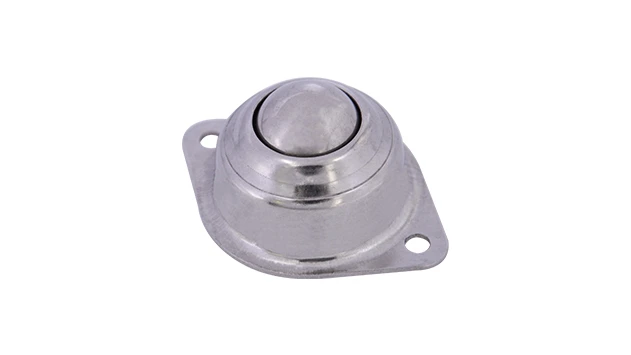
In the bustling world of manufacturing, where every second counts and precision is non-negotiable, the smallest components often hold the key to unlocking significant efficiency gains. Imagine a production line where (materials) glide effortlessly from one workstation to the next, where operators no longer strain to push heavy loads, and where bottlenecks dissolve into smooth, continuous flow. This isn't just a vision of ideal manufacturing—it's the reality made possible by thoughtful engineering, and at the heart of this transformation lies a seemingly unassuming hero: the stainless steel swivel roller balls 1 inch .
For manufacturers across industries—from 3C electronics assembly to medical device production, from automotive parts manufacturing to warehousing logistics—the challenge of optimizing material handling is universal. Traditional fixed conveyors are rigid, difficult to reconfigure, and often overkill for small-batch operations. Manual handling, on the other hand, leads to operator fatigue, slower throughput, and increased risk of workplace injuries. What if there was a solution that combined flexibility, durability, and ease of integration into existing systems? That's where 1-inch stainless steel swivel roller balls step in, offering a simple yet powerful way to enhance workflow efficiency.
The Unsung Strength of Stainless Steel Swivel Roller Balls 1 Inch
At first glance, a swivel roller ball might seem like a minor component, but its design and material choice make it a workhorse in dynamic manufacturing environments. Let's break down what sets the 1-inch stainless steel variant apart:
Durability That Stands the Test of Time
Stainless steel isn't just a material choice—it's a commitment to longevity. In factories where dust, moisture, and occasional chemical exposure are part of daily operations, corrosion resistance is critical. Unlike plastic alternatives that degrade under heavy loads or metal options prone to rust, stainless steel roller balls maintain their smooth rotation and structural integrity even in harsh conditions. This durability translates to fewer replacements, lower maintenance costs, and uninterrupted production—exactly what manufacturers need to keep their lines running 24/7.
360-Degree Freedom for Unmatched Flexibility
The "swivel" in swivel roller balls is where the magic happens. These tiny spheres rotate freely in all directions, allowing materials to move horizontally, diagonally, or even pivot with minimal force. This omnidirectional movement is a game-changer for workstations where parts need to be adjusted, rotated, or transferred between multiple operators. For example, in a lean pipe workbench used for assembling smartphones, a technician can slide a circuit board across the roller balls to a colleague, rotate it for soldering, or reposition it for quality checks—all without lifting or straining. It's like giving the workstation a set of (flexible joints), adapting to the task rather than forcing the task to adapt to the setup.
Optimal Size for Versatile Applications
Why 1 inch? This size strikes a perfect balance between load capacity and precision. Smaller roller balls (like the 0.5-inch variant) are excellent for lightweight items such as small electronic components, but the 1-inch model shines when handling medium to heavy loads—think plastic injection molds, metal brackets, or fully assembled subassemblies. With a typical load capacity of up to 50 kg per ball (depending on installation density), they're robust enough for industrial use while remaining compact enough to integrate into tight spaces, such as the shelves of a flow rack or the surface of a turnover trolley.
Where Stainless Steel Swivel Roller Balls 1 Inch Make a Difference
To truly appreciate the impact of these roller balls, let's step into real-world manufacturing scenarios where they transform workflows. From the assembly line to the warehouse, their versatility turns inefficiency into opportunity.
1. Lean Pipe Workstations: Smoothing the Path of Assembly
The lean pipe system has revolutionized how manufacturers build workstations—with modular aluminum pipes and joints that allow for quick reconfiguration. When paired with stainless steel swivel roller balls 1 inch, these workstations become hubs of productivity. Consider a medical device assembly line where delicate instruments are put together. The roller balls, embedded into the workbench surface, let operators slide components between stations without jostling, reducing the risk of damage to sensitive parts. In 3C manufacturing, where products like laptops or tablets require precise alignment of screens and casings, the ability to effortlessly reposition the device on the workbench cuts down on adjustment time, letting technicians focus on quality rather than handling.
2. Flow Racks: Accelerating Material Flow in Warehouses
Warehousing and logistics thrive on the principle of "first in, first out" (FIFO), and flow racks are designed to make this happen. But traditional flow racks often rely on gravity-fed rollers that only move in one direction, limiting their flexibility. By integrating 1-inch stainless steel swivel roller balls into flow rack shelves, warehouses gain a twofold advantage: materials can slide forward for FIFO retrieval and also be accessed from the side or rear when needed. This is especially valuable in kitting operations, where workers need to pick multiple components for an order—no more reaching over or rearranging items to get what they need. The result? Faster picking times, reduced errors, and a warehouse that adapts to changing order priorities with ease.
3. Turnover Trolleys: Reducing Strain, Boosting Morale
Turnover trolleys are the workhorses of material transport, shuttling parts from storage to production lines and finished goods to shipping. But pushing a loaded trolley across a factory floor can be physically demanding, leading to operator fatigue and even repetitive strain injuries. When the shelves of these trolleys are fitted with stainless steel swivel roller balls, loading and unloading become effortless. A worker can slide a heavy carton onto the trolley with a gentle push, and when delivering to a workstation, the same carton glides off without lifting. This not only speeds up transport times but also shows employees that their well-being is a priority—a small change that goes a long way in boosting morale and reducing absenteeism.
4. Custom Lean Solutions: Tailoring Efficiency to Unique Needs
Every manufacturing environment has its quirks, which is why lean solution providers emphasize customization. Stainless steel swivel roller balls 1 inch excel in these tailored setups, acting as adaptable building blocks. For example, a automotive parts manufacturer might need a flexible line for assembling different car models. By incorporating roller balls into the conveyor sections between workstations, the line can quickly switch from handling door panels to dashboard assemblies—no need for costly conveyor reconfigurations. Similarly, a pharmaceutical company requiring strict (hygiene standards) can rely on the easy-to-clean surface of stainless steel roller balls, ensuring compliance with FDA regulations without sacrificing efficiency.

Beyond the Ball: Synergy with Aluminum Pipe Accessories
Great components become exceptional when they work together seamlessly. The true power of stainless steel swivel roller balls 1 inch emerges when integrated with a ecosystem of compatible parts, particularly aluminum pipe accessories . This synergy turns individual components into a cohesive, flexible system that grows with your manufacturing needs.
Take the humble aluminum pipe—lightweight, strong, and infinitely configurable. When combined with internal rotary aluminum joints, it forms the framework for workbenches, flow racks, and trolleys. Add stainless steel swivel roller balls to the mix, and suddenly that framework becomes a dynamic material-handling solution. For instance, a workbench built with basic aluminum tubes and fitted with roller balls on its surface can be repositioned, extended, or repurposed in hours, not days. Need to add a new workstation? Simply adjust the aluminum pipes, secure the joints, and lay down more roller balls—no welding, no specialized tools, just quick, hassle-free customization.
Other accessories, like plastic roller track guide rails or aluminum guide rails, complement the roller balls by channeling movement in specific directions when needed. For example, in a high-speed assembly line, combining roller balls with yellow plastic guide rails creates a "lane" for materials, ensuring they move precisely to the next station without wandering. This level of control is invaluable in industries like electronics, where even a minor misalignment can lead to defective products.
| Traditional Material Handling | With Stainless Steel Swivel Roller Balls 1 Inch & Aluminum Pipe Accessories |
|---|---|
| Rigid, fixed conveyors that are hard to reconfigure | Modular systems that adapt to new products or layouts in hours |
| Manual pushing/pulling of loads, leading to operator fatigue | Effortless gliding motion, reducing physical strain by up to 40% |
| High maintenance costs for worn-out rollers or belts | Durable stainless steel construction with minimal upkeep |
| Limited to one-directional movement | 360-degree rotation for multi-directional access |
| Heavy, bulky setups that take up valuable floor space | Compact design integrating with lightweight aluminum frames |

The Lean Advantage: More Than Efficiency—Sustainability and Adaptability
At the core of modern manufacturing lies the principle of lean production—eliminating waste, optimizing resources, and continuous improvement. Stainless steel swivel roller balls 1 inch embody this philosophy in several ways:
- Reduced Waste: By minimizing material handling time and errors, they cut down on scrap and rework. In a study of a consumer electronics plant, integrating roller balls into workbenches reduced product damage during assembly by 28%, directly lowering waste costs.
- Sustainable Design: Stainless steel is 100% recyclable, and the modular nature of aluminum pipe systems means components can be reused or repurposed when lines are upgraded—no need to discard entire setups. This aligns with the "sustainable improvement" ethos of lean solution providers, helping manufacturers reduce their environmental footprint.
- Future-Proofing: Manufacturing demands evolve—new products, changing volumes, emerging technologies. A system built with adaptable components like roller balls and aluminum pipes can grow and change alongside these demands. For example, a medical device manufacturer that expands into producing larger equipment can simply add more roller balls to their existing flow racks to handle the increased load, rather than investing in (entirely new) storage systems.
Perhaps most importantly, these components empower employees to contribute to continuous improvement. When workers see that their input—like suggesting roller balls on a workstation to reduce strain—is implemented and leads to tangible benefits, they become more engaged. This culture of improvement is the lifeblood of lean manufacturing, and it starts with tools that make positive change feel accessible.
Choosing the Right Partner for Your Roller Ball Needs
Not all stainless steel swivel roller balls are created equal. To maximize the benefits, it's crucial to partner with a supplier that understands both the technical specifications and the real-world challenges of manufacturing. Here's what to look for:
Commitment to Quality
Look for suppliers that use high-grade stainless steel (like 304 or 316) for their roller balls, ensuring corrosion resistance and smooth rotation. Ask about testing protocols—do they validate load capacity, wear resistance, and rotation smoothness before shipping? A reliable supplier will be transparent about their quality control processes, giving you confidence that the roller balls will perform as promised.
Customization Expertise
Every factory has unique needs, so a one-size-fits-all approach won't cut it. The best suppliers offer not just off-the-shelf products but also custom solutions—whether that's integrating roller balls into a bespoke lean pipe workbench or designing a complete material handling system for a new production line. They'll take the time to understand your workflow, identify pain points, and recommend the right combination of roller balls, aluminum pipes, and accessories to address them.
Comprehensive Product Range
Manufacturing is a complex ecosystem, and you'll save time and effort by working with a supplier that offers a full suite of lean manufacturing components. From basic aluminum tubes and internal rotary joints to flow racks, conveyors, and ESD workstations, having all these products under one roof ensures compatibility and simplifies ordering. Plus, a supplier with deep product knowledge can advise on how to combine components—like pairing 1-inch roller balls with heavy-duty casters for a mobile workstation that's both flexible and stable.
Focus on Long-Term Support
Your relationship with a supplier shouldn't end after delivery. Look for partners that offer technical support, from installation guidance to troubleshooting. Do they provide documentation on how to maintain the roller balls for optimal lifespan? Can they help you source replacement parts quickly if needed? A supplier that invests in your success beyond the sale is a partner for the long haul.
Conclusion: Small Components, Big Impact
In the grand scheme of manufacturing, stainless steel swivel roller balls 1 inch might seem small—but their impact is anything but. They're the quiet innovators that turn frustrating bottlenecks into smooth workflows, that turn physical strain into effortless motion, and that turn rigid production lines into adaptable, future-ready systems. Whether integrated into a flow rack in a warehouse, a lean pipe workbench on an assembly line, or a custom solution for a niche industry, they embody the lean philosophy: continuous improvement through attention to detail.
As manufacturers face increasing pressure to deliver higher quality, faster turnaround, and lower costs, the search for efficiency gains will only intensify. In this quest, it's easy to overlook the small components—but as we've explored, they're often the key to unlocking big results. So the next time you walk through your production facility, take a closer look at your material handling processes. Could a set of stainless steel swivel roller balls 1 inch be the missing piece in your efficiency puzzle? The answer might just glide right into place.