- Company Articles
- Products and Technology
- Product knowledge
- Enhancing Workplace Safety with Chrome Four Way Straight Lean Pipe Joints

Enhancing Workplace Safety with Chrome Four Way Straight Lean Pipe Joints
Related Product
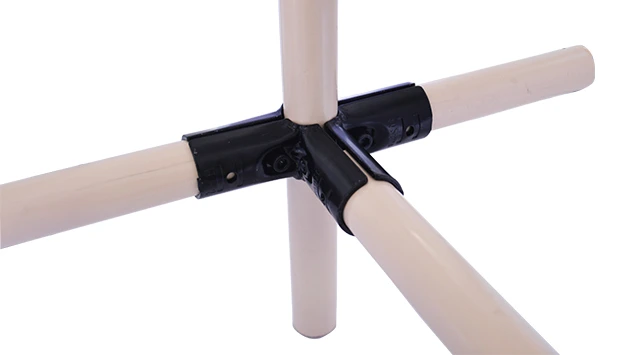
Four Way Straight Lean Pipe Joint
Four way lean pipe joint for 4 pcs 28MM lean pipe connection in straight angle, which used widely in workbench, flow rack, hand trolley frame connection.
In the bustling environment of a production facility, where the hum of machinery blends with the rhythm of assembly lines, one element stands above all else: safety. It's the invisible foundation that keeps operations running smoothly, protects the most valuable asset—your team—and ensures that every shift ends with everyone going home unharmed. Yet, despite its critical role, safety is often overlooked in the rush to meet deadlines or cut costs. Common issues like wobbly workbenches, unstable material racks, or poorly secured roller tracks can turn a routine day into a crisis, leading to ergonomic injuries, equipment damage, or even more severe accidents. This is where lean systems step in—not just as tools for efficiency, but as guardians of safety. And at the heart of these systems lies a small but mighty component: the chrome four way straight lean pipe joint.
What Is a Chrome Four Way Straight Lean Pipe Joint?
Let's start with the basics. Imagine walking through a factory and noticing the sturdy workbenches where operators assemble products, the flow racks that feed materials to the line, or the roller tracks that glide components from one station to the next. What holds these structures together? More often than not, it's a network of lean pipes and joints. Among these, the
chrome four way straight lean pipe joint
is a unsung hero.
Designed to connect four lean pipes in straight, perpendicular directions, this joint is a marvel of simplicity and strength. Crafted from high-quality steel and coated with a thick layer of chrome, it's built to withstand the wear and tear of daily use—resisting rust, corrosion, and the constant stress of holding heavy loads. Unlike basic plastic or uncoated joints that degrade over time, the chrome plating acts as a shield, ensuring longevity even in humid or dusty production environments. But its real genius lies in its design: four precision-machined ports that align perfectly with standard lean pipes, creating a tight, wobble-free connection that forms the backbone of stable, reliable structures.
Designed to connect four lean pipes in straight, perpendicular directions, this joint is a marvel of simplicity and strength. Crafted from high-quality steel and coated with a thick layer of chrome, it's built to withstand the wear and tear of daily use—resisting rust, corrosion, and the constant stress of holding heavy loads. Unlike basic plastic or uncoated joints that degrade over time, the chrome plating acts as a shield, ensuring longevity even in humid or dusty production environments. But its real genius lies in its design: four precision-machined ports that align perfectly with standard lean pipes, creating a tight, wobble-free connection that forms the backbone of stable, reliable structures.
The Hidden Link Between Joint Quality and Workplace Safety
You might be thinking, "It's just a joint—how much impact can it really have on safety?" The answer: more than you'd expect. Weak or poorly designed joints are like cracks in a foundation—they start small, but over time, they compromise the entire structure. A loose joint on a
lean pipe workbench
, for example, can cause the surface to tilt, making tools slide off or forcing operators to hunch awkwardly to compensate, leading to chronic back strain. A flimsy joint on a material rack might cause the rack to collapse under the weight of boxes,ing feet or damaging inventory. Even a minor wobble in a roller track joint can jostle materials, causing them to jam or fall, creating trip hazards or damaging delicate components.
The chrome four way straight joint addresses these risks head-on. Its rigid, four-point connection distributes weight evenly across all connected pipes, eliminating weak spots. The chrome coating ensures a smooth, consistent surface that won't snag on clothing or gloves, reducing the risk of cuts or abrasions. And because it's designed for quick, tool-free assembly, it minimizes human error during setup—no more over-tightened bolts that strip threads or under-tightened connections that loosen over time. This level of reliability turns "maybe safe" into "definitely safe," giving your team the confidence to focus on their work without worrying about the structures around them.
The chrome four way straight joint addresses these risks head-on. Its rigid, four-point connection distributes weight evenly across all connected pipes, eliminating weak spots. The chrome coating ensures a smooth, consistent surface that won't snag on clothing or gloves, reducing the risk of cuts or abrasions. And because it's designed for quick, tool-free assembly, it minimizes human error during setup—no more over-tightened bolts that strip threads or under-tightened connections that loosen over time. This level of reliability turns "maybe safe" into "definitely safe," giving your team the confidence to focus on their work without worrying about the structures around them.

Building Safer Workbenches: The Role of the Chrome Four Way Joint
Let's zoom in on one of the most common structures in any facility: the workbench. For operators who spend 8+ hours a day standing or sitting at their stations, the workbench isn't just a table—it's their second office. An unstable workbench isn't just an annoyance; it's a safety hazard. A slight shake can send a screwdriver tumbling to the floor, requiring the operator to bend down repeatedly (straining knees and backs), or worse, cause a heavy component to crash onto a foot.
This is where the chrome four way joint shines. When building a lean pipe workbench , using these joints at critical stress points—like the corners of the frame or where the tabletop connects to the legs—creates a rock-solid base. Unlike 90° fixed joints that only connect two pipes, the four way design allows for additional cross-bracing, adding lateral stability that prevents the bench from swaying during use. For example, a workbench used for assembling electronics might need to support a 50kg test equipment; with a chrome four way joint, the weight is spread across four pipes instead of two, reducing the strain on any single connection.
Ergonomics, too, play a role here. A stable workbench can be adjusted to the perfect height for each operator, reducing the need to hunch or reach awkwardly. When the structure doesn't wobble, operators can work more comfortably, lowering the risk of repetitive strain injuries. It's a small change, but one that adds up to fewer missed shifts, happier teams, and a safer workplace overall.
This is where the chrome four way joint shines. When building a lean pipe workbench , using these joints at critical stress points—like the corners of the frame or where the tabletop connects to the legs—creates a rock-solid base. Unlike 90° fixed joints that only connect two pipes, the four way design allows for additional cross-bracing, adding lateral stability that prevents the bench from swaying during use. For example, a workbench used for assembling electronics might need to support a 50kg test equipment; with a chrome four way joint, the weight is spread across four pipes instead of two, reducing the strain on any single connection.
Ergonomics, too, play a role here. A stable workbench can be adjusted to the perfect height for each operator, reducing the need to hunch or reach awkwardly. When the structure doesn't wobble, operators can work more comfortably, lowering the risk of repetitive strain injuries. It's a small change, but one that adds up to fewer missed shifts, happier teams, and a safer workplace overall.

Stabilizing Roller Tracks: Keeping Materials Flowing Safely
Now, let's shift our focus to another critical area: material handling. In fast-paced production lines,
roller tracks
are the arteries that keep materials moving—from raw components to finished products. But a roller track is only as good as the joints that hold its rails in place. A loose joint can cause the track to misalign, making materials get stuck or slide off, creating bottlenecks and hazards. Imagine a carton of small parts tumbling off a misaligned roller track and scattering across the floor—suddenly, you've got a trip risk, a waste of materials, and a disruption to the entire line.
The chrome four way straight joint solves this by anchoring the roller track to the supporting frame with unwavering stability. By connecting the track's side rails to vertical support pipes and horizontal cross-braces, it creates a rigid framework that doesn't shift under the weight of moving materials. Even when heavy boxes or metal components glide over the rollers, the joint absorbs the impact, preventing the track from bowing or twisting. This not only keeps materials flowing smoothly but also reduces the need for manual intervention—meaning operators spend less time fixing jams and more time on tasks that add value, all while staying out of harm's way.
The chrome four way straight joint solves this by anchoring the roller track to the supporting frame with unwavering stability. By connecting the track's side rails to vertical support pipes and horizontal cross-braces, it creates a rigid framework that doesn't shift under the weight of moving materials. Even when heavy boxes or metal components glide over the rollers, the joint absorbs the impact, preventing the track from bowing or twisting. This not only keeps materials flowing smoothly but also reduces the need for manual intervention—meaning operators spend less time fixing jams and more time on tasks that add value, all while staying out of harm's way.
How Does It Compare to Other Joints? A Safety-First Breakdown
To truly understand the safety benefits of the chrome four way straight joint, let's compare it to three common alternatives: the 90° fixed lean pipe joint, the three way lean pipe joint, and the plastic swivel joint. The table below highlights key safety features, load capacity, and ease of installation—factors that directly impact workplace safety.
| Joint Type | Safety Features | Max Load Capacity (kg per Joint) | Ease of Installation (1=Hard, 5=Easy) | Best For |
|---|---|---|---|---|
| Chrome Four Way Straight | Chrome plating (corrosion resistance), 4-point load distribution, rigid connection | 300-400 | 4 (Tool-free, tight fit) | Workbenches, heavy-duty material racks, roller track frames |
| 90° Fixed Lean Pipe Joint | Basic steel construction, 2-point connection | 150-200 | 3 (Requires precise alignment) | Light shelves, simple frames |
| Three Way Lean Pipe Joint | Uncoated steel, 3-point connection (less stable than 4-way) | 200-250 | 3 (Prone to misalignment) | Small flow racks, lightweight structures |
| Plastic Swivel Joint | Plastic material (prone to cracking), flexible connection (wobble risk) | 50-100 | 5 (Quick snap-on, but loose fit) | Temporary structures, non-critical areas |
As the table shows, the chrome four way joint outperforms alternatives in load capacity and safety features. Its 4-point connection distributes weight more evenly than 2 or 3-point joints, reducing the risk of structural failure. The chrome plating also ensures it lasts longer, avoiding the need for frequent replacements that can leave structures temporarily unstable during maintenance. For safety-critical areas like
lean pipe workbenches
or roller tracks, there's no substitute.
Real-World Impact: A Case Study
Let's bring this to life with a real example. A mid-sized electronics manufacturer in the Midwest was struggling with frequent safety incidents: a workbench collapsed under the weight of test equipment, injuring an operator; a roller track frame swayed, causing circuit boards to fall and break; and a material rack leaning dangerously close to a walkway forced workers to step into traffic to avoid it. After an audit, the root cause was clear: they were using a mix of cheap plastic joints and uncoated steel joints that had rusted and weakened over time.
The solution? Upgrading to chrome four way straight lean pipe joints for all critical structures. Within three months, the results were staggering: zero incidents related to structural failure. The workbenches, now reinforced with four way joints, felt rock-solid, even with 300kg of equipment on top. The roller tracks, anchored by these joints, ran smoother than ever, with no more jams or spills. And the material racks, once a hazard, now stood straight and stable, freeing up walkways. "It's like night and day," said the facility manager. "Our team no longer hesitates to lean on a workbench or load materials onto a rack—they trust the structures, and that confidence makes them more productive and safer."
The solution? Upgrading to chrome four way straight lean pipe joints for all critical structures. Within three months, the results were staggering: zero incidents related to structural failure. The workbenches, now reinforced with four way joints, felt rock-solid, even with 300kg of equipment on top. The roller tracks, anchored by these joints, ran smoother than ever, with no more jams or spills. And the material racks, once a hazard, now stood straight and stable, freeing up walkways. "It's like night and day," said the facility manager. "Our team no longer hesitates to lean on a workbench or load materials onto a rack—they trust the structures, and that confidence makes them more productive and safer."
Beyond the Joint: Complementary Components for Total Safety
While the chrome four way joint is a star player, it works best when paired with other high-quality components. For example,
caster wheels
with locking brakes ensure that mobile workbenches or trolleys (built with four way joints) stay firmly in place during use, preventing accidental movement.
Aluminum profile
accessories, like end caps and edge guards, add an extra layer of protection, softening sharp edges and reducing the risk of cuts. Even the lean pipes themselves matter—using 2.0mm thick steel pipes (instead of thinner 1.0mm options) ensures the entire structure can handle heavier loads, reducing stress on the joints.
Together, these components create a safety ecosystem where every part reinforces the others. It's not just about one joint; it's about choosing a system where quality is non-negotiable. When you invest in chrome four way joints, durable pipes, and reliable accessories, you're not just building structures—you're building a culture of safety.
Together, these components create a safety ecosystem where every part reinforces the others. It's not just about one joint; it's about choosing a system where quality is non-negotiable. When you invest in chrome four way joints, durable pipes, and reliable accessories, you're not just building structures—you're building a culture of safety.
Maintaining Safety: Tips for Long-Term Joint Performance
Even the best joints need a little care to stay safe. Here are simple maintenance steps to ensure your chrome four way joints keep performing at their best:
1. Regular Inspections: Every month, check joints for signs of looseness, rust, or damage. Tighten any connections that feel wobbly—over time, vibrations can cause pipes to shift slightly.
2. Clean and Protect: Wipe chrome surfaces with a damp cloth to remove dust and debris. For extra protection, apply a thin layer of anti-rust spray in humid environments.
3. replace When Needed: If a joint shows cracks, heavy rust, or stripped threads, replace it immediately. A damaged joint is a safety risk waiting to happen.
4. Train Your Team: Ensure operators know how to properly assemble and disassemble structures using four way joints. A well-trained team is less likely to make mistakes that compromise stability.
1. Regular Inspections: Every month, check joints for signs of looseness, rust, or damage. Tighten any connections that feel wobbly—over time, vibrations can cause pipes to shift slightly.
2. Clean and Protect: Wipe chrome surfaces with a damp cloth to remove dust and debris. For extra protection, apply a thin layer of anti-rust spray in humid environments.
3. replace When Needed: If a joint shows cracks, heavy rust, or stripped threads, replace it immediately. A damaged joint is a safety risk waiting to happen.
4. Train Your Team: Ensure operators know how to properly assemble and disassemble structures using four way joints. A well-trained team is less likely to make mistakes that compromise stability.
Conclusion: Safety Starts with the Right Foundation
At the end of the day, workplace safety isn't about grand gestures or expensive gadgets. It's about the small, intentional choices—like choosing a chrome four way straight lean pipe joint over a cheaper alternative—that add up to big results. It's about recognizing that every component, no matter how small, plays a role in protecting your team.
The next time you walk through your facility, take a closer look at the joints holding your workbenches, racks, and roller tracks together. Are they sturdy? Are they rust-free? Do they inspire confidence? If not, it might be time for an upgrade. Because when you invest in quality joints, you're not just preventing accidents—you're showing your team that their safety matters. And that's the best investment you can ever make.
The next time you walk through your facility, take a closer look at the joints holding your workbenches, racks, and roller tracks together. Are they sturdy? Are they rust-free? Do they inspire confidence? If not, it might be time for an upgrade. Because when you invest in quality joints, you're not just preventing accidents—you're showing your team that their safety matters. And that's the best investment you can ever make.