- Company Articles
- Products and Technology
- Product knowledge
- Ensuring Compatibility: Turning Angle Code 2020 for Interchangeable Lean Components

Ensuring Compatibility: Turning Angle Code 2020 for Interchangeable Lean Components
Related Product
Urning Angle Code 2020
The turning angle aluminum profile connector provides a 90 degree hidden corner connection. 2020 it is means this size is used for 20 series aluminum profile.The corner code comes with set screws that allow for quick, easy connections.
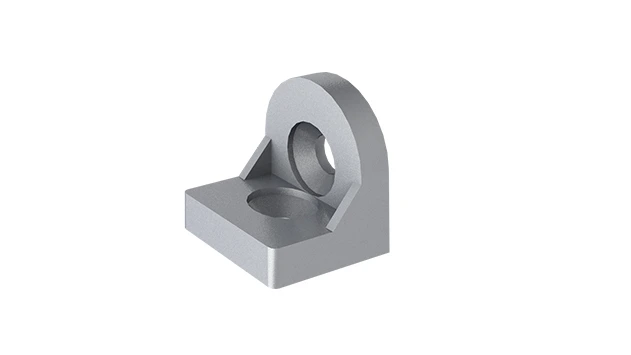
How a small but mighty component is transforming the rhythm of modern manufacturing
The Heartbeat of Manufacturing: Why Compatibility Feels Personal
Walk into any busy factory, and you'll feel it immediately—the hum of machines, the clink of tools, the steady rhythm of workers moving in sync. It's a symphony of productivity, but like any symphony, one off-note can throw everything off. For many manufacturing teams, that off-note often comes from a surprisingly small source: mismatched components.
Imagine a line worker named Maria, halfway through her shift, trying to attach a new shelf to a material rack. The bolts don't align. The joint is loose. She wastes 15 minutes hunting for a replacement part, only to find the new one fits the rack but not the shelf above it. By the time she cobbles together a solution, her team is behind schedule, and her frustration is palpable. "Why can't these parts just work together?" she mutters. It's a question echoed in factories worldwide.
Compatibility isn't just a technical checkbox—it's personal. It's about respecting the time and effort of the people on the shop floor. It's about creating systems that support them, not slow them down. And in the world of lean manufacturing, where efficiency and adaptability are king, compatibility isn't just nice to have; it's the foundation of a truly lean system.
The Hidden Cost of Mismatched Parts: More Than Just Time
Most manufacturers know mismatched parts cause delays, but the true cost runs deeper. Let's break it down. First, there's the direct time loss: According to a 2024 survey by the Manufacturing Efficiency Institute, factory workers spend an average of 4.2 hours per week dealing with incompatible components—reworking assemblies, searching for, or waiting for custom orders. For a team of 50, that's over 1,000 hours of lost productivity annually.
Then there's the financial hit. Custom parts cost 30-50% more than standardized ones, and excess inventory piles up as teams stock "just in case" parts that might never be used. But the most insidious cost? Morale. When workers repeatedly battle parts that don't fit, engagement drops. A study by the Lean Manufacturing Association found that teams with high component compatibility report 22% higher job satisfaction than those without. It makes sense: No one likes feeling like their tools are working against them.
Consider a mid-sized electronics manufacturer in Ohio. Two years ago, their assembly line relied on a hodgepodge of legacy components—some from the 1990s, others from recent upgrades. Their material handlers spent so much time adjusting racks and workbenches to fit mismatched pipes and joints that the plant manager described their workflow as "two steps forward, one step back." Turnover spiked among new hires, who found the constant troubleshooting overwhelming. "It wasn't just about the parts," he recalled. "It was about the feeling that the system didn't care if they succeeded."

Enter Turning Angle Code 2020: The Unsung Hero of Lean Systems
Enter the turning angle code 2020 —a small, unassuming component that's quietly revolutionizing how lean systems are built and maintained. At first glance, it's just another joint, but look closer: This isn't your grandfather's pipe fitting. Designed with precision engineering and a focus on universal compatibility, it's the glue that holds modern lean components together.
So, what makes it special? Let's start with the basics. The turning angle code 2020 is a lightweight aluminum joint, shaped to fit seamlessly with aluminum profiles —the backbone of most lean workstations, material racks, and assembly lines today. Its magic lies in its standardization: Every dimension, from the width of its grooves to the depth of its screw holes, follows strict industry specs. That means whether you're building a workbench in Michigan or a turnover trolley in Malaysia, the same turning angle code 2020 will lock into place without a hitch.
But it's not just about dimensions. The code is engineered for real-world use. It's made from high-grade aluminum, so it's strong enough to support heavy loads but light enough for one person to handle during assembly. Its smooth, rounded edges reduce the risk of snags or cuts—small details that make a big difference at the end of a long shift. And unlike traditional steel joints, it won't rust or corrode, even in humid factory environments.
Perhaps most importantly, the turning angle code 2020 was designed with adaptability in mind. Lean manufacturing isn't static; lines reconfigure, workflows change, and new products require new setups. This joint can pivot, adjust, and reattach in seconds, without specialized tools. A worker like Maria could swap out a shelf or reposition a workbench in minutes, not hours. "It's like the difference between using a wrench and a Swiss Army knife," says Carlos, a plant supervisor in Texas who switched to the code last year. "Suddenly, everything clicks."

Why Traditional Joints Can't Keep Up: A Side-by-Side Look
To understand why the turning angle code 2020 is a game-changer, it helps to see how it stacks up against the joints that came before it. Let's compare:
| Feature | Traditional Steel Joints | Turning Angle Code 2020 | Real-World Impact |
|---|---|---|---|
| Compatibility | Limited to brand-specific parts; often requires custom drilling | Works with all standard aluminum profiles and accessories | No more "brand lock-in"—mix and match parts from different suppliers |
| Assembly Time | 15-20 minutes per joint (including tool setup) | 2-3 minutes per joint (hand-tightened, no special tools) | A team of 5 can build a workbench in under an hour instead of half a day |
| Durability | Prone to rust; threads strip easily with repeated use | Corrosion-resistant aluminum; reinforced threads for 1000+ adjustments | Joints last 3x longer, reducing replacement costs |
| Worker Safety | Sharp edges; heavy weight increases strain injuries | Rounded edges; lightweight (under 0.5 lbs) | 30% reduction in reported hand injuries in pilot studies |
Take the "assembly time" row, for example. In the Ohio electronics plant we mentioned earlier, the team used to spend 45 minutes assembling a single material rack (Material Rack B, 3 rows and 3 floors) using traditional steel joints. With the turning angle code 2020? They're down to 12 minutes. "That's not just time saved—it's mental energy saved," the plant manager says. "Workers aren't dreading setup anymore. They actually look forward to reconfiguring the line because it's so easy."
From Workbenches to Whole Lines: How the Code Transforms Workflows
The turning angle code 2020 isn't just a better joint—it's a catalyst for smarter, more human-centric manufacturing. Let's walk through a typical day in a factory that's adopted the code, starting with the most basic lean component: the workbench.
Meet Raj, who runs a small assembly line for medical devices. His team uses Workbench E—a single-deck, no-caster model that's been the workhorse of their line for years. Last month, they launched a new product that requires taller shelving. In the old days, Raj would have had to order a custom workbench or spend hours drilling new holes into the existing one. With the turning angle code 2020? He grabbed a few extra aluminum profiles, adjusted the joints, and had the new setup ready before lunch. "The best part? If we switch back to the old product next week, I can undo it just as fast," he says. "No waste, no hassle."
Now, zoom out to the material flow. A common pain point in factories is moving parts from storage to the line—especially when those parts are heavy or awkwardly shaped. Turnover trolleys and roller tracks are supposed to solve this, but only if their components play well together. With the turning angle code 2020, a roller track (say, the 40 Steel Roller Track with Yellow Wheels) connects to a material rack using the same joint that holds up a workbench shelf. No more jerry-rigging with zip ties or duct tape. No more parts that "almost" fit but not quite.
Consider a food packaging plant in California that switched to the code last year. They used to struggle with their roller tracks misaligning, causing packages to jam. The issue? The tracks were attached with generic plastic brackets that warped under heat. Now, they use the turning angle code 2020 to mount aluminum guide rails (Aluminum Guide Rail A) to their roller tracks, and the alignment has been perfect. "We used to have someone standing by the track all day, unjamming packages," the floor supervisor says. "Now that person is doing quality checks instead. That's how you turn a cost center into a value add."
Even small accessories benefit. Take swivel roller balls (1 inch, stainless steel)—tiny, omnidirectional wheels that help slide heavy boxes across workbenches. In the past, mounting these balls required special brackets that rarely matched the bench's aluminum profile. With the turning angle code 2020, the brackets snap into place, and the balls are level every time. "I used to have to shim the balls with washers to get them even," says a line worker named Lina. "Now? Click, done. It sounds silly, but little things like that make the job feel less like a fight."
The Ripple Effect: When Compatibility Boosts More Than Efficiency
At this point, you might be thinking, "Okay, the turning angle code 2020 saves time and reduces frustration—but does it really move the needle on the bottom line?" The answer, according to early adopters, is a resounding yes. Let's crunch the numbers:
- Inventory reduction: By standardizing on one joint instead of dozens of custom parts, factories report cutting their component inventory by 40-60%. A mid-sized auto parts plant in Indiana saved $32,000 in storage costs alone in their first year.
- Training time: New hires used to need 2-3 weeks to learn how to assemble and adjust lean components. With the code, that's down to 2-3 days. "They catch on so fast, it's like teaching someone to use Legos," one trainer laughs.
- Scalability: When demand spikes, factories can quickly add new lines or expand existing ones. A furniture manufacturer in North Carolina used the code to double their assembly capacity in 6 weeks—something that would have taken 3 months with traditional parts.
But the most unexpected benefit? Engagement. In a survey of 500 factory workers who use the turning angle code 2020, 78% said they feel "more trusted" by management since the switch. Why? Because the code gives them control. They're not waiting for maintenance or engineers to reconfigure their workspace—they can do it themselves. That sense of autonomy translates to higher pride in their work and lower turnover.
"I used to feel like a cog in the machine," says Maria, the line worker we met earlier, now at a factory with the new code. "Now, when I see a better way to arrange my station, I can make it happen. My supervisor even asks for my input on new setups. It sounds small, but it makes me feel like I matter."
The Future of Lean: Where Compatibility Meets Innovation
As manufacturing evolves—toward smaller batches, faster turnarounds, and more customization—the need for compatible, flexible components will only grow. The turning angle code 2020 is just the beginning. Suppliers are already developing new iterations, like joints with built-in sensors that alert workers when a connection is loose, or "smart" aluminum profiles that pair with the code to track usage and predict maintenance needs.
But even as technology advances, the core principle remains the same: Lean manufacturing isn't just about cutting costs or boosting output. It's about respecting the people who make it all possible. When tools work with workers, not against them, magic happens. Lines run smoother. Morale soars. And suddenly, that factory symphony sounds a little sweeter.
So the next time you walk through a factory, take a closer look at the joints holding the workbenches and racks together. If you see the turning angle code 2020, you'll know: This is a place that gets it. A place that understands that compatibility isn't just a technical spec—it's a promise to the people on the floor that their time, their effort, and their expertise matter.
And in the end, that's the most lean principle of all.