- Company Articles
- Products and Technology
- Product knowledge
- Ergonomic Benefits of Swivel Stem Caster Wheels with Brake in Assembly Lines

Ergonomic Benefits of Swivel Stem Caster Wheels with Brake in Assembly Lines
Related Product
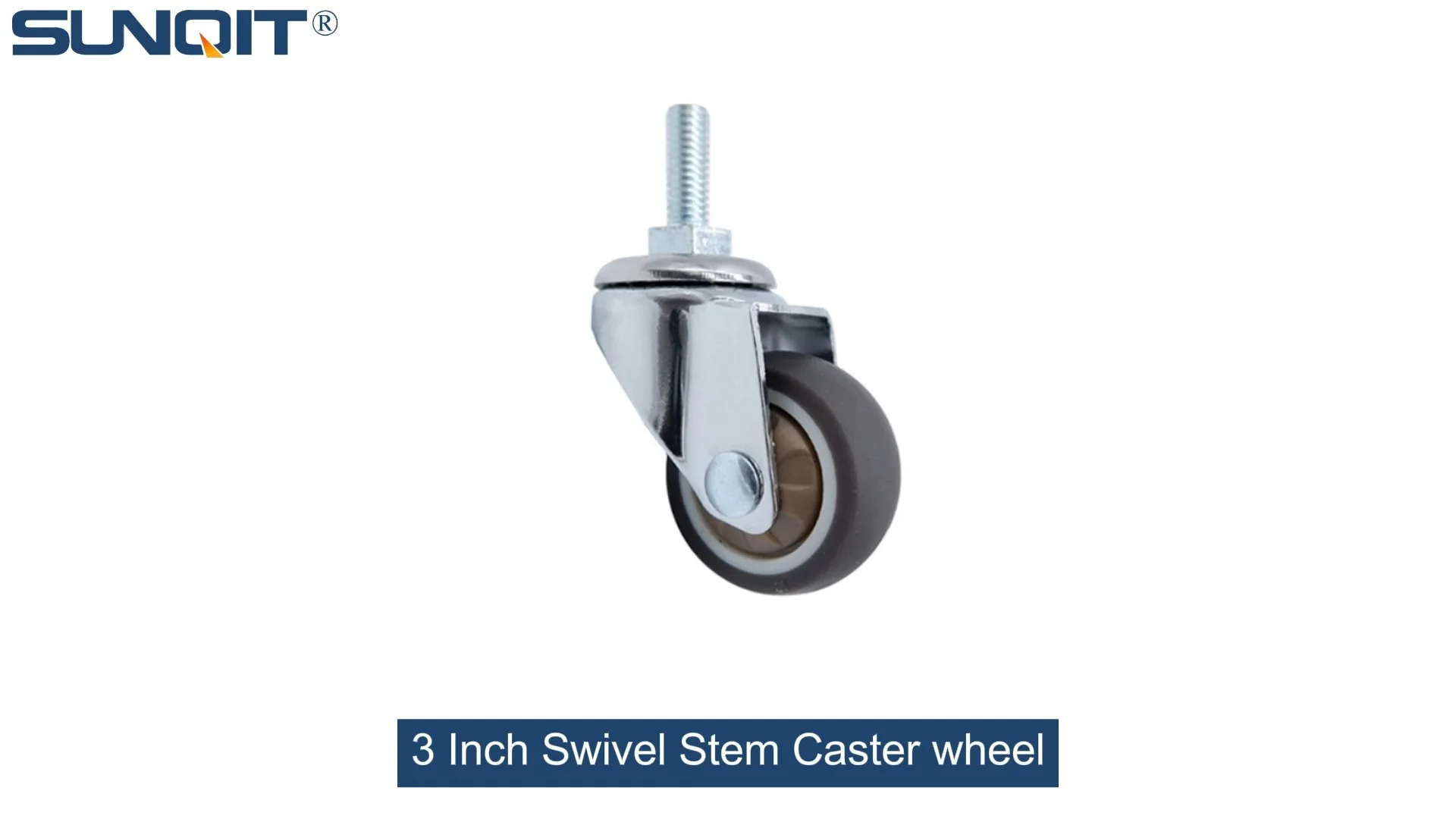
Swivel Stem Caster wheel
360 Degree Swivel Stem Caster. Threaded-post mount design, castors diameter 3 inch.Each swivel caster wheels loading 70KGS. Heavy enough and widely suit for carts, chairs, cabinet, flow rack, workbench, turnover rolley.
Walk into any manufacturing facility, and you'll likely hear the hum of machinery, the clink of tools, and the steady rhythm of workers assembling products. What you might not notice at first glance is the silent struggle many of these workers face: the physical demands of their jobs. Day in and day out, they bend to reach parts on low shelves, stretch to grab tools from overhead racks, or push heavy carts loaded with materials across the factory floor. Over time, these repetitive movements and awkward postures can lead to strained muscles, aching joints, and even chronic conditions like carpal tunnel syndrome or lower back pain. The cost of this isn't just personal—it affects productivity, too. Fatigued workers make more mistakes, take more breaks, and are more likely to miss work due to injury. So, how can we make assembly line work safer and more sustainable for the people behind the products? The answer might lie in a surprisingly simple component: swivel stem caster wheels with brake . These unassuming wheels are changing the game by turning static workstations into dynamic, worker-friendly spaces. Let's dive into how they work, why they matter, and the tangible benefits they bring to assembly lines everywhere.
The Hidden Cost of Static Workstations
For decades, assembly lines have relied on fixed workbenches, immovable material racks, and rigid trolleys. While these setups were once seen as efficient, they come with a hidden cost: ergonomic strain. Let's break down the problem. Imagine a worker stationed at a workbench bolted to the floor. Their tools are on a shelf three feet to the left, and their materials are in a bin two feet to the right. Every hour, they reach left, reach right, and maybe even twist their torso to grab what they need. By the end of the shift, their shoulders are tight, their neck is sore, and their lower back aches from the constant twisting. Now, multiply that by five days a week, 50 weeks a year—that's a recipe for long-term injury.
Then there are the turnover trolley and rack systems. Traditional trolleys often have rigid wheels that only roll forward and backward, making them hard to maneuver around corners or tight spaces. Workers end up pushing with more force than necessary, straining their arms and backs. And when unloading materials from these trolleys, the lack of mobility means they might have to lift heavy items higher or carry them farther than needed. According to the Bureau of Labor Statistics, overexertion and bodily reaction are the leading causes of workplace injuries in manufacturing, accounting for nearly 30% of all cases. Much of this could be prevented with better workplace mobility.
Static workstations also limit flexibility. In today's fast-paced manufacturing environment, production lines often need to reconfigure quickly to accommodate new products or higher demand. A fixed workbench can't be moved to a new location without tools or extra help, slowing down the process. This rigidity not only hurts efficiency but also demoralizes workers who feel stuck in uncomfortable, unchangeable setups. The solution? Making workspaces mobile—without sacrificing stability. That's where swivel stem caster wheels with brake come in.
Swivel Stem Caster Wheels with Brake: A Game-Changer for Mobility
At first glance, a caster wheel might seem like a minor detail. But when you add a swivel stem and a reliable brake mechanism, it becomes a tool that transforms how work gets done. Let's start with the basics: a swivel stem caster wheel with brake is a wheel attached to a stem (a rod that mounts to the bottom of a piece of equipment) that can rotate 360 degrees. The "swivel" part allows the wheel to turn freely, making it easy to maneuver in any direction. The "brake" is a lever or pedal that locks the wheel in place, preventing movement when needed. This combination of mobility and stability is what sets these casters apart from their rigid or brakeless counterparts.
Think about it: a traditional rigid caster only rolls forward and backward, like the wheels on a shopping cart that can't turn. To change direction, you have to pivot the entire cart, which takes extra effort and space. A swivel caster, on the other hand, rotates smoothly, letting you glide around obstacles with minimal force. This is especially valuable in crowded assembly lines, where space is limited and every inch counts. A worker pushing a trolley with swivel casters can navigate between machines, around corners, and even through narrow aisles without breaking a sweat.
But mobility alone isn't enough. What happens when you need to stop and work? Without a brake, a mobile workstation might roll away unexpectedly, forcing the worker to hold it steady or prop it against something. That's where the brake mechanism shines. With a simple tap of a foot pedal or flip of a lever, the caster locks, securing the workstation in place. This stability is crucial for tasks that require precision, like assembling small electronics or attaching delicate components. Workers no longer have to split their focus between their task and keeping the workstation from moving—they can lock it down and concentrate on the job at hand.
Real Scenario: Maria, an assembler at a electronics plant, used to work at a fixed workbench . Her tools were on a shelf above, and her materials were in a bin below, requiring her to stretch upward 20+ times an hour and bend downward just as often. After her team switched to mobile workbenches fitted with swivel stem caster wheels with brake, she can now roll her workbench to the material storage area, load up her supplies, and position the bench at waist height. She locks the brakes, eliminating the need to bend or stretch. "My shoulders and back don't ache anymore," she says. "I can focus on making sure each product is perfect, not on how much my body hurts."

Reducing Physical Strain: How Mobility Lowers Injury Risk
Ergonomics is all about designing work to fit the worker, not the other way around. When workstations are static, workers are forced to adapt their bodies to the space—often in ways that strain muscles and joints. Swivel stem caster wheels with brake flip this script by letting workers adapt the space to their bodies. Let's break down how this reduces specific types of strain:
1. Lower Back Strain: Bending, twisting, and lifting are the biggest culprits of lower back injuries. When materials are stored on immovable racks or in fixed bins, workers often have to bend at the waist to reach them, putting pressure on the lumbar spine. With mobile turnover trolley and rack systems, materials can be brought directly to the worker at waist height. A worker can roll a trolley loaded with parts to their station, lock the brakes, and access everything without bending. This reduces the stress on the lower back and lowers the risk of herniated discs or muscle strains.
2. Shoulder and Neck Fatigue: Reaching overhead or across the body repeatedly can lead to shoulder impingement, tendonitis, and neck stiffness. A mobile workbench with swivel casters lets workers position tools and materials within easy arm's reach. Instead of stretching to grab a screwdriver from a far shelf, they can roll the bench closer, keeping their shoulders relaxed and their neck in a neutral position. Over time, this reduces the wear and tear on shoulder joints and neck muscles.
3. Wrist and Arm Strain: Pushing heavy, rigid-wheeled trolleys requires significant force, which can strain the wrists, elbows, and forearms. Swivel casters reduce the effort needed to move objects by up to 50%, according to ergonomic studies. Their 360-degree rotation allows for smooth, effortless movement, so workers don't have to grip the trolley handle tightly or use brute force to change direction. This is especially beneficial for workers with conditions like carpal tunnel syndrome, as it reduces pressure on the median nerve in the wrist.
| Ergonomic Issue | With Static Workstations | With Swivel Stem Caster Wheels with Brake |
|---|---|---|
| Lower Back Strain | High (bending, twisting to reach materials) | Low (materials brought to waist height; no bending) |
| Shoulder/Neck Fatigue | High (overhead reaching, constant stretching) | Low (workstation positioned for easy access) |
| Wrist/Arm Strain | High (force needed to push rigid trolleys) | Low (effortless movement with swivel casters) |
| Overall Fatigue | High (constant physical exertion) | Low (reduced movement, less effort) |
The numbers back this up. A study by the National Institute for Occupational Safety and Health (NIOSH) found that workplaces with ergonomic interventions—including mobile workstations—saw a 32% reduction in musculoskeletal injuries. For assembly lines, this translates to fewer missed workdays, lower workers' compensation costs, and a healthier, more productive team.

Ergonomics Meets Lean System : Boosting Efficiency While Caring for Workers
Lean system principles focus on eliminating waste, improving flow, and creating value for customers. But lean isn't just about processes—it's also about respecting the people who drive those processes. Swivel stem caster wheels with brake align perfectly with this dual focus: they reduce waste (time, effort, and motion) while prioritizing worker well-being. Let's see how:
Eliminating Motion Waste: In lean terminology, "motion waste" refers to unnecessary movement by workers, like walking, reaching, or bending. Static workstations are a hotbed of motion waste. A worker might walk 50 extra steps per hour to fetch materials, or spend 10 minutes a day stretching to reach tools. Mobile workstations with swivel casters cut this waste dramatically. A turnover trolley with swivel casters can deliver materials directly to the assembly line, reducing walking time. A mobile workbench can be positioned to minimize reaching, turning minutes of wasted motion into seconds of productive work.
Improving Flow: Lean manufacturing thrives on smooth, continuous flow—materials and products should move seamlessly from one step to the next. Static racks and trolleys disrupt this flow by creating bottlenecks. For example, if a material rack is stuck in a corner, workers might hoard materials at their stations to avoid constant trips, leading to clutter and inefficiency. With mobile racks on swivel casters, materials can flow to the line just-in-time, reducing clutter and keeping the line moving. Workers spend less time waiting for materials and more time assembling products.
Respecting People: At its core, lean is about valuing workers as assets, not just resources. When workers are fatigued or in pain, they can't perform at their best—and they're more likely to leave for a healthier workplace. By investing in ergonomic tools like swivel stem caster wheels with brake, employers show they care about their team's well-being. This boosts morale, reduces turnover, and creates a culture of mutual respect. Workers who feel valued are more engaged, more innovative, and more committed to quality—all of which drive lean success.
Lean in Action: A automotive parts manufacturer implemented a lean system but struggled with high turnover and low morale. Their assembly line used fixed workbenches and rigid trolleys, leading to frequent worker complaints about fatigue. After switching to mobile workstations and trolleys with swivel stem caster wheels with brake, they saw immediate results: motion waste decreased by 25%, assembly time per unit dropped by 12%, and turnover fell by 40%. "We thought lean was just about cutting costs," said the plant manager. "But we realized that taking care of our workers is the best way to make lean work long-term."

Choosing the Right Caster: Key Features to Prioritize
Not all swivel stem caster wheels with brake are created equal. To maximize ergonomic benefits, it's important to choose the right ones for your assembly line. Here are key features to consider:
Load Capacity: Casters are rated for maximum weight, so choose one that can handle your typical load (including the workstation/trolley plus materials). Overloading casters can cause them to jam or break, reducing mobility and safety.
Wheel Material: The floor surface matters. Rubber wheels work well on concrete floors, as they absorb shock and reduce noise. Nylon wheels are better for smooth surfaces like tile, as they roll more easily. For production assemble areas with oil or chemicals, consider chemical-resistant wheels.
Brake Type: There are two main brake types: total lock (locks both the wheel and swivel motion) and wheel lock (only locks the wheel). Total lock brakes offer maximum stability, making them ideal for workbenches. Wheel locks are better for trolleys that need to swivel slightly while stopped.
Swivel Radius: The smaller the swivel radius, the easier the caster is to maneuver in tight spaces. Look for casters with a compact swivel design if your assembly line has narrow aisles.
Stem Size: The stem (the part that attaches to the workstation) must fit your equipment. Measure the mounting hole size and depth to ensure a secure fit—loose stems can cause wobbling, which negates ergonomic benefits.
By choosing casters that match your workplace needs, you'll ensure maximum mobility, stability, and durability—all of which contribute to a safer, more ergonomic assembly line.
The Ripple Effect: Happy Workers, Better Products
Ergonomic improvements like swivel stem caster wheels with brake don't just benefit workers—they create a ripple effect that touches every part of the manufacturing process. When workers are comfortable and pain-free, they're more focused, more precise, and more invested in their work. This leads to fewer defects, higher quality products, and happier customers. It also boosts morale: workers who feel their employer cares about their health are more loyal, reducing turnover and the costs of hiring and training new staff.
Consider this: a study by the Society for Human Resource Management found that companies with strong ergonomic programs report 20-50% higher productivity than those without. Why? Because healthy workers are present, engaged, and efficient. They don't take as many sick days, and they don't rush through tasks to finish early and escape discomfort. Instead, they take pride in their work, knowing their employer has their back—literally.
In the end, assembly lines are about people. Machines and processes are important, but it's the workers who bring them to life. By investing in tools like swivel stem caster wheels with brake , manufacturers aren't just improving ergonomics—they're building a workplace where people can thrive. And when people thrive, so does productivity, quality, and success.
Assembly line work doesn't have to be a battle against fatigue and strain. With swivel stem caster wheels with brake, we can transform static, painful workspaces into dynamic, ergonomic environments that prioritize both people and productivity. From workbench to turnover trolley and rack , these simple wheels are making a big difference—reducing injuries, boosting efficiency, and proving that small changes can lead to big results. So, the next time you walk through a manufacturing facility, take a look at the casters under the workstations. Chances are, the ones with swivel stems and brakes are the ones where the workers are smiling—and thriving.