- Company Articles
- Products and Technology
- Product knowledge
- Ergonomic Brake Handles: Design Considerations for Flat Swivel Castor Wheels

Ergonomic Brake Handles: Design Considerations for Flat Swivel Castor Wheels
Related Product
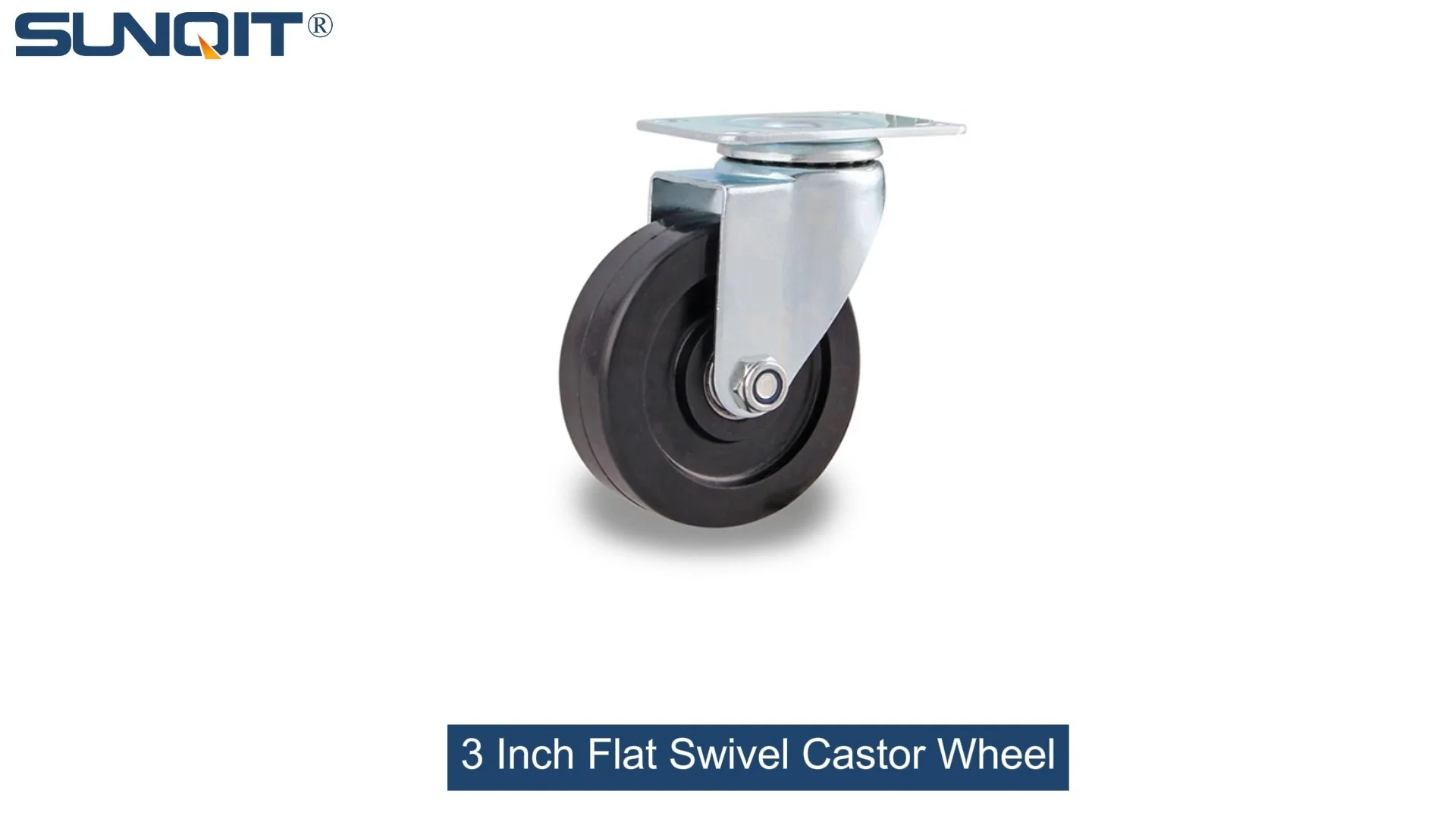
Flat Swivel Castor Wheel
Chair Casters Ball Bearing Wheels Rubber Base. Resistant to abrasion, impact and corrosion. Heavy payload can hold 70-90Kgs per pcs,which can make it works at a stable and smooth status.
In the bustling world of manufacturing plants, warehouses, and workshops, where every second counts and efficiency is king, there's a silent workhorse that keeps operations moving: the caster wheel. These small, unassuming components are the unsung heroes beneath workbenches, material carts, and assembly line trolleys, allowing heavy loads to glide smoothly across floors with minimal effort. But among all the parts that make a caster system functional, one element often determines whether a caster is a joy to use or a daily frustration: the brake handle. For flat swivel castor wheels—those versatile, 360-degree rotating wheels that navigate tight corners with ease—the brake handle isn't just a safety feature; it's a bridge between human comfort and operational reliability. In this article, we'll dive into the art and science of designing ergonomic brake handles for flat swivel castor wheels, exploring how small tweaks in grip, force, and placement can transform a tool from "good enough" to "indispensable."
The Human Factor: Why Ergonomics Matters in Brake Handle Design
Before we dissect the specifics of brake handle design, let's take a step back and ask: why does ergonomics matter here? Imagine a warehouse worker pushing a loaded trolley eight hours a day. Each time they need to stop to load or unload materials, they bend down, grasp the brake handle, and engage it—sometimes dozens of times per shift. If that handle is awkwardly shaped, requires excessive force, or sits at an uncomfortable angle, it's not just a minor annoyance. Over time, it can lead to strained wrists, aching backs, or even repetitive strain injuries (RSIs). These injuries don't just hurt the worker; they cost businesses in lost productivity, increased absenteeism, and workers' compensation claims. Ergonomic design, then, isn't a luxury—it's a commitment to valuing the people behind the tools. It's about creating brake handles that feel like an extension of the hand, not a barrier between the user and their task.
Ergonomics in brake handles also ties directly to safety. A handle that's hard to grip or slow to engage increases the risk of accidents. If a worker fumbles with a slippery handle while trying to stop a moving trolley, the trolley could roll into equipment, products, or even other workers. Conversely, a well-designed brake handle inspires confidence: the user knows they can engage it quickly and reliably, even when tired or wearing gloves. In high-stakes environments, that confidence is priceless.
Key Design Considerations: From Grip to Force
Grip Design: Shape, Texture, and Comfort
The first point of contact between the user and the brake handle is the grip—and it's where many designs fall short. A good grip should fit naturally in the hand, regardless of the user's hand size or whether they're wearing gloves. Let's start with shape. Round or cylindrical grips are common, but they often lack stability; the hand can slip if pressure is applied at an angle. A better approach is to incorporate subtle contours that mirror the natural curve of the palm. Think of the difference between holding a smooth metal pipe and a well-worn baseball bat—the bat's taper and texture conform to your hand, reducing fatigue.
Texture is equally critical. A smooth plastic handle might look sleek, but in a busy workshop where hands are often sweaty or dusty, it's a recipe for slips. Instead, designers should opt for non-slip textures: fine ridges, rubberized coatings, or even soft-touch materials that provide friction without irritation. For example, thermoplastic elastomers (TPEs) offer a balance of durability and grip, staying tacky even when wet. Some manufacturers go a step further by adding ergonomic finger grooves, which guide the hand into the optimal position, reducing the need for excessive grip strength.
Size matters too. A grip that's too small forces the user to clench their fingers tightly, leading to cramping; one that's too large can strain the wrist as the hand struggles to wrap around it. The sweet spot? A diameter between 25mm and 35mm for adult hands, with enough length to accommodate at least three fingers. This ensures a secure hold without overextending the hand muscles.
Actuation Force: Reducing Strain, Increasing Control
Once the grip feels right, the next hurdle is the force required to engage or disengage the brake. If you've ever struggled with a brake that feels like it's rusted shut, you know how frustrating this can be. Actuation force—the amount of pressure needed to flip the handle or press the pedal—directly impacts user experience. Too much force, and workers may avoid using the brake altogether (a dangerous habit); too little, and the brake might disengage accidentally. So, what's the ideal range?
Ergonomic guidelines, such as those from the International Organization for Standardization (ISO), suggest that the average adult can comfortably exert between 15N and 30N (approximately 1.5kg to 3kg of force) with a single hand for repetitive tasks. This range accounts for variations in strength across genders, ages, and physical abilities. To hit this target, designers must optimize the brake's internal mechanics: using high-quality springs that provide consistent resistance, minimizing friction in the pivot points, and ensuring the linkage between handle and brake shoe is efficient. For example, a well-lubricated hinge or a cam mechanism can reduce the force needed by 30% compared to a poorly designed linkage.
It's also important to consider the direction of force. A brake handle that requires pulling upward might be easy for someone tall but painful for a shorter person who has to bend their wrist backward. Similarly, a downward-pressing pedal might strain the shoulder if the caster is mounted too low. The solution? Design handles that allow force to be applied in the direction of the user's natural arm movement—typically downward or forward, aligning with the body's center of gravity.
Placement: Finding the Sweet Spot on the Caster
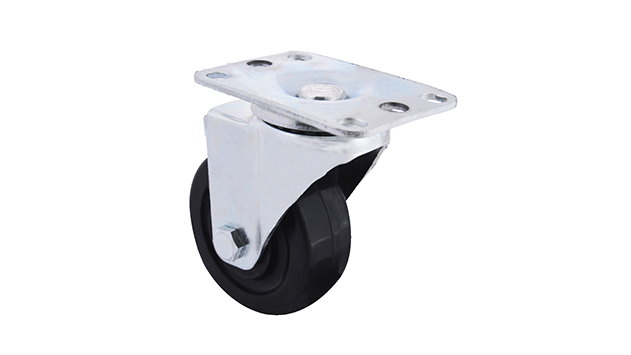
Even the most perfectly shaped grip and balanced force won't matter if the brake handle is hidden behind the wheel or mounted too close to the floor. Placement is where form meets function, and it's deeply influenced by the caster's design—especially for flat swivel castor wheels, which have a low profile to maintain stability. The goal is to position the handle so that the user can engage it without bending, stooping, or contorting their body.
Height is the first consideration. For most adults, the ideal handle height is between 150mm and 300mm from the floor when the caster is mounted on a trolley or workbench. This range allows users to reach the handle with a slight bend at the elbow, keeping their back straight and avoiding unnecessary strain. For example, a brake handle on a hospital cart might be placed higher to accommodate nurses wearing scrubs, while one on a low-profile workshop trolley might sit lower to suit workers in seated positions.
Visibility is another key factor. A brake handle that blends into the caster's frame is easy to miss, leading to fumbling. High-contrast colors—like bright orange or yellow—can make the handle stand out, even in dimly lit environments. Some manufacturers also add tactile indicators, such as a raised "BRAKE" label or a textured patch, to help users locate the handle by touch alone (useful when visibility is poor or gloves limit dexterity).
Finally, clearance matters. The handle should have enough space around it to allow the user's hand to grip it without hitting the wheel, trolley frame, or other caster accessories. A common mistake is mounting the handle too close to the wheel, which can pinch fingers when the caster swivels. A minimum clearance of 50mm between the handle and adjacent components prevents this, ensuring safe, unobstructed access.
Materials: Balancing Durability and Comfort
Ergonomics isn't just about shape and force—it's also about the materials that touch the user's hand. A handle that feels great on day one but cracks after a month of use is a failure. So, designers must balance comfort with durability, choosing materials that can withstand the rigors of industrial environments while remaining gentle on the skin.
Rubber and rubber-like materials (such as TPE or neoprene) are popular for grips because they're soft, non-slip, and insulate against cold metal. However, they can degrade over time when exposed to oils, solvents, or extreme temperatures—common in manufacturing settings. For these environments, a better choice might be polypropylene (PP) or acrylonitrile butadiene styrene (ABS) with a textured finish. These plastics are chemical-resistant, impact-resistant, and can be molded into ergonomic shapes. For added comfort, some manufacturers overmold a soft TPE layer onto a rigid plastic core, combining the best of both worlds: the core provides strength, while the TPE offers grip and cushioning.
Metal handles, often made of steel or aluminum, are durable but can be uncomfortable in cold weather or when exposed to direct sunlight (they heat up quickly). If metal is necessary for heavy-duty applications, adding a plastic or rubber sleeve can mitigate this issue. Stainless steel is another option for environments where hygiene is critical (like food processing plants), as it resists corrosion and is easy to clean.

User-Centric Testing: From Prototypes to Real-World Use
Even the most thoughtful design on paper needs real-world validation. User testing is where ergonomic theories meet the messy, varied reality of human hands. To design a brake handle that works for everyone, manufacturers must test with a diverse group of users—people with small hands, large hands, limited mobility, and those who wear gloves or protective gear. This isn't just about checking boxes; it's about uncovering insights that lab data alone can't reveal.
One effective testing method is anthropometric analysis, which uses data on hand size, grip strength, and reach to inform design. For example, a study might measure the grip strength of 100 workers and find that 90% can comfortably exert 25N of force—guiding the design team to set the actuation force at 20N to accommodate the lower end of the spectrum. Usability testing takes this further: observing users as they engage and disengage the brake in simulated work scenarios. Do they fumble for the handle? Do they complain of wrist pain after repeated use? Are there differences in how men and women, or taller and shorter users, interact with the handle? These observations can highlight flaws in the design—like a grip that's too narrow for users with larger hands or a placement that forces shorter users to bend excessively.
Feedback loops are equally important. After initial testing, manufacturers should refine the prototype and test again, incorporating user suggestions. For example, if several testers mention that the handle slips when wet, adding a more aggressive texture or switching to a rubberized material might solve the problem. This iterative process ensures that the final product isn't just "ergonomic on paper"—it's ergonomic in the hands of the people who use it every day.

Integration with Caster Systems: Compatibility and Cohesion
A brake handle doesn't exist in isolation—it's part of a larger caster system, which includes the wheel, swivel mechanism, and caster accessories like mounting plates or axle covers. For the handle to work seamlessly, it must integrate with these components. Take the flat swivel castor wheel itself: its low-profile design means there's less space between the wheel and the mounting plate, which can limit where the brake handle can be placed. Designers must work closely with caster engineers to ensure the handle doesn't interfere with the swivel action or the wheel's rotation.
Compatibility with caster accessories is another consideration. For example, some casters come with locking mechanisms that engage both the wheel and the swivel (called "total lock" brakes), while others only lock the wheel ("wheel lock"). The brake handle must clearly indicate which type it is—perhaps through color coding (red for total lock, blue for wheel lock) or a distinct shape. Similarly, if the caster is part of a modular system (common in lean manufacturing setups), the brake handle should be easy to replace or upgrade without requiring special tools. This modularity ensures that if a handle wears out, it can be swapped quickly, minimizing downtime.
| Brake Handle Feature | Poor Design Example | Ergonomic Design Example |
|---|---|---|
| Grip Texture | Smooth plastic surface; slips easily when wet. | Rubberized, ridged texture; provides grip even with gloves. |
| Actuation Force | Requires 40N of force (hard to engage for most users). | Requires 20N of force (comfortable for repetitive use). |
| Placement Height | 100mm from the floor (requires bending deeply). | 250mm from the floor (reachable with a slight elbow bend). |
| Visibility | Same color as caster frame; hard to locate quickly. | High-contrast yellow with raised "BRAKE" label; easy to spot. |
Case Study: Transforming a Trolley Brake Handle
To put these principles into context, let's look at a real-world example: a manufacturer of assembly line trolleys that recently redesigned their flat swivel castor wheel brake handles. The original handle was a simple metal lever with a smooth finish, mounted 120mm from the floor, requiring 35N of force to engage. Workers complained of wrist pain and frequently forgot to engage the brake (leading to minor accidents). The company's design team set out to create a better handle, starting with user testing.
First, they measured the hand sizes and grip strengths of 50 workers, finding that the average grip strength was 28N—meaning the original 35N force was too high. They adjusted the internal spring to reduce actuation force to 22N. Next, they redesigned the grip: adding a contoured TPE coating with finger grooves and a non-slip texture. They also raised the handle height to 220mm and painted it bright orange for visibility. Finally, they added a small "click" mechanism to provide tactile feedback when the brake engaged, so users knew it was secure without looking.
The results were striking: after six months of use, worker complaints about wrist pain dropped by 80%, and brake engagement rates (measured via workplace observations) increased by 45%. Accidents related to rolling trolleys decreased by 60%. This case study illustrates a simple truth: ergonomic brake handle design isn't just about making a better product—it's about making a better workplace.
Future Trends: Smart Brakes and Sustainable Design
As technology advances, ergonomic brake handle design is evolving too. One emerging trend is "smart" brakes that incorporate sensors to monitor usage. For example, a brake handle might track how often it's engaged, alerting maintenance teams when it needs lubrication or replacement. Some prototypes even include haptic feedback—vibrating gently if the brake is not fully engaged, preventing accidental rollaways. While these features are still in early stages, they hint at a future where brake handles don't just respond to users—they communicate with them.
Sustainability is another growing focus. Manufacturers are exploring eco-friendly materials, like recycled plastics or biodegradable rubber, for grip coatings. They're also designing handles that are easier to disassemble and recycle, reducing waste. For example, a handle with a modular design (removable grip, replaceable spring) allows users to repair individual components instead of replacing the entire brake system—saving money and reducing environmental impact.
Conclusion: Small Handles, Big Impact
Ergonomic brake handles for flat swivel castor wheels are a testament to the power of human-centered design. They remind us that even the smallest components can have a profound impact on worker comfort, safety, and productivity. By prioritizing grip, force, placement, and materials—and validating designs through user testing—manufacturers can create brake handles that don't just meet standards; they exceed expectations. In a world where every detail matters, these handles are more than just parts—they're a reflection of a company's commitment to its people. So, the next time you push a trolley or adjust a workbench, take a moment to appreciate the brake handle. If it feels effortless to use, know that someone cared enough to design it that way.