- Company Articles
- Products and Technology
- Product knowledge
- Ergonomic Design with 3060 Aluminum Angle Yards: Worker-Friendly Workstations

Ergonomic Design with 3060 Aluminum Angle Yards: Worker-Friendly Workstations
Related Product
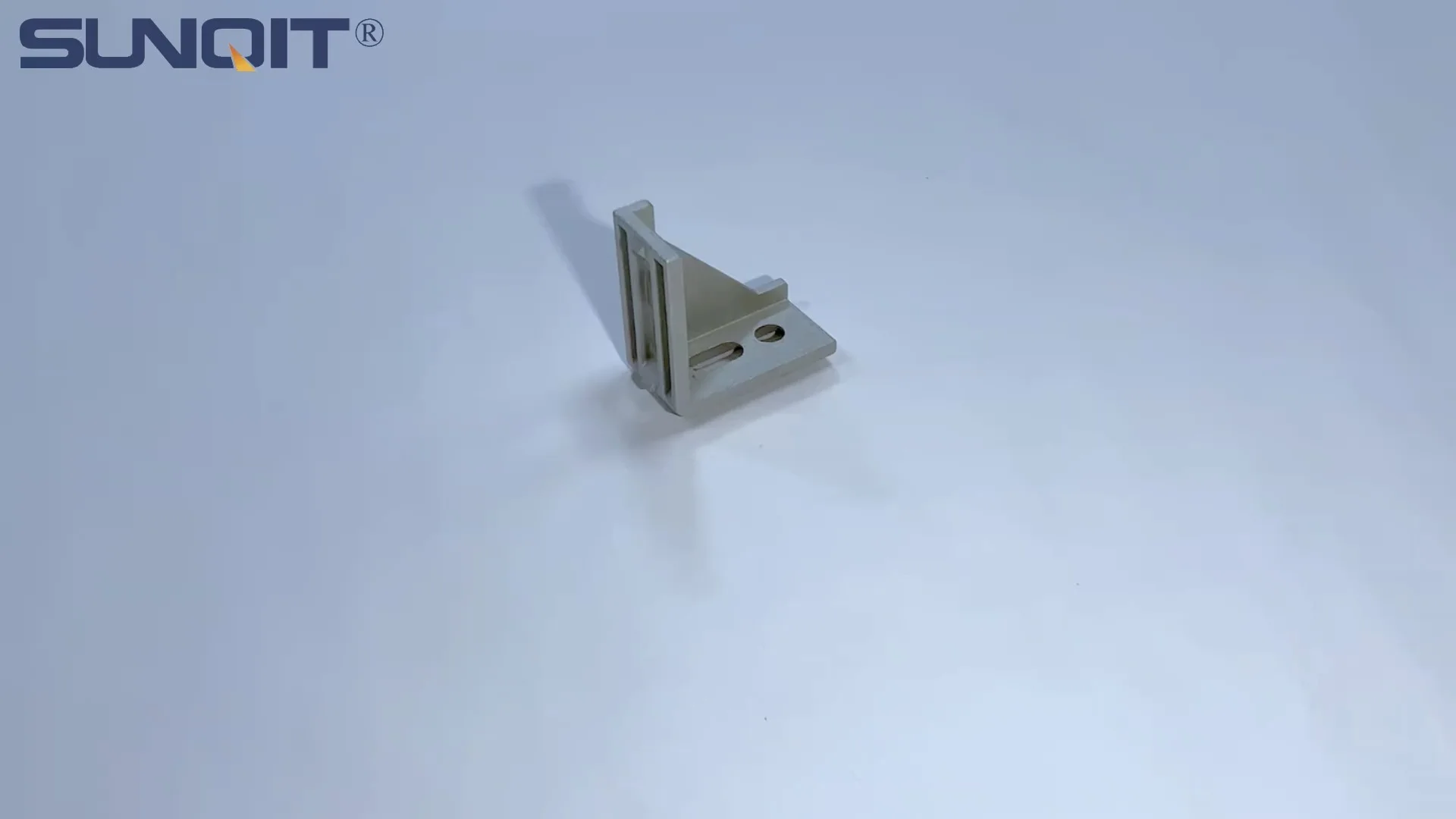
3060 Aluminum Angle Yards
It used for 90° flat connection for 20 series aluminum profile.
Walk into any busy workshop, factory floor, or assembly line, and you'll notice something universal: the workstations are the unsung heroes (or villains) of the daily grind. A well-designed workstation feels like an extension of the worker—supportive, intuitive, and tailored to the task at hand. A poorly designed one? It's a silent drain on energy, focus, and even physical health. For decades, companies have prioritized speed and cost over comfort, but the tide is turning. Today, forward-thinking businesses are realizing that ergonomics isn't a luxury—it's a cornerstone of productivity, retention, and employee well-being. And at the heart of this shift? Innovative materials like 3060 aluminum angle yards, which are redefining what a worker-friendly workstation can be.
The Hidden Cost of "Good Enough" Workstations
Let's start with the basics: what happens when workstations ignore ergonomics? Picture Maria, a mid-shift assembly line worker, hunched over a table that's three inches too low. Her shoulders are tight, her lower back aches, and she's constantly reaching across a cluttered surface to grab tools. By 2 PM, her hands tingle from repetitive strain, and she's already counting the minutes until the end of her shift. Sound familiar? This isn't just a story—it's the reality for millions of workers worldwide.
The numbers back it up. The Bureau of Labor Statistics reports that musculoskeletal disorders (MSDs) account for over 30% of workplace injuries, costing U.S. businesses billions annually in medical bills, lost productivity, and workers' compensation claims. But the damage goes beyond dollars. Employees stuck in uncomfortable workstations are 2.5 times more likely to report burnout, according to a 2023 study by the International Ergonomics Association. They're less engaged, more prone to mistakes, and quicker to seek opportunities elsewhere. In short, a "good enough" workstation is never good enough—not for workers, and not for the companies that depend on them.
So, what's the solution? It starts with reimagining the workstation as a tool for empowerment, not just a place to get the job done. And that's where 3060 aluminum angle yards enter the picture.
3060 Aluminum Angle Yards: The Ergonomic Workhorse
If you're not familiar with aluminum profiles, think of them as the building blocks of modern industrial design. These extruded metal shapes—lightweight, strong, and infinitely customizable—have revolutionized everything from automotive manufacturing to office furniture. But among the many profiles available, 3060 aluminum angle yards stand out for one key reason: they're engineered for balance. Let's break that down.
First, the specs: a 3060 aluminum angle yard is an extrusion with a 30mm x 60mm cross-section, shaped like an L (hence "angle yard"). This unique geometry gives it two critical advantages: stability and versatility. The right angle design distributes weight evenly, making it perfect for supporting heavy work surfaces, tools, or equipment without wobbling. At the same time, its moderate size strikes a sweet spot between the smaller 2020 profiles (too flimsy for heavy-duty tasks) and larger 4080 profiles (overkill for most workstations). In short, it's the Goldilocks of aluminum profiles—just right for creating sturdy, adaptable workspaces.
But what really makes 3060 aluminum angle yards a game-changer for ergonomics is their modularity. Unlike fixed, one-size-fits-all workbenches made of wood or steel, these aluminum angles can be easily cut, connected, and reconfigured using simple brackets and fasteners. Need to raise the work surface by 4 inches to reduce shoulder strain? Swap out a few brackets. Want to add a shelf at eye level for frequently used tools? Slide in a crossbar and secure it with T-slot nuts. This flexibility means workstations can evolve with the worker, not the other way around—a critical feature in environments where tasks, team members, and even job roles change regularly.

Aluminum Extrusion Profiles: Precision Meets Practicality
To truly appreciate 3060 aluminum angle yards, it helps to understand the magic of aluminum extrusion itself. Aluminum extrusion is a manufacturing process where raw aluminum is heated to a malleable state and forced through a die, creating complex cross-sectional shapes with incredible precision. The result? Profiles that are consistent, lightweight, and packed with built-in features—like the T-slots that run along 3060 angle yards. These slots are the secret to their adaptability, allowing workers to attach accessories (think monitor arms, tool hooks, or cable management clips) anywhere along the length of the profile, no drilling or welding required.
Compare this to traditional steel workbenches. Steel is strong, but it's heavy—reconfiguring a steel workstation often requires a team of people and power tools. Aluminum extrusion profiles, by contrast, are up to 60% lighter than steel while maintaining comparable strength (thanks to aluminum's impressive strength-to-weight ratio). This lightness makes 3060 angle yards easy to handle, even for a single worker, turning workstation adjustments from a weekend project into a 15-minute task. For managers, this means less downtime and more agility; for workers, it means having a say in how their workspace functions.
Another underrated benefit of aluminum extrusion profiles? They're inherently clean and low-maintenance. Unlike wood, which can warp or splinter, or steel, which rusts if not painted, aluminum resists corrosion and wipes clean with a damp cloth. This is a big deal in industries like electronics assembly or food processing, where hygiene and precision are non-negotiable. And because aluminum is naturally conductive, 3060 angle yards can even be grounded to prevent static buildup—a feature that's a lifesaver when working with sensitive components.

Building the Perfect Workbench: A Case Study in Ergonomics
Let's put theory into practice. Imagine a small electronics manufacturing company, "TechCraft," that recently decided to upgrade its assembly workstations. Their old setup? Heavy wooden tables with fixed heights, cluttered with tools, and no built-in storage. Workers complained of neck pain from craning to see small components and wrist strain from repetitive motions. Productivity was stagnant, and turnover was high. TechCraft's solution? A fleet of custom workstations built with 3060 aluminum angle yards.
The first step was assessing each worker's needs. Using ergonomic guidelines from OSHA, the team measured arm length, shoulder height, and typical task movements for every employee. For example, Priya, who specializes in soldering tiny circuit boards, needed a work surface that could be raised or lowered by up to 8 inches to match her seated or standing preference. Raj, who handles larger component assembly, required extra surface area and a built-in shelf for bins of parts. With 3060 aluminum angle yards, these customizations were surprisingly straightforward.
The base frame of each workstation was constructed using 3060 angle yards cut to length, connected with lightweight aluminum brackets. For height adjustability, the team added telescoping legs with easy-turn knobs—no tools needed. The work surface itself? A durable, anti-fatigue mat topped with a heat-resistant aluminum honeycomb panel (another extrusion profile win), which provided a stable, cushioned surface for long hours of work. Along the back edge of each bench, they mounted a slim aluminum profile with T-slots, perfect for attaching LED task lights, magnifying glasses, and tool holders. For Raj's extra storage, they added a three-tiered shelf using, you guessed it, more 3060 angle yards and matching aluminum brackets.
The results were transformative. Within three months, TechCraft saw a 15% reduction in reported MSDs and a 20% boost in assembly speed. Workers like Priya noted that adjusting her workstation height throughout the day kept her back and shoulders from tiring, while Raj appreciated having tools and parts within arm's reach, cutting down on unnecessary movement. Perhaps most telling? Exit interviews dropped by 40%. "It feels like the company actually cares about how we work," one employee noted. "That makes a difference."

Lean Systems: Ergonomics and Efficiency Hand in Hand
TechCraft's success isn't just about ergonomics—it's about aligning workspace design with lean principles. Lean systems, which focus on minimizing waste and maximizing value, thrive when workstations are optimized for flow. A cluttered, uncomfortable workstation creates waste in the form of unnecessary movements, errors, and delays. By contrast, an ergonomic workstation built with 3060 aluminum angle yards streamlines workflows by keeping tools, materials, and controls exactly where the worker needs them.
Take "5S," a core lean methodology (Sort, Set in Order, Shine, Standardize, Sustain). 3060 angle yards excel at "Set in Order"—organizing tools and materials for easy access. With T-slots and modular brackets, every tool has a designated spot, reducing time spent searching. For example, a lean-focused auto parts manufacturer might use 3060 angle yards to build a "shadow board"—a vertical panel with cutouts or hooks shaped like each tool—ensuring that wrenches, screwdrivers, and gauges are always within reach and quickly accounted for. This not only speeds up tasks but also reinforces accountability (if a tool is missing, it's immediately obvious).
Another lean principle, "poka-yoke" (mistake-proofing), is also easier to implement with aluminum extrusion profiles. For instance, 3060 angle yards can be fitted with guide rails or dividers to ensure parts are loaded into assembly fixtures correctly, reducing errors. Or, they can support LED indicators that light up when a tool is placed in the wrong position. Because aluminum profiles are so customizable, these small but impactful improvements can be added without overcomplicating the workstation.
The bottom line? Ergonomics and lean systems aren't competing priorities—they're two sides of the same coin. A workstation that's kind to the body is also kind to the bottom line, and 3060 aluminum angle yards make it possible to achieve both.
Beyond the Bench: Customization for Every Task
Workstations aren't one-size-fits-all, and neither are the tasks they support. A packaging station has different needs than a quality control inspection area, which in turn differs from a lab testing bench. The beauty of 3060 aluminum angle yards is their ability to adapt to any role, thanks to a vast ecosystem of compatible accessories and complementary aluminum profiles.
Consider a warehouse picking station. Here, workers need to quickly sort and pack orders, which means easy access to bins, labels, and packing materials. A 3060 angle yard frame can support sloped shelving (using adjustable brackets) to ensure bins tilt forward, making contents visible at a glance. Add a overhead aluminum profile with hanging label holders, and suddenly, even the busiest picker can stay organized. For heavier items, 3060 angle yards can be paired with roller tracks (another aluminum extrusion product) to create gravity-fed shelving, letting boxes glide gently to the picking area without heavy lifting.
Or take a medical device assembly cleanroom, where sterility and precision are paramount. 3060 aluminum angle yards, with their smooth, non-porous surfaces, are easy to sanitize—critical for meeting FDA standards. Add a clear acrylic sneeze guard (mounted via T-slots) and a built-in HEPA filter bracket, and you've got a workstation that protects both the product and the worker. Even specialized tools like anti-static wrist strap holders or ESD-safe bins can be integrated seamlessly, thanks to the profile's versatile design.
The message is clear: whether you're building a simple workbench or a complex, multi-functional station, 3060 aluminum angle yards provide the flexibility to design around the task—not the other way around.
Why 3060 Aluminum Angle Yards Stand Out Among Profiles
With so many aluminum profiles on the market, why choose 3060 angle yards for ergonomic workstations? Let's compare them to some common alternatives:
| Profile Type | Key Features | Best For | Limitations for Ergonomic Workstations |
|---|---|---|---|
| 2020 Aluminum Profile | Small (20x20mm), lightweight, highly customizable | Small hobby projects, light-duty shelving | Not strong enough for heavy work surfaces; limited weight capacity |
| 4040 Aluminum Profile | Medium (40x40mm), very strong, widely used in industry | Heavy machinery frames, industrial workbenches | Bulky for smaller workstations; overkill for most office or light assembly tasks |
| 3060 Aluminum Angle Yard | Medium (30x60mm), angled design, balanced strength/weight | Ergonomic workstations, assembly lines, custom benches | Fewer pre-made accessories than 4040 (easily solved with custom brackets) |
| Steel Angle Iron | Very strong, low cost, traditional material | Heavy structural support, outdoor use | Heavy, hard to cut/modify, prone to rust, no built-in T-slots for accessories |
As the table shows, 3060 aluminum angle yards hit the sweet spot for most workstation needs. They're strong enough to support daily use (up to 500 lbs per linear foot, depending on the setup) but light enough to reconfigure without heavy equipment. Their angled design adds rigidity, reducing wobble during precision tasks, and their T-slots make accessory integration a breeze. For companies looking to balance durability, flexibility, and cost, 3060 angle yards are the clear choice.
Future-Proofing Workstations: Adaptability in a Changing World
The only constant in business is change. New technologies emerge, workflows evolve, and workforce demographics shift. A workstation that works perfectly today might be obsolete in two years. That's why adaptability is just as important as ergonomics when designing worker-friendly spaces—and 3060 aluminum angle yards excel here, too.
Consider the rise of hybrid work in manufacturing. Many companies now blend in-person and remote tasks, meaning workstations might need to accommodate hot-desking or shared use. With 3060 angle yards, a single workstation can be reconfigured from a seated assembly station in the morning to a standing packing station in the afternoon, simply by adjusting the height and swapping out accessories. No need to buy new furniture—just repurpose what you already have.
Sustainability is another growing concern. Aluminum is 100% recyclable, and 3060 angle yards are often made from recycled aluminum, reducing their carbon footprint. Unlike wooden workbenches, which end up in landfills when outdated, aluminum profiles can be disassembled, melted down, and reused to make new products. For companies aiming for net-zero goals, this circularity is a major plus.
And let's not forget the rise of automation. As cobots (collaborative robots) become more common on factory floors, workstations need to integrate with these machines seamlessly. 3060 aluminum angle yards can support robot mounts, sensor brackets, and cable management systems, ensuring humans and robots work side-by-side safely and efficiently. This adaptability means your investment in ergonomic workstations today won't become a liability tomorrow.
Conclusion: Investing in People, Powered by 3060 Aluminum Angle Yards
At the end of the day, workstations are about people. They're where ideas become products, where skills are honed, and where hours of hard work turn into success. For too long, companies have treated workstations as afterthoughts, focusing on cost and speed over the humans who use them. But as we've explored, this approach is short-sighted. Ergonomic workstations don't just make workers more comfortable—they make them more productive, engaged, and loyal.
3060 aluminum angle yards are more than just a material; they're a tool for empowerment. They let companies build workstations that adapt to workers, not the other way around. They turn "one-size-fits-all" into "made just for you." And they prove that ergonomics and efficiency can go hand in hand, creating workspaces that are as good for the bottom line as they are for the people who power it.
So, whether you're a small workshop owner looking to upgrade a single bench or a large manufacturer overhauling an entire facility, consider this: the best investment you can make isn't in faster machines or cheaper materials. It's in the people who use them. And with 3060 aluminum angle yards, building that investment has never been easier, more affordable, or more impactful.
Here's to workstations that support, empower, and inspire—one aluminum angle yard at a time.