- Company Articles
- Products and Technology
- Product knowledge
- ESD-Safe Flat Swivel Castor Wheel with Brake for Electronic Component Handling

ESD-Safe Flat Swivel Castor Wheel with Brake for Electronic Component Handling
Related Product
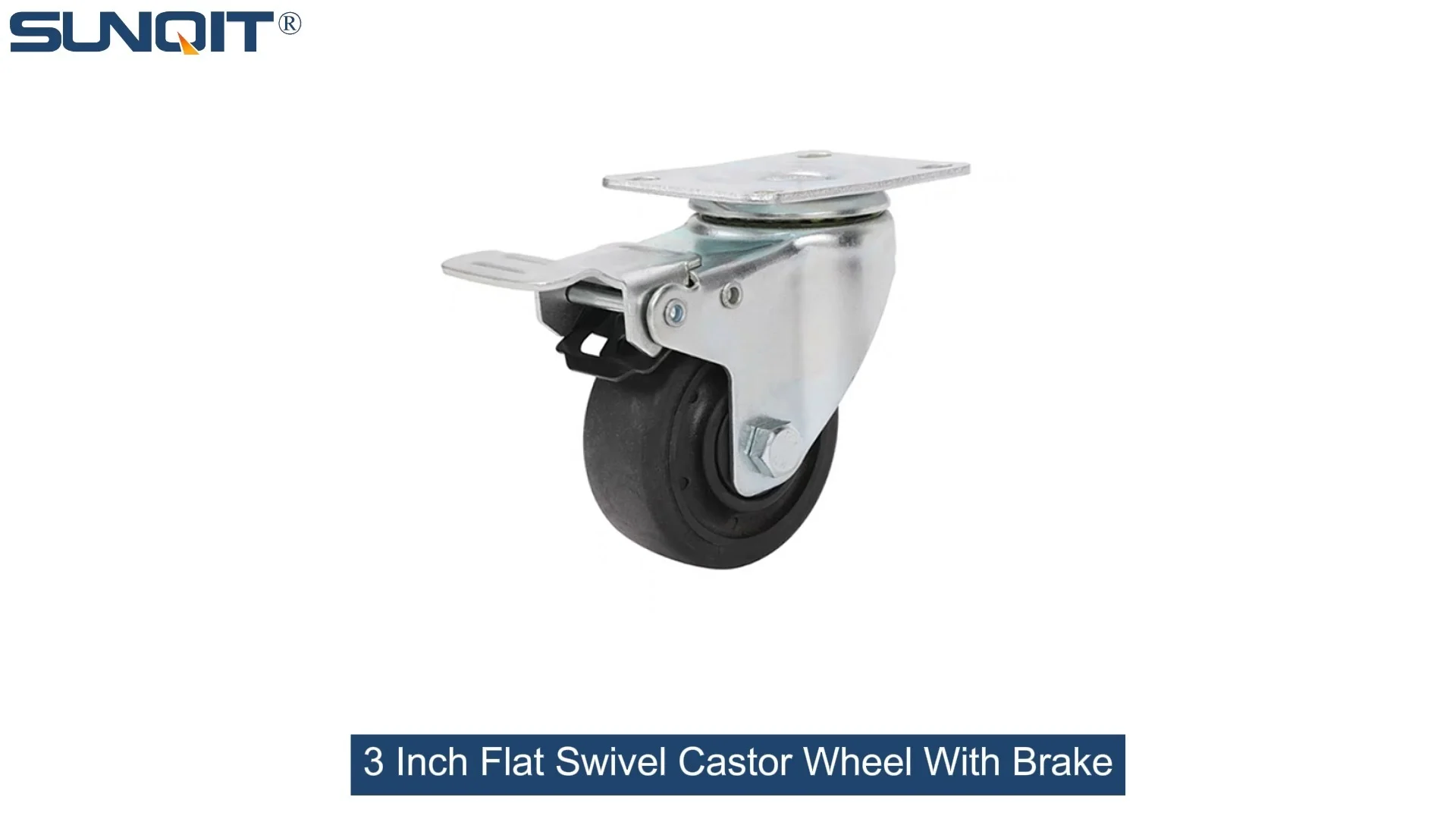
Flat Swivel Castor Wheel With Brake
Chair Casters Ball Bearing Wheels Rubber Base with brake design. Resistant to abrasion, impact and corrosion. Heavy payload can hold 70Kgs per pcs,which can make it works at a stable and smooth status.
The Hidden Danger of Static in Electronic Component Handling
In the world of electronics manufacturing, where precision is measured in micrometers and components are smaller than a grain of rice, there's an invisible threat that can derail production, damage products, and erode profits: electrostatic discharge (ESD). Most people don't think twice about the static electricity that zaps their hand when they touch a doorknob on a dry day, but in a factory setting, that same discharge—even as small as 50 volts—can fry a sensitive microchip, turning a $0.50 component into a useless piece of silicon. For context, a human can't even feel an ESD event until it reaches around 3,000 volts, yet many modern semiconductors and circuit boards are vulnerable to voltages as low as 10 volts. That's why ESD safety isn't just a "nice-to-have" in electronics facilities—it's the backbone of quality control.
Consider this scenario: A technician wheels a cart loaded with printed circuit boards (PCBs) from the assembly line to the testing station. The cart's wheels, made of standard rubber, build up static as they roll across the factory floor. When the technician stops to unload the PCBs, the static charge on the cart discharges through the metal frame, traveling straight into the components. Later, during testing, those PCBs fail—no visible damage, no obvious cause, just a silent failure traceable back to that seemingly harmless cart ride. This isn't a hypothetical; it's a daily risk in facilities that overlook the role of material handling equipment in ESD protection. And that's where the ESD-safe flat swivel castor wheel with brake comes into play: not just as a mobility tool, but as a critical line of defense against static damage.
Why Material Mobility Matters in Modern Electronics Workspaces
Today's electronics manufacturing floors are dynamic environments. Unlike the rigid assembly lines of the past, modern facilities prioritize flexibility—workstations that can be reconfigured for new product lines, carts that glide between stations to reduce downtime, and lean pipe workbenches that adapt to changing workflows. This mobility is key to efficiency: if a component needs to move from soldering to inspection to packaging, every second spent manually carrying it is a second lost. But mobility without safety is a trade-off no facility can afford. That's why equipment like carts, workbenches, and racks—all of which rely on caster wheels—must do double duty: move smoothly and protect against ESD.
Enter the esd workstation: a specialized workspace designed to minimize static buildup, equipped with grounded surfaces, anti-static mats, and tools that dissipate charge. But even the most advanced esd workstation is only as safe as the components that support it. If the workstation is mounted on standard caster wheels that generate static, all the anti-static mats and grounding straps in the world can't prevent that charge from transferring to the components on the bench. This is especially true for mobile workstations, which are becoming increasingly popular in agile manufacturing setups. These workstations need to roll to where the work is, but they can't bring static along for the ride. That's where the ESD-safe flat swivel castor wheel with brake becomes indispensable: it ensures that mobility and ESD protection go hand in hand.
The ESD-Safe Flat Swivel Castor Wheel: A Closer Look
What Makes It "ESD-Safe"?
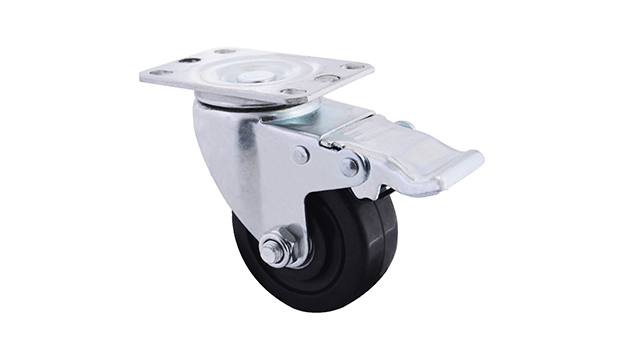
At first glance, an ESD-safe flat swivel castor wheel might look similar to a standard caster wheel, but under the surface (literally), it's engineered to tackle static head-on. The magic starts with the wheel material. Unlike standard rubber or plastic wheels, which insulate static and let it build up, ESD-safe wheels are made from conductive or dissipative materials—typically a blend of rubber or polyurethane infused with carbon black or metallic particles. These additives create a path for static charge to flow from the wheel to the caster's metal frame, then through the mounting plate to the grounded workstation or cart. The result? Static doesn't accumulate; it's safely channeled away, preventing sudden discharges.
But material alone isn't enough. The wheel's surface resistivity is tightly controlled, usually falling between 10^6 and 10^9 ohms per square (Ω/sq). This range is critical: too conductive (below 10^6 Ω/sq) and the wheel might act as a lightning rod for external charges; too resistive (above 10^9 Ω/sq) and it won't dissipate static quickly enough. ESD-safe wheels are tested rigorously to ensure they meet industry standards like ANSI/ESD S20.20, which sets the bar for electrostatic control in electronics manufacturing. This certification isn't just a sticker—it's proof that the wheel will consistently protect components, even after months of use.
The "Flat Swivel" Advantage: Maneuverability in Tight Spaces
"Flat swivel" refers to two key design features: the mounting plate and the swivel mechanism. The mounting plate is typically a flat, rectangular metal plate with pre-drilled holes, making it easy to bolt onto carts, workbenches, or racks—including modular setups like lean pipe workbenches, which are built using lightweight aluminum or steel pipes and joints. This flat design ensures a secure, low-profile attachment, keeping the center of gravity low and reducing the risk of tipping, even when the cart is loaded to capacity.
The swivel mechanism, housed in the caster's "head," is where the mobility magic happens. Instead of a rigid, fixed wheel, the swivel head uses precision ball bearings to let the wheel rotate 360 degrees. This makes maneuvering in tight spaces—like between assembly lines or around bulky machinery—a breeze. Imagine trying to navigate a cart loaded with delicate circuit boards through a narrow aisle with fixed wheels: you'd need to stop, pivot, and push, risking jostling the components. With a swivel castor, the cart glides around corners with minimal effort, reducing operator strain and the chance of accidental bumps. For facilities that prioritize lean manufacturing, this translates to faster workflows and fewer errors.
The Critical Role of the Brake System
A caster wheel's mobility is only useful if you can stop it when needed. That's why the brake system on an ESD-safe flat swivel castor is non-negotiable—especially in electronics handling. When a workstation or cart is parked at a workbench, even a slight roll can disrupt precision tasks like soldering or component placement. Worse, if the cart moves unexpectedly, components might slide off, get damaged, or create a tripping hazard. The brake on these casters isn't just a "wheel lock"; many models lock both the wheel and the swivel head, preventing any movement whatsoever. This dual-locking feature is a game-changer for stability: once engaged, the cart stays exactly where you left it, even on slightly uneven floors.
Most ESD-safe casters use a foot-operated brake, which is intuitive for operators—no bending down or fumbling with levers. A simple tap with the toe engages the brake; another tap releases it. This ease of use ensures that operators actually use the brake, rather than skipping it to save time. Over time, this small habit can drastically reduce the risk of accidental movement and ESD-related damage.

Key Features That Set It Apart
Load Capacity: Built to Handle Real-World Weights
Electronics manufacturing isn't just about small components—workstations and carts often carry heavy loads, from stacks of PCBs to testing equipment. An ESD-safe flat swivel castor wheel must balance mobility with strength, which is why load capacity is a top consideration. Most models are rated for 150 to 300 pounds per wheel, meaning a cart with four casters can safely carry 600 to 1,200 pounds. This is more than enough for typical loads: a fully loaded cart of PCBs might weigh 300 pounds, while a mobile esd workstation with tools and materials could hit 500 pounds. For heavier applications, like transporting large server components, heavy-duty models with reinforced frames and larger wheels (up to 6 inches in diameter) can handle 500+ pounds per wheel.
But load capacity isn't just about raw strength. The wheel's tread design also plays a role. ESD-safe wheels often have a flat or slightly rounded tread, which distributes weight evenly across the floor, reducing indentation on soft surfaces like vinyl or carpet. This even distribution also minimizes rolling resistance, making it easier to push heavy loads without straining operators—a small detail that adds up to big improvements in ergonomics and productivity.
Compatibility with Lean Pipe Workbenches and ESD Workstations
Modern electronics facilities love lean pipe workbenches for their flexibility. These workbenches are built using modular pipes (often aluminum or steel) and joints, allowing teams to add shelves, tool holders, or lighting as needed. ESD-safe flat swivel castor wheels are designed to integrate seamlessly with these setups. The flat mounting plate bolts directly to the workbench's steel or aluminum frame, and the low profile ensures the workbench sits at a comfortable height for operators—usually 30 to 36 inches, the standard for seated or standing workstations.
What about existing setups? Many facilities already have esd workstations or carts; retrofitting them with ESD-safe casters is often straightforward. As long as the workstation's frame has a flat surface for mounting, the casters can be swapped out in minutes, instantly upgrading ESD protection without replacing the entire workstation. This compatibility makes ESD-safe casters a cost-effective solution for facilities looking to improve safety without a complete overhaul.

How It Works with Adjustable Leveling Feet: Stability Meets Mobility
While mobility is key, there are times when a workstation or cart needs to stay perfectly still—for example, during precision assembly or when connected to power tools. That's where adjustable leveling feet come into play, often used alongside ESD-safe casters in a "caster-leveler combo" setup. Here's how it works: the casters provide mobility when needed, and the leveling feet (which can be screwed up or down) are lowered to lift the casters off the ground when stability is critical. This hybrid approach gives operators the best of both worlds: the ability to move the workstation with ease, then lock it into place with rock-solid stability.
Adjustable leveling feet are especially useful on uneven floors, which are common in older factories or facilities with concrete floors that have settled over time. A workstation with only casters might wobble on a bumpy floor, making delicate tasks like soldering or component placement frustrating. By lowering the leveling feet, operators can "level" the workstation, ensuring the work surface is flat and steady. And because the leveling feet are often made from conductive materials (like metal with a rubber pad), they also contribute to ESD protection, grounding the workstation even when the casters are off the floor. It's a symbiotic relationship: casters handle movement, leveling feet handle stability, and both work together to keep static at bay.
A Comparative Look: ESD-Safe vs. Standard Caster Wheels
To truly understand the value of ESD-safe flat swivel castor wheels, it helps to compare them side-by-side with standard caster wheels. The table below breaks down key differences in safety, performance, and suitability for electronics handling:
| Feature | ESD-Safe Flat Swivel Castor Wheel | Standard Caster Wheel |
|---|---|---|
| Surface Resistivity | 10^6–10^9 Ω/sq (dissipative/conductive) | >10^12 Ω/sq (insulative) |
| Wheel Material | Conductive rubber/polyurethane (carbon/metal infused) | Standard rubber, plastic, or nylon (non-conductive) |
| Brake Functionality | Dual-locking (wheel + swivel) foot brake | Wheel-only lock (if brake exists) |
| ESD Certification | ANSI/ESD S20.20 compliant | No ESD certification |
| Compatibility with ESD Workstations | Designed for integration with grounded setups | May insulate static, risking ESD damage |
| Load Capacity (per wheel) | 150–300 lbs (heavy-duty models up to 500+ lbs) | Similar range, but no ESD protection |
| Best For | Electronics manufacturing, ESD-sensitive environments, lean pipe workbenches | General material handling (non-sensitive goods) |
Choosing the Right ESD-Safe Castor Wheel: A Buyer's Guide
With so many options on the market, how do you pick the right ESD-safe flat swivel castor wheel for your facility? Start by asking these key questions:
1. What's the maximum load per wheel?
Calculate the total weight of your workstation or cart (including tools, materials, and components), then divide by the number of casters (usually 4). Add a 20% buffer to account for uneven weight distribution—if the total is 800 lbs, aim for casters rated for at least 200 lbs each (800 lbs / 4 = 200 lbs, plus buffer). Overloading casters can stretch the materials, reducing ESD performance and lifespan.
2. What type of floor will the casters roll on?
Hard floors (concrete, tile) work well with most ESD-safe wheels, but soft floors (carpet, vinyl) may require larger wheels (5+ inches in diameter) to prevent sinking. If your facility has both floor types, look for wheels with a tread that balances grip and rolling resistance—too soft, and they'll stick on carpet; too hard, and they'll slide on smooth concrete.
3. Do you need dual-locking brakes?
If stability during tasks like assembly or testing is critical, dual-locking brakes (wheel + swivel) are a must. For carts that are only moved occasionally, a wheel-only brake might suffice, but dual-locking is safer for ESD-sensitive environments.
4. Is ANSI/ESD S20.20 certification required?
Most electronics manufacturers follow ANSI/ESD S20.20, which mandates that all ESD control products meet specific standards. Choosing certified casters ensures compliance and reduces liability if a component failure occurs.
Maintenance Tips to Ensure Longevity and Consistent ESD Protection
An ESD-safe flat swivel castor wheel is an investment, and like any investment, it needs care to deliver long-term value. Here are simple maintenance steps to keep your casters performing at their best:
- Clean the wheels regularly: Dust, dirt, and debris can build up in the wheel tread, reducing conductivity and increasing rolling resistance. Wipe wheels with a damp cloth weekly, and use a soft brush to dislodge stubborn grime from the tread grooves.
- Lubricate the swivel head: Over time, the ball bearings in the swivel head can dry out, making rotation stiff. Apply a small amount of silicone-based lubricant (avoid oil-based lubricants, which attract dust) every 3–6 months to keep the swivel smooth.
- Check the brake mechanism: Test the brake monthly to ensure it engages and releases smoothly. If the brake feels loose or doesn't lock properly, tighten the mounting bolts or replace worn brake pads—don't wait for it to fail mid-use.
- Inspect for wear: Look for cracks in the wheel material, flat spots on the tread, or rust on the metal frame. If the wheel is worn, replace it immediately—damaged wheels lose conductivity and can't protect components.
- Verify grounding: Use an ESD tester to check the wheel's surface resistivity quarterly. If readings fall outside the 10^6–10^9 Ω/sq range, the wheel may need to be replaced, as its ability to dissipate static has degraded.
Conclusion: Investing in Safety, Mobility, and Efficiency
In the fast-paced world of electronics manufacturing, where every component counts and downtime is costly, ESD-safe flat swivel castor wheels with brakes are more than just "wheels"—they're a critical part of your ESD protection strategy. By combining mobility, stability, and static dissipation, these casters let you move components safely, reconfigure workspaces quickly, and protect against the invisible threat of ESD. Whether you're retrofitting existing lean pipe workbenches, upgrading esd workstations, or building new carts from scratch, choosing ESD-safe casters is a decision that pays off in fewer defects, higher quality, and greater peace of mind.
At the end of the day, electronics manufacturing is about precision, reliability, and trust. When a customer buys a smartphone, laptop, or medical device, they trust that it will work as intended—no hidden defects, no premature failures. ESD-safe casters might be a small part of that process, but they're a reminder that safety and efficiency don't have to compete. With the right tools, you can have both.