- Company Articles
- Products and Technology
- Product knowledge
- Essential Accessories for 4080A EU Standard Aluminum Profile Systems

Essential Accessories for 4080A EU Standard Aluminum Profile Systems
Related Product
4080A EU Standard Aluminum Profile
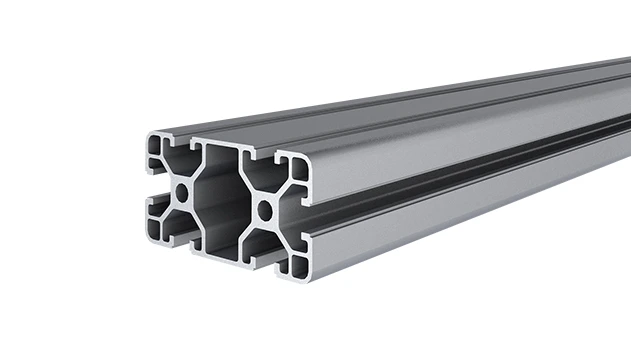
4080A is a 4.00x8.00 CM fractional 40 series square extrusion T-slot profile with two side open T-slots, each side with 4.00cm face, two side with 8.00cm face. The profile has align-a-grooves to assist in aligning connecting profiles.
Walk into any modern factory, workshop, or logistics hub, and you'll likely spot the sleek, silver frames of aluminum profile systems hard at work. Among these, the 4080A EU Standard Aluminum Profile stands out as a workhorse—renowned for its strength, versatility, and modular design. But here's the thing: a 4080A profile alone is just a length of metal. It's the accessories that transform it into a dynamic, functional system—whether you're building a production workbench, a material handling rack, or an automated conveyor line. In this guide, we'll dive into the essential aluminum profile accessories that unlock the full potential of 4080A systems, making your operations smoother, more efficient, and adaptable to whatever the day throws at you.
Why 4080A? The Backbone of Modern Workspaces
Before we jump into accessories, let's quickly appreciate why the 4080A profile is a favorite. Measuring 40mm by 80mm, it strikes the perfect balance between load capacity and flexibility. Its T-slot design—those grooves running along its length—lets you slide in connectors, brackets, and other components without drilling or welding. This modularity means you can assemble, disassemble, and reconfigure your setup in hours, not days. But to leverage that modularity, you need the right accessories. Think of it like building with LEGO: the bricks (profiles) are great, but the minifigures, wheels, and hinges (accessories) are what bring your creation to life.
Structural Accessories: The "Glue" That Holds It All Together
Every stable structure starts with strong connections, and 4080A systems are no exception. These structural accessories ensure your frames, racks, and workbenches stay rigid under pressure—even when loaded with heavy tools, materials, or products.
1. 90° Aluminum Profile Connectors: The Right-Angle Workhorses
If there's one accessory you'll use more than any other, it's the 90° aluminum profile connector . As the name suggests, these handy components join two 4080A profiles at a perfect right angle—ideal for building the corners of workbenches, shelving units, or machine guards. What makes them special? They slot into the T-slots of the profiles and secure with bolts, creating a joint that's both strong and adjustable. Unlike welded joints, if you need to tweak the angle or disassemble later, just loosen the bolts. It's modularity in action.
For example, imagine building a workbench: the vertical legs (4080A profiles) need to connect to the horizontal frame. A 90° connector at each corner ensures the legs stay perpendicular, so your workbench doesn't wobble when you're hammering, assembling, or testing products. Heavy-duty versions even come with reinforced edges for extra stability, making them perfect for industrial settings where loads can reach hundreds of kilograms.
2. 45° Aluminum Profile Connectors: Adding Angles to Your Design
Not every structure is a rectangle. Sometimes you need slopes, ramps, or diagonal supports—think of a material chute or a tilted work surface for easy access. That's where 45° aluminum profile connectors shine. These connectors let you join profiles at a 45° angle, adding versatility to your designs. They're especially useful in flow racks, where materials need to glide downward by gravity, or in ergonomic workstations where a tilted surface reduces strain on the wrists.
Like their 90° cousins, 45° connectors are T-slot compatible and adjustable. Just align the profiles, insert the connector, tighten the bolts, and you're good to go. No need for complex measuring tools—most come with pre-marked guides to ensure a precise angle every time.
3. Aluminum Profile End Caps: Safety and Aesthetics in One
Ever run your hand along an aluminum profile and felt a sharp edge? Not only is it unpleasant, but it's also a safety hazard—especially in busy workplaces where people brush against equipment daily. 4080 aluminum profile end caps solve this problem. These simple plastic or rubber caps snap onto the ends of 4080A profiles, covering sharp edges and preventing dust, debris, or small tools from falling into the T-slots. They also give your setup a polished, professional look—no more raw, unfinished ends sticking out.
End caps come in various colors, too. While black or gray are standard, some manufacturers offer options like blue or yellow for color-coding workstations (e.g., yellow for "caution" zones, blue for "assembly" areas). It's a small detail, but it adds up to a more organized, safer workspace.

Functional Accessories: Making Your System "Do" Something
Structural accessories keep things stable, but functional accessories turn your 4080A system into a tool that actually does work—moving materials, guiding products, or supporting specific tasks. Let's explore two game-changers in this category.
1. Aluminum Guide Rail A: Guiding Materials with Precision
In material handling, precision is everything. Whether you're moving boxes along a conveyor, sliding components between workstations, or aligning parts for assembly, you need a way to keep things on track—literally. That's where aluminum guide rail A comes in. Designed to work seamlessly with 4080A profiles, this guide rail mounts directly to the T-slots, creating a smooth, low-friction path for products, bins, or even robotic arms.
What sets Aluminum Guide Rail A apart? Its U-shaped design with a smooth inner surface reduces friction, allowing materials to glide easily—even when pushed manually. It's also durable, resistant to scratches and corrosion, making it ideal for both indoor and covered outdoor use. For example, in an electronics assembly line, you might use Aluminum Guide Rail A to guide PCBs from the soldering station to the testing station. The rail ensures each PCB stays aligned, preventing jams and reducing the risk of damage.
Another bonus: Aluminum Guide Rail A is compatible with a range of slider blocks and stops, so you can customize the path—adding curves, stops, or diverters as needed. It's like adding lanes to a highway, ensuring every "car" (material) reaches its destination on time.
2. Roller Track Placon Mount for Aluminum Profile Flat: Smooth Material Flow, Simplified
If you've ever watched a warehouse in action, you've seen roller tracks in use—those lines of small wheels that let boxes and totes glide from one point to another with minimal effort. To attach these roller tracks to your 4080A system, you need a reliable mounting solution: the roller track placon mount for aluminum profile flat .
These mounts are the unsung heroes of material flow. They're designed to fit flush against the flat surfaces of 4080A profiles, providing a stable base for roller tracks. The "placon" part refers to their low-profile, lightweight design—they don't add unnecessary bulk, keeping your system sleek and efficient. Installation is a breeze: slide the mount into the T-slot, secure with bolts, and then attach the roller track to the mount. Done.
Why does this matter? Without a proper mount, roller tracks can wobble, leading to stuck materials or uneven wear. The roller track placon mount for aluminum profile flat ensures the track stays level and secure, even under heavy loads. For instance, in a distribution center, you might use this mount to attach roller tracks to a 4080A-based flow rack. Boxes slide down the tracks by gravity, reducing the need for manual lifting and speeding up order fulfillment.
Mobility Accessories: Taking Your System on the Go
Not every setup needs to stay in one place. Workbenches might need to move to a new production line, racks might need to shift for inventory counts, and mobile carts might need to transport materials across the shop floor. That's where mobility accessories come in, turning fixed structures into flexible, on-the-go tools.
Caster Wheels: Rolling Toward Flexibility
You can't talk about mobility without mentioning caster wheels . These small but mighty accessories attach to the bottom of 4080A-based structures, letting you roll them anywhere with ease. But not all caster wheels are created equal—choosing the right ones depends on your needs.
Swivel Casters with Brakes: Perfect for workbenches or mobile racks that need to move freely but stay put during use. The swivel design allows 360° movement, so you can maneuver around tight corners, while the brake locks the wheel in place, preventing accidental movement when you're working.
Rigid Casters: Best for straight-line movement, like carts that travel back and forth between two fixed points. They're simpler and often more affordable than swivel casters, making them a good choice for high-traffic, predictable paths.
Heavy-Duty Casters: For loads over 200kg, you'll want heavy-duty casters with reinforced frames and larger wheels. These are ideal for mobile tool racks or material carts carrying bulky items like metal sheets or engine parts.
When pairing caster wheels with 4080A profiles, look for models with mounting plates that fit the T-slots. Most caster manufacturers offer adapters specifically for aluminum profiles, ensuring a secure fit that won't loosen over time. For example, a mobile workbench built with 4080A profiles and swivel casters with brakes can be rolled to the assembly line in the morning, locked in place during production, then moved to the cleaning station in the afternoon—all without breaking a sweat.
Workbench Essentials: Building a Space That Works for You
One of the most common uses for 4080A profiles is building workbenches—and for good reason. They're customizable, durable, and can be tailored to any task, from electronics assembly to heavy machining. But a workbench isn't just a flat surface; it's a collection of accessories that turn it into a productivity hub.
Table Tops and Surface Options
The heart of any workbench is its surface. While 4080A profiles form the frame, you'll need a top that can handle your tools, materials, and daily wear and tear. Popular options include:
- Aluminum Honeycomb Panels: Lightweight but strong, these panels have a honeycomb core sandwiched between aluminum sheets, making them resistant to dents and scratches. They're also heat-resistant, ideal for soldering or welding work.
- Particleboard with Laminate: Affordable and versatile, laminate surfaces are easy to clean and come in a range of colors. Great for general assembly or packing stations.
- ESD-Safe Tops: For electronics manufacturing, ESD (electrostatic discharge) safe tops prevent static electricity from damaging sensitive components.
These tops mount directly to the 4080A frame using T-slot bolts or brackets, so you can swap them out if they get worn or if your needs change. For example, if you start with a laminate top for assembly and later switch to welding, you can easily replace it with an aluminum honeycomb panel.
Accessory Rails and Tool Holders
A cluttered workbench is a productivity killer. That's why accessory rails and tool holders are a must. These mount to the back or sides of the 4080A frame, providing a place to hang tools, cables, or small parts bins. Some even come with hooks, magnetic strips, or pegboards, letting you customize the layout to your workflow. Imagine never having to search for a screwdriver again—because it's hanging right where you need it, thanks to a tool holder attached to your 4080A workbench.
Choosing the Right Accessories: A Quick Guide
With so many accessories available, how do you pick the right ones for your 4080A system? Here's a simple checklist to keep in mind:
- Load Capacity: Always check the weight rating of accessories—especially connectors, casters, and roller tracks. A caster rated for 100kg won't cut it if your workbench weighs 300kg.
- Environment: If you're working in a wet or corrosive environment (like a food processing plant), opt for stainless steel or corrosion-resistant accessories. For cleanrooms, look for low-dust options like aluminum guide rails with smooth surfaces.
- Future Flexibility: Think about whether you might reconfigure your system later. Modular accessories (like adjustable connectors or removable guide rails) make it easier to adapt as your needs change.
- Compatibility: Not all accessories work with all profiles. Double-check that the accessory is designed for 4080A EU standard profiles—look for "4080 compatible" in the product description.
Accessory Spotlight: Comparing Key Components
To help you visualize how these accessories work together, here's a quick comparison of some essential components and their best uses:
| Accessory | Primary Use | Key Benefit | Best For |
|---|---|---|---|
| 90° Aluminum Profile Connector | Joining profiles at right angles | Strong, adjustable, no welding needed | Workbench corners, shelving units |
| Aluminum Guide Rail A | Guiding materials along a path | Low friction, durable, customizable paths | Assembly lines, conveyor systems |
| Roller Track Placon Mount for Aluminum Profile Flat | Mounting roller tracks to 4080A profiles | Stable, low-profile, easy installation | Flow racks, material chutes |
| Swivel Caster Wheel with Brake | Adding mobility to structures | 360° movement, secure braking | Mobile workbenches, tool carts |
| Aluminum Honeycomb Panel | Workbench table tops | Lightweight, strong, heat-resistant | Welding stations, heavy-duty assembly |
Final Thoughts: Accessories as the Key to Adaptability
In today's fast-paced work environments, adaptability isn't just a nice-to-have—it's a necessity. 4080A EU Standard Aluminum Profile systems give you the foundation, but it's the aluminum profile accessories that let you pivot, grow, and innovate. From the humble 90° connector holding your workbench together to the Aluminum Guide Rail A keeping your materials on track, each accessory plays a role in making your operations more efficient, safer, and tailored to your unique needs.
So, the next time you look at a 4080A profile, don't just see a piece of metal. See a blank canvas—and let the right accessories turn it into something extraordinary. After all, in the world of manufacturing and logistics, the best systems aren't just built—they're assembled , one smart accessory at a time.