- Company Articles
- Products and Technology
- Product knowledge
- External Straight Aluminum Joint: Key Features That Enhance Lean Pipe Structures

External Straight Aluminum Joint: Key Features That Enhance Lean Pipe Structures
Related Product
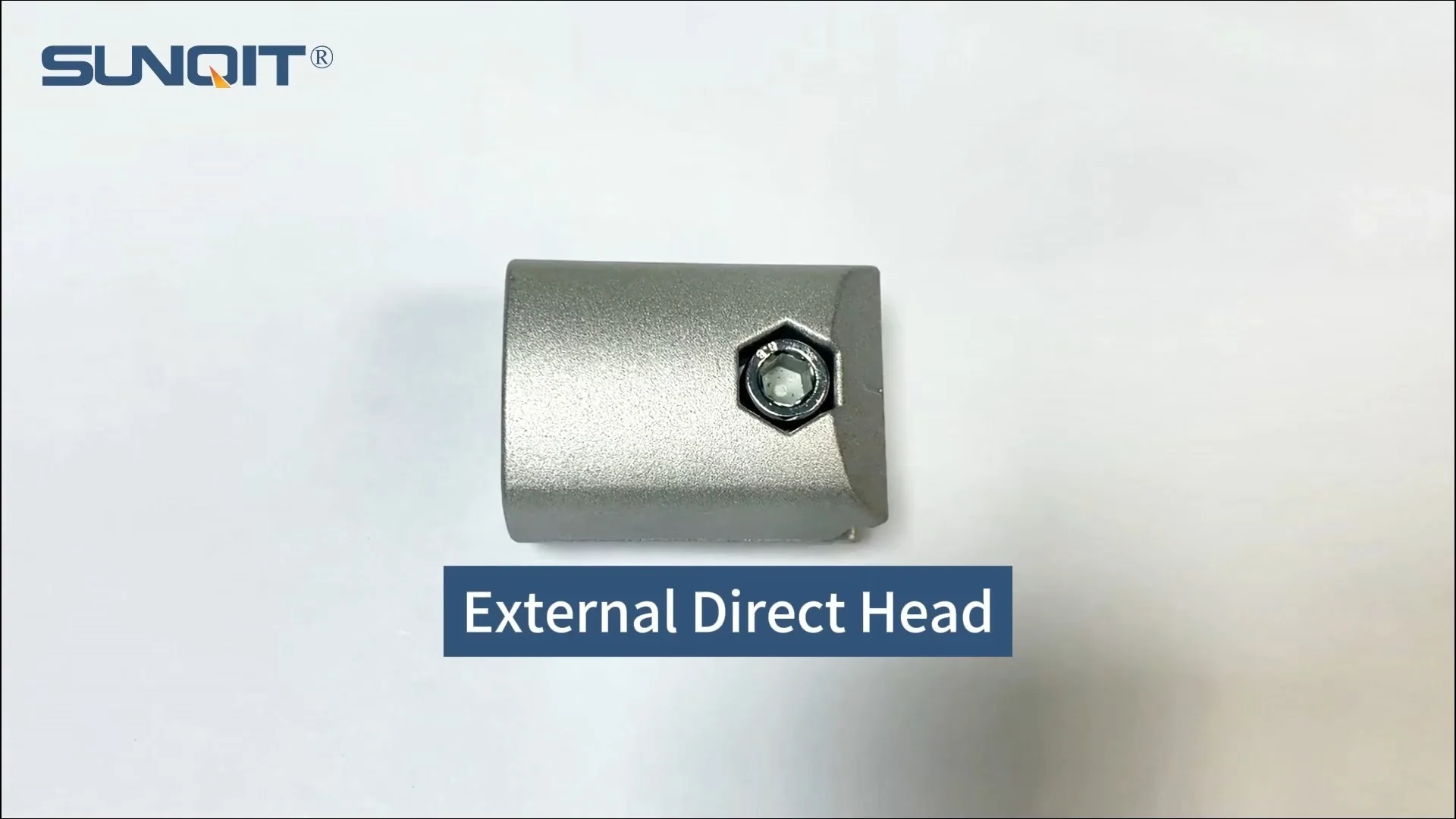
External Straight Aluminum Joint
Aluminum pipe joint outside connection used for two pcs 28pcs aluminum pipe connection in straight angle,it connects two pcs pipe from outside.
In the world of lean manufacturing, where efficiency, flexibility, and waste reduction are more than just buzzwords—they're the backbone of operational success—the tools and components that build your workspace matter as much as the processes themselves. Lean pipe structures, from workbenches to flow racks and conveyors, are the silent workhorses of modern factories, warehouses, and assembly lines. They organize workflows, streamline material handling, and adapt to the ever-changing demands of production. But none of this is possible without the unsung heroes holding them together: the joints. Today, we're shining a spotlight on one such hero: the external straight aluminum joint . Far more than a simple connector, this component is a linchpin in creating lean pipe structures that are durable, adaptable, and built for the long haul. Let's dive into its key features and explore how it transforms good lean systems into great ones.
Understanding Lean Pipe Structures: The Foundation of Efficient Workspaces
Before we zoom in on the external straight aluminum joint, let's take a step back to appreciate the role of lean pipe structures in modern operations. At their core, these structures are modular systems built from pipes, joints, and accessories, designed to support everything from manual assembly workstations to automated material transport. What makes them "lean"? They're customizable, scalable, and easy to reconfigure—perfect for environments where production needs shift, product lines change, or space constraints demand flexibility.
Think about a typical electronics manufacturing plant. On the floor, you might find aluminum profile workbenches where technicians assemble circuit boards, flow racks loaded with components that glide smoothly to each station, and conveyors moving partially finished products between stages. Each of these structures relies on joints to connect pipes, secure shelves, and maintain stability. A weak joint? It can turn a productive line into a source of frustration—wobbly workbenches leading to errors, flow racks that sag and jam, or conveyors that misalign and damage products. That's where the right joint makes all the difference.
What Is an External Straight Aluminum Joint?
The external straight aluminum joint is exactly what its name suggests: a connector made from high-grade aluminum alloy, designed to join two or more aluminum pipes in a straight line. Unlike internal joints that fit inside pipes, this joint wraps around the exterior of the pipes, creating a secure, visible connection. It's available in various sizes to match common pipe diameters (think 20mm, 30mm, or 40mm) and is often paired with bolts or set screws to lock the pipes in place. But its simplicity is deceptive—beneath that straightforward design lies a host of features that make it indispensable for lean pipe structures.
While there are countless joints on the market—plastic, steel, even composite—aluminum stands out for its unique blend of strength, lightness, and resistance to corrosion. And among aluminum joints, the external straight variety is a workhorse, favored for its ability to create long, stable runs of pipe that form the backbone of everything from shelving units to assembly lines. Now, let's unpack the features that make it so effective.

Key Features of the External Straight Aluminum Joint
1. Durability: Built to Withstand the Rigors of Daily Use
Aluminum alloys—like the 6061-T6 commonly used in these joints—are renowned for their strength-to-weight ratio. This means the external straight aluminum joint can handle heavy loads without adding unnecessary bulk. In a busy warehouse, where flow racks might hold hundreds of pounds of parts or workbenches support power tools and assembly materials, durability isn't just a nice-to-have; it's critical. Unlike plastic joints, which can crack under stress or degrade in high temperatures, aluminum joints resist warping, bending, and wear. Even in environments with moisture or chemicals (common in food processing or automotive plants), aluminum's natural corrosion resistance ensures the joint stays strong for years, reducing the need for frequent replacements.
Consider this: A plastic joint in a automotive parts warehouse might last 6–12 months under heavy use before showing signs of fatigue. An external straight aluminum joint in the same setting? It can easily last 5–7 years with minimal maintenance. That's a huge difference in long-term reliability—and cost savings.
2. Precision Engineering: Tight Tolerances for a Secure Fit
In lean systems, precision matters. A joint that's even slightly loose can throw off the alignment of a conveyor, cause a flow rack to tilt, or make a workbench wobble—all of which lead to inefficiencies, errors, or even safety hazards. The external straight aluminum joint is engineered with tight tolerances, meaning its inner diameter is precisely matched to the outer diameter of standard aluminum pipes. When you slide the joint onto the pipes and tighten the set screws (or bolts), it creates a snug, gap-free connection that won't shift over time.
This precision is the result of advanced manufacturing techniques, like CNC machining, which ensure every joint is consistent. Whether you're building a small parts cart or a 50-foot-long conveyor, you can trust that each external straight aluminum joint will fit exactly as intended, creating a structure that's stable from day one.
3. Compatibility: Works Seamlessly with Aluminum Profiles and Accessories
Lean systems thrive on compatibility. A joint that only works with one type of pipe or a handful of accessories limits your ability to customize and adapt. The external straight aluminum joint, however, is designed to play well with others. It pairs effortlessly with standard aluminum profiles (think 2020, 3030, or 4040 series), which are the building blocks of most lean structures. Whether you're attaching a shelf to a workbench frame, connecting a crossbar to a flow rack, or extending a conveyor track, this joint integrates smoothly.
But it doesn't stop there. It also works with a range of aluminum pipe accessories , from end caps that protect pipe ends to clamps that secure tools or bins. This compatibility means you can mix and match components to create exactly the structure you need—no need to invest in proprietary systems or custom parts. For example, a manufacturer might use the same external straight aluminum joint to build a workbench, a material trolley, and a flow rack, standardizing on components to simplify ordering and reduce inventory costs.
4. Tool-Free (or Minimal-Tool) Assembly: Speed and Simplicity
In lean manufacturing, downtime is the enemy. The faster you can build, modify, or repair a structure, the less it disrupts production. The external straight aluminum joint excels here with its user-friendly design. Most models require only a hex key (Allen wrench) to tighten the set screws—no welding, no drilling, no specialized equipment. This means a team of two can assemble a basic workbench in under an hour, or reconfigure a flow rack in minutes to accommodate a new product line.
Compare this to steel joints, which often require welding or heavy bolts, or plastic joints that may need adhesives (and time to dry). The external straight aluminum joint's simplicity reduces labor costs, speeds up setup, and empowers frontline workers to make adjustments on the fly—no need to wait for maintenance or engineering teams. It's a small feature, but it adds up to big gains in agility.
5. Lightweight Design: Easier to Handle, Cheaper to Ship
Aluminum is significantly lighter than steel, and the external straight aluminum joint leverages this advantage. A typical steel joint of the same size might weigh twice as much, making it harder to transport, install, or reposition. For workers assembling structures overhead or moving components around the factory floor, this lightness reduces fatigue and injury risk. It also cuts shipping costs—lighter components mean lower freight bills, especially when ordering in bulk.
But don't mistake lightness for weakness. As we noted earlier, aluminum alloys are surprisingly strong, so the joint maintains the structural integrity needed for heavy-duty applications. It's the best of both worlds: a connector that's easy to handle but tough enough to get the job done.

How These Features Enhance Lean Pipe Structures: Beyond Just "Holding It Together"
Now that we've explored the external straight aluminum joint's features, let's connect the dots: How do these traits translate into better lean pipe structures and, ultimately, better operations? Let's break it down.
Stability That Reduces Waste and Errors
A stable structure is a productive structure. Wobbly workbenches lead to shaky hands and assembly errors; sagging flow racks cause parts to get stuck, slowing down production; misaligned conveyors damage products or jam, halting lines. The external straight aluminum joint's tight fit and durability eliminate these issues. By creating rigid, wobble-free connections, it ensures that workbenches stay level, flow racks maintain their shape, and conveyors run smoothly. This stability reduces waste—no more scrapped products due to drops or misalignment—and cuts down on rework, letting teams focus on making goods, not fixing structures.
Adaptability to Keep Pace with Change
Lean manufacturing isn't static—it's about continuous improvement. Your production line today might need to shrink, expand, or reconfigure tomorrow to meet new demand, launch a product, or adopt a new process. The external straight aluminum joint's compatibility and easy assembly make reconfiguration a breeze. Need to add a shelf to a workbench? Loosen the joint, slide in a new pipe, retighten, and you're done. Want to extend a flow rack by 3 feet? Grab a few extra pipes and joints, and you can have it up and running in an hour. This adaptability means your lean pipe structures grow and change with your business, eliminating the waste of "overbuilding" or the cost of replacing entire systems.
Consider a small appliance manufacturer that recently shifted from producing blenders to adding air fryers to their line. Their existing assembly workbenches, built with external straight aluminum joints, were easily modified to accommodate the new, larger components—no need to buy new workbenches, just a few extra pipes and accessories. That's lean in action.
Efficiency That Boosts Productivity
Time is money, and nowhere is that truer than on the factory floor. The external straight aluminum joint's quick assembly and low maintenance free up time for your team. Instead of spending hours wrestling with complicated joints or repairing broken ones, workers can focus on their core tasks: assembling products, moving materials, or optimizing workflows. Even better, the joint's precision ensures that material flows smoothly—components glide down flow racks without jamming, products move along conveyors without bottlenecks, and tools stay within easy reach on stable workbenches. All of this adds up to faster cycle times, higher output, and a more productive workforce.
Cost Savings That Align with Lean Principles
Lean is about eliminating waste, and unnecessary costs are a major form of waste. The external straight aluminum joint helps cut costs in three key ways: First, its durability means fewer replacements—no more buying new joints every few months. Second, its light weight reduces shipping and handling costs. Third, its compatibility with standard aluminum profiles and accessories means you don't need to invest in expensive, proprietary systems. Over time, these savings add up, making the joint not just a component, but an investment in your operation's bottom line.

Comparing External Straight Aluminum Joints to Other Connectors
To truly appreciate the external straight aluminum joint, it helps to see how it stacks up against other common connectors. Let's compare it to two alternatives: plastic lean pipe joints and steel external joints.
| Feature | External Straight Aluminum Joint | Plastic Lean Pipe Joint | Steel External Joint |
|---|---|---|---|
| Durability | High (resists corrosion, warping, and wear; 5–7 year lifespan) | Low (prone to cracking, melting in heat; 6–12 month lifespan under heavy use) | High (strong, but prone to rust in humid environments) |
| Weight | Light (easy to handle and ship) | Lightest (but sacrifices strength) | Heavy (increases shipping costs and installation effort) |
| Assembly Time | Fast (tool-free or minimal tools; 5–10 minutes per joint) | Fast (similar to aluminum, but may require more frequent retightening) | Slow (often requires welding or heavy tools) |
| Compatibility | High (works with standard aluminum profiles and accessories) | Moderate (may only fit specific plastic pipes) | Moderate (often designed for steel pipes, limiting material flexibility) |
| Cost (Long-Term) | Low (initial cost higher than plastic, but lifespan and savings offset it) | High (low upfront cost, but frequent replacements add up) | High (expensive upfront and higher shipping/installation costs) |
As the table shows, the external straight aluminum joint balances durability, weight, ease of use, and cost better than many alternatives. It's not the cheapest upfront, but its long lifespan and low maintenance make it the most cost-effective choice for lean systems that need to last.
Real-World Applications: Where the External Straight Aluminum Joint Shines
The external straight aluminum joint isn't just a theoretical win—it's proven in the field. Let's look at a few real-world scenarios where it makes a tangible difference.
Automotive Assembly Lines
Automotive plants are fast-paced environments with heavy loads and constant movement. A typical line might use lean pipe structures to hold tools, transport parts, or support assembly workstations. Here, the external straight aluminum joint's durability is critical. For example, a workbench where technicians install car door panels needs to support power tools, heavy panels, and constant movement. The joint's tight fit ensures the bench doesn't wobble, reducing errors in alignment. Flow racks carrying engine components—often weighing 50+ pounds—rely on the joint's strength to prevent sagging, ensuring parts reach each station on time.
Electronics Manufacturing: Precision in a Delicate Environment
Electronics assembly requires precision—even a small misalignment can damage sensitive components like circuit boards or microchips. In these settings, aluminum profile workbenches with external straight aluminum joints are a staple. The joint's tight tolerances ensure the bench stays level, so technicians can solder, test, and assemble with steady hands. Flow racks carrying tiny components (resistors, capacitors, connectors) benefit from the joint's stability, preventing jams that could halt production. And because electronics plants often have strict cleanliness standards, the joint's corrosion resistance is a plus—no rust or flaking paint to contaminate sensitive parts.
Logistics and Warehousing: Streamlining Material Flow
Warehouses and distribution centers rely on lean pipe structures to organize inventory and speed up order fulfillment. Flow racks, pick carts, and conveyor systems are everywhere, and they need to handle constant use. The external straight aluminum joint's adaptability shines here. A warehouse that experiences seasonal spikes in demand can quickly extend flow racks using the joint, adding more levels or length to accommodate extra inventory. Pick carts, built with the joint, are lightweight enough for workers to maneuver but strong enough to carry heavy boxes. Even conveyor systems benefit—straight runs of pipe connected by the joint ensure smooth movement of packages, reducing the risk of jams or damage.
Maintaining Your External Straight Aluminum Joints: Tips for Longevity
Like any component, the external straight aluminum joint performs best with a little care. Here are simple maintenance tips to keep your joints (and your lean pipe structures) in top shape:
- Regular Inspections: Every few months, check joints for looseness. Tighten set screws or bolts as needed—vibration from daily use can cause them to wiggle over time.
- Cleaning: Wipe joints with a damp cloth to remove dust, grease, or debris. In environments with oil or chemicals (like automotive plants), use a mild detergent to prevent buildup that could corrode the aluminum.
- Avoid Overloading: While the joint is strong, it has limits. Check the manufacturer's weight ratings and avoid exceeding them—overloading can bend pipes or strip threads.
- Protect from Impact: In busy areas, add corner guards or bumpers to structures to prevent forklifts, carts, or pallet jacks from hitting joints. A hard impact can dent or bend the joint, weakening the connection.
These simple steps take minutes but can extend the life of your joints and structures by years.
Conclusion: The External Straight Aluminum Joint—A Cornerstone of Lean Systems
In the world of lean manufacturing, success lies in the details. The external straight aluminum joint may seem like a small component, but its impact is huge. Its durability ensures stability, its precision reduces errors, its compatibility fosters adaptability, and its efficiency cuts costs. Together, these features transform lean pipe structures from basic frameworks into dynamic, responsive tools that support the core principles of lean: waste reduction, efficiency, and continuous improvement.
Whether you're building a single workbench or an entire factory floor of lean systems, choosing the right joint matters. The external straight aluminum joint isn't just a connector—it's a partner in your operational success. It's built to work as hard as your team does, adapting to change, standing up to daily use, and helping you create a workspace that's not just lean, but truly exceptional.
So the next time you walk through your facility, take a closer look at the joints holding your lean pipe structures together. If they're external straight aluminum joints, you're already on the path to a more efficient, adaptable, and successful operation. If not? It might be time to make the switch.