- Company Articles
- Products and Technology
- Product knowledge
- External Straight Aluminum Joint Sizes: Standard vs. Custom Options

External Straight Aluminum Joint Sizes: Standard vs. Custom Options
Related Product
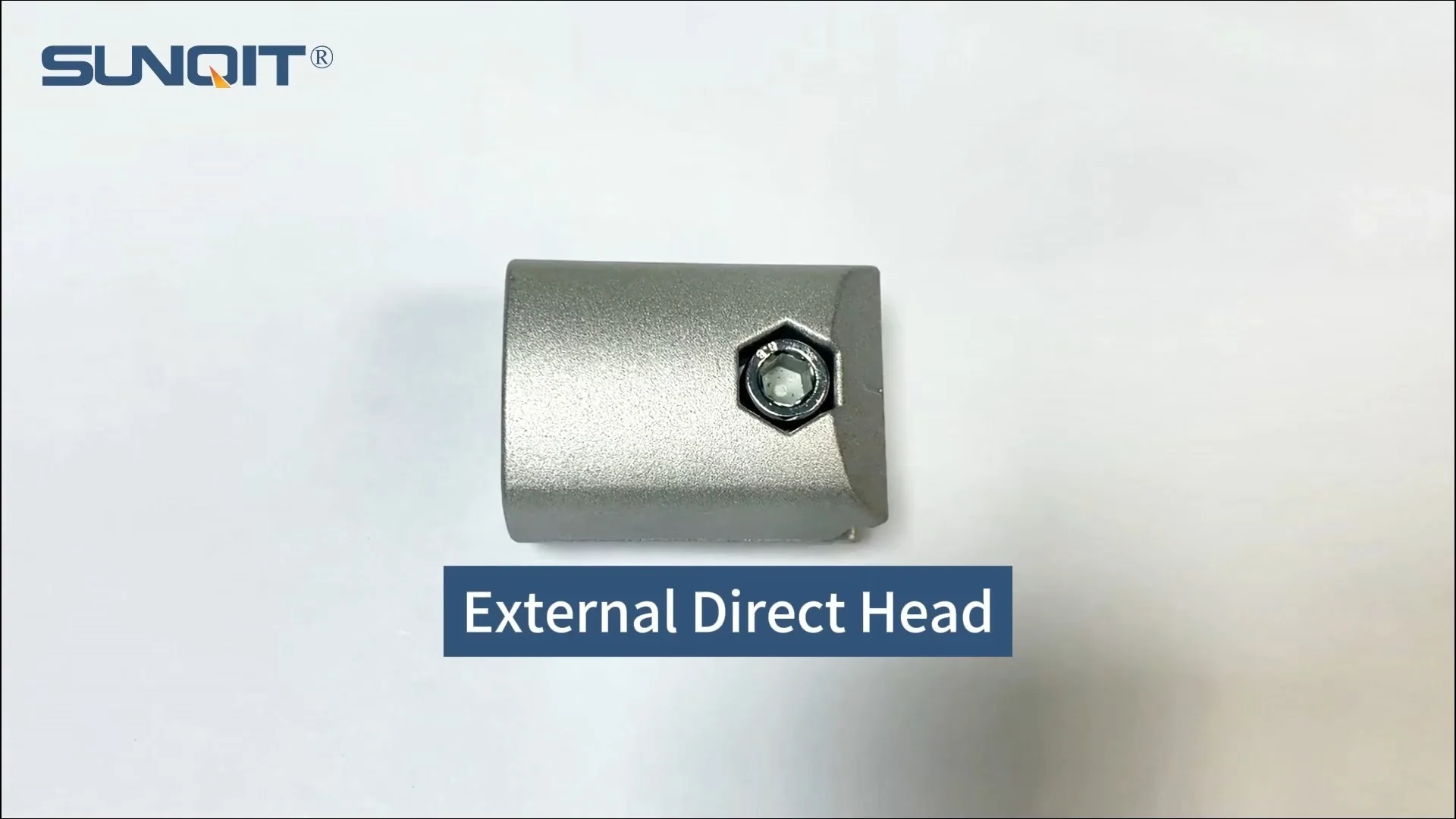
External Straight Aluminum Joint
Aluminum pipe joint outside connection used for two pcs 28pcs aluminum pipe connection in straight angle,it connects two pcs pipe from outside.
In the world of manufacturing, assembly lines, and material handling, it's often the "small parts" that keep everything running smoothly. Think about the workbenches where products are assembled, the flow racks that move materials across the factory floor, or the turnover trolleys that transport goods from one station to another. Behind all these structures lies a critical component: the joints that hold them together. Among these, external straight aluminum joints stand out for their versatility, strength, and compatibility with aluminum lean pipe systems. But when it comes to choosing the right joint for your project, the decision often boils down to one key question: standard sizes or custom options? In this article, we'll dive deep into both, exploring their benefits, use cases, and how to decide which is right for your needs.
Understanding External Straight Aluminum Joints
Before we jump into sizes, let's clarify what an external straight aluminum joint is. Simply put, it's a connector designed to join two or more aluminum pipes or profiles in a straight line (hence "straight") and is mounted on the exterior of the pipes (hence "external"). These joints are the backbone of modular systems built with aluminum lean pipe—a lightweight, durable material widely used in lean manufacturing, 5S implementation, and industrial workspaces. Unlike rigid welded connections, external straight joints allow for easy assembly, disassembly, and reconfiguration, making them ideal for dynamic environments where layouts change frequently.
These joints are typically made from aluminum extrusion profile, a material known for its high strength-to-weight ratio, corrosion resistance, and machinability. Common alloys include 6061-T6, which offers excellent structural integrity and is easy to anodize for added protection. When paired with aluminum pipe accessories like end caps, clamps, or casters, external straight joints become part of a flexible ecosystem that can be tailored to everything from simple workbenches to complex conveyor systems.
Standard Sizes: The Workhorses of Industry
What Are Standard Sizes?
Standard external straight aluminum joints are pre-engineered, mass-produced components with dimensions that follow industry-wide norms. These sizes are determined by decades of manufacturing experience, focusing on the most common needs of businesses across sectors like automotive, electronics, logistics, and pharmaceuticals. Think of them as the "one-size-fits-most" solution—designed to work seamlessly with standard aluminum lean pipe diameters, profiles, and accessories.
Common Standard Dimensions
While exact sizes can vary slightly between manufacturers, most standard external straight aluminum joints are built around a few core diameter ranges, thread sizes, and load capacities. Here are some of the most prevalent options:
- Diameters: The inner diameter of the joint (which fits over the aluminum pipe) is the most critical measurement. Common sizes include 20mm, 30mm, and 40mm, corresponding to standard aluminum pipe diameters used in workbenches, racks, and trolleys. For example, a 20mm joint pairs with 20mm basic aluminum tube, while a 40mm joint is designed for heavier-duty applications like material racks or conveyor supports.
- Thread Sizes: Many standard joints feature threaded holes (e.g., M6, M8) for securing bolts, ensuring a tight fit between pipes. These threads are standardized to work with off-the-shelf fasteners, simplifying assembly.
- Length: The body length of the joint typically ranges from 30mm to 80mm, depending on the load it needs to support. Shorter joints are used for lightweight structures, while longer ones add stability in heavier setups.
Benefits of Standard Sizes
So why choose standard sizes? For most businesses, the advantages are hard to beat:
Readily Available: Standard joints are stocked by nearly every lean pipe supplier, meaning you can get them with minimal lead time. Whether you need a few replacement joints or hundreds for a new project, suppliers like lean pipe joint suppliers keep these in inventory, reducing downtime.
Cost-Effective: Mass production drives down the cost of standard joints. Since manufacturers produce them in large volumes, economies of scale result in lower per-unit prices compared to custom options. This is especially beneficial for small to medium-sized businesses or projects with tight budgets.
Interchangeability: Standard joints are designed to work with other standard components. A 30mm joint from one supplier will fit a 30mm aluminum pipe from another, and pair seamlessly with standard aluminum pipe accessories like casters or roller tracks. This interchangeability reduces the risk of compatibility issues and simplifies maintenance.
Proven Performance: Standard sizes have been tested and refined over years of use. They're engineered to handle typical loads, environmental conditions, and assembly workflows, so you can trust they'll perform reliably in most scenarios.
Best Use Cases for Standard Sizes
Standard external straight aluminum joints shine in situations where:
- You're building common structures like workbenches (e.g., Workbench E with a single deck), flow racks (e.g., Material Rack B with 3 rows and 3 floors), or basic turnover trolleys.
- Your project has standard load requirements (e.g., supporting up to 50kg per linear meter).
- You need quick assembly or replacement parts (e.g., repairing a damaged joint on an existing rack).
- You're working with a lean budget and need to minimize costs.

Custom Sizes: Tailored to Your Unique Needs
While standard sizes work for most applications, some projects demand a more personalized approach. Custom external straight aluminum joints are designed from scratch (or modified from standard designs) to meet specific, non-standard requirements. This could mean unusual diameters, unique thread patterns, specialized materials, or enhanced load capacities. Custom joints are the solution when "close enough" just isn't good enough.
When to Consider Custom Sizes
Custom joints aren't a luxury—they're often a necessity in scenarios like:
Non-Standard Pipe Sizes: If your project uses aluminum pipes with diameters outside the 20mm–40mm range (e.g., 25mm or 50mm), standard joints won't fit. For example, a pharmaceutical manufacturer might need 25mm pipes for cleanroom equipment, requiring custom joints to match.
Heavy-Duty Loads: Standard joints are rated for typical loads, but some applications demand more. A manufacturer of heavy machinery, for instance, might need joints that support 200kg per linear meter—far beyond what standard options can handle. Custom joints can be reinforced with thicker walls or stronger alloys to meet these demands.
Specialized Environments: In industries like food processing or chemical manufacturing, joints may need to resist corrosion, high temperatures, or chemical exposure. Custom joints can be made from stainless steel or coated with specialized finishes (e.g., food-grade anodizing) to withstand these conditions.
Unique Assembly Requirements: Maybe your design requires joints with offset threads, integrated gaskets for noise reduction, or a specific length to fit into a tight space. Customization allows you to tweak every dimension to align with your project's exact specs.
The Custom Design Process
Creating a custom external straight aluminum joint isn't as simple as asking for a "bigger" or "smaller" version of a standard part. It involves collaboration between your team and the supplier, typically following these steps:
- Needs Assessment: You'll work with the supplier to define requirements: pipe diameter, load capacity, environment, materials, and assembly method. Providing CAD drawings or prototypes of your structure can help clarify expectations.
- Engineering and Prototyping: The supplier's engineers will design the joint, using software like CAD to model it. A prototype is then produced—often via 3D printing or CNC machining—to test fit, strength, and functionality.
- Testing and Refinement: The prototype is tested under real-world conditions (e.g., load testing, corrosion resistance). If adjustments are needed (e.g., thicker walls, modified threads), the design is refined, and a new prototype is created.
- Production: Once the design is finalized, the joint goes into production. Depending on volume, this could involve CNC machining (for small batches) or die casting (for larger runs).
Benefits and Challenges of Custom Sizes
Benefits:
- Perfect Fit: Custom joints eliminate gaps, loose connections, or workarounds, ensuring your structure is stable and efficient.
- Optimized Performance: They're engineered to handle your exact load, environment, and assembly needs, reducing the risk of failure.
- Innovation Enablement: Custom joints can unlock new designs—like lighter, stronger structures or more ergonomic workbenches—that wouldn't be possible with standard parts.
Challenges:
- Higher Cost: Design, prototyping, and small-batch production drive up the price of custom joints—often 2–5x more than standard options.
- Longer Lead Times: From design to production, custom joints can take weeks or even months to deliver, delaying project timelines.
- Supplier Dependence: If you need replacements, you'll likely have to go back to the original supplier, as other manufacturers won't stock your custom design.

Standard vs. Custom: A Side-by-Side Comparison
Still unsure whether to go standard or custom? The table below breaks down the key differences to help you decide:
| Factor | Standard External Straight Aluminum Joints | Custom External Straight Aluminum Joints |
|---|---|---|
| Size Range | Limited to common diameters (20mm, 30mm, 40mm), standard threads, and lengths. | Unlimited—can be tailored to any diameter, thread, or length. |
| Material Options | Typically aluminum extrusion profile (e.g., 6061-T6) with standard finishes. | Aluminum, stainless steel, or specialty alloys; custom finishes (e.g., food-grade, high-temperature coatings). |
| Lead Time | 1–5 days (in-stock at most suppliers). | 4–8 weeks (design, prototyping, testing, production). |
| Cost | Lower ($2–$10 per unit, depending on size). | Higher ($20–$100+ per unit, depending on complexity). | >
| Compatibility | Works with standard aluminum lean pipe, aluminum pipe accessories, and profiles. | Only compatible with your specific project's pipes and components. |
| Best For | Standard workbenches, flow racks, trolleys, and projects with typical loads/environments. | Non-standard pipe sizes, heavy loads, specialized environments, or unique assembly needs. |

Choosing the Right Option: A Practical Guide
At the end of the day, the choice between standard and custom external straight aluminum joints depends on your project's unique needs. Here's a step-by-step framework to help you decide:
- Define Your Requirements: Start by listing must-haves: pipe diameter, load capacity, environment (temperature, corrosion), and assembly method. If all these align with standard sizes, go standard.
- Assess Cost vs. Benefit: If you need custom joints, calculate the ROI. Will the improved performance, durability, or efficiency justify the higher cost and longer lead time? For example, a custom joint that prevents frequent breakdowns in a high-volume production line might pay for itself quickly.
- Consult with Suppliers: Lean pipe suppliers have seen it all—they can help you determine if a standard joint can be modified (e.g., drilled for custom threads) to meet your needs, avoiding the full cost of a custom design.
- Test Before Scaling: If you're on the fence, order a small batch of standard joints first to test fit and performance. If they work, great—if not, you'll have clearer data to guide your custom design.
Final Thoughts: The Power of the Right Joint
External straight aluminum joints may seem like small components, but they play a huge role in the success of your material handling and assembly systems. Standard sizes offer convenience, cost savings, and reliability for most projects, while custom sizes unlock innovation and precision for unique challenges. By understanding the strengths of each and aligning them with your project's needs, you can build structures that are not only strong and efficient but also adaptable to the ever-changing demands of modern industry.
Whether you're a small workshop setting up a single workbench or a large manufacturer building a complex conveyor system, the right joint size—standard or custom—will ensure your operations run smoothly, safely, and cost-effectively. And remember: when in doubt, reach out to your trusted lean pipe supplier. Their expertise can help you navigate the options and find the perfect fit.