- Company Articles
- Products and Technology
- Product knowledge
- External Straight Aluminum Joint vs. Internal Rotating Joint: Key Differences

External Straight Aluminum Joint vs. Internal Rotating Joint: Key Differences
Related Product
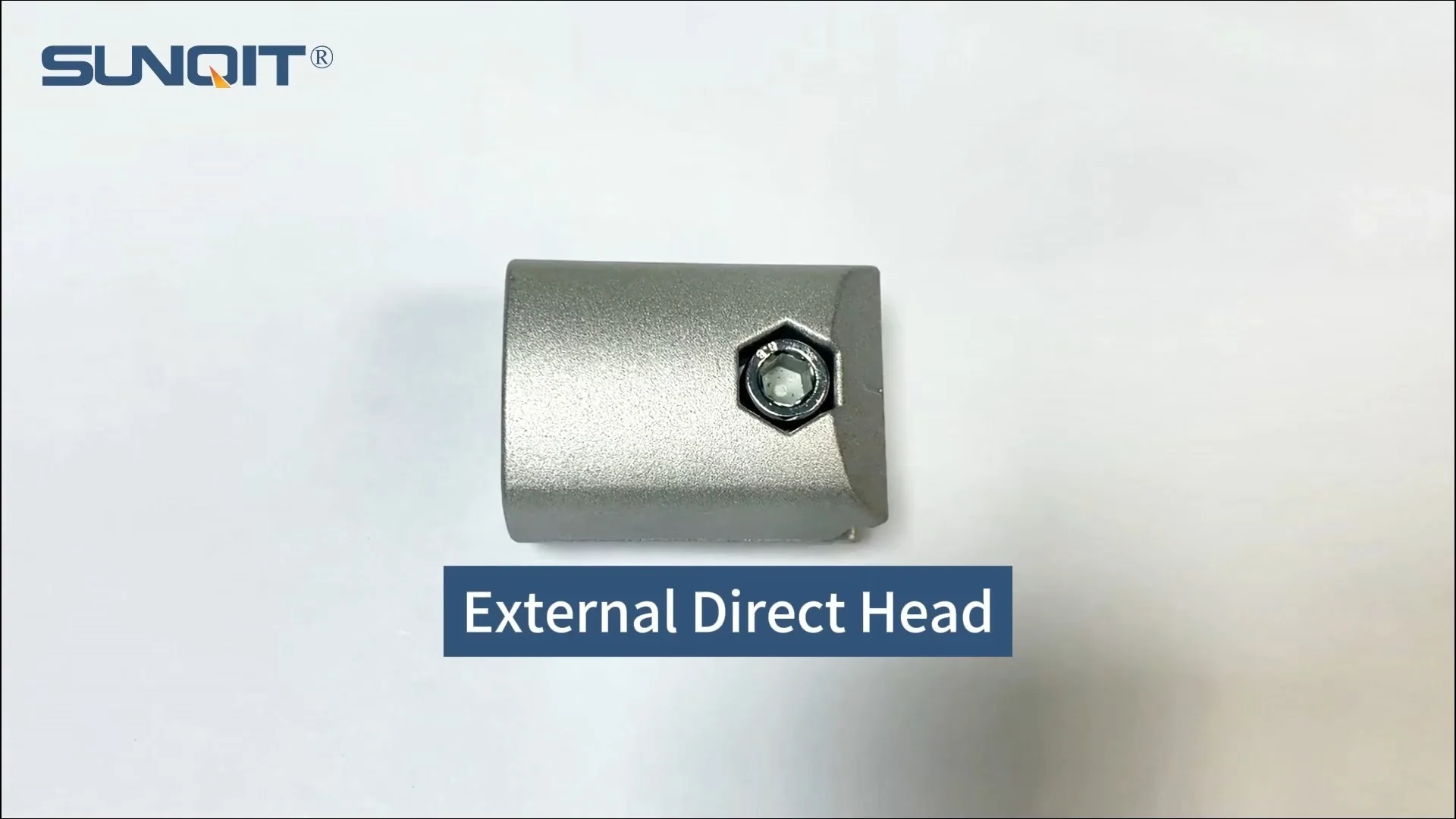
External Straight Aluminum Joint
Aluminum pipe joint outside connection used for two pcs 28pcs aluminum pipe connection in straight angle,it connects two pcs pipe from outside.
In the world of manufacturing and workshop design, the phrase "the right tool for the job" isn't just a cliché—it's the foundation of efficiency, safety, and long-term productivity. When it comes to building flexible, durable workspaces, aluminum lean pipe systems have emerged as a go-to solution for businesses of all sizes. These systems, made from lightweight yet sturdy aluminum lean pipe and a range of aluminum pipe accessories, allow teams to construct everything from workbenches and material racks to assembly lines and trolleys, all while keeping costs in check and adaptability front and center.
But here's the thing: even the best aluminum lean pipe is only as strong as the joints that hold it together. Enter two critical components of any aluminum pipe system: the external straight aluminum joint and the internal rotating aluminum joint . At first glance, they might seem like small, unassuming parts, but choosing between them can make or break the functionality of your setup. Are you building a static workbench that needs to withstand heavy tooling? Or a dynamic assembly line where parts need to pivot and adjust on the fly? The answer lies in understanding how these joints differ—and how those differences align with your specific needs.
In this article, we'll dive deep into the design, functionality, and real-world applications of external straight and internal rotating aluminum joints. We'll explore their strengths, weaknesses, and the scenarios where each truly shines. By the end, you'll have a clear roadmap to selecting the right lean pipe joint for your project, ensuring your aluminum lean pipe system works with you, not against you.
Understanding Aluminum Lean Pipe Systems: The Backbone of Modern Workspaces
Before we jump into the specifics of joints, let's take a moment to appreciate why aluminum lean pipe systems have become so indispensable. Unlike rigid, one-size-fits-all metal structures, aluminum lean pipe systems are built around modularity. Think of them as the "Lego sets" of industrial design: you start with basic aluminum tubes (the "bricks") and connect them using various joints and accessories (the "connectors") to create almost any structure you can imagine—all without welding, heavy tools, or specialized expertise.
Aluminum, as a material, brings a lot to the table. It's lightweight, making it easy to assemble and reconfigure without straining your team. It's resistant to corrosion, so it holds up well in factories, warehouses, and even outdoor settings. And perhaps most importantly, it's strong enough to support the day-to-day demands of manufacturing, from holding heavy components on a material rack to stabilizing a workbench during assembly tasks. When paired with the right aluminum pipe accessories—like clamps, brackets, and casters—aluminum lean pipe systems become incredibly versatile, adapting to everything from small workshops to large-scale production lines.
But again, the magic is in the connections. Joints are the unsung heroes here, dictating how much weight a structure can bear, how easily it can be adjusted, and how long it will last. Among the dozens of aluminum pipe accessories available, external straight and internal rotating joints are two of the most commonly used—yet they serve very different purposes. Let's break them down.
External Straight Aluminum Joint: The Reliable Workhorse
Design and Mechanics: Built for Stability
The external straight aluminum joint is exactly what its name suggests: a connector designed to join two or more aluminum lean pipes in a fixed, straight (or sometimes angled, depending on the model) position, with the joint mechanism sitting externally to the pipes. Picture a small, sturdy bracket with holes or clamps that wrap around the outside of the aluminum tubes, secured in place with bolts, screws, or quick-release levers. This external design is intentional: it creates a rigid connection that leaves little room for movement, making it ideal for structures where stability is non-negotiable.
Most external straight joints are made from high-grade aluminum alloy, matching the material of the pipes themselves to ensure compatibility and prevent galvanic corrosion (a common issue when dissimilar metals touch). Some models also feature rubber or plastic gaskets at the connection points to reduce slippage and dampen vibrations—critical for precision workbenches or racks holding delicate components.
How It Works: Simplicity Meets Strength
Installing an external straight joint is straightforward, even for those new to aluminum lean pipe systems. Here's a typical process:
- Slide the joint over the ends of the aluminum pipes you want to connect. Most joints are designed to fit standard pipe diameters (e.g., 28mm or 30mm), so sizing is rarely an issue if you're using components from the same supplier.
- Align the pipes to the desired angle (usually 90°, 45°, or straight—180°). Many external joints have built-in guides or notches to ensure precise alignment, which is key for maintaining structural integrity.
- Tighten the fasteners (bolts or screws) to secure the joint. This compresses the joint around the pipes, creating a tight, immovable bond. Some joints use wing nuts for tool-free assembly, while others require a hex key or wrench for a more permanent hold.
The result? A connection that's built to stay put. Because the joint wraps around the outside of the pipes, it distributes weight evenly across the entire connection point, reducing stress on any single area. This makes external straight joints excellent for bearing heavy loads—think of a workbench supporting a 50kg tool chest or a material rack stacked with metal components. Once installed, there's minimal "play" in the joint, meaning your structure won't wobble, shift, or sag over time, even with daily use.
Best For: Static Structures and Heavy Loads
External straight joints are the workhorses of aluminum lean pipe systems, and they excel in scenarios where movement is a liability, not an asset. Here are a few common applications:
- Workbenches: Whether you're assembling electronics, repairing machinery, or packing products, a workbench needs to stay steady. External straight joints ensure the tabletop doesn't shift when you lean on it or use power tools.
- Static Material Racks: Racks holding raw materials, finished goods, or heavy inventory rely on stability to prevent tipping or collapse. External joints keep the vertical and horizontal pipes locked in place, even when fully loaded.
- Assembly Line Frames: The backbone of an assembly line—think the metal framework that supports conveyors, lighting, or tool holders—needs to be rock-solid. External straight joints provide the rigidity required to keep the entire line aligned, preventing jams or misalignments in production.
In short, if your structure doesn't need to move, adjust, or pivot, external straight joints are the way to go. They're simple, reliable, and built to handle the heavy lifting.

Internal Rotating Aluminum Joint: The Flexible Adaptor
Design and Mechanics: Built for Movement
If external straight joints are the "steady hands" of aluminum lean pipe systems, internal rotating aluminum joints are the "flexible wrists." These joints are designed to connect pipes while allowing for rotation or pivoting, and their magic lies in their internal mechanism. Unlike external joints, which clamp around the outside of the pipes, internal rotating joints fit inside the aluminum lean pipe, with a rotating core that lets one pipe turn relative to another.
Imagine a hollow aluminum sleeve that slides into the end of one pipe, with a metal rod or bearing in the center that connects to a second sleeve (which fits into another pipe). This core mechanism allows the two pipes to rotate 180° (or more, depending on the model) around the joint, giving you the ability to adjust angles on the fly. Some internal rotating joints also have locking mechanisms—levers or knobs that let you "freeze" the joint in a specific position once you've found the right angle, combining flexibility with stability when needed.
Like their external counterparts, internal rotating joints are typically made from aluminum alloy, but they often include additional components like ball bearings or plastic washers to reduce friction and ensure smooth rotation. These components are housed inside the joint, protected from dust, debris, and accidental damage—critical for maintaining functionality in busy industrial environments.
How It Works: Precision in Motion
Installing an internal rotating joint is a bit more involved than an external straight joint, but still manageable for most users. Here's the gist:
- insert the joint's internal sleeve into the end of one aluminum pipe. Most sleeves are designed to fit snugly, so they don't slip out during rotation.
- Connect the rotating core to the second pipe (either via another sleeve or a threaded end, depending on the joint type).
- Test the rotation to ensure it moves smoothly, then use the locking mechanism (if included) to secure the angle when needed.
The key here is the balance between movement and control. Internal rotating joints aren't meant to spin freely like a wheel—instead, they offer controlled rotation, allowing you to adjust angles incrementally. For example, if you're building a tilting workbench for inspecting large components, an internal rotating joint would let you angle the tabletop from 0° (flat) to 45° (tilted) and lock it in place at any point in between. This level of adjustability is impossible with a rigid external straight joint.
That said, this flexibility comes with a trade-off: load capacity. Because the rotating mechanism is housed inside the pipe, the connection point is narrower than with an external joint, meaning it can't bear as much weight. Most internal rotating joints are rated for lighter loads—think of a small parts trolley or a pivot arm on an assembly line, not a workbench with heavy machinery.
Best For: Dynamic Setups and Adjustable Angles
Internal rotating joints shine in scenarios where adaptability is key. They're perfect for structures that need to change shape, angle, or position to accommodate different tasks or workflows. Here are a few examples:
- Adjustable Workstations: In environments where tasks vary—say, a lab where technicians need to inspect samples at different angles—internal rotating joints let you tilt or swivel work surfaces without rebuilding the entire bench.
- Material Handling Trolleys: Trolleys used to transport parts between workstations often need flexible shelves or trays that can be angled to prevent items from sliding off. Internal rotating joints make this adjustment quick and easy.
- Assembly Line Pivot Arms: On production lines, tools or components might need to swing into place for workers—think of a power drill mounted on a rotating arm that can be positioned over the assembly area and then moved out of the way. Internal rotating joints make this motion smooth and controlled.
In short, if your structure needs to "bend but not break," internal rotating joints are the way to go. They add a layer of adaptability that rigid systems simply can't match.

External Straight vs. Internal Rotating: A Head-to-Head Comparison
To help you visualize the differences, let's put these two joints side by side in a comparison table. This will highlight their key features, strengths, and weaknesses, making it easier to decide which is right for your project.
| Feature | External Straight Aluminum Joint | Internal Rotating Aluminum Joint |
|---|---|---|
| Design | Clamps/brackets wrap around the outside of pipes; fixed position. | Mechanism fits inside pipes; allows rotation/pivoting. |
| Movement | No rotation; rigid, fixed connection. | Controlled rotation (typically 0–180°); some models lock in place. |
| Load Capacity | High (supports heavy loads: 50kg+ per joint). | Medium to low (supports lighter loads: 10–30kg per joint). |
| Installation | Simple: clamp around pipes and tighten fasteners. | Slightly more complex: insert internal sleeves and align rotating core. |
| Best For | Static structures: workbenches, fixed racks, assembly line frames. | Dynamic setups: adjustable workstations, pivoting arms, material trolleys. |
| Durability | High: external design protects mechanism from damage; minimal wear. | Medium: internal moving parts (bearings, washers) may wear over time with heavy use. |
| Cost | Generally lower (simpler design, fewer components). | Generally higher (includes rotating mechanism, bearings, locking parts). |
As you can see, there's no "better" joint—only the "right" joint for the job. If you need stability and strength, go with external straight. If you need flexibility and adjustability, opt for internal rotating. And in some cases, you might even use both: imagine a workbench with external straight joints for the frame (stability) and an internal rotating joint for a tool holder arm (adjustability).

Real-World Scenarios: How the Right Joint Makes All the Difference
To bring this to life, let's walk through two hypothetical scenarios where choosing the right joint was critical to success. These examples will show how the wrong joint can lead to frustration, inefficiency, or even safety risks—while the right one can transform a workspace.
Scenario 1: The Overloaded Workbench
The Problem: A small automotive repair shop decides to build a custom workbench using aluminum lean pipe and aluminum pipe accessories. They want the bench to hold a diagnostic machine (30kg), a tool chest (45kg), and various parts (15kg), totaling 90kg. To save money, they use internal rotating joints for the frame, assuming they can "lock" the joints to keep the bench steady.
The Result: Within a week, the bench starts to wobble. The internal rotating joints, which are only rated for 30kg each, can't handle the total load. The locking mechanisms slip under the weight, causing the tabletop to tilt slightly. One day, the diagnostic machine slides off, damaging the equipment and injuring a technician.
The Fix: The shop replaces the internal rotating joints with external straight joints. The new joints distribute the weight evenly, and the bench becomes rock-solid. The technicians can now work safely, and the equipment stays secure.
Scenario 2: The Rigid Assembly Line
The Problem: A electronics manufacturer builds an assembly line for smartphone screens using external straight joints for all connections. The line includes a section where workers need to inspect screens from different angles, but the rigid frame won't allow adjustment. Workers have to strain their necks or move the screens manually, slowing down production and increasing the risk of repetitive strain injuries.
The Result: Productivity drops by 20%, and two workers report neck pain. The manufacturer realizes the line is too inflexible for their needs.
The Fix: They replace the external straight joints in the inspection area with internal rotating joints. Now, workers can pivot the screen holders to eye level, reducing strain and speeding up inspection. Productivity rebounds, and the injury reports stop.
These scenarios highlight a simple truth: there's no substitute for matching the joint to the job. External straight joints are fantastic for heavy, static loads, but they'll leave you frustrated if you need flexibility. Internal rotating joints add adaptability, but they're not built for brute strength. The key is to assess your needs upfront: How much weight will the structure bear? Does it need to move? How often will it be reconfigured?
Choosing the Right Joint: A Step-by-Step Guide
Now that you understand the differences between external straight and internal rotating aluminum joints, let's walk through a simple process to help you choose the right one for your next project. This step-by-step guide will ensure you consider all the critical factors and avoid common pitfalls.
Step 1: Define the Purpose of Your Structure
Start by asking: What will this structure do ? Is it a workbench for assembly? A rack for storage? A trolley for moving parts? The answer will immediately narrow down your options. For example:
- If it's a storage rack for heavy boxes: External straight joints (stability, high load capacity).
- If it's an adjustable shelf for displaying products: Internal rotating joints (flexibility, angle adjustment).
Step 2: Calculate the Total Load
Next, estimate how much weight the structure will need to support. Be realistic—don't just guess. For a workbench, add up the weight of tools, equipment, and materials. For a rack, calculate the weight of the items you'll store (and add a 20% buffer for safety). Then, check the load rating of the joints you're considering. Remember: external straight joints handle more weight, so if your total load exceeds 50kg, they're likely the safer choice.
Step 3: Ask: Will It Need to Move or Adjust?
Be honest: Do you anticipate needing to reconfigure the structure later? Will parts of it need to pivot, tilt, or rotate? If yes, internal rotating joints are worth considering. If not—if the structure will stay in one place forever—external straight joints are the more reliable, cost-effective option.
Step 4: Consider Your Team's Expertise
External straight joints are easier to install, making them a good fit for teams with limited experience building aluminum lean pipe systems. Internal rotating joints require a bit more skill to align and secure properly. If your team is new to modular systems, start with external joints to avoid installation errors.
Conclusion: The Right Joint, The Right Outcome
At the end of the day, external straight and internal rotating aluminum joints are both essential tools in the aluminum lean pipe toolkit—but they're not interchangeable. External straight joints are the reliable workhorses, built for stability and heavy loads. They're the foundation of static structures that need to stand strong day in and day out. Internal rotating joints are the flexible adaptors, adding movement and adjustability to dynamic workspaces where change is constant.
The key is to match the joint to your needs. Ask yourself: What's the purpose of my structure? How much weight will it bear? Does it need to move? By answering these questions, you'll avoid the pitfalls of choosing the wrong joint—like the wobbly workbench or the rigid assembly line we discussed earlier. Instead, you'll build a workspace that's efficient, safe, and tailored to your team's unique workflow.
And remember: aluminum lean pipe systems are all about adaptability. Even if you start with one type of joint, you can always reconfigure later. Maybe you'll build a static workbench with external straight joints today, then add a pivoting tool arm with internal rotating joints next month. The beauty of modular systems is that they grow and change with your business.
So, whether you're setting up a small workshop or revamping a large production line, take the time to choose your joints wisely. Your team's productivity, safety, and sanity will thank you.