- Company Articles
- Products and Technology
- Solution
- External Straight Aluminum Joints for Custom Lean Solutions: Tailored Applications

External Straight Aluminum Joints for Custom Lean Solutions: Tailored Applications
Related Product
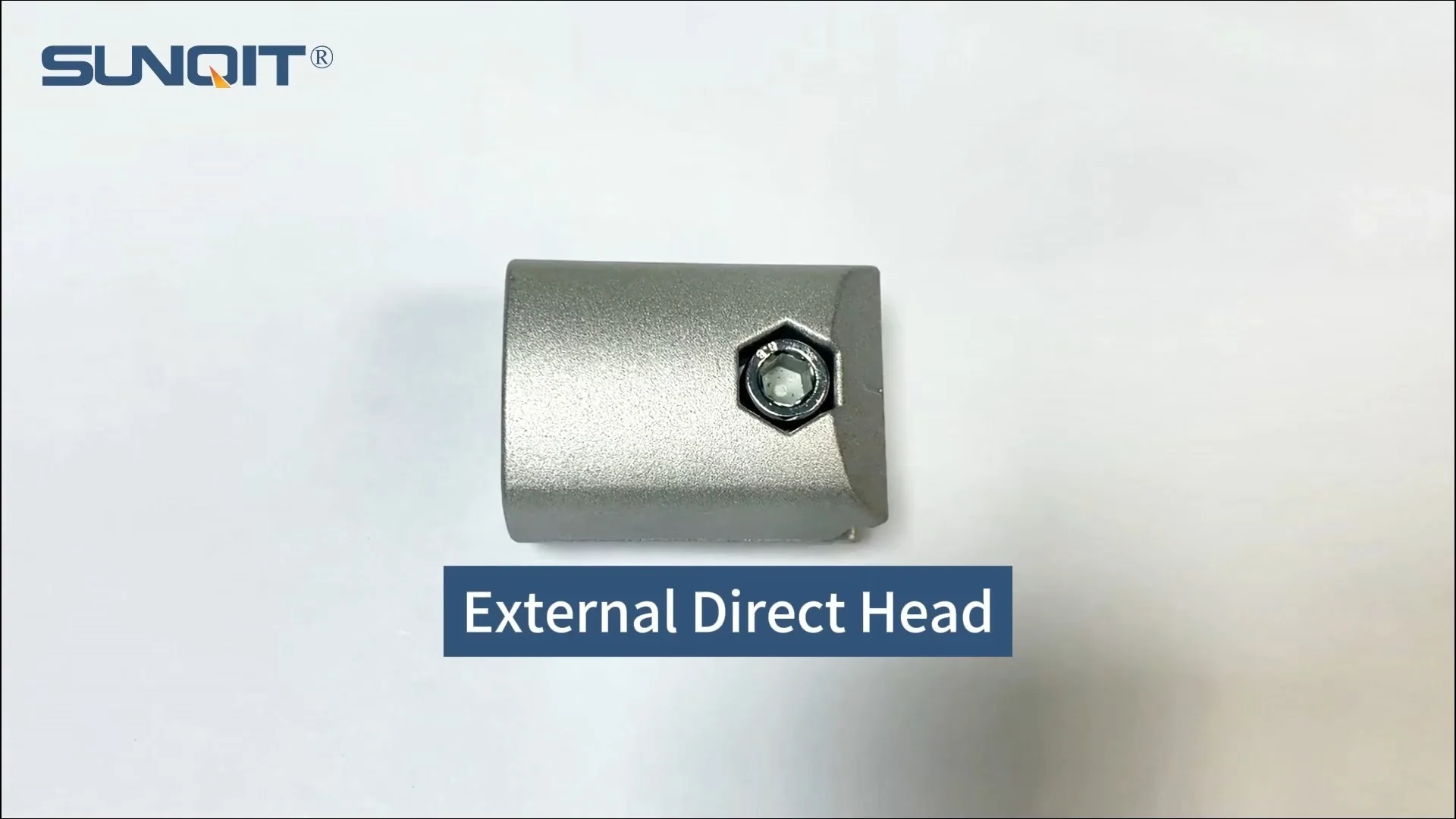
External Straight Aluminum Joint
Aluminum pipe joint outside connection used for two pcs 28pcs aluminum pipe connection in straight angle,it connects two pcs pipe from outside.
Walk into any manufacturing facility, warehouse, or assembly plant, and you'll notice a common thread: the constant need to adapt. A electronics factory might shift from producing headphones to smart speakers overnight. A medical device manufacturer could scale up production of a critical component to meet a sudden surge in demand. Even a small workshop assembling artisanal furniture might need to reconfigure its workspace to accommodate a new design. In each of these scenarios, the difference between meeting deadlines and falling behind often comes down to one thing: the flexibility of the tools and systems in place.
For decades, many businesses relied on rigid, one-size-fits-all equipment. Fixed workbenches bolted to the floor, immovable storage racks, and assembly lines that required weeks of retooling to adjust. But in today's fast-paced market, rigidity is a liability. What if there was a way to build workspaces, storage systems, and production lines that could evolve as quickly as your business does? That's where modular lean solutions come in—and at the heart of these systems lies a quiet hero: the external straight aluminum joint.
The Problem with "Set It and Forget It" Infrastructure
Let's paint a picture. Maria, a production manager at a mid-sized automotive parts supplier, starts her Monday morning with a crisis. Over the weekend, the company landed a rush order for a new line of electric vehicle (EV) components—parts that are smaller, lighter, and require more precise assembly than their traditional counterparts. The existing workbenches on the factory floor are built for heavier parts, with fixed shelving that's too deep to efficiently access the small components. The flow racks, designed to hold bulky engine parts, can't accommodate the new, smaller bins without risking items slipping through the gaps. To make matters worse, the team has only three days to reconfigure the line before production begins.
In the old days, Maria would have two options: spend thousands of dollars on new, custom-built workbenches and racks (and hope they arrive on time), or cobble together a temporary setup with plywood, zip ties, and whatever spare parts are lying around—risking worker safety and efficiency. Neither option is ideal. But today, she reaches for a different solution: a set of aluminum lean pipes, a box of external straight aluminum joints, and a handful of aluminum profile accessories. By the end of the day, her team has reconfigured three workbenches, adjusted the flow racks to fit the new bins, and even added mobile carts to transport materials between stations. The line is ready, on time and under budget. What made this possible? The modular, adaptable nature of systems built with external straight aluminum joints.
What Are External Straight Aluminum Joints, Anyway?
At first glance, an external straight aluminum joint might not look like much—a sleek, metallic connector with a few holes and a tightening mechanism. But its simplicity is deceptive. These joints are the linchpins of modular lean systems, designed to connect aluminum lean pipes (hollow, lightweight tubes) into stable, customizable structures. Unlike traditional steel joints, which are often heavy, require welding, or rust over time, aluminum joints are lightweight, corrosion-resistant, and require no special tools to assemble. You tighten them with a hex key, and they hold firm—yet loosen just as easily when it's time to reconfigure.
The "external straight" designation refers to their design: they clamp around the outside of two aluminum lean pipes, creating a straight, rigid connection. This might sound basic, but when paired with other joint types (elbows, tees, swivels), external straight aluminum joints become the building blocks for almost any structure imaginable. Think of them as the "Lego bricks" of industrial design—simple on their own, but infinitely versatile when combined.
But why aluminum? Steel is stronger, right? While steel has its place, aluminum offers a unique balance of strength and weight. An aluminum lean pipe is roughly 30% lighter than a steel pipe of the same diameter, making structures easier to assemble, disassemble, and move. It's also naturally resistant to rust, which is critical in environments like food processing plants or pharmaceutical facilities where cleanliness is non-negotiable. And because aluminum is malleable, joints can be precision-engineered to grip pipes tightly without damaging them—meaning you can take apart and rebuild a structure dozens of times without weakening the components.

Beyond the Joint: The Ecosystem of Modular Lean Components
External straight aluminum joints don't work in isolation. They're part of a larger ecosystem of components designed to work together seamlessly. Let's break down the key players:
Aluminum Lean Pipes: These are the "bones" of the system. Typically made from high-grade aluminum alloy, they come in various diameters (common sizes include 28mm and 30mm) and lengths, but can easily be cut to size on-site with a standard pipe cutter. Their smooth, anodized finish resists scratches and wear, ensuring they look and perform well even after years of use.
Aluminum Profile Accessories: The "muscles" that add functionality. This category includes everything from end caps (to smooth rough pipe edges and prevent snags) to brackets (for attaching shelves or tool holders), and even caster wheels (to make structures mobile). For example, adding a set of locking casters to a workbench built with external straight joints and aluminum lean pipes turns it into a mobile workstation that can be rolled to where it's needed most—then locked in place for stability.
Lean Pipe Workbenches: One of the most common applications of these components. A basic lean pipe workbench starts with a frame built from aluminum lean pipes connected by external straight joints (for the sides and legs) and elbow joints (for the corners). From there, you can add a wooden or aluminum top, shelves (using tee joints to branch off the frame), and accessories like tool hooks or LED light strips. Need the workbench taller? Swap out the leg pipes for longer ones. Need to add a second tier for supplies? Attach additional pipes and joints to the frame. It's customization without the custom price tag.
Flow Racks: Essential for keeping materials moving efficiently. Flow racks use gravity to feed materials from the back to the front, ensuring workers always access the oldest items first (FIFO—First In, First Out). Building a flow rack with aluminum lean pipes and external straight joints allows you to adjust the angle of the shelves (by varying the height of the supporting pipes) to control how quickly items slide down. You can also add roller tracks (another aluminum profile accessory) to reduce friction, making even heavy items easy to move.

From Pipe and Joint to Productivity: Real-World Applications
To understand the impact of these components, let's dive into how they solve real problems for businesses like Maria's automotive parts plant, or a small business just starting out. We'll explore three scenarios where external straight aluminum joints, paired with aluminum lean pipes and accessories, transformed inefficiency into agility.
Scenario 1: The EV Component Assembly Line (Reconfiguring Workbenches)
Going back to Maria's dilemma: the rush order for EV components. Her team needed workbenches that were adjustable for height (to accommodate both standing and seated workers), had shallow shelves for small parts, and could be fitted with bins and tool holders. Here's how modular lean components came to the rescue:
First, the team disassembled the existing fixed workbenches (which would have otherwise been scrapped) and salvaged the aluminum lean pipes (they were still in good shape). Using external straight aluminum joints, they cut the pipes to the new height requirements (6 inches shorter for seated workers, standard height for standing) and reassembled the frames. For the shelves, they used tee joints to branch off the main frame, attaching shorter pipes to create shallower shelves—perfect for the small component bins. Aluminum profile accessories like bracket clamps allowed them to add a pegboard on one side for tools and a magnetic strip for metal parts. Finally, they added locking casters to two of the workbenches, so they could be rolled to the testing station when assembly was complete.
Total time to reconfigure three workbenches: 6 hours. Cost: less than $500 (mostly for new casters and brackets—they reused the pipes and joints). Compare that to the old approach: ordering custom workbenches would have cost $5,000+ and taken 2–3 weeks to deliver. The EV components rolled off the line on time, and Maria's team avoided overtime and missed deadlines.
Scenario 2: The Craft Brewery's Growing Inventory (Building Custom Flow Racks)
Now, let's shift to a smaller business: a craft brewery in Portland, Oregon. When the brewery first opened, they stored their glass bottles and cans on basic wooden shelves. But as their popularity grew, they expanded their lineup to include seasonal flavors, limited-edition releases, and even non-alcoholic options. Suddenly, they had 15+ SKUs to manage, and the wooden shelves were chaos—bottles would tip over, expiration dates were hard to track, and restocking took hours.
The brewery's operations manager, Jake, decided to invest in modular flow racks. Using aluminum lean pipes (lightweight enough for his small team to handle without heavy equipment) and external straight joints, they built two 8-foot-long flow racks. Each rack had three levels, with roller tracks (aluminum profile accessories) to let cans and bottles glide forward. The angle of the shelves was adjusted by making the back pipes 4 inches taller than the front, ensuring a gentle slope. They even added dividers (using tee joints and short pipes) to separate different SKUs. Now, restocking is as simple as placing new cases at the back of the rack; gravity moves them forward, and the oldest stock is always at the front. Expiration dates are visible, waste from expired products has dropped by 30%, and restocking time is down to 45 minutes.
Scenario 3: The Medical Device Startup (Scaling from Garage to Warehouse)
Finally, consider a startup developing wearable health monitors. When they first launched, they assembled products in a garage, using a folding table and plastic bins. As they secured funding and hired more staff, they moved to a small warehouse—but they needed to scale up without overspending on permanent infrastructure. Modular lean systems were the perfect fit.
Their first purchase: a kit of aluminum lean pipes, external straight joints, and basic accessories. With it, they built two lean pipe workbenches (using the workbench E design, single deck without casters, per their supplier's catalog) for assembly, and a small flow rack for component storage. Six months later, when they added a second assembly line, they didn't need to buy new workbenches—they simply bought more pipes and joints and built duplicates of the first. When they outgrew their warehouse and moved to a larger space, they disassembled everything, loaded it into a van, and reassembled it in the new location in a day. Today, they have a fully modular production floor that grows with them—no wasted money on equipment that becomes obsolete as they scale.

The Hidden Benefits: Beyond Flexibility
We've talked about flexibility and cost savings, but modular lean systems built with external straight aluminum joints offer other, less obvious benefits that impact your bottom line and your team's morale.
Worker Empowerment: When employees can adjust their workbenches to fit their height, add a shelf where they need it, or reposition a flow rack to reduce bending, they feel valued. A study by the Manufacturing Institute found that workplaces with adjustable, ergonomic setups report 20% higher employee satisfaction and 15% fewer injuries. Happy, healthy workers are more productive—and less likely to leave.
Sustainability: In an era where businesses are under pressure to reduce waste, modular systems are eco-friendly by design (reusing components instead of discarding them reduces landfill waste). Aluminum is also 100% recyclable, and many suppliers use recycled aluminum in their pipes and joints. For example, the craft brewery in Portland now highlights their "zero-waste infrastructure" in their marketing materials, appealing to eco-conscious customers.
Speed to Market: In competitive industries, being first to market is often the difference between success and failure. Modular systems let you prototype new production lines quickly. A tech company developing a new smart home device, for instance, can build a small-scale assembly line with aluminum lean pipes and joints in days, test the process, and iterate before scaling up. This agility reduces the risk of investing in unproven, fixed infrastructure.
Choosing the Right Components: What to Look For
Not all aluminum lean pipes, joints, and accessories are created equal. To ensure your modular system is durable, safe, and truly adaptable, here are key factors to consider when selecting components:
Material Quality: Look for aluminum lean pipes made from 6063-T5 aluminum alloy—a high-strength, corrosion-resistant material commonly used in industrial applications. The external straight aluminum joints should have a robust design, with reinforced clamping areas to prevent slipping. Avoid cheap, plastic-coated joints; they may save money upfront but will crack or wear out quickly under heavy use.
Compatibility: Ensure all components work together. Most suppliers follow standard sizing (e.g., 28mm pipes with matching joints), but double-check before mixing brands. A good supplier will provide a compatibility chart or sample kits to test connections.
Accessory Range: The best systems offer a wide range of aluminum profile accessories to add functionality. Look for suppliers that carry everything from basic brackets and end caps to specialized items like LED light mounts, bin holders, and even cable management clips (critical for keeping workbenches organized in tech assembly).
Technical Support: Especially if you're new to modular systems, choose a supplier that offers design assistance. Many suppliers have online configurators or can help you draft plans for workbenches, flow racks, or carts based on your specific needs. Maria's team, for example, worked with their supplier to calculate the optimal height for their flow rack shelves to ensure the EV components slid smoothly without jamming.
The Future of Manufacturing: Adaptability as a Competitive Edge
As we look ahead, one trend is clear: the pace of change in business will only accelerate. Consumer demands shift faster, new technologies emerge overnight, and global events (like supply chain disruptions) force companies to pivot on a dime. In this environment, adaptability isn't just a nice-to-have—it's a competitive advantage.
Modular lean systems, built on components like external straight aluminum joints, aluminum lean pipes, and aluminum profile accessories, are more than just tools. They're a mindset—one that says, "We don't just react to change; we embrace it." They let businesses small and large build infrastructure that grows with them, adapts to new challenges, and empowers their teams to do their best work.
So, the next time you walk through a factory, warehouse, or workshop, take a closer look at the workbenches, racks, and carts. Chances are, if they're lightweight, adjustable, and look like they could be reconfigured with a few twists of a hex key, they're built with these modular components. And behind every smooth assembly line, every organized storage area, and every on-time delivery, there's a quiet hero: the external straight aluminum joint—connecting pipes, people, and possibilities.
Why It Matters: More Than Just Pipes and Joints
At the end of the day, modular lean solutions are about more than metal and machinery. They're about giving businesses the freedom to dream bigger. Maria's automotive plant didn't just reconfigure a workbench—they secured a major EV contract and positioned themselves as a flexible partner for future innovations. The craft brewery didn't just organize their inventory—they created a scalable system that let them expand their product line without expanding their budget. The medical device startup didn't just build a workbench—they built a foundation for growth that took them from a garage to a warehouse.
In a world where the only constant is change, the ability to adapt is everything. And with external straight aluminum joints, aluminum lean pipes, and the right accessories, that adaptability is within reach for every business—no matter the size or industry. It's not just about building better workspaces. It's about building better businesses.