- Company Articles
- Products and Technology
- Product knowledge
- External Straight Aluminum Joints for High-Volume Production: Scalability

External Straight Aluminum Joints for High-Volume Production: Scalability
Related Product
External Straight Aluminum Joint
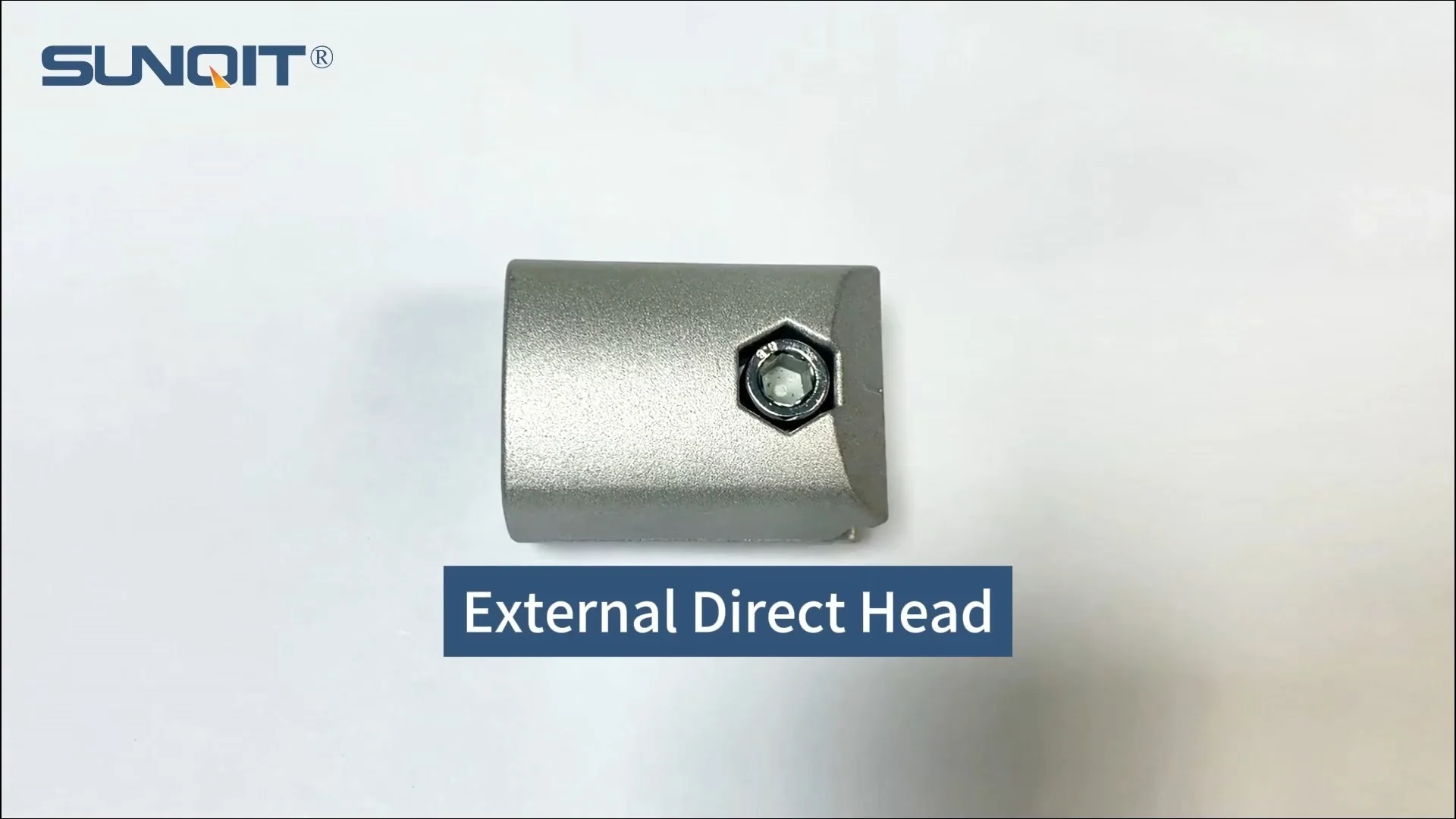
Aluminum pipe joint outside connection used for two pcs 28pcs aluminum pipe connection in straight angle,it connects two pcs pipe from outside.
In the fast-paced world of high-volume production, where deadlines loom and every second counts, the difference between meeting targets and falling behind often lies in the tools and systems that keep operations moving. Production managers, line supervisors, and floor teams alike know the frustration of rigid setups that can't adapt to sudden changes—whether it's a new product launch, a shift in demand, or a need to reconfigure workflows for greater efficiency. This is where the unsung heroes of modern manufacturing come into play: components that blend durability with flexibility, strength with adaptability. Among these, external straight aluminum joints have emerged as a quiet game-changer, offering a level of scalability that traditional materials and designs simply can't match.
Imagine a production line where adding a new workstation or extending a roller track doesn't require days of planning, specialized tools, or a team of engineers. Instead, it's a task that can be handled by the same team members who use the equipment daily, with minimal downtime and maximum precision. That's the promise of external straight aluminum joints—a promise rooted in their design, material choice, and compatibility with other essential components like aluminum lean pipe and aluminum profile accessories. In this article, we'll dive into how these unassuming joints are reshaping high-volume production, making scalability not just a buzzword, but a tangible reality for manufacturers worldwide.
The Role of External Straight Aluminum Joints in Modern Manufacturing
At first glance, a joint might seem like one of the smallest, least significant parts of a production system. But anyone who's ever struggled to assemble a workbench or reconfigure a material rack knows better: the joint is the backbone of modularity. It's the component that holds everything together while still allowing for adjustments, expansions, and modifications. External straight aluminum joints take this concept to the next level, combining the best properties of aluminum with a design focused on simplicity and versatility.
What Are External Straight Aluminum Joints?
External straight aluminum joints are connectors designed to link aluminum pipes, profiles, or tubes in a straight line, forming the structural framework of everything from workbenches and roller tracks to material racks and assembly stations. Unlike traditional steel joints, which are often heavy, prone to rust, and require welding or complex tools to install, these aluminum joints are lightweight, corrosion-resistant, and engineered for tool-free or minimal-tool assembly. Their "external" design means they clamp around the outside of pipes or profiles, creating a secure connection without compromising the integrity of the material itself.
Why Aluminum? The Material Advantage
Aluminum might not be the first material that comes to mind when thinking about industrial strength, but its unique properties make it ideal for high-volume production environments. For starters, it's significantly lighter than steel—up to 60% lighter—without sacrificing durability. This lightness reduces the physical strain on workers who need to move or reconfigure equipment, a small detail that adds up to big improvements in daily productivity and safety. Aluminum also resists corrosion, a critical feature in factories where exposure to moisture, oils, or chemicals is common. Unlike steel, which can rust and weaken over time, aluminum joints maintain their strength and appearance even in harsh conditions, extending the lifespan of the entire system.
Perhaps most importantly, aluminum is highly malleable, allowing for precision engineering of joint designs that balance tight tolerances with ease of use. External straight aluminum joints, for example, often feature ergonomic levers, knobs, or clamping mechanisms that can be tightened or loosened by hand, eliminating the need for wrenches, screwdrivers, or power tools. This simplicity is key to scalability: when a production line needs to grow or change, time spent fumbling with tools is time taken away from actual production.
Key Features Driving Scalability
Scalability in manufacturing isn't just about making things bigger—it's about making growth and adaptation as seamless, cost-effective, and low-effort as possible. External straight aluminum joints excel here, thanks to a set of features that address the most common pain points of high-volume production teams. Let's break down the qualities that make these joints indispensable for scalable operations.
Modularity: Build, Expand, Repeat
Modularity is the cornerstone of scalability, and external straight aluminum joints are designed with this in mind. Unlike fixed, welded structures that are permanent once built, systems using these joints are essentially "building blocks" that can be added to, rearranged, or repurposed at any time. Need to extend a roller track by 10 feet to accommodate longer products? Simply add more aluminum lean pipe sections and external straight joints. Want to split a large workbench into two smaller ones for a new assembly line? Loosen the joints, disassemble the frame, and rebuild it in minutes. This modularity means manufacturers don't have to invest in entirely new setups every time their needs change—they can adapt what they already have, saving both time and money.
Compatibility with Aluminum Lean Pipe and Profile Accessories
A joint is only as useful as the components it can connect, and external straight aluminum joints shine in their compatibility with other modular systems. They're specifically engineered to work seamlessly with aluminum lean pipe—a lightweight, durable tubing used in everything from workbench frames to material handling racks—and a wide range of aluminum profile accessories, such as brackets, connectors, and end caps. This compatibility creates a unified ecosystem where every part works with every other part, eliminating the frustration of mismatched components or proprietary systems that lock manufacturers into one supplier.
For example, a production team using aluminum lean pipe to build a material rack can use external straight joints to connect the vertical and horizontal supports, then add aluminum profile accessories like roller track guides to create a smooth-flowing picking station. Later, if they need to add a shelf or extend the rack, they can simply purchase additional pipe and joints, knowing they'll fit perfectly with the existing setup. This interoperability is critical for scalability: it allows growth to happen incrementally, without overhauls.
Speed of Assembly and Disassembly
In high-volume production, downtime is the enemy. Every minute a line is idle while a workbench is being built or a roller track is being adjusted is a minute of lost output. External straight aluminum joints are designed to minimize this downtime with fast, tool-free assembly. Many models feature quick-release levers or twist-lock mechanisms that allow workers to connect or disconnect pipes in seconds, not hours. This speed isn't just convenient—it's transformative. A team that can reconfigure a workstation in 20 minutes instead of 2 hours can adapt to changes in real time, whether it's a last-minute order rush or a sudden need to switch between product variants.
Consider a scenario where a manufacturer receives a rush order for a new product that requires a specialized assembly station. With traditional steel joints, building that station might take half a day, involving welding, drilling, and painting. With external straight aluminum joints, the same team could have the station up and running in under an hour, using pre-cut aluminum lean pipe and accessories. That's the difference between meeting the rush order and missing the deadline.
Reusability: Reducing Waste, Cutting Costs
Scalability isn't just about growing—it's also about sustainability and cost-efficiency. External straight aluminum joints are built to be reused, again and again. Unlike plastic joints that crack under stress or steel joints that rust and seize up, aluminum joints maintain their functionality even after multiple disassembly and reassembly cycles. This reusability reduces waste, as manufacturers don't have to discard old components when reconfiguring setups, and lowers long-term costs by extending the lifespan of each part.
For instance, when a production line is retired or redesigned, the aluminum joints can be stripped from the old frames, cleaned, and used in new projects. This not only saves money on new parts but also aligns with the growing focus on sustainability in manufacturing, where reducing waste is both an environmental and economic priority.

Integration with Essential Production Components
To truly understand the scalability of external straight aluminum joints, it helps to look at how they work with the components manufacturers use every day. From workbenches where assembly happens to roller tracks that move materials efficiently, these joints are the glue that holds scalable systems together. Let's explore their role in two critical production elements: workbenches and roller tracks.
Workbenches: The Heart of Assembly Lines
A workbench is more than just a table—it's the command center for assembly, testing, and packaging. In high-volume production, workbenches need to be sturdy enough to support tools and materials, flexible enough to adapt to different tasks, and easy to reconfigure as workflows change. External straight aluminum joints make this possible by turning workbenches into modular systems rather than fixed pieces of furniture.
Take, for example, a workbench used in electronics assembly. Initially, it might be designed as a single deck without casters, with a simple frame built from aluminum lean pipe connected by external straight joints. As production ramps up, the team might add a second tier using additional pipe and joints to create more storage space for components. Later, if the line needs to be rearranged, they can attach casters (using compatible aluminum profile accessories) to make the workbench mobile, or split it into two smaller benches for parallel assembly. None of these changes require replacing the entire bench—just adjusting the joints and adding or removing pipe sections.
What makes this possible is the joint's ability to distribute weight evenly and maintain stability, even as the bench is modified. Unlike flimsy plastic joints that loosen over time or rigid steel joints that can't be adjusted, external straight aluminum joints lock securely into place while still allowing for future changes. This balance of strength and flexibility is why they've become a staple in workbench design for high-volume environments.
Roller Tracks: Keeping Materials Moving
In any production facility, the smooth flow of materials is essential to meeting output goals. Roller tracks—used to move products, components, or packages between stations—are a critical part of this flow. But traditional roller tracks are often fixed in length and layout, making them difficult to adapt when production needs change. External straight aluminum joints solve this by making roller tracks as scalable as the rest of the system.
A typical roller track system consists of aluminum lean pipe frames connected by external straight joints, with roller track guides (another type of aluminum profile accessory) mounted on top to hold the rollers. If a manufacturer needs to extend the track to reach a new packaging station, they can add more pipe, joints, and roller guides in minutes. If they need to create a curved section, they can use angled joints (compatible with the same external straight joints) to adjust the track's path. Even the rollers themselves can be swapped out—say, from plastic to steel for heavier loads—without changing the underlying frame, thanks to the joint's secure connection.
This scalability is especially valuable in industries with seasonal demand fluctuations, such as consumer electronics or automotive parts. During peak seasons, manufacturers can quickly extend roller tracks to handle higher volumes, then shrink them back during slower periods to free up floor space. No more investing in oversized, permanent tracks that sit idle half the year—just a system that grows and contracts with the business.

Traditional vs. Aluminum Joint Solutions: A Comparison
To fully appreciate the impact of external straight aluminum joints, it helps to compare them to the traditional alternatives that many manufacturers still rely on. Below is a breakdown of how they stack up against two common options: welded steel joints and plastic snap-fit joints.
| Feature | Welded Steel Joints | Plastic Snap-Fit Joints | External Straight Aluminum Joints |
|---|---|---|---|
| Weight | Heavy (increases worker strain) | Light (but less durable) | Lightweight (easy to handle, reduces fatigue) |
| Assembly Time | Hours (requires welding, cooling time) | Minutes (snap-fit, but prone to loosening) | Seconds (tool-free, secure clamping) |
| Reusability | Low (welds must be cut, damaging materials) | Medium (can break after repeated use) | High (can be disassembled and reused indefinitely) |
| Corrosion Resistance | Low (prone to rust without coating) | High (but UV and chemical sensitive) | High (aluminum naturally resists corrosion) |
| Scalability | Very low (fixed, cannot be reconfigured) | Medium (limited load capacity, not ideal for growth) | Very high (modular, compatible with other components) |
Table 1: Comparing joint solutions for high-volume production scalability
As the table shows, external straight aluminum joints outperform traditional options in nearly every category that matters for scalability. They combine the lightness of plastic with the durability of steel, add the convenience of tool-free assembly, and eliminate the waste of one-time-use welded structures. For manufacturers looking to build systems that can grow with their business, this comparison makes the choice clear.

Choosing the Right Lean System Supplier: A Key to Scalability
Even the best components—like external straight aluminum joints—can fall short if they're not supported by a reliable lean system supplier. A supplier isn't just a vendor; they're a partner in your manufacturing success, providing not just parts, but expertise, consistency, and support when you need to scale. So what should you look for when choosing a supplier for your aluminum lean pipe, joints, and accessories?
Product Range and Compatibility
First and foremost, a good lean system supplier should offer a comprehensive range of compatible products. This includes not just external straight aluminum joints, but also aluminum lean pipe, aluminum profile accessories (like roller tracks, brackets, and casters), workbenches, and material racks. Having all these components from a single supplier ensures they'll work together seamlessly, reducing the risk of mismatched parts or compatibility issues that can derail scalability.
For example, if you purchase external straight joints from one supplier and aluminum lean pipe from another, there's a chance the pipe diameter or wall thickness won't match the joint's clamping mechanism, leading to loose connections or instability. A supplier with an integrated product line eliminates this risk, giving you peace of mind that every component is designed to work with the others.
Quality and Consistency
In high-volume production, consistency is everything. A single faulty joint can lead to a wobbly workbench, a jammed roller track, or even a safety hazard. Look for a supplier that prioritizes quality control, with strict standards for materials (e.g., high-grade aluminum), manufacturing tolerances, and testing. Ask about their quality assurance processes—do they inspect every batch of joints for defects? Do they use standardized production methods to ensure every joint performs the same way?
Consistency also applies to delivery. A supplier that can't meet lead times or frequently runs out of stock can derail your scalability plans. Choose a partner with a track record of reliable shipping and inventory management, so you can order additional joints, pipe, or accessories with confidence, knowing they'll arrive when you need them.
Technical Support and Expertise
Even the most modular systems can be confusing to configure, especially when you're trying to scale a complex production line. A great lean system supplier will offer more than just products—they'll provide technical support to help you design, build, and optimize your setup. This might include access to engineers who can help with layout planning, guides on best practices for joint placement, or even on-site training for your team to ensure they're using the components correctly.
For example, if you're unsure how many external straight joints you need to build a scalable roller track system, a knowledgeable supplier can calculate the load requirements, recommend spacing, and suggest compatible accessories to ensure the track runs smoothly. This level of support turns a transaction into a partnership, helping you get the most out of your investment in scalable manufacturing components.
Conclusion: Scalability Starts with the Right Components
In the end, scalability in high-volume production isn't about grand, sweeping changes—it's about the small, intentional choices that make growth possible. External straight aluminum joints may not be the most glamorous components in a factory, but they embody this principle perfectly: by combining aluminum's natural advantages (lightweight, durable, corrosion-resistant) with a design focused on modularity, speed, and compatibility, they empower manufacturers to adapt, expand, and evolve without being held back by rigid systems.
Whether it's a workbench that grows with your team, a roller track that extends to meet new demand, or a material rack that reconfigures for a new product line, these joints turn "someday" scalability into "today" reality. And when paired with a reliable lean system supplier that offers quality products, technical expertise, and consistent support, they become more than just parts—they become the foundation of a manufacturing operation that can thrive in an ever-changing market.
So the next time you look at your production line, take a closer look at the joints holding it all together. Are they holding you back, or are they helping you grow? For manufacturers ready to embrace scalability, the answer is clear: external straight aluminum joints aren't just connectors—they're the key to building a future-ready factory.