- Company Articles
- Products and Technology
- Product knowledge
- External Straight Aluminum Joints for Mobile Workstations: Design Considerations

External Straight Aluminum Joints for Mobile Workstations: Design Considerations
Related Product
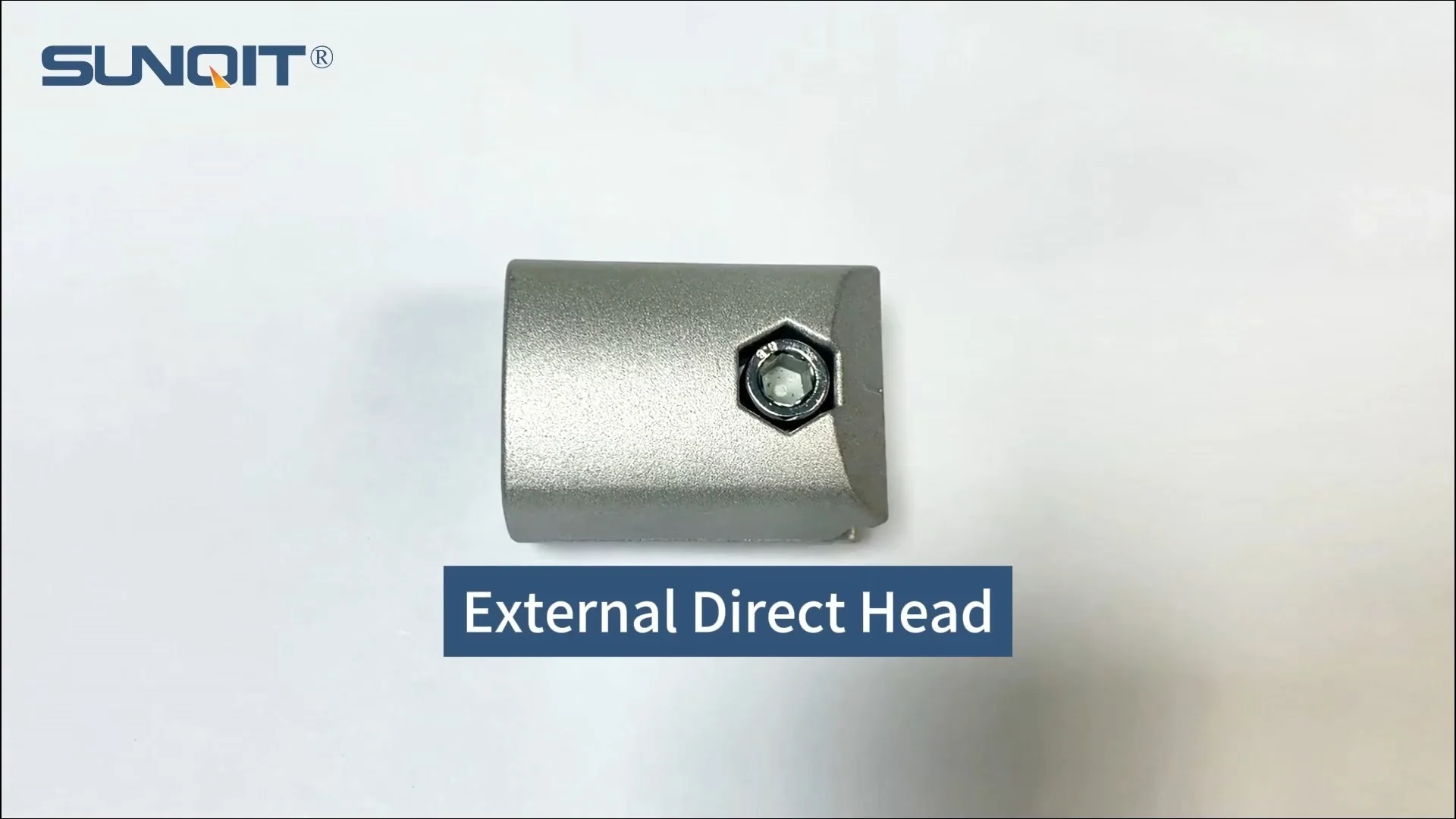
External Straight Aluminum Joint
Aluminum pipe joint outside connection used for two pcs 28pcs aluminum pipe connection in straight angle,it connects two pcs pipe from outside.
Walk into any modern manufacturing facility, warehouse, or even a bustling tech startup's assembly line, and you'll likely notice a common sight: mobile workstations gliding smoothly across the floor, carrying tools, components, or finished products. These workstations are the unsung heroes of efficiency, adapting to shifting workflows, supporting lean manufacturing principles, and keeping operations agile. But what holds these versatile setups together? Behind their seamless mobility and structural integrity lies a critical component often overlooked: the joints that connect their aluminum pipes and profiles. Among these, external straight aluminum joints stand out as quiet workhorses, ensuring stability, flexibility, and durability in every movement. In this article, we'll dive deep into the design considerations that make external straight aluminum joints indispensable for mobile workstations, exploring how their engineering impacts everything from load capacity to assembly speed—and why they're a cornerstone of modern material handling systems.
What Are External Straight Aluminum Joints?
Before we jump into design nuances, let's clarify what external straight aluminum joints are and why they matter. Simply put, these are mechanical connectors designed to join two or more aluminum pipes or profiles in a straight line, with the joint mechanism visible (external) rather than hidden inside the pipe (internal). Think of them as the "elbows" or "couplings" of the aluminum framing world, but optimized for straight-line connections. They're part of a broader family of aluminum pipe accessories , which includes everything from brackets to clamps, all engineered to work with aluminum extrusion profiles—the lightweight, modular building blocks of modern workstations, racks, and trolleys.
Unlike traditional welded or glued connections, external straight aluminum joints offer tool-free or minimal-tool assembly, making them ideal for dynamic environments where workstations need to be reconfigured, expanded, or repurposed quickly. They're commonly used in mobile setups, where rigidity and mobility must coexist: too loose, and the workstation wobbles under load; too rigid, and assembly becomes a hassle, defeating the purpose of modularity. In short, these joints bridge the gap between strength and flexibility, ensuring that mobile workstations can handle daily wear and tear while remaining adaptable to changing needs.
Key Design Considerations for External Straight Aluminum Joints
Designing an external straight aluminum joint for mobile workstations isn't just about connecting two pipes—it's about balancing multiple, often competing, priorities. Let's break down the critical factors engineers and manufacturers must weigh to create a joint that performs reliably in real-world conditions.
1. Material Selection: The Foundation of Durability
Aluminum is the go-to material here, but not all aluminum is created equal. External straight aluminum joints are typically made from aluminum alloys, chosen for their unique blend of strength, lightweight properties, and corrosion resistance. The most common alloys include 6061 and 6063, both part of the 6000-series aluminum family known for their excellent extrudability (critical for shaping complex joint geometries) and mechanical performance.
6061 aluminum, for example, offers higher tensile strength (around 310 MPa) and better machinability, making it suitable for joints that need to bear heavier loads—think mobile workstations carrying heavy tools or bulk materials. 6063 aluminum, on the other hand, has slightly lower strength but superior surface finish and corrosion resistance, making it ideal for environments where aesthetics or exposure to moisture (like cleanrooms or food processing facilities) are concerns. Some manufacturers also add a protective anodized coating to the joints, which not only enhances corrosion resistance but also adds a scratch-resistant layer, ensuring the joints maintain their integrity even after repeated assembly and disassembly.
Why does material matter for mobile workstations? A joint made from subpar aluminum might warp under constant vibration from movement, or corrode in humid warehouse conditions, leading to loose connections and safety hazards. By choosing the right alloy and finish, designers ensure the joint can withstand the daily rigors of a busy facility—from accidental bumps with forklifts to exposure to cleaning chemicals.
2. Load Capacity: Supporting the Workstation's Purpose
A mobile workstation is only as good as its ability to carry weight without bending or breaking, and the external straight aluminum joint is a critical link in that chain. Load capacity refers to the maximum weight the joint can support without deforming or failing, and it depends on several design features:
- Wall Thickness: Thicker joint walls distribute stress more evenly, increasing load-bearing capability. For example, a joint with a 2mm wall thickness might support 50kg, while a 3mm wall could handle 75kg—though this varies by alloy and design.
- Reinforcement Ribs: Many high-load joints include internal or external ribs (ridges) that add structural rigidity without significantly increasing weight. These ribs act like girders in a bridge, preventing the joint from flexing under pressure.
- Connection Mechanism: How the joint attaches to the aluminum pipe matters. Threaded connections (using set screws) or clamping mechanisms (like T-slot bolts) must grip the pipe securely to avoid slippage. A poorly designed clamp might loosen under vibration, reducing effective load capacity.
To put this in context, consider a mobile workbench used in electronics assembly. It might carry a 30kg circuit board tester, tools, and bins of components—easily 50kg total. The external straight joints holding its frame together must support this weight not just when stationary, but also when the workstation is rolled across uneven floors, where sudden jolts can create temporary "shock loads" higher than the static weight. Overengineering here isn't just cautious; it's essential for preventing accidents and downtime.
3. Compatibility with Aluminum Profile: Fitting the Industry Standard
Aluminum extrusion profiles come in standard sizes, with common dimensions like 20x20mm, 30x30mm, or 40x40mm (referring to width and height). These profiles often feature T-slots—longitudinal grooves that allow accessories like joints, brackets, and panels to be attached using bolts or nuts. For an external straight aluminum joint to be versatile, it must be compatible with these standard profiles, ensuring manufacturers and facility managers can mix and match components from different suppliers.
Designers achieve compatibility by matching the joint's inner diameter to the outer diameter of the aluminum pipe or profile. For example, a 30x30mm profile would pair with a joint designed to fit 30mm pipes. Some joints are adjustable, with slotted holes or interchangeable inserts, allowing them to work with multiple profile sizes (e.g., 20mm and 25mm pipes). This flexibility is key for facilities that use a mix of workstation sizes or upgrade their equipment over time.
Incompatible joints can lead to frustrating workarounds: using shims to make a 25mm joint fit a 30mm pipe, or drilling custom holes to attach mismatched components. These hacks weaken the structure and increase assembly time, defeating the purpose of modular aluminum systems. By prioritizing compatibility, external straight aluminum joint designers ensure that their products integrate seamlessly into existing workflows.
4. Ease of Assembly: Saving Time on the Factory Floor
In fast-paced environments, every minute counts. A joint that takes 5 minutes to assemble per connection can add hours to building a single workstation—time better spent on production. That's why ease of assembly is a top design consideration for external straight aluminum joints.
Tool-free or "quick-connect" joints are increasingly popular here. These use snap-fit mechanisms, lever clamps, or hand-tightened knobs instead of screws, allowing workers to assemble a workstation frame in minutes rather than hours. For example, a lever-clamp joint might require simply sliding the pipe into the joint and flipping a lever to lock it in place—no wrenches needed. This not only speeds up setup but also makes reconfiguration easier: if a workstation needs to be lengthened by 50cm, workers can disconnect the joint, add a pipe segment, and reattach it in under a minute.
Even joints that do require tools are designed for efficiency. Many use standard hex keys (Allen wrenches) or Phillips screws, tools that are readily available on factory floors. Some include "captive" screws—screws that stay attached to the joint even when loosened—preventing lost parts and reducing frustration during assembly.
5. Integration with Mobility: Working with Caster Wheels
A mobile workstation isn't mobile without caster wheels , and the external straight aluminum joint plays a hidden but vital role in ensuring smooth movement. Casters attach to the workstation's base frame, which is often held together by straight joints. If those joints are misaligned or weak, the frame might flex when the workstation is rolled, causing the casters to bind or the load to shift dangerously.
Designers address this by ensuring joints have precise alignment features, like guide pins or notches, that keep pipes perfectly straight during assembly. This alignment minimizes frame (torsion) when the workstation moves, allowing casters to roll freely. Additionally, joints near the caster mounting points are often reinforced, as these areas experience higher stress when the workstation starts, stops, or turns. For example, a joint at the corner of the base frame might have extra material around the caster bolt holes to prevent cracking under the lateral forces of a sudden turn.
Consider a turnover trolley used to transport heavy boxes in a warehouse. Its base frame, connected by external straight joints, must stay rigid as the trolley is pushed over cracks in the floor or up small ramps. If a joint loosens or bends, the trolley could tip, spilling its contents. By integrating mobility-focused features into the joint design, engineers ensure the workstation moves as smoothly as the casters themselves.
6. Environmental Resistance: Thriving in Harsh Conditions
Mobile workstations don't just live in clean, climate-controlled factories. They're used in auto repair shops (exposed to oil and grease), food processing plants (high humidity and sanitizing chemicals), and even outdoor loading docks (rain, extreme temperatures). External straight aluminum joints must resist these environmental challenges to maintain performance.
Corrosion resistance is a top priority. As mentioned earlier, anodized aluminum provides a protective oxide layer that resists rust and chemical attack. For extra protection, some joints use stainless steel components (like set screws) instead of standard steel, which can corrode in damp environments. In food-grade facilities, joints might also be designed with smooth surfaces (no crevices) to prevent bacterial buildup, making them easier to clean with high-pressure hoses.
Temperature is another factor. Aluminum expands and contracts with heat and cold, but joints must maintain their grip on pipes through these fluctuations. A joint that fits tightly at 20°C might loosen at 40°C if the design doesn't account for thermal expansion. Engineers test joints across temperature ranges (-10°C to 60°C is common) to ensure they stay secure in real-world conditions.

Comparing External Straight Aluminum Joints to Other Joint Types
External straight aluminum joints aren't the only option for connecting aluminum profiles. Let's compare them to two common alternatives—internal straight aluminum joints and 90° aluminum pipe joints—to see where they excel and where they might fall short.
| Feature | External Straight Aluminum Joint | Internal Straight Aluminum Joint | 90° Aluminum Pipe Joint |
|---|---|---|---|
| Connection Type | Straight-line (axial) | Straight-line (axial) | Right-angle (perpendicular) |
| Load Capacity (Typical) | 50–100kg (depends on size/alloy) | 40–80kg (lower due to hidden design) | 60–120kg (higher for perpendicular loads) |
| Assembly Time | Fast (external access for tools) | Slower (requires access inside pipes) | Moderate (angle alignment needed) |
| Compatibility | Works with most standard aluminum profiles | Limited to pipes with large enough inner diameter | Compatible with straight pipes/profiles at 90° |
| Best For | Mobile workstations, linear frames, extension of existing setups | Low-profile designs where aesthetics matter (no visible joints) | Corner connections, workbench frames, rack uprights |
As the table shows, external straight joints shine in applications where speed of assembly, high load capacity, and compatibility are key—exactly the needs of mobile workstations. Internal joints, while sleek, are harder to assemble and less versatile, making them better for fixed, aesthetic-focused setups. 90° joints, of course, are essential for corners but can't replace straight joints for linear connections.

Real-World Applications: How Design Considerations Translate to Performance
To understand how these design considerations come together, let's look at a real-world example: a mobile workbench used in a smartphone assembly plant. This workbench must be lightweight enough for a single worker to move (so aluminum is ideal), carry 60kg of equipment (high load capacity), reconfigure quickly for different phone models (easy assembly), and resist solder fumes and cleaning solvents (environmental resistance). The external straight aluminum joints holding its frame together must check all these boxes.
The manufacturer chooses 6061 aluminum joints with a 2.5mm wall thickness and reinforcement ribs, ensuring they can handle the 60kg load. The joints have a quick-clamp mechanism, allowing workers to adjust the workbench length by adding or removing pipe segments in minutes. Alignment pins keep the frame straight, so the caster wheels roll smoothly, even when the bench is fully loaded. An anodized finish protects against solder residue and cleaning sprays, ensuring the joints last for years without corroding. In short, every design consideration—material, load capacity, ease of assembly, mobility integration, and environmental resistance—works in tandem to create a workstation that enhances, rather than hinders, productivity.

Future Trends in External Straight Aluminum Joint Design
As manufacturing and warehousing grow more automated and data-driven, external straight aluminum joints are evolving to keep up. Here are a few trends shaping their future:
- Smart Joints: Imagine joints with built-in sensors that monitor load, vibration, or temperature, sending alerts to a facility management system if a connection loosens or a joint is overloaded. This predictive maintenance could prevent breakdowns before they happen.
- 3D-Printed Customization: While mass-produced joints work for most cases, 3D printing may allow facilities to create custom external straight joints for unique workstation designs—e.g., joints with integrated cable management channels for power tools on mobile workbenches.
- Eco-Friendly Materials: Manufacturers are exploring recycled aluminum alloys and biodegradable lubricants for joint mechanisms, aligning with sustainability goals in modern supply chains.
Conclusion: The Joint That Moves the Industry Forward
External straight aluminum joints may not grab headlines, but they're the backbone of the mobile workstations that keep modern industries moving. By prioritizing design considerations like material selection, load capacity, compatibility, ease of assembly, mobility integration, and environmental resistance, engineers ensure these joints deliver the strength, flexibility, and durability needed in today's fast-paced facilities. Whether in a smartphone factory, a warehouse, or a research lab, a well-designed external straight aluminum joint does more than connect pipes—it connects people to the tools and workflows they need to succeed.
As we look to the future, these joints will only grow more critical, adapting to new technologies and sustainability demands while remaining the quiet heroes of efficiency. So the next time you see a mobile workstation glide by, take a moment to appreciate the external straight aluminum joints holding it all together—they're not just connectors; they're enablers of progress.