- Company Articles
- Products and Technology
- Application Cases
- External Straight Aluminum Joints in Automotive Manufacturing: Case Studies

External Straight Aluminum Joints in Automotive Manufacturing: Case Studies
Related Product
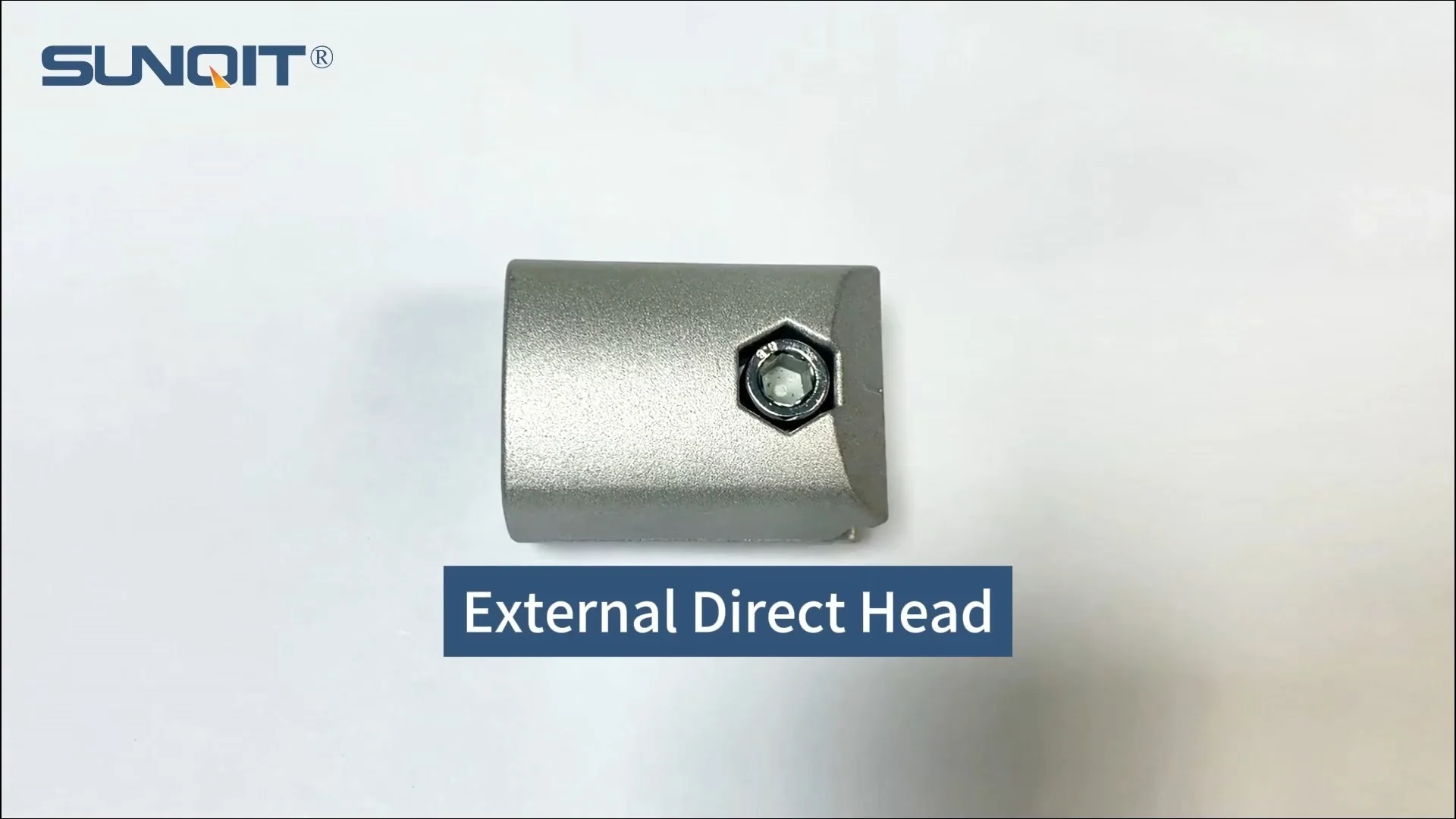
External Straight Aluminum Joint
Aluminum pipe joint outside connection used for two pcs 28pcs aluminum pipe connection in straight angle,it connects two pcs pipe from outside.
In the fast-paced world of automotive manufacturing, where every second counts and adaptability is key, the tools and components that keep production lines moving often go unnoticed—until they become a bottleneck. For decades, manufacturers relied on rigid steel structures and welding to build assembly lines, workstations, and material flow systems. But as car models evolve faster, electric vehicles demand new production processes, and lean manufacturing principles take center stage, the industry has been crying out for flexibility. Enter external straight aluminum joints: small, unassuming components that are quietly revolutionizing how automotive plants design, build, and reimagine their operations. These joints, paired with aluminum lean pipe and a suite of aluminum profile accessories, are not just parts—they're the building blocks of a more agile, efficient, and human-centered factory floor. Let's dive into real-world stories of how these humble connectors are making a big impact.
Case Study 1: Adapting Assembly Lines for Electric Vehicle (EV) Transitions
When a leading Tier 1 automotive supplier based in Michigan was tasked with producing components for a new line of electric SUVs, their existing assembly workstations hit a wall. The problem? Their old steel workbenches were welded into place, making it nearly impossible to adjust heights, add tool holders, or reconfigure layouts to accommodate the larger battery packs and unique wiring harnesses of EVs. "We'd spend two full days just cutting and rewelding steel frames whenever we needed to shift a workstation," recalls Maria Gonzalez, the plant's production manager. "With the EV launch timeline compressed to half our usual cycle, that wasn't going to work."
The solution came in the form of external straight aluminum joints, paired with lightweight aluminum lean pipe and aluminum profile accessories. The team worked with a local supplier to design modular workbenches: aluminum lean pipes formed the frame, connected by external straight aluminum joints that snapped into place with a simple twist of a wrench—no welding required. "It was like building with giant Tinkertoys, but industrial-grade," Gonzalez laughs. The joints allowed workers to adjust the height of the workbench surfaces by simply loosening a bolt, sliding the pipe, and retightening. They added custom tool holders using aluminum profile accessories like brackets and clips, and even integrated ESD-safe mats for handling sensitive EV electronics.
The results were transformative. What once took 48 hours to reconfigure now took just 4 hours. When the EV line required a last-minute change to accommodate a new battery module design, the team repositioned three workstations in a single afternoon. "Our operators used to dread reconfig days—now they actually volunteer to help," Gonzalez says. "They feel empowered because they can tweak their own workstations to fit how they move, instead of the other way around." Beyond speed, the aluminum setup cut the weight of each workstation by 40%, reducing strain on workers who occasionally need to shift benches manually. The plant estimates saving $120,000 in labor costs alone in the first year, not to mention avoiding production delays that could have cost millions in missed deadlines.
Case Study 2: Streamlining Material Flow with Lightweight Roller Tracks
On the other side of the country, a California-based automotive battery manufacturer was struggling with a different challenge: material flow. Their production facility relied on steel roller tracks to move battery cells from the testing area to assembly, but the tracks were heavy, prone to rust in the humid coastal air, and frustratingly hard to adjust. "If a roller jammed, we'd have to shut down the line, unbolt the entire section, and replace the steel track—often taking an hour or more," explains Raj Patel, the plant's logistics coordinator. "And forget about rerouting the track for a new batch size; the steel was too rigid, and the old cast-iron joints would seize up."
The turning point came when Patel's team discovered external straight aluminum joints. They replaced the steel tracks with aluminum roller tracks, connected by external straight aluminum joints that allowed for quick disassembly and reconfiguration. The joints, designed to lock into the T-slots of aluminum lean pipe, created a seamless connection between track segments, ensuring batteries glided smoothly without jams. "We paired the joints with aluminum profile accessories like guide rails and end stops, which snapped into place without drilling," Patel says. "Now, if a roller needs replacing, a single worker can pop out the joint, swap the roller, and have the track running again in 10 minutes."
The lightweight aluminum system also solved another problem: floor space. The old steel tracks required heavy-duty supports, limiting where the team could route material. With aluminum, they mounted tracks overhead and around existing equipment, freeing up 1,200 square feet of floor space for additional assembly stations. "We even added a 'switch track' using external straight aluminum joints that let us divert batteries to either the main line or a quality control station with a flip of a lever," Patel notes. The plant's material flow efficiency increased by 22%, and maintenance requests for track issues dropped by 75%. "Our night shift crew used to complain about track jams keeping them late—now they're out the door on time," he adds. "That's the human side of it: happier workers mean fewer mistakes, and fewer mistakes mean better batteries."

Case Study 3: Building ESD-Safe Workstations for Sensitive Electronics
For automotive plants handling sensitive components like infotainment systems or autonomous driving sensors, static electricity is a silent killer. A single electrostatic discharge (ESD) can fry a $500 circuit board, leading to costly rework and delays. That's the problem a Texas-based automotive electronics manufacturer faced when they expanded production to include advanced driver-assistance systems (ADAS). Their existing workbenches, made of untreated wood and steel, weren't ESD-safe, and workers were accidentally damaging 2-3 boards per week. "We tried adding ESD mats, but the steel frames still conducted static, and the mats would slip because the benches weren't level," says Jamie Liu, the plant's quality engineer.
The solution combined external straight aluminum joints with ESD workstation components, aluminum lean pipe, and anti-slip accessories. The team built new workstations using aluminum lean pipe (naturally conductive, dissipating static) connected by external straight aluminum joints. They added ESD-safe laminate tops and used aluminum profile accessories like adjustable feet with suction cup anti-slip bases to keep the benches stable and level. "The joints were key here—they let us customize the height of each section of the workstation to match the operator's arm reach, reducing strain and the likelihood of sudden movements that generate static," Liu explains. Workers could also adjust the angle of the component holders using swivel joints (paired with external straight joints for stability), keeping sensitive parts at eye level and minimizing contact.
The results spoke for themselves: ESD-related damage dropped to zero within the first month. "Our operators used to be nervous handling the ADAS boards—now they move with confidence," Liu says. The adjustable height also cut down on worker fatigue; ergonomic assessments showed a 30% reduction in reported shoulder and wrist strain. The plant saved an estimated $45,000 in avoided component damage and reduced rework time, but Liu emphasizes the intangible benefit: "When workers don't have to worry about breaking parts, they focus on building them right the first time. That's the real win."

Case Study 4: Lean System Implementation with Turnover Trolleys and Racks
Lean manufacturing is all about eliminating waste—whether it's time, materials, or space. For a mid-sized automotive parts manufacturer in Ohio, waste was piling up in their material handling process. Workers were spending 20% of their shifts walking to retrieve parts from centralized storage, and the plant's fixed steel racks couldn't be adjusted to fit varying part sizes, leading to cluttered aisles and lost inventory. "We had racks that were too tall for small parts and too short for large ones, so we'd stack bins on the floor," says Tom Wilson, the plant's lean coordinator. "It was chaos, and it was eating into our production time."
Wilson's team turned to external straight aluminum joints to build a fleet of modular turnover trolleys and racks. Using aluminum lean pipe as the base, they connected the pipes with external straight joints to form lightweight, foldable trolleys that workers could wheel directly to assembly stations. The racks, too, were modular: adjustable shelves held in place by external straight joints let the team reconfigure storage on the fly. "A trolley that held small fasteners on Monday could hold door panels on Tuesday—just by moving the joints," Wilson explains. They added caster wheels with brakes (another aluminum profile accessory) to the trolleys, making them easy to maneuver but stable when parked.
The impact was immediate. Worker walk time dropped by 65%, freeing up 12 hours per worker per week for actual production. The adjustable racks reduced floor clutter by 40%, and inventory accuracy improved because parts were stored at eye level, not hidden in overflow bins. "One of our line leads told me, 'I used to spend an hour every morning hunting for parts—now I just roll my trolley over and grab what I need,'" Wilson says. The plant estimates saving $85,000 annually in labor costs, and they've repurposed 800 square feet of previously cluttered space into a new inspection area. "Lean isn't just about numbers—it's about respecting your workers' time," Wilson adds. "These joints didn't just build racks; they built a more respectful workplace."
| Traditional Steel Systems | Aluminum Systems with External Straight Joints | Key Benefit for Automotive Manufacturing |
|---|---|---|
| Welding required for assembly; rigid and hard to reconfigure | Tool-free assembly with joints; reconfigurable in hours, not days | Adapts quickly to new car models and production changes |
| Heavy (50-100 lbs per workstation section) | Lightweight (30-50% lighter than steel) | Easier to move, reduces worker strain, and lowers shipping costs |
| Prone to rust and corrosion in humid environments | Aluminum resists corrosion; joints are coated for durability | Longer lifespan, lower maintenance costs in diverse climates |
| Limited accessory compatibility; requires custom fabrication | T-slot design works with hundreds of aluminum profile accessories | Add tool holders, ESD mats, or guide rails without redesign |
| High labor costs for installation and rework | Workers can assemble/reconfigure with basic tools | Reduces reliance on specialized welders, cuts labor time by 70% |

Why External Straight Aluminum Joints Are Here to Stay
What ties these case studies together isn't just the product—it's the philosophy. External straight aluminum joints embody the shift from "build it once and forget it" to "build it to evolve." In automotive manufacturing, where change is the only constant, that's invaluable. These joints don't just solve technical problems; they empower workers to take ownership of their spaces. When a line operator can adjust their workbench height to fit their posture, or a night shift crew can fix a roller track jam in 10 minutes instead of an hour, the factory becomes more than a production machine—it becomes a place where people can do their best work.
Looking ahead, as automotive plants adopt more automation and AI-driven production, the need for flexible infrastructure will only grow. Collaborative robots (cobots) work alongside humans in tight spaces, requiring workstations that can shift to make room for new equipment. Aluminum systems with external straight joints are already proving compatible with these technologies, as their lightweight design and modularity make them easy to integrate with cobot mounts and sensor brackets. "We're not just building for today's cars—we're building for the factories of 2030," says Gonzalez from the Michigan plant. "And those factories will need to be as adaptable as the people who run them."
External straight aluminum joints may be small, but their impact is large. They're a reminder that innovation in manufacturing doesn't always come from flashy robots or AI algorithms—sometimes it comes from reimagining the basics. For the automotive industry, still navigating the transition to electric vehicles, autonomous technology, and leaner operations, these joints are more than components. They're a tool for resilience, a way to build factories that can keep up with the future while respecting the people who power it. As one worker put it: "I don't know what these little aluminum pieces are called, but they make my job easier. That's all that matters." And in the end, isn't that the goal?