- Company Articles
- Products and Technology
- Product knowledge
- External Straight Aluminum Joints in Consumer Electronics Assembly: Efficiency Boost

External Straight Aluminum Joints in Consumer Electronics Assembly: Efficiency Boost
Related Product
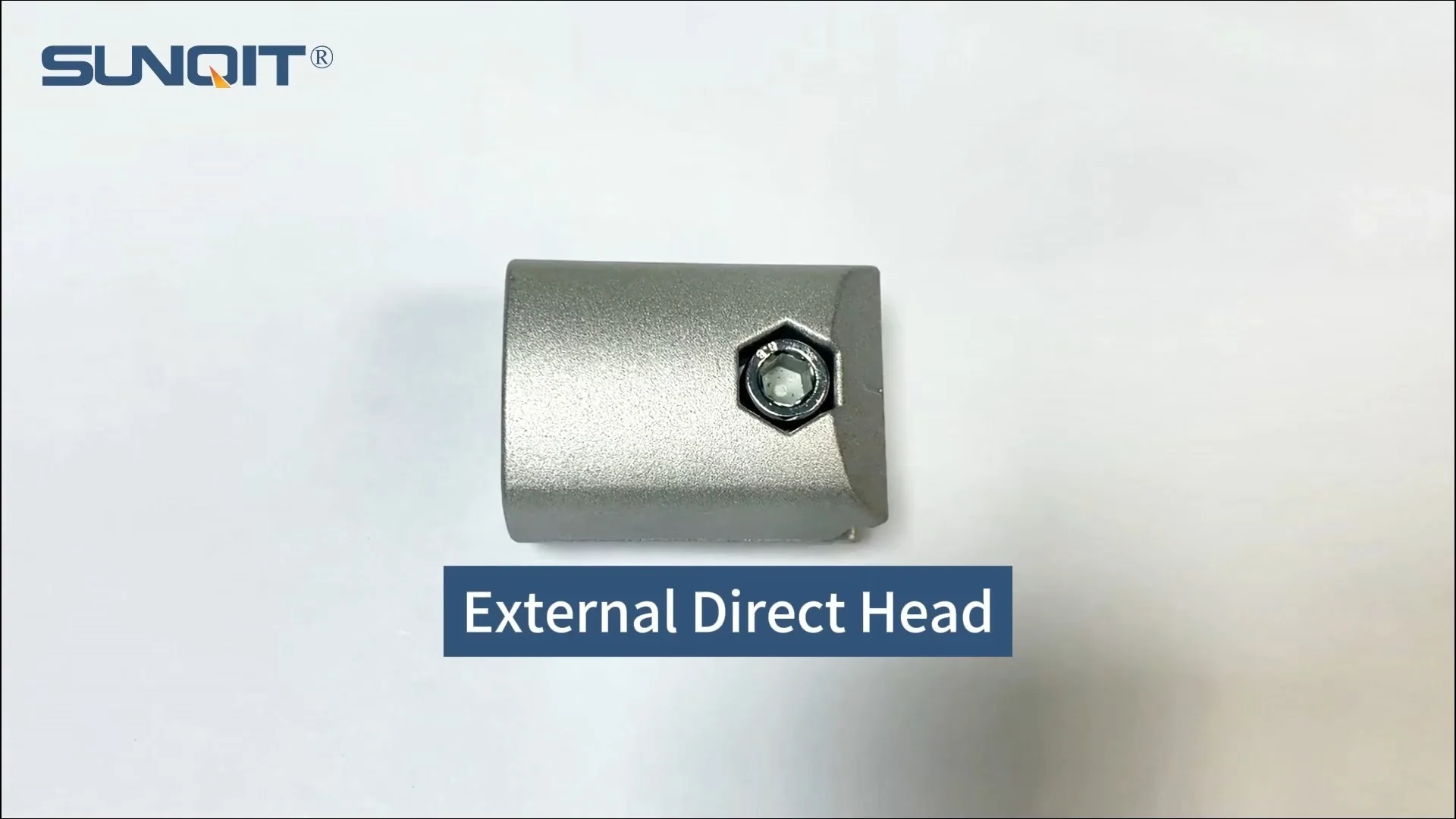
External Straight Aluminum Joint
Aluminum pipe joint outside connection used for two pcs 28pcs aluminum pipe connection in straight angle,it connects two pcs pipe from outside.
In the fast-paced world of consumer electronics, where new smartphones, tablets, and wearables hit the market every few months, manufacturers face relentless pressure to ramp up production speed without sacrificing quality. Walk into any modern assembly plant, and you'll hear the constant buzz of automated machines, the precise clicks of components being fitted together, and the steady shuffle of workers moving materials from one station to the next. In this environment, even the smallest inefficiency—a loose joint, a wobbly workbench, or a delayed material transfer—can snowball into missed deadlines, increased costs, and frustrated teams. Today, we're diving into a unsung hero of this high-stakes ecosystem: the external straight aluminum joint. Often overlooked, this unassuming component is quietly revolutionizing assembly lines by turning rigid, slow workflows into agile, responsive systems that keep pace with the demands of modern manufacturing.
The Hidden Cost of Outdated Assembly Line Joints
To understand why external straight aluminum joints matter, let's first look at the problem they solve. For decades, assembly lines relied on traditional joints: welded steel connectors, plastic clips, or bulky internal fasteners. While these served their purpose in slower, less dynamic manufacturing eras, they've become a bottleneck in today's consumer electronics plants. Consider welded steel joints: strong, yes, but once welded, they're permanent. If a factory needs to reconfigure a workbench to accommodate a new phone model with a different casing, workers must cut the welds, grind down the metal, and re-weld—a process that takes hours, if not days. Plastic clips, on the other hand, are cheap but flimsy; under the constant stress of daily use, they crack, warp, or snap, leading to frequent replacements and unplanned downtime.
Then there are internal joints, which fit inside the tubes of a workbench or rack. While they create a sleek, clean look, they're a nightmare to install. Workers often struggle to align the internal components, fumbling with tiny screws in tight spaces. And if a joint loosens over time? Disassembling the entire structure to reach the internal fastener is the only fix—hardly ideal when every minute of downtime costs thousands of dollars in lost production.
These outdated joints also clash with the principles of lean manufacturing, a methodology centered on minimizing waste and maximizing value. Lean systems thrive on flexibility: the ability to adapt quickly to changing product designs, shift production volumes, or reorganize workflows to eliminate bottlenecks. Traditional joints, with their rigidity and time-consuming installation, are the antithesis of lean. They trap factories in fixed layouts, force workers to waste time on repairs, and make it nearly impossible to scale up or down efficiently.
Enter the External Straight Aluminum Joint: A Lean Solution in Disguise
External straight aluminum joints were designed with one goal in mind: to make assembly lines as adaptable as the products they build. At first glance, they're simple: a sleek, lightweight aluminum connector that attaches to the outside of aluminum lean pipes, creating a secure, yet easily adjustable link between tubes. But their simplicity is deceptive. Let's break down what makes them unique.
First, the material: aluminum. Unlike steel, aluminum is lightweight—about one-third the weight of steel—making it easier for workers to handle during installation or reconfiguration. Yet it's surprisingly strong, with a tensile strength that rivals many steels when alloyed correctly. This combination of strength and lightness is a game-changer for assembly lines, where workers often need to move or adjust workbenches, roller tracks, or material racks by hand. No more straining to lift heavy steel structures; aluminum joints reduce physical fatigue, lowering the risk of workplace injuries and keeping teams energized throughout shifts.
Then there's the design: "external" and "straight." Unlike internal joints, which hide inside tubes, external joints clamp onto the outside of aluminum lean pipes, making them visible and accessible. This might seem like a minor detail, but it eliminates the guesswork of alignment. Workers can see exactly how the joint connects to the pipe, ensuring a tight, secure fit in seconds. The "straight" design means they're optimized for linear connections—perfect for building workbenches, roller tracks, or straight sections of assembly lines—though many models can be paired with angled joints for corners or T-junctions.
But the real magic lies in their modularity. External straight aluminum joints don't require welding, glue, or specialized tools. Most use simple hex keys or even hand-tightened knobs to lock onto aluminum lean pipes. This means a team can assemble a basic workbench in under 30 minutes, compared to the 2+ hours it might take with welded steel. Need to shorten the workbench by a foot? Loosen the joints, slide the pipes to the new position, and retighten—done. Want to add a roller track to the side for material transport? Just clamp on a few more joints and attach the track. This level of flexibility is a cornerstone of lean systems, allowing factories to pivot quickly without halting production for days.

The Efficiency Boost: How External Straight Aluminum Joints Transform Workflows
So, what does this flexibility look like in action? Let's break down the tangible benefits these joints bring to consumer electronics assembly lines, from the factory floor to the bottom line.
1. Faster Setup and Reconfiguration: From Days to Hours (or Minutes)
In consumer electronics, product cycles are shorter than ever. A smartphone model might be updated every 6–12 months, and each update can require changes to the assembly line: new workbench heights, adjusted roller track angles, or modified material racks to hold new components. With traditional welded joints, reconfiguring a single station could take a full day of cutting, welding, and painting. With external straight aluminum joints, that same reconfiguration takes 30 minutes. Workers simply loosen the joints, adjust the aluminum lean pipes, and lock everything back into place. No special skills, no messy cleanup, no extended downtime.
Consider a hypothetical scenario: a factory assembling smartwatches suddenly needs to switch from a 42mm to a 45mm model. The change requires raising workbenches by 5 inches to better align with workers' ergonomics (reducing wrist strain during screen installation). With traditional joints, the team would need to order new, taller steel frames, wait for delivery, and then weld them into place—losing 2–3 days of production. With external straight aluminum joints? They adjust the existing workbench legs by loosening the joints, sliding the pipes to the new height, and retightening. The line is back up and running by lunch.
2. Reduced Waste: Aligning with Lean Principles
Lean manufacturing teaches us to eliminate "muda" (waste) in all forms: waste of time, materials, space, and effort. External straight aluminum joints tackle multiple types of waste at once. Take material waste: traditional plastic joints often crack after 6–12 months of use, ending up in landfills. Aluminum joints, by contrast, are built to last 10+ years, even in high-use environments. Their durability means fewer replacements, less plastic waste, and lower long-term costs.
Time waste is another area where these joints shine. In a study by the Manufacturing Excellence Association, factories using aluminum modular systems (including external straight joints) reported a 35% reduction in time spent on maintenance compared to those using welded steel or plastic. Why? Because aluminum resists corrosion (no rust to clean or repair), and loose joints can be tightened in seconds, without disassembling the entire structure. Workers aren't stuck waiting for maintenance crews to fix a wobbly shelf—they can do it themselves between tasks.
3. Compatibility: A Universal Connector for Modular Systems
Consumer electronics assembly lines aren't just workbenches and conveyor belts—they're complex ecosystems of tools, racks, and transport systems. External straight aluminum joints are designed to play well with others, seamlessly integrating with aluminum profiles, roller tracks, casters, and accessories. Need to add a roller track to a workbench to slide circuit boards from one station to the next? The same external joints that hold the workbench together can clamp onto the roller track's aluminum frame, creating a smooth, continuous flow of materials.
This compatibility is key for lean system adoption. Instead of buying separate, incompatible components from different suppliers, factories can build a unified system using aluminum lean pipes, external joints, and matching accessories. For example, a material rack built with aluminum profiles and external joints can be easily modified to include roller tracks (using the same joints) when production needs change. This modularity reduces the need to invest in entirely new equipment, stretching capital budgets further.
Case Study: How XYZ Electronics Cut Assembly Time by 22% with Aluminum Joints
To put these benefits into perspective, let's look at a real-world example. XYZ Electronics, a mid-sized manufacturer of wireless earbuds, was struggling with bottlenecks in their final assembly line. Their old setup used plastic-jointed workbenches and steel racks, which were slow to reconfigure and prone to wobbling. Workers often had to pause to adjust loose plastic clips, and retooling for new earbud models took 8 hours—time that could have been spent assembling products.
In 2023, XYZ switched to a modular system built with aluminum lean pipes, external straight aluminum joints, and aluminum profile accessories. The results were striking: setup time for new models dropped from 8 hours to 1.5 hours. Material transfer between stations, once delayed by wobbly roller tracks, became 40% faster thanks to stable, joint-supported tracks. Most notably, overall assembly time per earbud decreased by 22%, allowing XYZ to increase daily output by 1,200 units without adding extra shifts. "It's like night and day," said Maria Gonzalez, the plant's operations manager. "Our team used to dread retooling days; now they finish in time for lunch and spend the rest of the day actually building products."

Technical Deep Dive: What Makes a Quality External Straight Aluminum Joint?
Not all external straight aluminum joints are created equal. To deliver the efficiency boost we've discussed, a joint must meet specific design and performance standards. Let's unpack the key features to look for when choosing these components for your assembly line.
Material Grade: Strength Meets Lightness
Aluminum joints are typically made from 6061 or 6063 aluminum alloy—two of the most common alloys in manufacturing. 6061 is prized for its high tensile strength (about 45,000 psi) and excellent machinability, making it ideal for joints that need to withstand heavy loads (like those supporting workbenches with power tools). 6063, while slightly less strong, offers superior corrosion resistance and a smoother finish, making it a better choice for joints exposed to moisture or chemicals (common in electronics cleaning stations). Both alloys are lightweight and recyclable, aligning with sustainability goals.
Clamping Mechanism: Secure, Yet Adjustable
The best external straight aluminum joints use a "cam-lock" or "threaded knob" clamping system. Cam-lock joints use a lever that, when flipped, tightens the joint around the aluminum lean pipe, creating a vice-like grip. They're tool-free and can be adjusted in seconds—perfect for quick reconfigurations. Threaded knob joints, on the other hand, use a large plastic or metal knob that workers twist to tighten. While slightly slower than cam-locks, they offer finer control over tightness, ensuring a precise fit for applications where vibration (like near heavy machinery) might loosen the joint over time.
Load Capacity: Built for Real-World Use
A quality external straight aluminum joint should support at least 50 kg (110 lbs) of vertical load per joint—enough to hold a fully loaded workbench with tools, components, and a worker's weight. For horizontal loads (like those on roller tracks), look for joints rated for 30 kg (66 lbs) or more, to handle the constant sliding of materials. Reputable suppliers will provide load-testing data, so don't hesitate to ask for certifications.
Finish: Protection Against Wear and Tear
Most aluminum joints come with an anodized finish—a process that coats the aluminum with a protective oxide layer. Anodizing prevents scratches, resists corrosion, and even adds a sleek, professional look to the assembly line. For factories with strict cleanroom standards (common in semiconductor or medical device manufacturing), electropolished finishes are available, which create an ultra-smooth, bacteria-resistant surface that's easy to sanitize.

Traditional vs. External Straight Aluminum Joints: A Head-to-Head Comparison
Still on the fence about making the switch? Let's put external straight aluminum joints head-to-head with traditional options to see how they stack up in key categories.
| Feature | Welded Steel Joints | Plastic Clip Joints | Internal Aluminum Joints | External Straight Aluminum Joints |
|---|---|---|---|---|
| Installation Time | 2+ hours (requires welding equipment) | 30–60 minutes (hand tools needed) | 45–90 minutes (difficult alignment) | 5–15 minutes (tool-free or hex key) |
| Reconfigurability | Impossible (permanent welds) | Possible but prone to breakage | Difficult (requires disassembly) | Easy (loosen, adjust, retighten) |
| Durability | 10+ years (but prone to rust) | 6–12 months (cracks under stress) | 8–10 years (internal wear hidden) | 10+ years (corrosion-resistant, visible wear) |
| Weight | Heavy (steel) | Light (plastic) | Medium (aluminum, but adds bulk inside tubes) | Light (aluminum, minimal extra weight) |
| Cost (Lifetime) | High (initial + replacement of entire structure) | High (frequent replacements) | Medium (higher upfront, lower replacement) | Low (moderate upfront, minimal replacement) |
| Lean System Compatibility | Poor (rigid, wasteful) | Fair (flexible but unreliable) | Good (modular but slow to adjust) | Excellent (fast, flexible, low waste) |
Beyond the Joint: Building a Fully Lean Assembly Ecosystem
External straight aluminum joints are powerful on their own, but their true potential shines when they're part of a broader lean system. Let's explore how they integrate with other modular components to create a seamless, efficient assembly line.
Workbenches: The Heart of the Assembly Line
Workbenches are where the magic happens—where circuit boards are soldered, screens are attached, and final quality checks are performed. Traditional workbenches are often fixed, heavy, and difficult to customize. With external straight aluminum joints, workbenches become modular marvels. Want a bench with a built-in roller track for moving components? Attach roller track sections to the bench frame using external joints. Need to add a shelf for tools? Clamp on aluminum profiles with a few twists of a knob. Even height-adjustable legs are possible, allowing workers of different heights to customize their stations for comfort and efficiency.
Take the "Workbench E (Single Deck–Without Caster)" from leading suppliers—a basic model built with aluminum lean pipes and external straight joints. What starts as a simple flat surface can be transformed into a specialized workstation with lighting, tool hooks, and anti-static mats, all attached via compatible aluminum profile accessories. And if a new product requires a different layout? The entire bench can be reconfigured in under an hour.
Roller Tracks: Smooth Material Flow, No Stumbling Blocks
In consumer electronics assembly, materials need to flow like water—from storage racks to workbenches, and from workbenches to testing stations. Roller tracks, which use gravity or gentle inclines to slide components along a path, are critical for this flow. But traditional roller tracks often suffer from jams or misalignments, thanks to poorly secured joints. External straight aluminum joints solve this by creating rock-solid connections between roller track sections. Their precise clamping ensures the track stays level, and their compatibility with aluminum guide rails (like Aluminum Guide Rail A or B) keeps rollers aligned, reducing jams by up to 70%.
For example, Plastic Roller Track Guide Rail Yellow—used to guide small components like charging ports—can be attached to aluminum lean pipes using external joints, creating a custom track that bends around corners or adjusts to different heights. Workers no longer waste time unjamming stuck parts; materials glide smoothly from station to station, keeping the line moving.
Material Racks: Organized Storage That Grows with You
A disorganized material rack is a productivity killer. Workers waste precious minutes hunting for the right component, and overstocked shelves lead to clutter and wasted space. External straight aluminum joints make material racks modular and adaptable. "Material Rack B (3 Row and 3 Floor)," a popular design, uses aluminum profiles and external joints to create adjustable shelves. Need to add a fourth row to hold new components? Loosen the joints, add a new aluminum profile, and tighten—no tools, no hassle. The rack grows with your inventory, ensuring every part has a place and every worker can find what they need in seconds.
The Future of Assembly Line Efficiency: Innovations in Aluminum Joint Technology
As consumer electronics continue to evolve—thinner, lighter, more complex—so too will the tools that build them. External straight aluminum joints are no exception. Here are three trends shaping the future of these critical components:
Smart Joints with IoT Integration
Imagine a joint that can "talk" to your factory's management system. Emerging smart aluminum joints include embedded sensors that monitor tightness, temperature, and vibration. If a joint starts to loosen, it sends an alert to maintenance teams before it causes a problem. If a section of the assembly line gets too hot (a risk for sensitive electronics), the joint triggers a cooling system adjustment. This predictive maintenance could reduce unplanned downtime by 40% or more, keeping lines running smoother than ever.
Sustainable Materials and Recycling
With consumers and regulators demanding greener manufacturing, aluminum joints are becoming even more eco-friendly. Suppliers are experimenting with recycled aluminum alloys (up to 70% recycled content) without sacrificing strength. Additionally, the modular nature of aluminum systems means joints and pipes can be disassembled and reused when a factory upgrades, reducing waste and lowering the carbon footprint of manufacturing.
3D-Printed Custom Joints
For ultra-specific applications—like assembling curved or irregularly shaped components—3D-printed aluminum joints are on the horizon. While still in the prototype phase, these joints can be custom-designed for unique assembly challenges, then printed on-site, reducing lead times from weeks to days. Early tests show they're just as strong as traditional machined joints, opening up new possibilities for personalized, efficient assembly lines.
Conclusion: Small Joints, Big Impact on Consumer Electronics Manufacturing
In the high-pressure world of consumer electronics assembly, where speed, flexibility, and quality are non-negotiable, external straight aluminum joints are more than just components—they're catalysts for change. By replacing rigid, wasteful traditional joints with these lightweight, adaptable connectors, factories can slash setup times, reduce waste, and build assembly lines that evolve as quickly as the products they create. From workbenches that adjust in minutes to roller tracks that glide without jams, the efficiency boost is tangible, measurable, and transformative.
As we look to the future, with smart joints, sustainable materials, and 3D-printed customization on the horizon, the potential only grows. For manufacturers ready to stay ahead of the curve, the message is clear: don't overlook the small stuff. The right joint can turn a struggling assembly line into a lean, mean, productivity machine—one that not only meets today's demands but is ready to tackle whatever tomorrow brings.
So, the next time you pick up your smartphone or slide on your wireless earbuds, take a moment to appreciate the unseen heroes holding their assembly lines together. External straight aluminum joints may not make the headlines, but they're the quiet force driving the devices we rely on—and the factories that build them—toward a faster, smarter, more efficient future.