- Company Articles
- Products and Technology
- Product knowledge
- External Straight Aluminum Joints in Mechanical Manufacturing: Stability Benefits

External Straight Aluminum Joints in Mechanical Manufacturing: Stability Benefits
Related Product
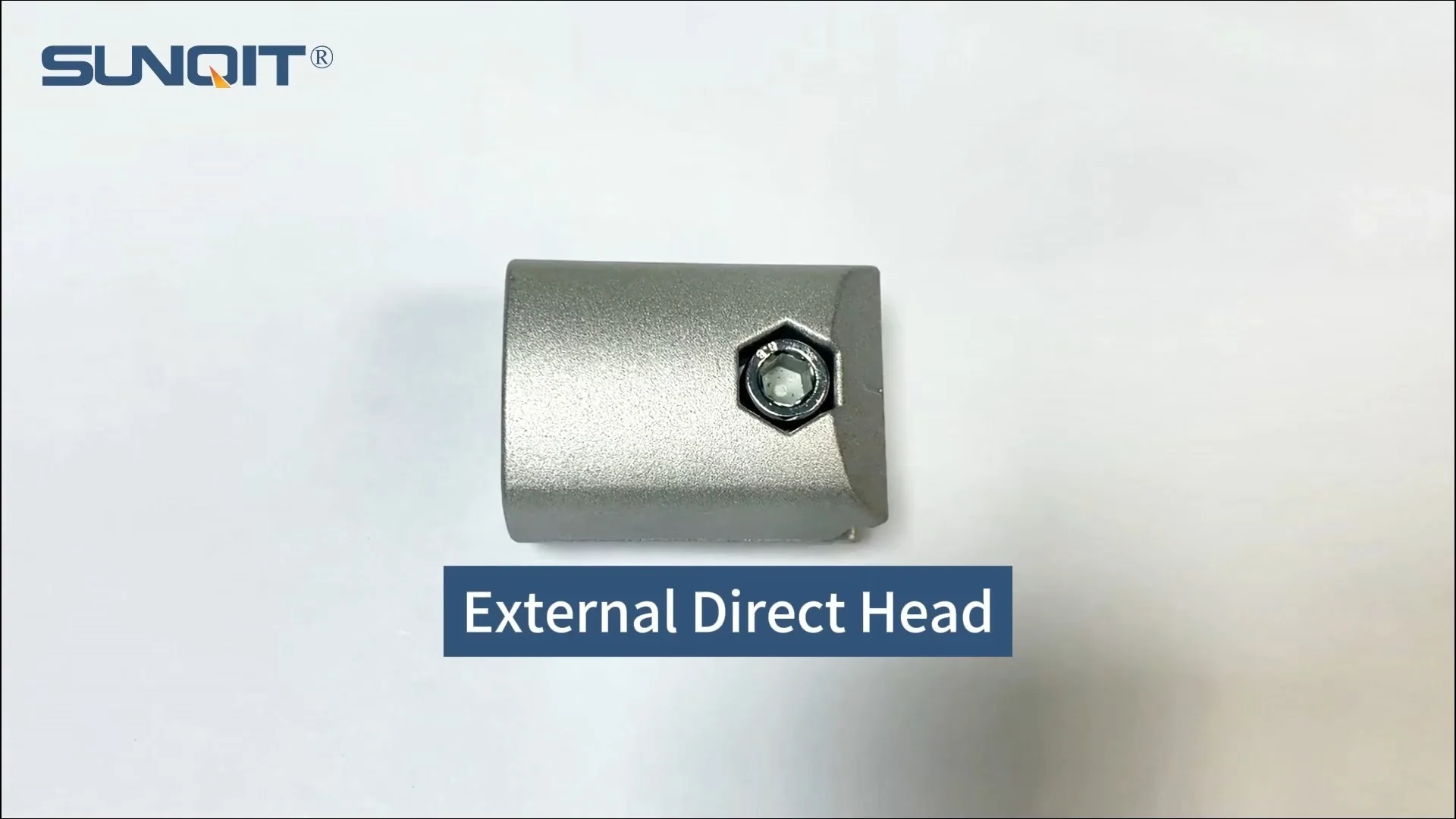
External Straight Aluminum Joint
Aluminum pipe joint outside connection used for two pcs 28pcs aluminum pipe connection in straight angle,it connects two pcs pipe from outside.
Walk into any modern manufacturing facility, and you'll quickly realize that the backbone of efficient production isn't just the heavy machinery or high-tech robots—it's the often-overlooked components that hold everything together. From the workbenches where operators assemble delicate parts to the material racks that keep inventory organized, stability is the unsung hero of smooth operations. Wobbly structures lead to errors, slowdowns, and even safety risks. This is where components like external straight aluminum joints step into the spotlight. These unassuming connectors play a critical role in ensuring that everything from aluminum profiles to workbenches stays rigid, reliable, and ready to meet the demands of fast-paced manufacturing. In this article, we'll explore how external straight aluminum joints deliver unmatched stability, why they've become a staple in lean systems, and how they integrate seamlessly with aluminum pipe accessories to transform industrial workflows.
What Are External Straight Aluminum Joints?
At their core, external straight aluminum joints are engineered connectors designed to join aluminum pipes or profiles in a straight line, creating stable, load-bearing structures. Unlike internal joints that fit inside the pipe, these joints clamp around the exterior of the aluminum components, forming a secure bond that resists twisting, bending, or separation under stress. Picture a simple T-joint, but instead of being hidden inside the pipe, it wraps around the outside like a sturdy handshake between two pieces of aluminum. This external design offers unique advantages in terms of accessibility, adjustability, and, most importantly, stability.
Most external straight aluminum joints are made from high-grade aluminum alloys, such as 6061 or 6063, chosen for their exceptional strength-to-weight ratio. These alloys are lightweight—critical for reducing overall structure weight without sacrificing durability—and naturally resistant to corrosion, making them suitable for both indoor and outdoor industrial environments. Many joints also feature anodized finishes, which add a protective layer that enhances scratch resistance and extends their lifespan, even in settings where they're exposed to oils, coolants, or humidity.
The design of these joints is deceptively simple but meticulously engineered. A typical external straight joint consists of two main parts: a clamping mechanism (often a metal collar or bracket) and fasteners (like bolts or levers) that tighten the joint around the aluminum pipe or profile. Some models include rubber or plastic gaskets to improve grip and prevent slippage, while others have precision-machined grooves that align perfectly with the T-slots found on most aluminum profiles. This alignment isn't just for aesthetics—it ensures that the joint distributes stress evenly across the profile, reducing weak points and enhancing overall structural integrity.
Design and Engineering: The Science of Stability
Stability in mechanical structures isn't just about being "strong enough"—it's about predictable performance under varying loads and conditions. External straight aluminum joints excel here because their design prioritizes three key engineering principles: load distribution, mechanical advantage, and material compatibility.
Let's start with load distribution. When you tighten an external straight joint around an aluminum profile, the clamping force isn't concentrated in one spot. Instead, the joint's collar spreads this force along the length of the profile, creating a larger contact area. This is crucial because concentrated stress can deform or damage aluminum, especially in thinner-walled profiles. By distributing the load, the joint ensures that even heavy weights—like a fully loaded workbench or a rack of metal components—are supported without warping the underlying structure. Engineers often refer to this as "stress sharing," and it's a primary reason these joints are trusted in applications where stability is non-negotiable.
Mechanical advantage comes into play with the joint's fastening system. Many external straight joints use a cam lever or a bolt with a washer to amplify the clamping force. For example, a bolt with a 10mm diameter might seem small, but when paired with a lever arm or a nut with fine threading, it can generate hundreds of pounds of force. This force creates friction between the joint and the aluminum profile, effectively "locking" them together. Unlike welded joints, which are permanent and rigid, this friction-based connection allows for minor adjustments (like realigning a profile) while still maintaining stability—a balance that's invaluable in lean manufacturing, where flexibility is as important as rigidity.
Material compatibility is the third pillar. Aluminum profiles and external straight aluminum joints are a match made in engineering heaven because they share similar thermal expansion properties. When temperatures fluctuate (a common occurrence in factories with heating, cooling, or machinery generating heat), both the profile and the joint expand or contract at roughly the same rate. This minimizes internal stress that could loosen the joint over time. In contrast, mixing materials like aluminum profiles with steel joints can lead to uneven expansion, causing the connection to weaken or even fail. By sticking to aluminum alloys for both the profile and the joint, manufacturers ensure long-term stability, even in environments with variable temperatures.

Compatibility with Aluminum Profiles and Accessories
No component exists in isolation, and external straight aluminum joints are no exception. Their true value shines when paired with aluminum profiles and aluminum pipe accessories, forming a modular system that can be customized for almost any manufacturing need. Aluminum profiles, with their T-slot design, are the perfect partners for these joints. The T-slots—longitudinal grooves running along the profile's length—allow accessories like brackets, shelves, and tools to be attached anywhere along the structure, while the external joints ensure the profiles themselves stay aligned and stable.
Consider a simple example: building a workbench. You start with four vertical aluminum profiles (legs) and connect them with horizontal profiles (the frame) using external straight joints. The T-slots in the horizontal profiles let you add a wooden or aluminum top, while additional joints can support shelves, tool holders, or even a monitor arm. Because the external joints are easy to adjust, you can tweak the height of the workbench or reposition the shelves without disassembling the entire structure. This modularity is a hallmark of lean systems, where adaptability to changing production needs is key.
Aluminum pipe accessories further enhance this compatibility. Things like end caps (to protect workers from sharp edges), corner brackets (to add bracing), and cable management clips (to keep wires organized) can all be integrated into the system using the same T-slots and joints. For instance, a material rack built with aluminum profiles and external straight joints can have roller tracks (another accessory) added to its shelves, turning it into a gravity-fed flow rack that speeds up material retrieval. The joints ensure the roller tracks stay perfectly aligned, so boxes or bins glide smoothly without jamming—a small detail that eliminates frustrating delays in the workflow.
This ecosystem of profiles, joints, and accessories also simplifies maintenance. If a joint becomes loose or an accessory wears out, it can be replaced in minutes with basic tools. There's no need for welding or specialized equipment, which reduces downtime and keeps production on track. In a manufacturing environment where every minute counts, this ease of repair is just as important as initial stability.

Stability Benefits: Why External Straight Joints Stand Out
When manufacturers choose external straight aluminum joints, they're investing in more than just a connector—they're investing in a stability solution that delivers tangible benefits across the production lifecycle. Let's break down these benefits into five key areas: load-bearing capacity, precision alignment, vibration resistance, durability, and adaptability.
1. Exceptional Load-Bearing Capacity
Stability under load is the most obvious benefit, and external straight aluminum joints deliver here in spades. Thanks to their wide clamping area and high-friction design, these joints can support surprisingly heavy weights. Tests show that a well-installed external straight joint on a 40x40mm aluminum profile (a common size in manufacturing) can withstand static loads of up to 500kg per joint, depending on the profile's wall thickness and the joint's material. For dynamic loads—like a trolley rolling across a conveyor or a worker leaning on a workbench—the joint's ability to absorb shock without loosening is equally impressive.
This load-bearing capacity is critical in applications like material storage racks. Imagine a rack with three levels, each holding 20kg boxes. The vertical profiles must support the weight of all three levels, and the horizontal profiles (connected by external straight joints) must distribute this weight evenly. A weak joint here could cause the rack to sag or collapse, risking damage to inventory and injury to workers. External straight joints eliminate this risk by ensuring each connection is as strong as the profile itself.
2. Precision Alignment for Consistent Performance
In manufacturing, even a millimeter of misalignment can throw off an entire production line. External straight aluminum joints excel at maintaining precision alignment, thanks to their tight tolerances and T-slot compatibility (T-slots have standardized dimensions, ensuring a snug fit). When you connect two profiles with an external straight joint, they stay perfectly parallel or perpendicular—no "wobble" or "play" that could affect the accuracy of tasks like assembly or inspection.
This precision is especially valuable in workbenches used for electronics assembly, where operators handle small components like circuit boards or microchips. A wobbly workbench could cause a soldering iron to slip or a part to misalign, leading to defects. With external straight joints, the workbench remains rock-steady, allowing operators to work with confidence and reducing the risk of costly mistakes.
3. Vibration Resistance for Long-Term Reliability
Manufacturing floors are noisy, bustling places, filled with vibrating machinery, clanking tools, and constant foot traffic. Over time, this vibration can loosen fasteners and degrade joint performance—unless the joint is designed to resist it. External straight aluminum joints address this with their high clamping force and anti-slip features (like rubber gaskets or textured surfaces). The friction between the joint and the profile acts as a damper, absorbing small vibrations before they can loosen the connection.
Consider a conveyor system used to transport parts between workstations. Every time a part hits the conveyor or a motor starts up, vibrations travel through the frame. If the joints holding the conveyor's roller tracks together loosen, the tracks could misalign, causing parts to jam. External straight joints keep the tracks aligned, even after months of continuous vibration, ensuring smooth, uninterrupted material flow.
4. Durability in Harsh Environments
Manufacturing environments are tough on equipment. Chemicals, moisture, and physical abrasion can take a toll on even the sturdiest components. External straight aluminum joints are built to withstand these challenges. Their aluminum alloy construction resists corrosion from oils, coolants, and cleaning agents, while anodized finishes protect against scratches and wear. Unlike plastic joints, which can crack or degrade under UV light or extreme temperatures, aluminum joints maintain their integrity for years—often outlasting the equipment they're attached to.
In food processing or pharmaceutical manufacturing, where cleanliness is critical, stainless steel versions of these joints are available. These stainless steel variants resist rust and can be sanitized with harsh cleaning agents, ensuring compliance with hygiene standards without sacrificing stability.
5. Adaptability for Lean and Agile Manufacturing
Lean manufacturing is all about eliminating waste and adapting to change quickly—and external straight aluminum joints are lean by design. Unlike welded or glued joints, which are permanent, these joints can be disassembled and reconfigured in minutes. Need to shorten a workbench? Loosen the joints, remove a section of profile, and retighten. Want to add a new shelf to a material rack? Slide a new joint onto the profile and secure it in place. This flexibility reduces the need for custom-built structures, saving time and money when production needs shift.
This adaptability is a game-changer for small-batch or custom manufacturing, where production lines might reconfigure weekly (or even daily). Instead of investing in new equipment for each project, manufacturers can reuse existing aluminum profiles and joints, simply rearranging them to fit the new task. It's a sustainable approach that aligns with modern manufacturing's focus on efficiency and resourcefulness.

Applications: Where Stability Meets Real-World Needs
External straight aluminum joints aren't just theoretical—they're hard at work in factories, warehouses, and workshops around the world. Let's explore some of their most common applications and how they deliver stability in each scenario.
Lean System Integration
Lean systems thrive on efficiency, and external straight aluminum joints are a cornerstone of this philosophy. In a lean facility, workflows are designed to minimize waste, which means equipment must be flexible enough to adapt to changing demands. For example, a production line might need to switch from assembling smartphones to tablets, requiring taller workbenches or wider conveyor belts. With aluminum profiles and external straight joints, these changes can happen in hours, not days.
One common lean application is the "5S" workstation—an organized workspace where everything has a place. External straight joints help build the shelving, tool boards, and material holders that make 5S possible. Because the joints are adjustable, workers can customize their stations to fit their specific tasks, reducing motion waste (like reaching for tools) and improving productivity. And if a new tool is introduced or a process changes, the workstation can be reconfigured without disrupting the entire line.
Workbench Construction
Workbenches are the heart of any manufacturing or assembly operation, and their stability directly impacts product quality. A workbench built with external straight aluminum joints offers a level, wobble-free surface that supports everything from manual assembly to automated testing equipment. For example, in automotive parts manufacturing, a workbench might hold a torque wrench that requires precise calibration—even a small amount of movement could result in over-tightened or under-tightened bolts, leading to product failures.
These workbenches can also be customized with accessories like LED task lights, ESD (electrostatic discharge) mats (for electronics work), or integrated power strips—all attached via the T-slots in the aluminum profiles. The external joints ensure that these accessories stay securely in place, even with daily use. And because the joints are easy to adjust, the workbench can grow with the company—adding a second tier of shelving or extending the length as the team expands.
Material Handling and Storage
From roller tracks that move parts between stations to turnover trolleys that transport materials across the factory floor, material handling relies on stable, reliable structures. External straight aluminum joints are ideal here because they ensure smooth, consistent movement. For example, a roller track built with aluminum profiles and external straight joints will have perfectly aligned rollers, so boxes glide evenly without getting stuck. This reduces the physical strain on workers (who don't have to push or pull jammed loads) and speeds up material flow.
Storage racks are another key application. Whether holding raw materials, work-in-progress, or finished goods, these racks need to support heavy weights without bending or collapsing. External straight joints connect the vertical and horizontal profiles, creating a grid-like structure that distributes weight evenly. Some racks even use these joints to add cross-bracing, increasing stability further and allowing the rack to withstand accidental impacts (like a forklift bumping into it).
Case Study: A Furniture Manufacturer's Stability Upgrade
A mid-sized furniture manufacturer was struggling with wobbly assembly workbenches and inefficient material racks. Their old workbenches, made from wooden frames and metal brackets, would loosen over time, leading to uneven surfaces and frequent repairs. Material racks, constructed from welded steel, were heavy and impossible to reconfigure, so the company often had to build new racks when product lines changed—costing time and money.
The solution? Switching to aluminum profiles with external straight aluminum joints. The manufacturer replaced their wooden workbenches with aluminum frames, using external straight joints to connect the profiles. The result was a stable, level surface that didn't wobble, even when workers leaned on it or used power tools. The T-slots in the profiles allowed them to add tool holders, shelves, and ESD mats, customizing each workstation to the task.
For material storage, they built adjustable racks using the same aluminum profiles and joints. These racks could be reconfigured in minutes—adding or removing shelves as needed—and were lightweight enough to be moved by two workers, eliminating the need for forklifts to reposition storage. Within six months, the company reported a 20% reduction in workstation repair time and a 15% improvement in material retrieval speed, all thanks to the stability and flexibility of external straight aluminum joints.
Comparing External Straight Aluminum Joints to Other Connector Types
To truly appreciate the stability benefits of external straight aluminum joints, it helps to compare them to other common connector types used in mechanical manufacturing. Below is a table highlighting how they stack up against plastic snap-fit joints, stainless steel welded joints, and internal aluminum joints.
| Connector Type | Stability (Under Load) | Installation Time | Reusability | Weight | Corrosion Resistance | Cost (Per Unit) |
|---|---|---|---|---|---|---|
| External Straight Aluminum Joint | High (500kg+ static load) | Fast (5-10 minutes with basic tools) | Yes (unlimited reassembly) | Light (100-200g per joint) | High (anodized aluminum resists rust) | Medium ($5-$15) |
| Plastic Snap-Fit Joint | Low (100-200kg static load) | Very Fast (1-2 minutes, no tools) | Limited (snaps weaken after 3-5 uses) | Very Light (50-100g per joint) | High (plastic resists chemicals) | Low ($1-$3) |
| Stainless Steel Welded Joint | Very High (Unlimited, but profile may fail first) | Slow (requires welding equipment and skill) | No (permanent, must be cut to disassemble) | Heavy (300-500g per joint) | Very High (stainless steel is rust-proof) | High ($20-$50, including labor) |
| Internal Aluminum Joint | Medium (300-400kg static load) | Medium (10-15 minutes, requires precise alignment) | Yes (reusable, but harder to access) | Light (80-150g per joint) | High (same as external aluminum) | Medium-High ($8-$20) |
As the table shows, external straight aluminum joints strike a balance between stability, cost, and flexibility that's hard to beat. Plastic joints are cheaper and faster to install but lack the load-bearing capacity for heavy applications. Welded joints are incredibly stable but permanent and expensive. Internal aluminum joints offer good stability but are harder to adjust and access. For most manufacturing environments, external straight aluminum joints provide the best of all worlds: high stability, easy installation, reusability, and reasonable cost.
Maintenance and Care: Keeping Joints Stable for Years
Like any component, external straight aluminum joints perform best with regular maintenance. Fortunately, their design makes this maintenance simple and straightforward—no specialized tools or training required. Here are a few key steps to ensure your joints stay stable for years:
1. Regular Inspections: Check joints monthly for loose fasteners or signs of wear. Tighten any bolts that have loosened (a quarter-turn with a wrench is usually enough). Look for cracks in the aluminum collar or damage to rubber gaskets—these are signs that the joint needs replacement.
2. Cleanliness: Wipe joints with a damp cloth to remove dust, oil, or debris. Buildup can reduce friction between the joint and the profile, weakening the connection. For greasy environments (like automotive shops), use a mild degreaser, then dry thoroughly to prevent corrosion.
3. Lubrication (If Needed): Some joints with moving parts (like cam levers) benefit from a drop of machine oil on the pivot points. This prevents sticking and ensures smooth operation when adjusting the joint.
4. Avoid Over-Tightening: While it's tempting to crank down on bolts to "make sure" the joint is tight, over-tightening can strip threads or deform the aluminum profile. Follow the manufacturer's torque specifications (usually printed on the joint or included in the manual).
5. replace Worn Parts: If a joint's clamping mechanism is damaged or the fasteners are stripped, replace the joint immediately. Using a damaged joint is a safety risk and can compromise the entire structure.
By following these steps, you can extend the life of your external straight aluminum joints and ensure they maintain their stability over time. In most cases, a well-maintained joint will last 5-10 years—far longer than the equipment it supports.
Future Trends: Innovations in Aluminum Joint Technology
As manufacturing evolves, so too do the components that power it. External straight aluminum joints are no exception, with new innovations focused on improving stability, sustainability, and integration with smart technology.
One emerging trend is the use of composite materials in joint construction. Manufacturers are experimenting with aluminum alloys reinforced with carbon fiber, creating joints that are lighter and stronger than traditional aluminum. These composite joints could soon support even higher loads, making them suitable for heavy machinery applications previously dominated by steel.
Another area of innovation is smart joints equipped with sensors. These sensors monitor clamping force, temperature, and vibration, sending real-time data to a central system. If a joint starts to loosen or wear out, the system alerts maintenance teams before a failure occurs. This predictive maintenance reduces downtime and prevents accidents—a game-changer for industries like aerospace or medical device manufacturing, where precision and safety are critical.
Sustainability is also driving change. Many manufacturers now produce joints from recycled aluminum, reducing their environmental impact. Additionally, the modular nature of aluminum profile systems (enabled by joints) supports a circular economy—profiles and joints can be disassembled, recycled, or repurposed at the end of their lifespan, rather than ending up in landfills.
Conclusion: Stability as a Foundation for Success
In the fast-paced world of mechanical manufacturing, stability might not always get the attention it deserves—but it's the foundation upon which efficiency, quality, and safety are built. External straight aluminum joints embody this stability, offering a reliable, flexible, and cost-effective way to connect aluminum profiles and accessories. From lean workstations to heavy-duty storage racks, these joints ensure that structures stay rigid, aligned, and ready to meet the demands of modern production.
As we've explored, their benefits are clear: exceptional load-bearing capacity, precision alignment, vibration resistance, durability, and adaptability. They integrate seamlessly with aluminum profiles and accessories, support lean manufacturing principles, and require minimal maintenance. And with ongoing innovations in materials and smart technology, their role in manufacturing is only set to grow.
So the next time you walk through a manufacturing facility, take a closer look at the workbenches, racks, and conveyor systems around you. Chances are, external straight aluminum joints are holding them together—quietly, reliably, and with the kind of stability that keeps production moving forward. In a world of constant change, these unassuming connectors are a reminder that sometimes, the most important innovations are the ones that simply work—stably, consistently, and without fanfare.