- Company Articles
- Products and Technology
- Product knowledge
- External Straight Aluminum Joints: Key Specs for Material Rack B Integration

External Straight Aluminum Joints: Key Specs for Material Rack B Integration
Related Product
External Straight Aluminum Joint
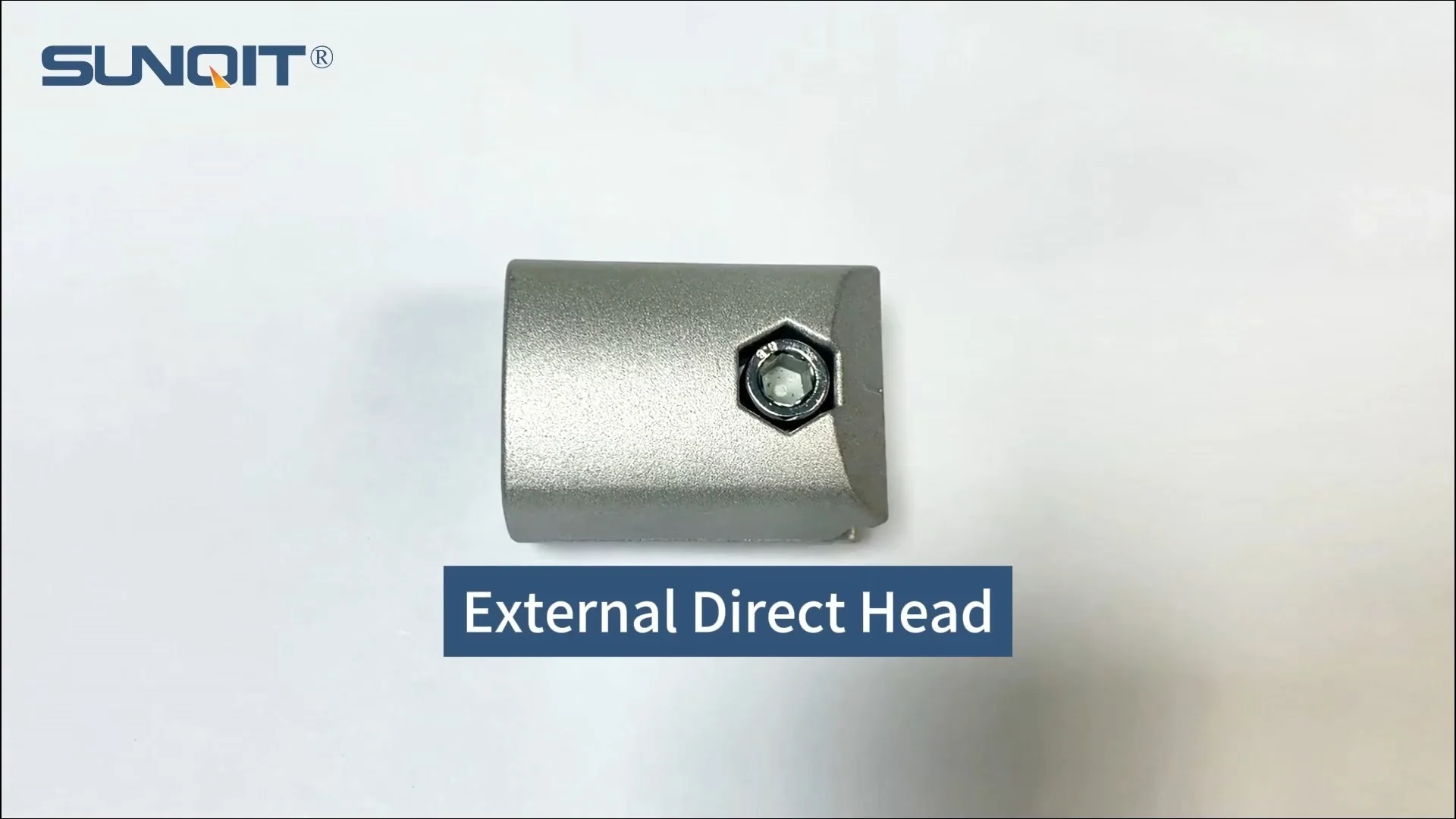
Aluminum pipe joint outside connection used for two pcs 28pcs aluminum pipe connection in straight angle,it connects two pcs pipe from outside.
Walk into any modern manufacturing facility, warehouse, or assembly plant, and you'll notice a quiet hero of efficiency: the material rack. These structures aren't just metal and pipes—they're the backbone of organized workflows, keeping parts within arm's reach, reducing downtime, and ensuring teams can focus on what matters most: building quality products. Among the countless rack designs out there, one stands out for its versatility and reliability: Material Rack B (3 row and 3 floor) . But what makes this rack so dependable? It's not just the shelves or the vertical supports. It's the small, often overlooked components that hold it all together. Today, we're shining a light on one such component: the External Straight Aluminum Joint. This unassuming piece plays a critical role in integrating Material Rack B's structure, and its specs can make or break the rack's performance. Let's dive in.
First, Let's Talk About Material Rack B: Why It's a Workhorse
Before we get into the nuts and bolts of External Straight Aluminum Joints, let's set the stage with Material Rack B itself. As the name suggests, this rack features 3 rows and 3 floors—think of it as a three-tiered shelf system, with each tier divided into three sections. It's a popular choice for facilities that need to store a variety of small to medium-sized parts, from electronic components to automotive fasteners. What makes it so widely used? For starters, its modular design. Unlike fixed metal racks that are welded in place, Material Rack B is built using aluminum lean pipe and compatible joints, which means it can be easily reconfigured as storage needs change. Need to add a fourth floor? Swap out a section for taller pipes. Shift from storing boxes to bins? Adjust the shelf spacing. This flexibility is a game-changer in dynamic environments where production lines evolve overnight.
But there's a catch: that flexibility relies entirely on the strength and precision of the joints connecting the aluminum lean pipes. Imagine building a house with wobbly nails—no matter how sturdy the beams, the structure will sag. The same goes for Material Rack B. If the joints can't handle the weight of the stored items, or if they loosen over time, the rack becomes unstable. Shelves might tilt, parts could slide off, and in worst-case scenarios, the entire structure could collapse. That's where External Straight Aluminum Joints come in. They're the "nails" that keep Material Rack B's 3 rows and 3 floors aligned, level, and secure.
What Are External Straight Aluminum Joints, Anyway?
At first glance, an External Straight Aluminum Joint looks simple: a cylindrical aluminum sleeve with a clamping mechanism, designed to connect two straight sections of aluminum lean pipe. But don't let its simplicity fool you. This joint is engineered for a specific purpose: to create a rigid, linear connection between pipes, ensuring that horizontal and vertical supports stay perfectly aligned. Unlike swivel joints or angled joints, which allow for rotation or bends, the External Straight Aluminum Joint is all about straight lines—making it ideal for the vertical posts and horizontal beams that form Material Rack B's frame.
Let's break down its basic design. The joint consists of two main parts: the outer sleeve and the clamping system. The sleeve is typically made from high-grade aluminum alloy (often 6063-T5, a material known for its strength and corrosion resistance). It's hollow, with an inner diameter that matches the outer diameter of the aluminum lean pipes it connects—usually 28mm, the standard size for most modular rack systems. The clamping mechanism, often a set of hex-head screws or a cam lever, tightens the sleeve around the pipes, creating a friction-based hold that's strong enough to resist lateral and vertical forces. Some models also feature rubberized inner liners to prevent slipping and protect the pipe's surface from scratches.
Fun fact: Aluminum lean pipe systems first gained popularity in lean manufacturing environments (hence the name "lean pipe"), where minimizing waste and maximizing efficiency are priorities. External Straight Aluminum Joints fit this ethos perfectly—they're lightweight, reusable, and require no welding or specialized tools to install. This aligns with the lean principle of "kaizen" (continuous improvement), as teams can quickly adjust the rack without calling in maintenance crews.

Key Specs of External Straight Aluminum Joints: Why They Matter for Material Rack B
Now, let's get to the heart of the matter: the specs of External Straight Aluminum Joints and how they impact Material Rack B's integration. When selecting joints for your rack, you can't just grab the first option off the shelf. You need to pay attention to details like material thickness, load capacity, and fit tolerance. Here's why each spec counts:
1. Material Grade and Thickness: The Foundation of Strength
Not all aluminum is created equal. External Straight Aluminum Joints are typically made from 6061 or 6063 aluminum alloy. Both are strong, but 6063-T5 is more commonly used for structural components like joints because it offers a better balance of strength, ductility, and corrosion resistance. Why does this matter? Material Rack B's 3 floors mean each joint is supporting the weight of the shelves above it, plus the items stored on those shelves. A joint made from low-grade aluminum might warp under heavy loads, causing the rack to lean. Similarly, the joint's wall thickness is critical. Most quality joints have a wall thickness of 2mm or more—thick enough to withstand clamping pressure without deforming. Thinner joints (1mm or less) might save a few cents, but they'll loosen over time as the metal stretches, putting the entire rack at risk.
2. Inner Diameter Tolerance: Ensuring a Snug Fit
Aluminum lean pipes come in standard diameters, usually 28mm for Material Rack B. The External Straight Aluminum Joint's inner diameter must match this size precisely—too loose, and the pipe will wobble; too tight, and you'll struggle to assemble the rack. The best joints have an inner diameter tolerance of ±0.1mm, meaning they'll fit snugly over 28mm pipes without gaps. This tight fit is crucial for alignment. If the joint is even slightly oversized, the pipe can rotate inside it, leading to misaligned shelves. Imagine trying to stack three levels of books on a shelf that tilts to the left—sooner or later, the books will slide off. The same logic applies here: tight tolerance = level shelves = secure storage.
3. Load Capacity: How Much Weight Can It Handle?
Every joint has a maximum load rating, which tells you how much weight it can support without failing. For Material Rack B, this spec is non-negotiable. Let's do some quick math: suppose each floor of the rack holds 50kg of parts. With 3 floors, that's 150kg total, distributed across the vertical joints. If the rack has 4 vertical posts (a common design), each post's joints must support roughly 37.5kg. But that's just the static load—you also need to account for dynamic forces, like someone pulling a heavy bin off the shelf or the rack vibrating from nearby machinery. A good rule of thumb is to choose joints with a load capacity of at least 50kg per joint to be safe. Cheaper joints might claim a 30kg rating, but under real-world conditions, they'll loosen or crack, turning your "reliable" rack into a liability.
4. Clamping Mechanism: Keeping It Tight Over Time
The clamping mechanism is what locks the joint onto the aluminum lean pipe. Most External Straight Aluminum Joints use set screws—small screws that tighten against the pipe to create friction. But not all set screws are the same. Look for joints with aluminum profile accessories like stainless steel set screws with knurled tips. Stainless steel resists rust (important in humid warehouses), and knurled tips bite into the aluminum pipe, preventing slippage. Avoid joints with plastic or low-carbon steel screws—they'll strip easily or corrode, leaving you with a joint that can't be tightened properly. Some premium joints also feature a dual-clamping design, with two set screws opposite each other. This distributes pressure evenly around the pipe, reducing the risk of warping and ensuring the joint stays tight even after repeated adjustments.
5. Finish: Protection Against Wear and Tear
You might not think about a joint's finish, but it plays a role in longevity. Most External Straight Aluminum Joints are anodized—a process that coats the aluminum with a protective oxide layer. Anodized finishes (usually clear or silver) resist scratches, corrosion, and fingerprints, which is important in busy facilities where racks are moved or adjusted frequently. A joint with a plain aluminum finish will dull quickly, and in damp environments, it might even develop white rust, weakening the metal over time. Anodization adds minimal cost but extends the joint's lifespan by years, making it a smart investment for Material Rack B, which is meant to be a long-term asset.
Pro tip: When shopping for External Straight Aluminum Joints, ask suppliers for test reports. Reputable manufacturers will provide data on load capacity, material composition, and tolerance levels. If a supplier can't share this info, it's a red flag—you don't want to gamble with untested components.

Why These Specs Matter for Material Rack B Integration
Okay, so we've covered the specs—but how do they translate to real-world performance for Material Rack B? Let's paint a picture. Imagine you're running an electronics assembly line, and your Material Rack B is storing delicate circuit boards on its 3 floors. Each floor has 3 rows, organized by part number. One morning, a technician notices that the top floor is tilting slightly. They check the shelves and realize the rightmost vertical post has shifted—its External Straight Aluminum Joint has loosened. Over the next hour, they have to stop production to fix the rack, delaying the day's output. What caused the joint to loosen? Maybe it was a low-tolerance fit, so the pipe wobbled inside the joint. Or perhaps the set screws were made of cheap steel and stripped, unable to hold the pipe tight. Either way, the root cause traces back to the joint's specs.
On the flip side, let's say you invested in high-spec External Straight Aluminum Joints: 6063-T5 aluminum, 2mm wall thickness, ±0.1mm tolerance, stainless steel set screws, and anodized finish. The rack goes up smoothly—pipes slide into joints with just enough resistance to feel secure. After installation, you load each floor with 50kg of parts. The joints don't budge. Six months later, a routine inspection shows the set screws are still tight, the finish is scratch-free, and the shelves are as level as day one. No delays, no near-misses, just reliable storage. That's the difference specs make.
Another scenario: modularity. Remember, Material Rack B is designed to be reconfigured. Suppose you need to add a roller track to the middle floor to help slide bins in and out more easily. Roller tracks require precise alignment—even a 2mm gap between sections can cause bins to jam. With External Straight Aluminum Joints that have tight tolerance and rigid clamping, you can adjust the shelf height, install the roller track, and trust that the new configuration will stay aligned. If the joints were low-quality, the roller track might warp or shift, turning a time-saving upgrade into a frustrating hassle.

Comparing External Straight Aluminum Joints to Other Joint Types
You might be wondering: why not use other joint types for Material Rack B? After all, there are plenty of options—Internal Rotary Aluminum Joints, 90° Aluminum Crossing Joints, even plastic snap-on joints. Let's compare External Straight Aluminum Joints to a few common alternatives to see why they're the best fit for this rack.
| Feature | External Straight Aluminum Joint | Internal Rotary Aluminum Joint | Plastic Snap-On Joint |
|---|---|---|---|
| Best For | Straight, rigid connections (horizontal/vertical beams) | Angled or rotating connections (e.g., foldable racks) | Light-duty, temporary structures (e.g., event displays) |
| Load Capacity | 50kg+ per joint | 30-40kg (due to rotating mechanism) | 10-15kg (plastic deforms under pressure) |
| Alignment Precision | High (±0.1mm tolerance) | Medium (rotation allows for slight misalignment) | Low (plastic flexes, leading to wobbly connections) |
| Longevity | 5+ years (anodized aluminum resists wear) | 3-4 years (rotary parts may wear out) | 6-12 months (plastic cracks, fades, or becomes brittle) |
| Ideal for Material Rack B? | Yes (perfect for 3-row, 3-floor linear structure) | No (unnecessary rotation weakens rigidity) | No (can't handle 3-floor load or frequent use) |
The takeaway? While other joints have their uses, External Straight Aluminum Joints are purpose-built for the linear, load-bearing needs of Material Rack B. They offer the strength, precision, and durability required to keep the rack stable, even in high-traffic environments.
Installation Tips: Getting the Most Out of Your Joints
Even the best External Straight Aluminum Joints won't perform well if installed incorrectly. Here are a few pro tips to ensure your Material Rack B integration goes smoothly:
- Clean the pipes first. Aluminum lean pipes can pick up dust, oil, or fingerprints during storage. Wipe them down with a lint-free cloth and isopropyl alcohol before assembly. Dirt between the pipe and joint will reduce friction, making it harder to get a tight clamp.
- Use a level during setup. As you build each section of Material Rack B, check for plumb (vertical) and level (horizontal) with a bubble level. A 1-degree tilt in the vertical posts will multiply across the 3 floors, leading to a noticeably sloped top shelf.
- Tighten set screws gradually. If your joint has two set screws, tighten them alternately (a quarter turn on one, then a quarter turn on the other) instead of cranking one all the way first. This ensures even pressure and prevents the pipe from bending inside the joint.
- Don't overtighten. It's tempting to crank the set screws as tight as possible, but this can strip the threads or warp the joint. Most manufacturers recommend a torque of 2-3 Nm (check the joint's specs!). If you don't have a torque wrench, tighten until the screw resists further turning, then stop.
- Inspect after loading. Once the rack is fully assembled and loaded with parts, give it a gentle shake. If you hear rattling or see movement in the joints, recheck the set screws—they may have loosened under the initial load.
Maintenance: Keeping Your Joints (and Rack) in Top Shape
External Straight Aluminum Joints are low-maintenance, but they're not "set it and forget it." A little care goes a long way in extending their lifespan:
- Quarterly inspections. Walk around the rack and check each joint for signs of looseness. Gently tug on the pipes—if they move inside the joint, retighten the set screws. Look for cracks in the aluminum or rust on the set screws (a sign they need replacement).
- Clean the finish. Wipe down joints with a damp cloth to remove dust and grime. Avoid abrasive cleaners, which can scratch the anodized surface.
- replace worn parts. If a set screw strips or the joint develops a crack, replace it immediately. Don't try to "make do" with a damaged joint—this is how racks fail.
- Lubricate threads (if needed). If set screws become hard to turn, apply a tiny drop of anti-seize lubricant to the threads (avoid getting it on the pipe, as it will reduce friction).
Final Thoughts: The Small Part That Makes a Big Difference
External Straight Aluminum Joints might not be the most glamorous components in your facility, but they're essential. For Material Rack B (3 row and 3 floor), they're the difference between a rack that reliably supports your workflow and one that causes headaches, delays, and safety risks. By paying attention to specs like material grade, tolerance, load capacity, and clamping mechanism, you're not just buying a joint—you're investing in efficiency, safety, and peace of mind.
So the next time you're setting up a new Material Rack B, or upgrading an old one, take a moment to look at the joints. Are they External Straight Aluminum Joints with the right specs? If not, it might be time to make the switch. Your team, your parts, and your bottom line will thank you.