- Company Articles
- Products and Technology
- Product knowledge
- External Straight Aluminum Joints: Reducing Downtime in Production Lines

External Straight Aluminum Joints: Reducing Downtime in Production Lines
Related Product
External Straight Aluminum Joint
Aluminum pipe joint outside connection used for two pcs 28pcs aluminum pipe connection in straight angle,it connects two pcs pipe from outside.
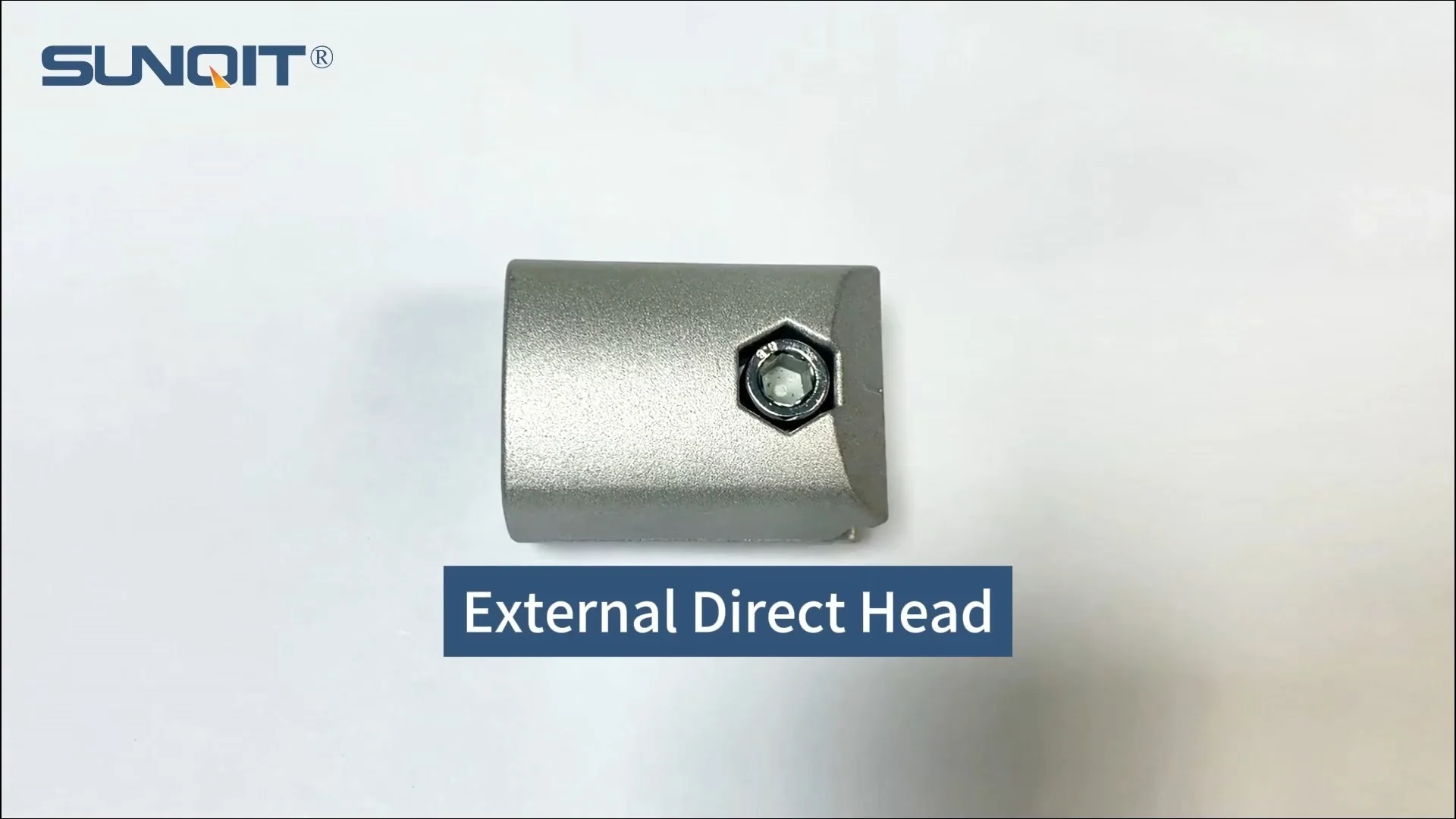
In the fast-paced world of manufacturing, every second counts. Production managers and line workers alike know the sinking feeling when a conveyor jams, a workbench wobbles, or a material rack suddenly gives way. These small interruptions—often dismissed as "part of the job"—add up to hours, even days, of lost productivity each month. Downtime isn't just about idle machines; it's about missed deadlines, overtime costs, and frustrated teams struggling to keep up. But what if the key to slashing this downtime lies in a component so, it's often overlooked? Enter the external straight aluminum joint: a quiet hero in the quest for smoother, more reliable production lines.
At first glance, joints might seem like trivial parts of a production system. They're the connectors that hold everything together—pipes, profiles, workbenches, conveyors. But when these connectors fail, the entire operation can grind to a halt. Traditional joints, made from steel or plastic, often rust, loosen, or crack under constant use, turning routine maintenance into emergency repairs. The external straight aluminum joint, however, is redefining what reliability looks like. Lightweight yet surprisingly strong, resistant to corrosion, and designed for quick, tool-free assembly, this small component is making big waves in factories and warehouses worldwide. Let's dive into how it works, why it matters, and how it can transform your production line from a source of stress into a model of efficiency.
What Are External Straight Aluminum Joints?
Before we explore their impact, let's get clear on what external straight aluminum joints are. Simply put, they're specialized connectors used to join aluminum lean pipe, aluminum profile, and other structural components in industrial setups. Unlike their bulkier steel counterparts or flimsy plastic alternatives, these joints are precision-engineered from high-grade aluminum—chosen for its unique blend of strength, lightness, and resistance to wear and tear.
The "external straight" design is key here. Unlike internal joints, which fit inside pipes and can weaken the structure, external joints clamp securely around the outside of aluminum lean pipe, distributing weight evenly and reducing stress on the pipe itself. This external grip ensures a tighter, more stable connection, even when supporting heavy loads like toolboxes on a workbench or crates on a conveyor. And because they're straight, they're ideal for creating linear structures—think conveyor tracks, material racks, or the frames of workbenches—where alignment and rigidity are critical.
But it's not just about strength. Aluminum's natural resistance to corrosion means these joints hold up in damp environments, such as food processing plants or warehouses with high humidity, without rusting or degrading. They're also lightweight, making them easy to handle during setup or reconfiguration—no more straining to lift heavy steel joints or fumbling with complicated tools. For teams that need to adapt quickly to changing production needs, this flexibility is a game-changer.
The Hidden Cost of Traditional Joints
To appreciate the value of external straight aluminum joints, it helps to first understand the problems they solve. Let's take a trip to a hypothetical (but all-too-real) manufacturing plant: GreenTech Assembly, a mid-sized facility producing small electronics. For years, GreenTech relied on steel pipe joints for their workbenches and roller conveyors. At first, they seemed sturdy enough. But over time, the plant's high humidity caused the steel to rust, weakening the joints. Workers noticed the conveyors starting to sag, leading to frequent jams as circuit boards and components got stuck on misaligned rollers. The maintenance team was spending 10 hours a week just tightening loose joints or replacing rusted ones—time they could have spent on preventive upkeep for more critical machinery.
Then there were the plastic joints they tried as a cheaper alternative. Lightweight, sure, but they cracked under the weight of heavy tooling on the workbenches. A single cracked joint on a material rack once sent a batch of crashing to the floor, damaging parts and halting production for two hours. "We were replacing plastic joints every month," recalls Maria, GreenTech's production supervisor. "It felt like we were pouring money into a leaky bucket."
These stories highlight the three biggest issues with traditional joints: durability , maintenance demands , and assembly time . Steel joints rust and corrode, plastic joints lack strength, and both often require specialized tools or training to install. When they fail, the result is downtime—time that, according to industry reports, costs manufacturers an average of $22,000 per minute. For small to mid-sized plants, that's a hit that can't be absorbed easily.

How External Straight Aluminum Joints Solve These Problems
External straight aluminum joints address each of these pain points head-on, starting with durability. Aluminum's natural oxide layer acts as a barrier against rust and corrosion, making these joints ideal for both indoor and outdoor use. In factories with strict hygiene standards—like pharmaceutical or food packaging plants—they won't leach chemicals or harbor bacteria, unlike steel joints that can chip or corrode. Even in dusty or high-moisture environments, aluminum joints maintain their integrity, reducing the need for frequent replacements.
Then there's the ease of assembly. Traditional joints often require wrenches, screwdrivers, or even welding to secure, turning a simple reconfiguration into a half-day project. External straight aluminum joints, by contrast, are designed for quick, tool-free installation. Many models feature a clamp-style design: you slide the joint over the end of an aluminum lean pipe, tighten a hand knob or lever, and it's locked in place. This means a team can disassemble a workbench, reconfigure a conveyor track, or build a new material rack in minutes, not hours. For plants that need to switch between product lines or adjust workflows seasonally, this flexibility is invaluable.
Strength is another standout feature. Aluminum might be lighter than steel, but modern alloys—like the ones used in these joints—offer impressive load-bearing capacity. Tests show that a well-designed external straight aluminum joint can support up to 500 pounds without bending or slipping, making it suitable for heavy-duty applications like automotive part assembly or bulk material handling. And because the joint clamps externally, it doesn't compromise the structural integrity of the aluminum lean pipe itself. This even weight distribution reduces the risk of pipe warping or cracking, further extending the life of the entire system.

Integration with Aluminum Lean Pipe and Profile Accessories
No joint exists in a vacuum, and the external straight aluminum joint truly shines when paired with compatible components like aluminum lean pipe and aluminum profile accessories. Aluminum lean pipe, also known as "lean tube," is a lightweight, modular piping system used to build everything from workbenches to flow racks. When combined with external straight aluminum joints, it becomes a building block for almost any structure, offering near-limitless customization.
Imagine building a workbench: start with basic aluminum tube as the frame, connect the vertical and horizontal pipes using external straight aluminum joints, then add a wooden or aluminum honeycomb panel top. Need a shelf? Attach aluminum profile accessories like side brackets or tray holders using the same joints. Want to add casters for mobility? Simply swap out the fixed feet for caster wheels, secured with—you guessed it—external straight aluminum joints. The beauty is that every part works together seamlessly, so you're not stuck with proprietary components that limit your options.
Aluminum profile accessories take this flexibility even further. From end caps that protect pipe edges to T-slot rubber seal covers that reduce noise, these small parts enhance the functionality of your system without adding complexity. For example, adding a plastic roller track guide rail (yellow or grey, depending on your color-coding needs) to a conveyor frame is a breeze with external straight aluminum joints—no drilling or welding required. The result is a system that adapts to your needs, not the other way around.
This modularity also simplifies maintenance. If a roller track gets damaged, you don't need to replace the entire conveyor—just swap out the affected section using the joints. If a workbench needs to be taller to accommodate a new machine, loosen the joints, adjust the pipe height, and retighten. It's like building with industrial-grade Legos, but for grown-ups who need their structures to hold real weight and perform reliably.

Real-World Applications: Workbench and Conveyor Systems
Let's bring this to life with two common applications: workbenches and conveyor systems. These are the backbone of most production lines, and their reliability directly impacts daily output.
Workbenches: A typical factory workbench sees constant use—tools dropped, parts stacked, workers leaning on it for hours. A wobbly workbench isn't just annoying; it can lead to mistakes, like misaligned part assemblies or even injuries. With external straight aluminum joints, building a stable workbench is straightforward. Start with a frame of aluminum lean pipe, connected at the corners with 90-degree aluminum crossing joints and reinforced with external straight aluminum joints along the sides for extra rigidity. Add a solid top, and you've got a workbench that stays level, even under heavy use. And if you need to add a shelf, a tool rail, or adjust the height later? Just loosen the joints, reconfigure, and you're done in 15 minutes. No more waiting for maintenance to bring in a welder or drill new holes.
Conveyor Systems: Conveyors are the arteries of a production line, moving parts from one station to the next. When a conveyor jams, the entire line backs up. External straight aluminum joints play a critical role here by ensuring the roller track stays aligned. The joints connect the aluminum guide rails (like aluminum guide rail A or B) to the support frames, keeping the track straight and the rollers spinning freely. Unlike steel joints, which can rust and seize up, aluminum joints resist corrosion, so even if a spill occurs or the area is damp, the track remains smooth. This means fewer jams, less time spent unclogging parts, and a conveyor that runs consistently shift after shift.
One electronics manufacturer in Ohio recently upgraded their conveyor system to use external straight aluminum joints and aluminum lean pipe. They reported a 40% reduction in conveyor-related downtime in the first three months. "Before, we were stopping every couple of hours to fix a wobbly rail or a stuck roller," said the plant manager. "Now, the conveyors run all day, and when we need to change the layout for a new product, we can do it over a weekend instead of a week."
Case Study: XYZ Manufacturing Cuts Downtime by 25% with Aluminum Joints
XYZ Manufacturing, a mid-sized automotive parts supplier, was struggling with frequent downtime on their assembly line. Their old steel-jointed workbenches and flow racks were prone to rust in the plant's humid environment, leading to loose connections and wobbly structures. The maintenance team was spending 12 hours per week just tightening or replacing joints, and the production line was averaging 3 hours of unplanned downtime monthly due to joint failures.
In January 2024, XYZ switched to a system built with aluminum lean pipe, external straight aluminum joints, and aluminum profile accessories. They replaced all steel workbenches and flow racks with modular setups using these components. The results were striking:
- Maintenance time dropped by 75%: The team now spends just 3 hours per week on joint-related upkeep, freeing up time for other tasks.
- Downtime decreased by 25%: Unplanned stoppages fell from 3 hours to 2.25 hours monthly, translating to an extra 9 hours of production time per month.
- Reconfiguration speed improved: When XYZ launched a new product line in March, they reconfigured 8 workbenches and 3 conveyors in 2 days—down from the 5 days it took with steel joints.
"The biggest surprise was how little we had to think about the joints after installing them," said the plant supervisor. "They just work. No rust, no looseness, no emergency calls. We can focus on making parts, not fixing tools."
Traditional vs. External Straight Aluminum Joints: A Comparison
Still on the fence? Let's put traditional joints and external straight aluminum joints side by side to see how they stack up in key areas:
| Feature | Traditional Steel/Plastic Joints | External Straight Aluminum Joints |
|---|---|---|
| Material | Steel (prone to rust) or plastic (weak under load) | High-grade aluminum alloy (corrosion-resistant, strong) |
| Assembly Time | 30–60 minutes per joint (requires tools, welding, or specialized training) | 2–5 minutes per joint (tool-free, hand-tightened) |
| Load Capacity | Steel: High, but heavy; Plastic: Low (cracks under >200 lbs) | Up to 500 lbs (lightweight, high strength-to-weight ratio) |
| Corrosion Resistance | Steel: Poor (rusts in moisture); Plastic: Good, but prone to UV damage | Excellent (natural oxide layer prevents rust, ideal for humid/dusty environments) |
| Maintenance Needs | High (frequent tightening, rust removal, replacements every 6–12 months) | Low (annual inspection, occasional cleaning, lasts 5+ years) |
| Cost Over Time | Low upfront cost, but high long-term (replacements, labor, downtime) | Slightly higher upfront, but lower total cost (fewer replacements, less downtime) |
Maintenance Tips: Keeping Your Aluminum Joints in Top Shape
While external straight aluminum joints are low-maintenance, a little care goes a long way in ensuring they last. Here are simple tips to keep them performing at their best:
1. Regular Inspections: Once a month, walk through your production line and check joints for signs of wear. Look for loose knobs, cracks in the aluminum, or debris (like dust or oil) that might prevent a tight grip. A quick visual check takes 10–15 minutes and can catch small issues before they become big problems.
2. Clean as Needed: In dusty or oily environments, wipe joints with a dry cloth to remove buildup. For stubborn grime, use a mild soap and water solution—avoid harsh chemicals that can damage the aluminum's finish. Dry thoroughly to prevent water spots (though aluminum won't rust, standing water can leave marks).
3. Tighten When Loose: Over time, vibrations from machinery might cause knobs to loosen slightly. A quick twist with your hand is usually enough to retighten them—no tools required. This takes seconds per joint and ensures a secure connection.
4. replace Worn Parts: While aluminum joints are durable, accessories like rubber gaskets or clamp pads might wear out after years of use. Most suppliers sell replacement parts, so you can swap these out without replacing the entire joint. This keeps costs low and extends the joint's life.
The key here is that maintenance is proactive, not reactive. Unlike traditional joints that demand urgent repairs, aluminum joints thrive on simple, regular check-ins—exactly what busy production teams need.
Conclusion: Small Joints, Big Impact
In the grand scheme of manufacturing, it's easy to focus on the "big" stuff: high-tech machinery, automated systems, cutting-edge software. But as we've seen, the smallest components can have the biggest impact on efficiency. External straight aluminum joints might not grab headlines, but they're quietly revolutionizing production lines by turning downtime into uptime, frustration into focus, and rigid systems into flexible, adaptable setups.
By combining the strength of aluminum, the convenience of tool-free assembly, and the versatility to work with aluminum lean pipe and profile accessories, these joints are more than just connectors—they're enablers. They enable teams to build better workbenches, smoother conveyors, and more reliable material racks. They enable managers to reconfigure lines quickly, respond to market changes, and keep up with demand. And they enable businesses to save time, reduce costs, and stay competitive in an increasingly fast-moving industry.
So, the next time you walk through your production line, take a closer look at those joints. Are they holding you back, or are they helping you move forward? If it's the former, maybe it's time to make the switch. After all, in manufacturing, the difference between good and great often comes down to the parts no one notices—until they start working.