- Company Articles
- Products and Technology
- Product knowledge
- External Straight Aluminum Joints: Temperature Resistance in Industrial Environments

External Straight Aluminum Joints: Temperature Resistance in Industrial Environments
Related Product
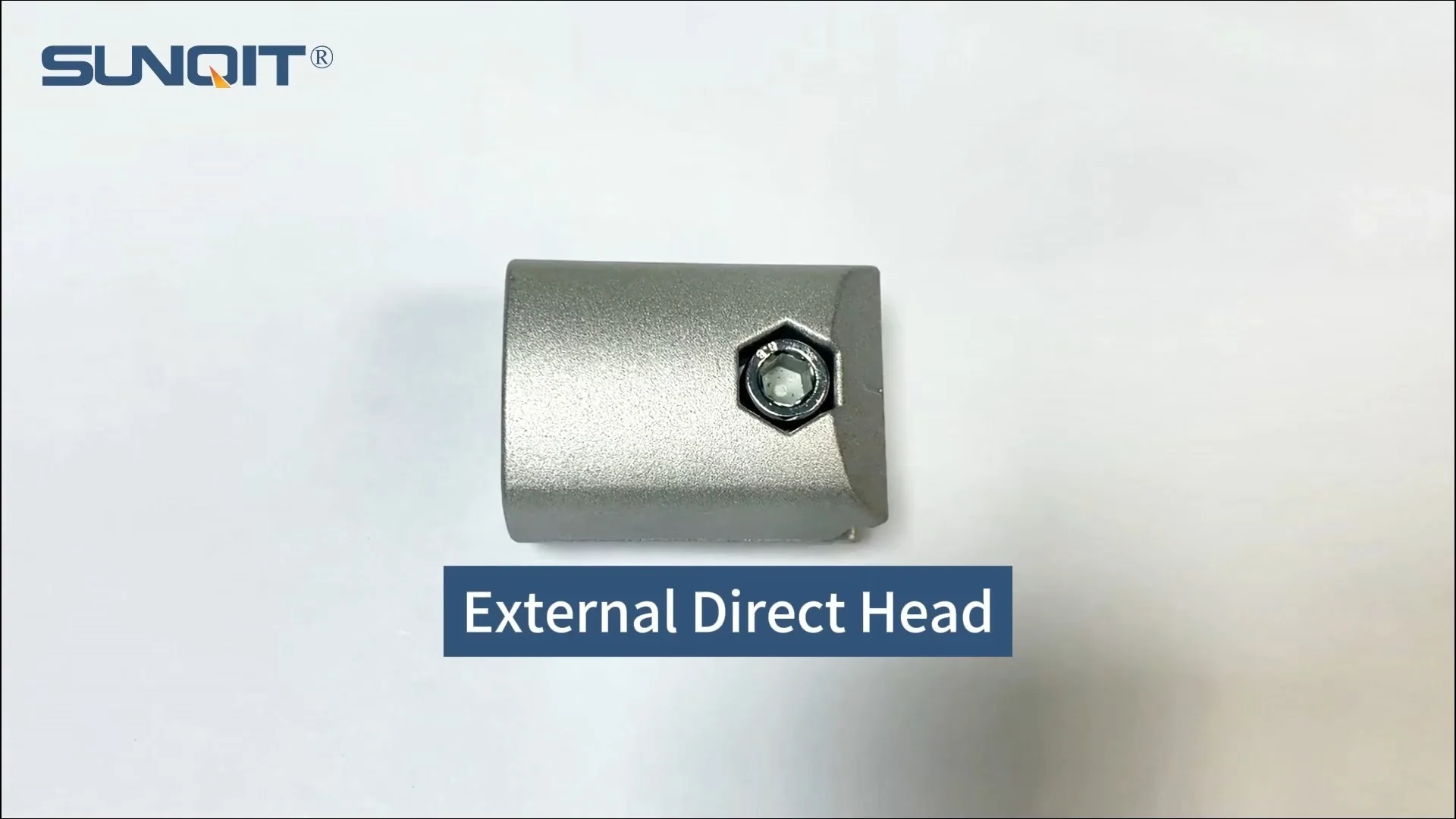
External Straight Aluminum Joint
Aluminum pipe joint outside connection used for two pcs 28pcs aluminum pipe connection in straight angle,it connects two pcs pipe from outside.
Walk into any modern manufacturing facility, and you'll be met with a symphony of activity: conveyor belts humming, robots assembling components, workers tending to workbenches, and machinery churning out products around the clock. Behind this orchestration of productivity lies a hidden network of components that often go unnoticed—until something goes wrong. Among these unsung heroes are the joints that hold everything together. In industrial settings, where temperatures can swing from scorching heat to bone-chilling cold, the reliability of these joints isn't just a matter of efficiency; it's a cornerstone of safety, uptime, and operational success. Today, we're shining a spotlight on a component that's quietly revolutionizing industrial construction: external straight aluminum joints. Specifically, we'll explore how their temperature resistance makes them indispensable in the most demanding industrial environments.
The Industrial Environment: A Battle Against the Elements
Industrial environments are unforgiving. Factories producing automotive parts might have welding stations where temperatures soar above 1,000°C, while adjacent assembly lines operate in climate-controlled rooms to protect sensitive electronics. Food processing plants alternate between hot sterilization zones and cold storage units that dip below -20°C. Even in "standard" manufacturing facilities, machinery generates constant heat, and seasonal changes can bring humidity, frost, or sweltering summer temperatures into play. In such conditions, every material used in construction—from the largest conveyor frame to the smallest joint—must stand up to extreme thermal stress.
Why does temperature matter so much for joints? When materials are exposed to heat, they expand; when cooled, they contract. This thermal expansion and contraction can weaken connections over time. A joint that works perfectly at 25°C might loosen, warp, or even crack after repeated cycles of heating and cooling. In worst-case scenarios, this can lead to structural failures: a conveyor belt collapsing, a workbench giving way, or a lean system rack buckling under the weight of materials. The result? Costly downtime, damaged products, and even risks to worker safety. For manufacturers operating on tight margins, where every minute of production counts, these failures are simply not an option.
Joints: The Glue That Holds Industrial Systems Together
Before diving into external straight aluminum joints, let's take a step back and appreciate the critical role joints play in industrial setups. Think of industrial structures as puzzles: aluminum profiles, pipes, and panels are the pieces, and joints are the fasteners that turn them into functional systems. Whether it's a workbench where technicians assemble circuit boards, a conveyor that moves raw materials across the factory floor, or a lean system rack that organizes inventory, joints are the unsung connectors that ensure stability and flexibility.
Not all joints are created equal. Traditional options like steel welds are strong but rigid—they don't handle thermal movement well and are difficult to disassemble or reconfigure. Plastic joints are lightweight and cheap but melt or become brittle in extreme temperatures. Brass joints offer corrosion resistance but are heavy and prone to cracking under repeated thermal stress. This is where aluminum joints, and specifically external straight aluminum joints, come into their own. Aluminum's unique properties—lightweight, durable, and inherently resistant to temperature extremes—make it an ideal material for joints in industrial environments. And when designed as "external straight" joints, they bring additional advantages: easy installation, compatibility with standard aluminum profiles, and a design that prioritizes strength even when temperatures fluctuate.

Aluminum: A Material Built for Resilience
Aluminum has been a staple in manufacturing for decades, and for good reason. Its natural properties make it a standout choice for industrial applications. First, it's lightweight—about one-third the weight of steel—making it easy to transport, install, and reconfigure. This is a game-changer for lean systems, which rely on flexibility to adapt to changing production needs. Second, aluminum is naturally corrosion-resistant, thanks to a thin oxide layer that forms on its surface, protecting it from rust and degradation. This is crucial in environments where moisture, chemicals, or humidity are present.
But perhaps most importantly for our discussion, aluminum boasts impressive temperature resistance. Pure aluminum has a melting point of 660°C, which is far higher than the temperatures encountered in most industrial settings (even welding zones rarely expose surrounding structures to sustained heat above 200°C). When alloyed with elements like magnesium, silicon, or copper, aluminum's thermal stability only improves. These alloys enhance its strength at both high and low temperatures, preventing brittleness in the cold and softening in the heat. For example, 6061 aluminum alloy, commonly used in industrial profiles and joints, retains over 80% of its room-temperature strength even when heated to 150°C—a temperature that would cause many plastics to warp or steel to lose structural integrity.

External Straight Aluminum Joints: Designing for Thermal Stress
So, what exactly are external straight aluminum joints? As the name suggests, these are joints designed to connect two straight sections of aluminum pipe or profile from the outside. Unlike internal joints, which fit inside the pipe, external joints clamp around the exterior, creating a secure, load-bearing connection. This external design offers several benefits for temperature resistance. For one, it distributes stress more evenly across the joint and the connected profiles, reducing the risk of cracks or deformation when the material expands or contracts. It also allows for slight movement—enough to accommodate thermal expansion without compromising the joint's integrity.
Let's break down their design features:
- Material Thickness: External straight aluminum joints are typically made from high-grade aluminum alloys with a thicker wall than standard pipe fittings. This extra thickness provides structural stability, even when exposed to repeated temperature cycles. Thicker material also reduces the risk of warping, as there's more mass to absorb and distribute heat.
- Clamping Mechanism: Most external straight joints use a bolted clamping system. This allows for adjustable tension—installers can tighten the bolts to account for thermal expansion, ensuring the joint stays secure even as temperatures rise. Unlike welded joints, which are fixed, the clamping design allows for minor adjustments over time, extending the joint's lifespan.
- Surface Treatments: Many external straight aluminum joints come with anodized or powder-coated finishes. Anodizing thickens the natural oxide layer on aluminum, enhancing corrosion resistance and adding a barrier against heat. Powder coatings, often heat-resistant formulations, provide an extra layer of protection, reflecting heat and preventing direct contact between the joint and extreme temperatures.
- Compatibility with Aluminum Profiles: These joints are engineered to work seamlessly with standard aluminum profiles, which are themselves designed for thermal stability. When paired with aluminum profiles—like the 4040 or 3030 series commonly used in workbenches and conveyors—external straight joints create a system where both the profiles and the connectors expand and contract at similar rates. This "thermal compatibility" minimizes stress on the joint, as there's no uneven movement between components.

Temperature Resistance in Action: How External Straight Aluminum Joints Perform
To truly understand the value of external straight aluminum joints, let's look at how they perform in real-world temperature scenarios. Below is a comparison of external straight aluminum joints with other common joint materials, based on their performance in extreme temperatures:
| Joint Material | Operating Temperature Range (°C) | Tensile Strength at 150°C (MPa) | Tensile Strength at -20°C (MPa) | Thermal Expansion Coefficient (10⁻⁶/°C) |
|---|---|---|---|---|
| External Straight Aluminum (6061 Alloy) | -40 to 180 | 240 | 260 | 23.6 |
| Steel Welded Joints | -20 to 300 | 380 | 420 | 11.7 |
| Plastic (Nylon) Joints | -10 to 80 | 45 (softens, loses strength) | 50 (brittle, prone to cracking) | 80-100 |
| Brass Compression Fittings | -20 to 120 | 190 | 200 (brittle, risk of cracking) | 19.0 |
The table tells a clear story: while steel joints have a higher maximum temperature range, they're significantly heavier, more rigid, and prone to corrosion (unless galvanized, which adds cost). Plastic joints fail miserably in extreme heat or cold, making them unsuitable for most industrial environments. Brass is a middle ground but lacks the flexibility and weight advantage of aluminum. External straight aluminum joints, on the other hand, offer a balanced mix of temperature resistance, strength, and practicality. Their operating range of -40°C to 180°C covers 99% of industrial environments, from cold storage to high-heat assembly lines.
Let's take a closer look at two extreme scenarios to see how these joints perform:
High-Temperature Environments: Automotive Welding Shops
Automotive manufacturing plants are a hotbed of thermal stress. Welding stations use electric arcs that reach 6,000°C, and while the heat is localized, nearby structures—like conveyors carrying parts to the welding line or workbenches holding tools—are exposed to ambient temperatures of 40-60°C for hours on end. Over time, this sustained heat can take a toll on materials. Plastic joints would soften and lose grip, causing conveyors to misalign. Steel joints, while strong, would conduct heat, making them hot to the touch and risking burns to workers. External straight aluminum joints, however, thrive here. Their anodized finish reflects heat, and the 6061 alloy retains its strength at 60°C. The clamping mechanism stays tight, ensuring the conveyor or workbench remains stable, even during long production runs.
Low-Temperature Environments: Food Cold Storage
On the flip side, cold storage facilities for frozen foods operate at -18°C to -25°C. In these environments, materials can become brittle, and joints can loosen as metal contracts. Steel joints, for example, become stiffer and more prone to cracking under impact (like a pallet being moved into a rack). Plastic joints turn rigid and snap easily. External straight aluminum joints, though, handle the cold with ease. Aluminum alloys remain ductile at low temperatures—meaning they bend rather than break—thanks to their crystal structure. The clamping bolts, made from stainless steel (another cold-resistant material), don't seize up, and the joint maintains its grip on the aluminum profiles. This is why many food processing plants use aluminum-based lean systems with external straight joints for their cold storage racks and material handling trolleys.
Applications: Where External Straight Aluminum Joints Shine
External straight aluminum joints aren't just theoretical—they're hard at work in industries around the world. Let's explore some of their most common applications, where their temperature resistance is a critical advantage:
1. Workbenches in Electronics Manufacturing
Electronics manufacturing requires precision, and workbenches are the heart of the operation. These workbenches often house sensitive equipment, like soldering irons (which reach 350°C) and thermal testing tools. The area around the workbench can see temperature spikes of 30-40°C during soldering, followed by cooling as the equipment is turned off. External straight aluminum joints, paired with aluminum profiles, form the frame of these workbenches. They withstand the heat from soldering, prevent warping of the bench surface, and keep tools and components stable. The lightweight nature of aluminum also makes the workbench easy to move if production lines need reconfiguring—something that's common in lean manufacturing setups.
2. Conveyors in Automotive and Packaging
Conveyors are the arteries of manufacturing, moving parts from one station to the next. In automotive plants, conveyors might pass through paint booths (high heat, solvents) and then into cooling zones. In packaging facilities, they carry hot-filled products (like canned soups) that radiate heat for hours. External straight aluminum joints connect the rollers and frames of these conveyors. Their temperature resistance ensures the conveyor frame doesn't warp, keeping the belt aligned and preventing jams. The corrosion resistance of aluminum is also a plus in food packaging, where washdowns with hot water and chemicals are common.
3. Lean System Racks in Warehousing
Lean systems, which focus on minimizing waste and maximizing efficiency, rely on modular racks and storage solutions. These racks hold everything from raw materials to finished products, and they're often exposed to temperature fluctuations—especially in warehouses with high ceilings, where summer heat rises and winter cold settles. External straight aluminum joints allow these racks to be built quickly and adjusted as inventory needs change. Their ability to handle thermal expansion means the racks don't loosen or become unstable over time, reducing the risk of collapsed shelves and damaged goods.
4. Clean Rooms in Pharmaceutical Production
Pharmaceutical clean rooms require strict temperature and humidity control (typically 20-24°C, 45-65% humidity). While the temperatures aren't extreme, consistency is key. Even minor warping of equipment or structures can disrupt airflow, compromising sterility. External straight aluminum joints, with their predictable thermal expansion and contraction, ensure that clean room workbenches, material racks, and conveyor systems remain dimensionally stable. Their smooth, anodized surfaces are also easy to clean, preventing the buildup of dust or bacteria—another critical factor in pharmaceutical manufacturing.
Aluminum Pipe Accessories: Enhancing Joint Performance
External straight aluminum joints don't work alone—they're part of a system that includes aluminum pipe accessories designed to boost performance, especially in temperature-sensitive environments. These accessories complement the joints, ensuring the entire structure is as resilient as possible. Let's look at a few key ones:
Thermal Insulation Sleeves
For environments with extreme heat (like foundries), thermal insulation sleeves can be added to aluminum pipes and joints. These sleeves, made from heat-resistant materials like fiberglass or ceramic, wrap around the pipe and joint, reducing heat transfer. This protects the joint from direct heat exposure, extending its lifespan and maintaining its clamping strength.
Stainless Steel Bolts and Washers
The bolts used in external straight aluminum joints are often made from stainless steel, which resists corrosion and maintains strength at both high and low temperatures. Stainless steel washers, placed between the bolt head and the joint, distribute pressure evenly, preventing the aluminum from denting or deforming under thermal stress.
Expansion Joints
In long conveyor systems or large lean racks, where thermal expansion over distance can be significant, expansion joints are used alongside external straight joints. These specialized joints allow for controlled movement of the aluminum profiles, preventing stress on the straight joints. They act as "shock absorbers" for thermal expansion, ensuring the entire structure remains stable.
Why External Straight Aluminum Joints Are the Future of Industrial Construction
In the fast-paced world of manufacturing and industrial production, every component matters. External straight aluminum joints may seem small, but their impact is huge. They're a testament to how material science and design innovation can solve real-world problems—like the challenge of temperature resistance in industrial environments. By combining the natural advantages of aluminum (lightweight, corrosion-resistant, thermally stable) with smart engineering (adjustable clamping, thick walls, compatible accessories), these joints deliver reliability where it counts.
As industries continue to evolve—with higher production speeds, more extreme operating conditions, and a focus on sustainability—external straight aluminum joints will only grow in importance. They support lean manufacturing by enabling quick reconfigurations, reduce downtime by resisting temperature-related failures, and contribute to a safer workplace by maintaining structural integrity. For manufacturers looking to stay competitive, investing in quality components like external straight aluminum joints isn't just a choice—it's a necessity.
So the next time you walk through a factory, take a moment to look at the structures around you: the workbenches, the conveyors, the racks. Chances are, external straight aluminum joints are holding them together, quietly ensuring that production runs smoothly, even when the heat is on.