- Company Articles
- Products and Technology
- Product knowledge
- External Straight Aluminum Joints vs. Plastic Joints: Material Comparison

External Straight Aluminum Joints vs. Plastic Joints: Material Comparison
Related Product
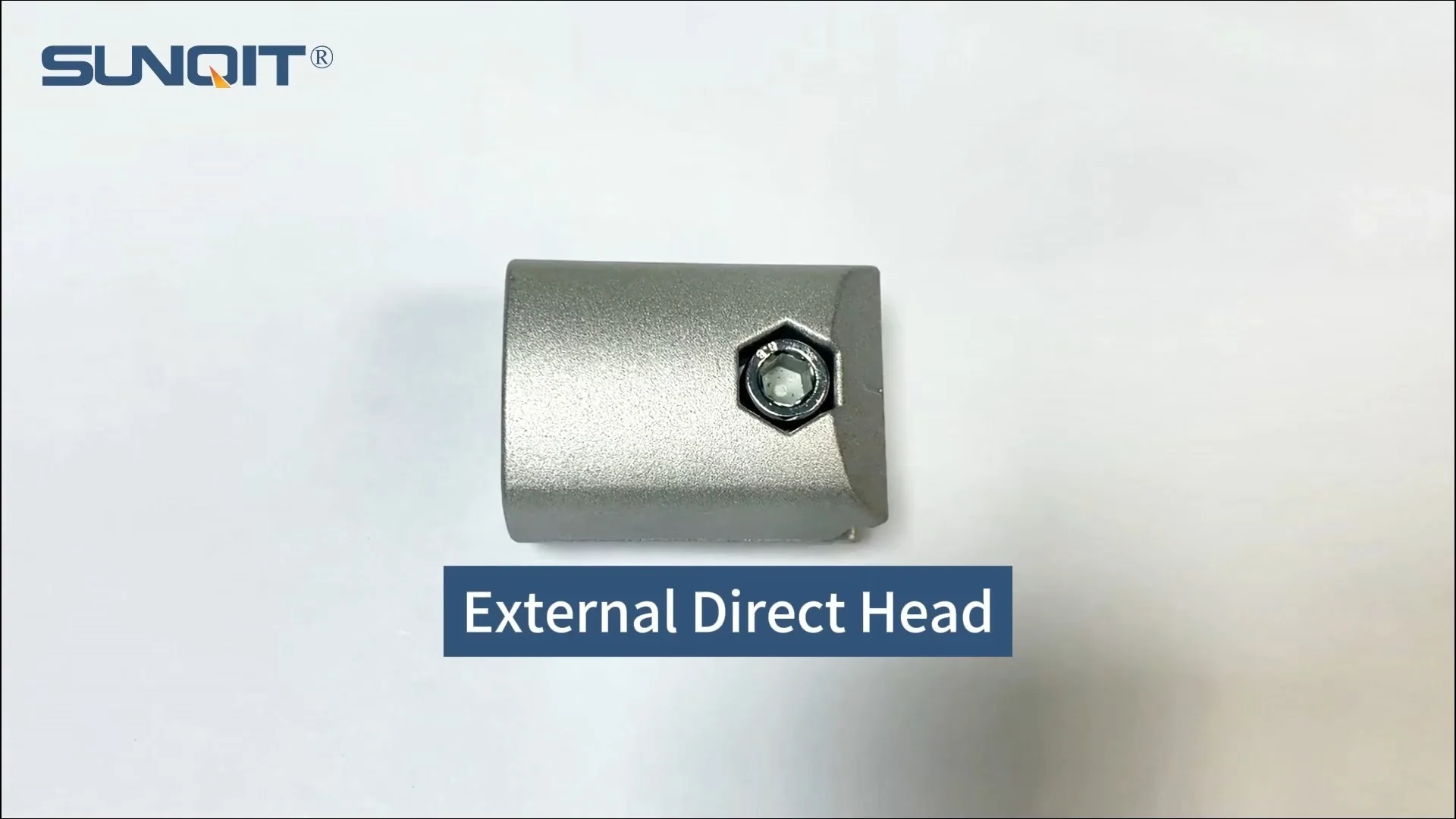
External Straight Aluminum Joint
Aluminum pipe joint outside connection used for two pcs 28pcs aluminum pipe connection in straight angle,it connects two pcs pipe from outside.
Walk into any modern manufacturing facility, and you'll quickly realize that the backbone of efficient production isn't just the big machines—it's the smaller, often overlooked components that hold everything together. Lean systems, from workbenches and flow racks to conveyor belts and material trolleys, rely on precision-engineered parts to keep operations running smoothly. Among these critical components, joints play a starring role. They're the unsung heroes that connect pipes, rails, and profiles, determining the stability, durability, and adaptability of the entire structure.
Today, we're zeroing in on two popular types of joints: external straight aluminum joints and plastic joints, with a special focus on examples like the plastic roller track guide rail yellow. Both have their place in lean manufacturing, but choosing between them depends on a mix of factors—load capacity, environment, cost, and long-term performance. Let's dive into what makes each unique, how they stack up against each other, and which might be the right fit for your specific needs.
Understanding External Straight Aluminum Joints
First, let's get to know external straight aluminum joints. As the name suggests, these are connectors designed to join aluminum pipes in straight-line configurations, a common requirement in lean systems like workbenches, material racks, and aluminum profile structures. Made from high-grade aluminum alloys—often 6061 or 6063, known for their strength-to-weight ratio—these joints are precision-machined to ensure a snug, secure fit with aluminum pipes.
Key Features of External Straight Aluminum Joints
Material Strength & Durability: Aluminum alloys are prized for their balance of lightness and strength. External straight aluminum joints can handle significant loads, making them ideal for heavy-duty applications. Unlike plastic, aluminum doesn't warp under pressure, and its structural integrity holds up even in high-stress environments—think automotive assembly lines where workbenches support tools, parts, and constant operator use.
Corrosion Resistance: Aluminum naturally forms a protective oxide layer, shielding it from rust and corrosion. This makes external straight aluminum joints a top choice for facilities with exposure to moisture, chemicals, or varying temperatures. Whether it's a food processing plant with regular washdowns or a warehouse in a humid climate, aluminum joints won't degrade over time like some plastics might.
Compatibility with Aluminum Pipe Accessories: One of the biggest advantages of aluminum joints is their seamless integration with other aluminum pipe accessories. They pair effortlessly with aluminum guide rails (like aluminum guide rail A or B), roller tracks, and even stainless steel pipe series components. This compatibility means you can build modular systems that are easy to assemble, disassemble, and reconfigure—perfect for lean manufacturing's focus on flexibility.
Precision Fit: Thanks to advanced machining techniques, external straight aluminum joints offer a tight, wobble-free connection. This precision is crucial in applications where alignment matters, such as conveyor systems or flow racks where materials need to move smoothly without jams or misalignment.
Common Applications
External straight aluminum joints shine in scenarios that demand robustness and longevity. You'll find them in:
- Heavy-Duty Workbenches: Like the aluminum workbench E (single deck-without caster), where stability is key for assembly tasks.
- Material Racks: Such as material rack B (3 row and 3 floor), which holds bulk inventory and needs to withstand constant loading and unloading.
- Conveyor Systems: Paired with roller tracks (40 steel roller track, 85 staggered roller track) to support the movement of heavy parts.
- Industrial Trolleys: Turnover trolleys and racks that transport goods across factory floors, relying on joints to handle dynamic loads.
The Role of Plastic Joints: A Look at Plastic Roller Track Guide Rail Yellow
Now, let's shift to plastic joints. While aluminum joints are all about strength and durability, plastic joints carve out their niche with flexibility, cost-effectiveness, and specialized properties. A great example is the plastic roller track guide rail yellow—a common plastic accessory used in light-duty flow racks, packaging lines, and assembly stations where noise reduction and static control are priorities.
What Makes Plastic Joints Unique?
Material Composition: Most plastic joints, including the plastic roller track guide rail yellow, are made from polymers like nylon, polypropylene, or ABS. These materials are lightweight, impact-resistant, and often infused with additives to enhance properties—for example, glass fibers for extra strength or static-dissipative compounds for ESD (electrostatic discharge) protection in electronics manufacturing.
Cost-Effectiveness: Plastic joints are generally cheaper to produce than aluminum ones, making them a budget-friendly option for small businesses or projects with tight cost constraints. If you're building a temporary structure or a low-load system, plastic can deliver functionality without breaking the bank.
Noise Reduction: Unlike metal-on-metal connections, plastic joints dampen vibrations and reduce noise. This is a huge plus in environments where worker comfort matters—think packaging lines or retail distribution centers where constant clanging from metal joints could lead to fatigue.
Non-Conductive & Chemical Resistance: Plastic is naturally non-conductive, making it safe for use in electronics manufacturing or around sensitive equipment where static electricity could damage components. Some plastics also resist chemicals, oils, and solvents, though this varies by type—nylon, for instance, holds up well against many industrial fluids, while polypropylene is better for acidic environments.
Lightweight & Easy to Install: Plastic joints are significantly lighter than aluminum, which simplifies handling and installation. They often feature snap-on or friction-fit designs, eliminating the need for tools like wrenches or screws. This speed of assembly is a boon for teams looking to set up or reconfigure systems quickly.
Applications Where Plastic Shines
Plastic joints like the plastic roller track guide rail yellow are ideal for:
- Light-Duty Flow Racks: Used in warehouses to move small parts or packages. The yellow color also enhances visibility, reducing the risk of misplacing items.
- ESD Workstations: In electronics assembly, where static control is critical. Plastic joints (paired with ESD workbench components) prevent static buildup that could fry sensitive circuit boards.
- Cleanrooms & Food Processing: Plastic is easy to sanitize, and its non-porous surface resists bacterial growth—making it suitable for pharmaceutical or food packaging lines.
- Temporary or Low-Load Structures: Think pop-up production cells or event setups where the system doesn't need to withstand heavy, constant use.

Head-to-Head: Aluminum vs. Plastic Joints
To truly understand which joint type is right for your project, let's compare them side by side across key metrics:
| Feature | External Straight Aluminum Joints | Plastic Joints (e.g., Plastic Roller Track Guide Rail Yellow) |
|---|---|---|
| Material Composition | Aluminum alloy (6061/6063) | Polypropylene, nylon, or ABS plastic |
| Load Capacity | High (supports heavy loads: 100-500+ kg per joint) | Low to medium (supports light loads: 10-50 kg per joint) |
| Durability | Excellent (resists wear, warping, and impact; lifespan of 10+ years) | Moderate (may degrade under UV light or high heat; lifespan of 3-7 years) |
| Corrosion Resistance | High (natural oxide layer prevents rust) | High (resists moisture, but some plastics may swell in water) |
| Temperature Resistance | Wide range (-40°C to 120°C) | Limited (typically -20°C to 80°C; may melt or become brittle outside this range) |
| Cost | Higher upfront cost | Lower upfront cost |
| Installation | Requires tools (wrenches, screws); precise but slightly time-consuming | Tool-free (snap-fit or friction); quick and easy |
| Maintenance | Minimal (occasional tightening; no degradation) | More frequent (may need replacement due to wear, UV damage, or warping) |
| Noise Level | Higher (metal-on-metal contact) | Lower (dampens vibrations) |
| Best For | Heavy loads, high-stress environments, long-term use, compatibility with aluminum pipe accessories | Light loads, noise-sensitive areas, ESD environments, budget projects, temporary setups |

Real-World Scenarios: Choosing the Right Joint
Theory is helpful, but nothing beats real-world examples. Let's look at two case studies to see how these joints perform in action.
Case Study 1: Automotive Manufacturing Plant
A large automotive OEM needed to upgrade its assembly line workbenches to support heavier tools and components. The old setup used plastic joints, which were starting to warp under the weight of pneumatic tools and engine parts. The plant's lean team opted for external straight aluminum joints paired with aluminum profile accessories.
Result: The new aluminum-jointed workbenches (similar to aluminum workbench A) showed zero signs of flexing or wear after six months of daily use. The team also appreciated the compatibility with existing aluminum roller tracks, allowing them to integrate material feeding systems directly into the workbenches. While the upfront cost was 30% higher than plastic, the plant projected the aluminum joints would last 10+ years, compared to 2-3 years for plastic—making them the more cost-effective choice long-term.
Case Study 2: Electronics Assembly Line
A consumer electronics manufacturer needed to build a new ESD workstation line for assembling smartphones. The priority was to minimize static discharge and noise, as workers would be handling sensitive microchips for 8-hour shifts. The team chose plastic roller track guide rail yellow for the flow racks and plastic joints for the workstation frames.
Result: The plastic components reduced static buildup to safe levels (below 100V), and the yellow guide rails improved visibility of small parts. Noise levels dropped by 15% compared to the previous metal-jointed system, leading to fewer worker complaints. The plastic joints were also easy to reconfigure when the production line switched to a new phone model, aligning with the manufacturer's lean goal of quick changeovers.

Beyond the Joint: Compatibility with Lean Systems
No joint exists in a vacuum—it's part of a larger lean system, and compatibility with other components is critical. Let's explore how aluminum and plastic joints interact with common lean pipe and accessories.
Aluminum Joints & Aluminum Pipe Accessories
External straight aluminum joints are designed to work seamlessly with aluminum pipe systems. For example:
- Aluminum Guide Rails: Aluminum guide rail A and B, used to guide materials along roller tracks, bolt directly to aluminum joints without adapters.
- Roller Tracks: 40 steel roller track or 38 aluminum roller track systems attach to aluminum joints via specialized brackets (like roller track placon mount for aluminum profile high), ensuring smooth material flow.
- Stainless Steel Pipe Series: In hybrid systems that mix aluminum and stainless steel, aluminum joints can connect to stainless steel pipes with minimal modification, thanks to their precision machining.
This compatibility makes aluminum joints a favorite for suppliers and manufacturers building custom lean solutions—they can mix and match components without worrying about fit issues.
Plastic Joints & Plastic Accessories
Plastic joints, like the plastic roller track guide rail yellow, are best paired with other plastic components. For instance:
- Plastic Roller Tracks: Grey or yellow plastic roller track guide rails lock into plastic joints with snap-fit connections, eliminating the need for screws.
- Swivel Roller Balls: Nylon swivel roller balls (1 inch or 0.5 inch) attach easily to plastic joints, creating low-friction surfaces for sliding materials.
- Light-Duty Casters: Plastic caster accessories pair well with plastic joints in trolleys, keeping the overall weight low and maneuverability high.
However, plastic joints can struggle with metal components. Attaching a steel roller track to a plastic joint may lead to stress cracks over time, as the metal's weight and rigidity exceed the plastic's flexibility.
Long-Term Value: Cost vs. Performance
It's easy to fixate on upfront costs, but the true value of a joint lies in its total cost of ownership (TCO). Let's break it down:
Aluminum Joints: Higher Upfront, Lower TCO
External straight aluminum joints cost more initially—sometimes 2-3x the price of plastic alternatives. But their durability means they rarely need replacement. A well-maintained aluminum joint can last 10+ years, even in harsh environments. Factor in minimal maintenance (occasional cleaning, tightening of bolts) and the ability to reuse them in reconfigured systems, and aluminum often comes out ahead in TCO for long-term projects.
Plastic Joints: Lower Upfront, Higher Long-Term Costs
Plastic joints are budget-friendly at first, but they have shorter lifespans. UV exposure, temperature fluctuations, and repeated stress can cause them to crack, warp, or become brittle. In high-use environments, you might replace plastic joints every 2-3 years. For small-scale or temporary setups, this is manageable. But for permanent systems, the cumulative cost of replacements and downtime can add up quickly.
The takeaway? If you need a system that will last and adapt over time, aluminum is worth the investment. If you're building something temporary or light-duty, plastic offers immediate savings.
Future Trends: Innovations in Joint Design
Both aluminum and plastic joints are evolving, driven by advances in materials science and manufacturing. Here's what to watch for:
Aluminum Alloys: New alloys are being developed to boost strength while reducing weight further. Look for aluminum joints with higher tensile strength, making them suitable for even heavier loads.
Reinforced Plastics: Plastic joints are getting stronger, too. Manufacturers are adding carbon fiber or glass fiber reinforcements to plastic compounds, increasing load capacity without sacrificing lightness. Some plastic roller track guide rail yellow models now feature these reinforcements, blurring the line between plastic and aluminum performance.
Smart Joints: Emerging technologies may integrate sensors into joints to monitor load, temperature, or wear. Imagine a joint that alerts maintenance when it's near failure—this could revolutionize predictive maintenance in lean systems.
Conclusion: Choosing the Right Joint for Your Lean System
External straight aluminum joints and plastic joints like the plastic roller track guide rail yellow each have distinct strengths. Aluminum excels in durability, load capacity, and long-term value, making it ideal for heavy-duty, permanent lean systems. Plastic shines in cost, noise reduction, and ESD protection, perfect for light-duty, temporary, or sensitive environments.
When deciding, ask yourself: What's the load requirement? How long will the system be in use? What's the environment like? And don't forget compatibility with aluminum pipe accessories or plastic components—your joint choice will dictate the rest of your system's design.
At the end of the day, the best joint is the one that aligns with your lean goals—whether that's maximizing uptime, minimizing costs, or creating a flexible, adaptable workspace. Both aluminum and plastic have their place; the key is to match the material to the mission.